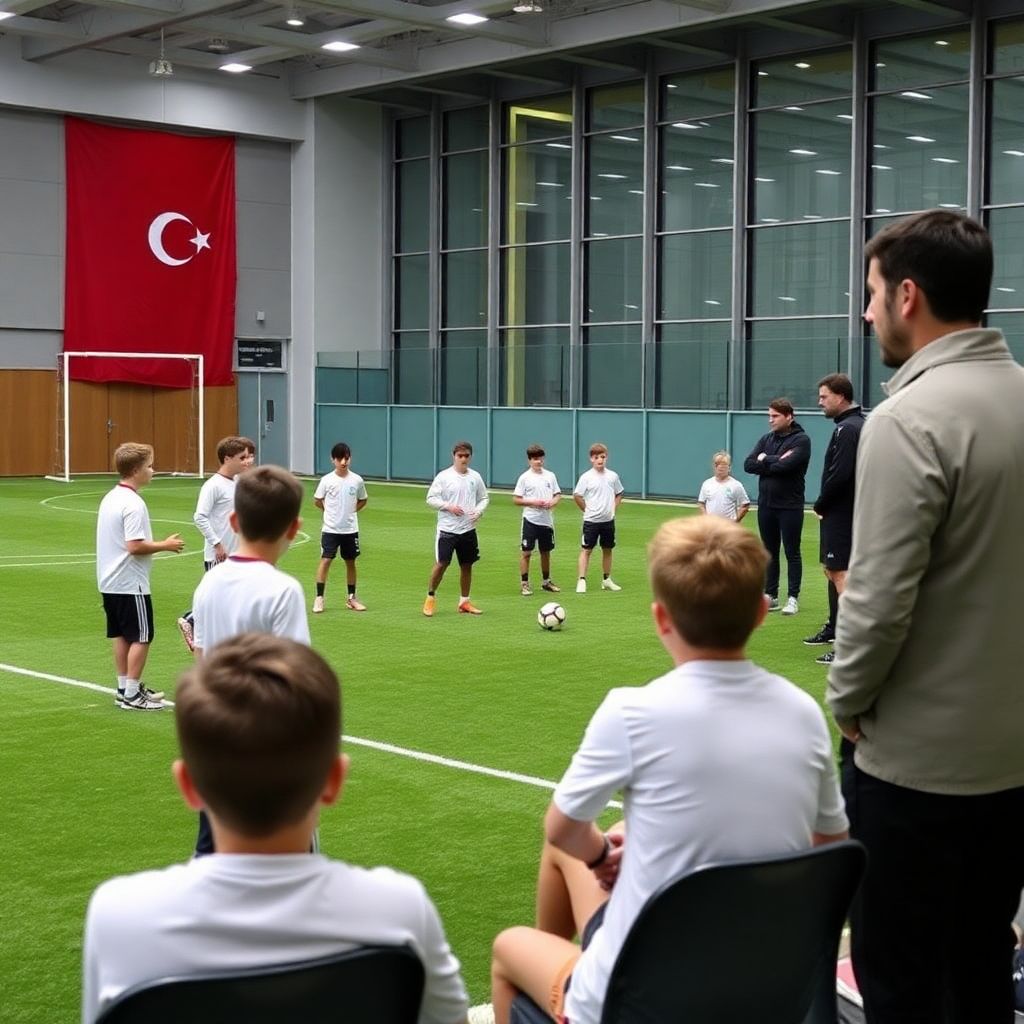
Turkish football academies can narrow the gap with top European models by reforming governance, investing steadily in coaching education, integrating schooling and welfare, and building structured pathways to pro and overseas moves. For families, the best option is usually a well‑run Super Lig club academy with clear KPIs, then selective exposure to European environments.
Executive summary and actionable conclusions
- turkish football academies vs european academies differ most in governance discipline, coach development, sports science depth and education-pathway integration, not only in money.
- For most players, the best football academies in turkey for youth players are stable club-linked programs with clear promotion ladders and transparent selection, not short-term showcase camps.
- Before worrying about turkey football academy training programs in europe, prioritise daily coaching quality, individual development plans and match minutes in Turkey.
- The cost to train at professional football academies in turkey is generally lower than in Western Europe, but hidden costs (equipment, travel, agents) can erase that advantage if not planned.
- Borrowed European ideas need Turkish adaptation: part-time schooling, parent education, and post-18 transition support must fit local education rules and club finances.
- Federation and big clubs should run pilot academies using European-style governance, data-driven KPIs, and shared medical and performance hubs, then scale what works.
Structural differences: funding, governance and ownership models
Core structural contrasts between Turkish and European academies shape stability, decision-making and long-term player development incentives.
| Aspect | Turkey | Top European leagues |
|---|---|---|
| Funding base | Heavily dependent on first-team budgets and short-term results. | Diversified: club, league, federation, solidarity, and commercial revenue. |
| Governance | Less standardised academy licensing and reporting. | Strict licensing, audits and graded academy categories. |
| Ownership focus | Presidential cycles, political and fan pressure. | Board-driven strategy, often with long-term investment plans. |
| Budget protection | Academy budgets often cut when first-team underperforms. | Ring-fenced youth investment and multi-year plans. |
| Accountability | Few transparent KPIs for academy directors. | Clear targets: debuts, sales, education outcomes. |
Key criteria to compare structural models
- Funding stability: multi-year commitment to academy budgets regardless of short-term league position.
- Governance and compliance: existence of clear academy licensing standards, audits and sanctions.
- Ownership horizon: whether club owners accept a 5-8 year payback on youth investment.
- Separation from first-team turmoil: protection of academy staff from frequent coaching changes.
- Transparency of KPIs: published targets for debuts, minutes, and transfers from the academy.
- Internal career paths: defined progression for academy staff (coach, head of phase, director).
- Partnership ecosystem: links with schools, municipalities and regional grassroots clubs.
- Conflict-of-interest controls: rules on agents, third-party academies and recruitment.
- Risk management: policies for safeguarding, injury, and dual-career planning.
Mini decision tree: choosing a structural direction
- If your club cannot guarantee stable funding for 5+ years, then prioritise low-cost structures (school partnerships, regional hubs) before big facilities.
- If political or presidential turnover is high, then ring-fence academy budgets via federation rules and long-term contracts for key staff.
- If academy KPIs are vague, then introduce a simple dashboard (debuts, minutes, transfer revenue, school completion) and tie leadership bonuses to it.
- If regional grassroots links are weak, then co-invest with municipalities in community pitches and coach education instead of duplicating infrastructure.
Talent ID and scouting: grassroots to elite pipelines
Talent identification in turkish football academies vs european academies differs mainly in how early players are tracked, how data is used and how open the pathways are from community level to professional level.
| Aspect | Turkey | Top European leagues |
|---|---|---|
| Grassroots coverage | Concentrated around big cities and major clubs. | National networks, formal club-grassroots partnerships. |
| Data use | Predominantly subjective assessments. | Combined video, data, and live scouting. |
| Entry points | Trials and personal references still dominate. | Structured school, regional and club competitions. |
| Late developers | Limited second-chance pathways. | Multiple re-entry channels and B-teams. |
Comparing practical talent pathway options
| Option | Best suited for | Strengths | Limitations | When to prioritise |
|---|---|---|---|---|
| Club-run academy in Turkey | Talented players living near professional clubs and stable families. | Direct path to first team, familiar culture, lower relocation stress and usually lower cost to train at professional football academies in turkey. | Variation in coaching quality; fewer international references before 18. | When daily quality is good and club has a real record of academy debuts. |
| Independent academy in Turkey | Players outside major cities or without immediate club access. | Flexible schedules, more trial exposure, links to multiple clubs. | Mixed standards; risk of over-promising; weaker welfare structures. | When no strong club academy is reachable within reasonable travel time. |
| Club academy in Western Europe | Elite-level talents with strong support, language skills and resilience. | High competitive level, strong development culture, clear scouting networks. | Visa, schooling, cultural adaptation, and selection pressure. | When proven nationally and scouted legitimately by a reputable club. |
| Residential academy in Europe | Players ready to board away from home and combine school-football. | Integrated schooling, structured weeks, strong peer environment. | High financial cost, emotionally demanding, risk if football path fails. | When family can support boarding and the academy has strong education outcomes. |
| Joint Turkey-Europe program | High-potential teens needing periodic exposure abroad. | Benefits of home stability plus benchmark matches and training abroad. | Coordination complexity, travel load, variable quality of partner programs. | When a Turkish club has trusted partner turkey football academy training programs in europe. |
Mini decision tree: building a better talent pipeline
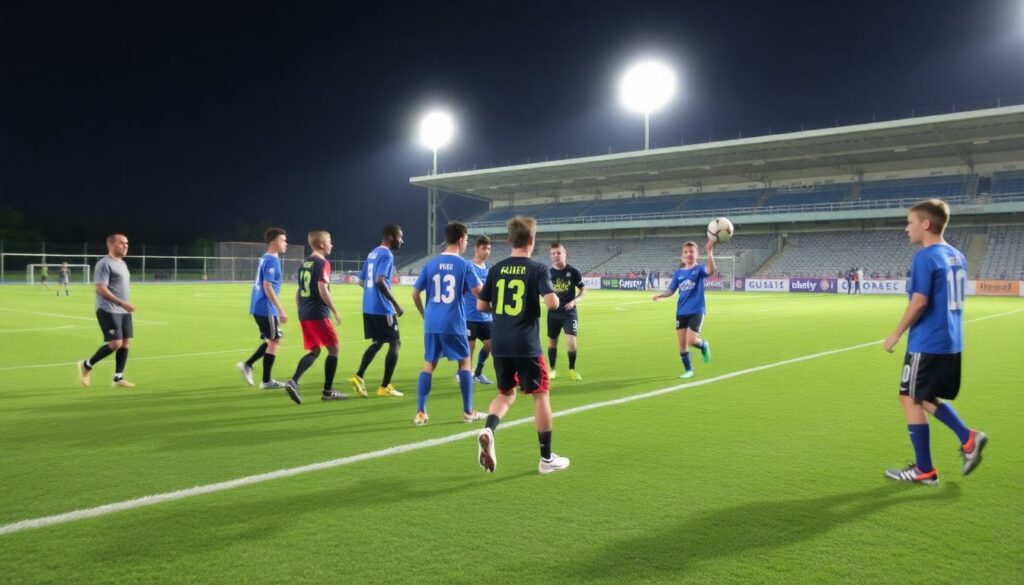
- If your region already has strong grassroots clubs, then formalise partnerships (shared coaching, scouting events) instead of competing with them.
- If your academy rarely signs players from smaller cities, then schedule regional ID camps and co-host tournaments with local associations.
- If data and video are rarely used, then start with simple tools: filmed games, basic physical benchmarks, and shared notes per player.
- If many players are released at 16-17 with no options, then set up B-teams, university links or cooperation with lower-league clubs.
Player development: coaching philosophies, curricula and KPI’s
Player development differences between Turkish and European academies come from how clearly game models, age-specific curricula and KPIs are defined and updated.
| Aspect | Turkey | Top European leagues |
|---|---|---|
| Game model | Often coach-dependent, less documented. | Club-wide model guiding all age groups. |
| Curriculum | Session-based, variable by coach. | Written age-phase curricula with targets. |
| Review cycle | Limited individual reviews. | Regular IDPs and multi-disciplinary reviews. |
| KPIs | Mainly results and anecdotal opinions. | Technical, tactical, physical and psycho-social KPIs. |
Scenario-based recommendations for development models
- If your club changes head coaches frequently, then anchor a written academy game model independent of first-team tactics, updated only every few years.
- If training looks different in every age group, then build a simple curriculum by phases (Foundation, Youth Development, Professional Development) with 3-5 key themes per phase.
- If coaches focus mainly on winning weekend games, then shift KPIs toward minutes played in preferred positions, technical repetitions, and decision-making actions per match.
- If parents and players do not know progress clearly, then introduce twice-yearly written evaluations and meetings aligned to objective KPIs.
- If coach education is inconsistent, then require all academy coaches to complete defined federation and club internal licenses before leading a team.
- If specialist positions (goalkeeper, winger, centre-back, six) are underdeveloped, then add weekly position-specific sessions across age groups.
Mini decision tree: aligning coaching with KPIs
- If your main goal is first-team debuts, then measure and reward coaches for debuts and minutes, not youth trophies.
- If your main goal is transfer revenue, then track technical excellence and versatility, and schedule games where scouts can see players.
- If your main goal is national-team representation, then align playing style and tactical education with national-team requirements.
- If you want all three, then balance KPIs across debuts, sales and international caps with clear weighting and communicated targets.
Facilities, sports science and medical ecosystem
Facilities and support staff are often the most visible difference between Turkish and European academies, but usage quality and integration matter more than pure size or luxury.
| Aspect | Turkey | Top European leagues |
|---|---|---|
| Training pitches | Good at big clubs; variable elsewhere. | Multiple pitches with different surfaces and sizes. |
| Sports science | Growing but uneven across clubs. | Integrated performance departments from U13 upwards. |
| Medical support | Basic coverage; limited long-term planning. | Full-time staff, prevention and return-to-play protocols. |
| Data and analysis | Some GPS/video use at top level only. | Routine GPS, wellness tracking, and video for most squads. |
Step-by-step checklist to assess and upgrade environment
- Audit current pitches, gym space, medical rooms and analysis facilities; classify each as adequate, upgrade needed, or missing.
- Map staff competencies: physios, S&C coaches, analysts; identify critical gaps per age phase.
- Define minimum service levels (screening, load monitoring, video review) for each squad based on age and competitive level.
- Prioritise low-cost, high-impact upgrades first: lighting, basic gym equipment, video capture, and treatment areas.
- Standardise injury-prevention and return-to-play protocols across squads, with clear communication to coaches and parents.
- Introduce simple data workflows: weekly wellness checks, GPS or running metrics, and match reports stored centrally.
- Plan for shared regional hubs where smaller clubs can access high-quality sports science and medical services collaboratively.
Mini decision tree: investing smartly in support systems
- If your budget is limited, then prioritise staffing (qualified physio, S&C coach, part-time analyst) over aesthetic facility upgrades.
- If injuries and overuse problems are frequent, then implement monitoring and prevention programs before adding more training hours.
- If match analysis is weak, then start with one shared analyst for multiple age groups and standardised post-match review templates.
- If players also train with school or local teams, then coordinate load management with external coaches to avoid burnout.
Education, welfare and transition pathways to pro football
Education and welfare models in the best football academies in turkey for youth players need to converge toward European standards where schooling, life skills and transition support are non-negotiable pillars alongside football.
| Aspect | Turkey | Top European leagues |
|---|---|---|
| School integration | Often separate, with schedule conflicts. | Formal partnerships and adapted timetables. |
| Welfare support | Relies heavily on families and individual staff. | Dedicated player care, psychologists, tutors. |
| Post-18 pathways | Unclear routes if no pro contract. | Links to universities, semi-pro, and dual-career programs. |
| Parent education | Mostly informal conversations. | Structured workshops and information packs. |
Frequent mistakes when evaluating pathways
- Judging an academy mainly by short-term results or famous graduates, not by how many players finish school or find alternative careers.
- Ignoring boarding conditions, psychological support and safeguarding when sending a child far from home or abroad.
- Assuming that a contract at 18 is guaranteed; in reality, only a minority receive professional deals in any system.
- Underestimating language and cultural barriers when considering turkey football academy training programs in europe.
- Focusing on the brand name of a club, not on who will actually coach, tutor and support the player daily.
- Neglecting clear written plans for education continuity in case of injuries or deselection.
- Accepting informal promises from agents or intermediaries instead of formal agreements and transparent processes.
- Overlooking how to join a football academy in turkey legally and ethically, including understanding federation rules on registrations and moves.
- Failing to budget realistically for the full cost to train at professional football academies in turkey, including travel, equipment, and potential private tutoring.
- Not checking the track record of an academy in helping released players transition to universities, lower leagues or other professions.
Mini decision tree: selecting safer pathways
- If an academy cannot clearly explain schooling arrangements, then treat it as a red flag regardless of football promises.
- If your child is under 16, then prioritise strong local schooling and family proximity over early international moves.
- If the player is 17-19 without a contract, then explore university-linked teams, semi-pro options and dual-career models before risking unregulated moves abroad.
- If welfare staff are absent or over-stretched, then parents must be ready to fill some gaps or reconsider that academy.
Roadmap for Turkey: prioritized reforms and pilot scenarios
To close the gap between turkish football academies vs european academies, Turkey should prioritise governance reform, coach development, and integrated education-welfare models, then selectively expand international links.
Mini decision tree: strategic choices for Turkish stakeholders
- If you are a federation or league, then start with stricter academy licensing, minimum staffing standards, and co-funded regional performance hubs.
- If you are a top-tier club, then pilot a fully integrated academy (governance, curriculum, sports science, education) and publish transparent KPIs annually.
- If you are a smaller club, then specialise in one phase (for example, 15-19) and partner with schools and bigger clubs for earlier ages and transitions.
- If you are a parent, then first choose the right environment in Turkey and only then consider carefully selected, time-limited experiences abroad.
For long-term national impact, the best option for Turkey is a mixed model: top Super Lig clubs and the federation operate a small group of European-standard pilot academies, while regional clubs focus on accessible, education-friendly pathways. European academies remain best for benchmark exposure and elite outliers, not as the default choice.
Implementation questions and common operational concerns
How to join a football academy in Turkey in a structured, safe way?
Use official club and federation channels: attend open trial days listed on club websites, contact youth departments directly, and avoid intermediaries demanding upfront fees. Keep all communication documented and ensure player registration follows federation rules.
What should families check first when comparing Turkish and European academies?
Confirm daily coaching quality, education arrangements, and welfare support before prestige. Ask for written curricula, school partnerships, and data on how many players progress to senior or alternative pathways, not only famous success stories.
When does it make sense to move a youth player from Turkey to a European academy?
Only when the player is already excelling nationally, scouted directly by a reputable club, and the family understands the academic, cultural and legal implications. For most players, better to build a strong base in Turkey and use short-term European training experiences.
How can smaller Turkish clubs improve without huge budgets?
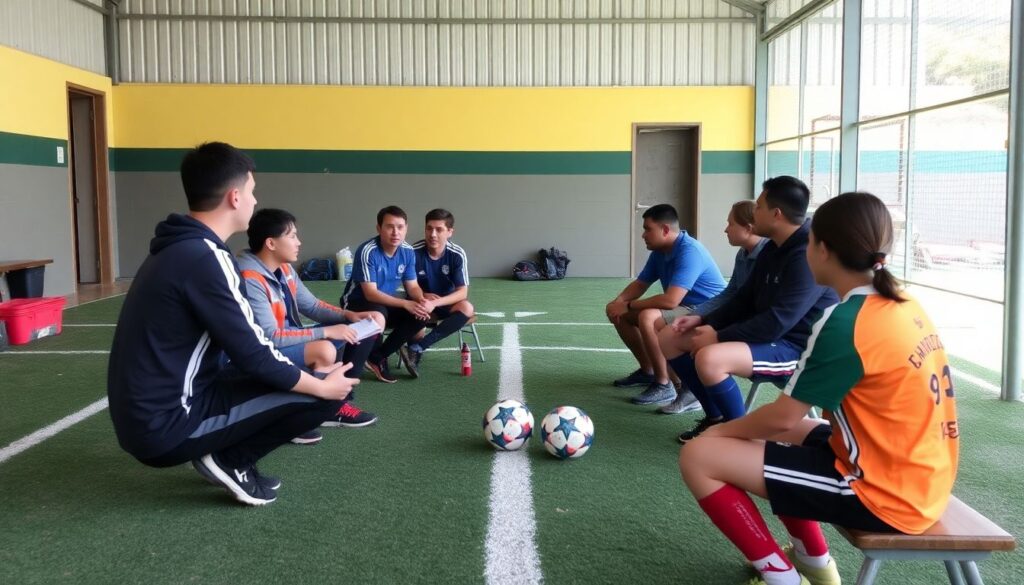
Focus on coach education, partnerships with local schools and municipalities, shared regional sports science services, and clear playing-time policies. Low-cost structure and good communication often matter more than expensive facilities.
What are warning signs of an unreliable private academy or intermediary?
Promises of guaranteed contracts, pressure for quick payments, no clear education plan, reluctance to share written policies, and lack of transparent links with recognised clubs are major red flags. Always verify registration status and speak to past participants.
How should clubs in Turkey measure whether academy reforms are working?
Track simple KPIs: number of academy debuts, minutes played, transfer revenue from academy graduates, school completion rates, injury trends, and player/parent satisfaction surveys. Review annually and adjust resources based on evidence.
What role can European partnerships play for Turkish academies?
Use them for knowledge transfer, coach exchanges and periodic tournaments rather than as marketing slogans. Well-designed partnerships can benchmark standards and open selective pathways abroad without draining local talent too early.