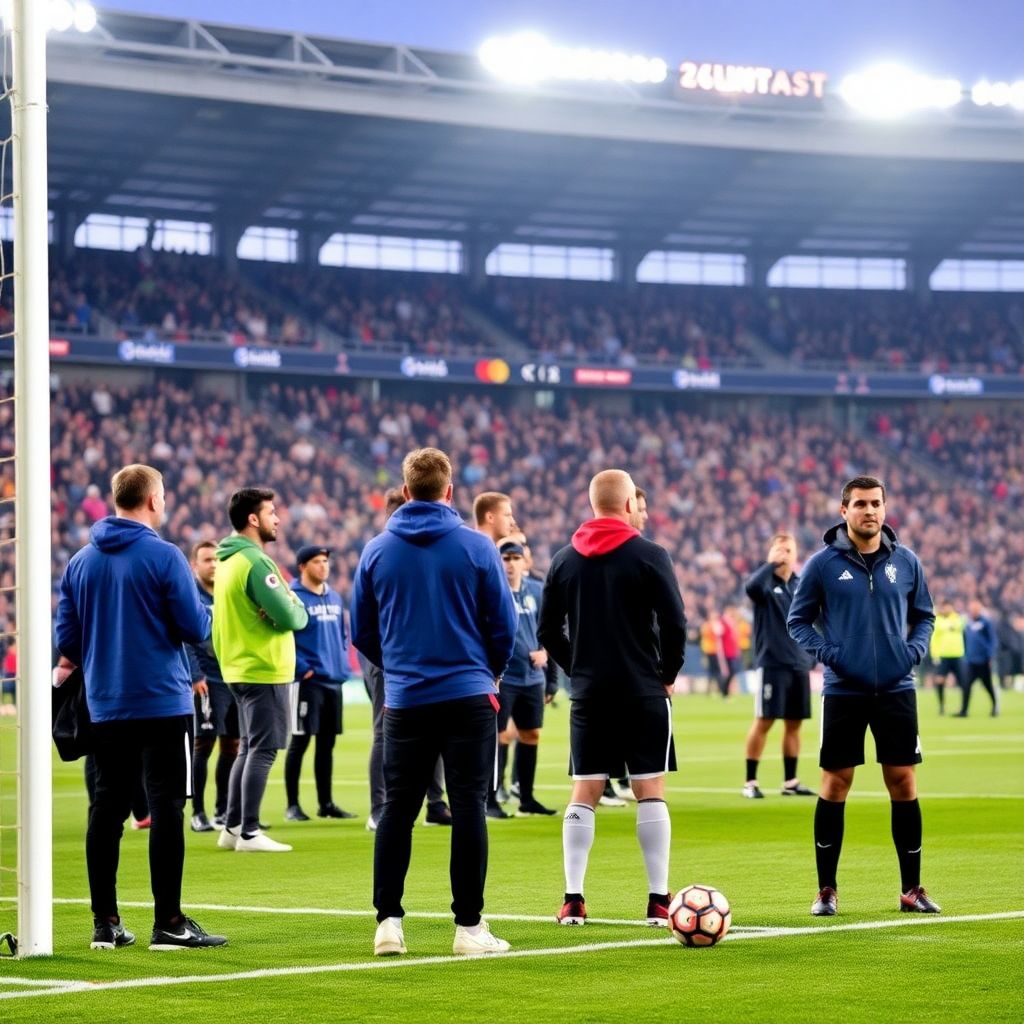
TFF 1. Lig is a hidden goldmine because it combines high playing intensity, relatively low transfer fees and real chances for young players to become starters fast. For clubs, agents and analysts, it offers undervalued talent, easier negotiations than Süper Lig and enough visibility to trigger bigger moves in Turkey and abroad.
How TFF 1. Lig Creates Breakout Opportunities
- Clubs rely heavily on young and hungry players, opening real minutes for TFF 1. Lig rising stars.
- Scouting coverage is improving but still incomplete, so prices stay below similar leagues.
- Attacking, high-transition football helps the best young players in TFF 1. Lig show end-product quickly.
- Short contracts and financial pressure create constant supply of realistic TFF 1. Lig transfer targets 2025.
- Easy access to watch TFF 1. Lig live streaming lets clubs track players consistently across a whole season.
Market dynamics: scouting, transfers and visibility
TFF 1. Lig sits between academy football and full top-flight pressure. Salaries and fees are lower than in the Süper Lig, but the level is high enough that performances translate well to stronger leagues. This gap is exactly why the league produces so many hidden bargains.
Scouting coverage is uneven. Big Turkish clubs and a few European sides regularly create a TFF 1. Lig talent scouting report, but many mid-level clubs still prioritise top leagues. That leaves room for proactive recruiters who are willing to travel, build local contacts and act faster than bigger competitors.
Visibility has improved thanks to TV and digital platforms. For any club or agency planning to watch TFF 1. Lig live streaming, it is now realistic to track the same player week by week. Consistent video access reduces risk and lets decision-makers confirm if a “hot streak” is actually a stable trend.
As this attention grows, TFF 1. Lig rising stars are moving earlier. Instead of waiting until age 24-25, clubs now try to secure players when they first become regular starters. Quick decisions and clear data make the difference between signing a bargain and paying full market price a year later.
- Create a structured TFF 1. Lig talent scouting report template (minutes, role, decision-making, mentality).
- Prioritise in-person visits to 2-3 clubs where reports repeatedly highlight promising players.
- Build relationships with local analysts and agents to hear about likely departures early.
Tactical environment that accelerates player development
The tactical profile of TFF 1. Lig is ideal for testing young players. Tempo is high, defensive structures are sometimes unstable, and many teams play direct or transition-based football. That exposes prospects to constant duels, pressure and decision-making, which quickly reveals who can handle “adult” football.
- High-tempo transitions: Games often swing end to end. Wide players, eights and strikers get many touches in space, speeding up their development in finishing, crossing and final passes.
- Physical duels: Defenders and defensive midfielders face frequent aerial and ground duels against experienced forwards, helping them adapt to the physical side of professional football early.
- Compact but imperfect blocks: Many teams defend in a mid-block that is organised but not perfect. Creative players learn to exploit half-spaces, while midfielders must read pressing triggers.
- Responsibility for set pieces: Young full-backs and wingers are often trusted with corners and free-kicks, accelerating their tactical maturity and leadership responsibilities.
- Frequent coaching changes: Because coaches rotate often, adaptable players learn multiple systems (4-2-3-1, 4-3-3, 3-5-2) quickly, a valuable skill for future transfers.
- Focus scouting on roles where the league’s high tempo reveals qualities clearly (full-backs, wingers, eights, mobile strikers).
- Prioritise players who stay effective under pressure from frequent transitions and coaching changes.
- Log tactical roles per match to see whether a prospect performs in more than one system.
Club structures and pathways for promoting youth
Many 1. Lig clubs depend on youth because of budget limits. Instead of filling the bench with high-cost veterans, they pull from their academies or loan players from Süper Lig clubs. This creates structured pathways where a strong six-month run can turn a loanee or academy product into a key asset.
For the best young players in TFF 1. Lig, there are three common development routes. First, academy graduates who sign pro terms and earn minutes quickly. Second, loans from big Istanbul and Anatolian clubs, who use 1. Lig for real match exposure. Third, regional talents signed from lower divisions and polished in a more professional environment.
Clubs that manage this well create a reputation. Once agents see that a specific team consistently turns prospects into starters and then sells them upwards, they actively push their clients there. These “development clubs” become hotspots for finding TFF 1. Lig transfer targets 2025 and beyond.
- Map which 1. Lig clubs regularly promote academy players into starting roles over multiple seasons.
- Track loan flows from Süper Lig clubs to identify trusted development partnerships.
- When choosing a player, prefer environments with a clear history of giving minutes to similar profiles.
Financial levers making 1. Lig attractive to agents
Financial tension in TFF 1. Lig can be an advantage for agents and buying clubs. Many teams must sell to stabilise budgets, so they are more open to structured deals, add-ons and sell-on clauses. Wages are high enough to attract players but usually lower than in top-five European leagues, leaving space for salary growth after a move.
At the same time, limits exist. Some clubs delay payments, and infrastructure varies. Agents must balance short-term exposure and contract flexibility against the risk profile of each team. The key is to structure deals that protect the player while keeping the selling club motivated.
Upsides for agents and buying clubs
- Entry-level salaries are often accessible, making it easier to sign TFF 1. Lig rising stars on sustainable contracts.
- Clubs are open to sell-on percentages, giving agents and players a path to future income from later moves.
- Shorter contract lengths make exits easier if the player outgrows the league quickly.
Limitations and risk areas
- Payment discipline and financial stability differ strongly between clubs; due diligence is essential.
- Relegation risk can suddenly reduce exposure and bargaining power for both club and player.
- Foreign player limits and squad registration rules can change, affecting playing time plans.
- Before recommending a move, check each club’s recent payment history and league position trend.
- Push for clear sell-on clauses and performance bonuses instead of chasing maximum fixed salary.
- Prepare an exit strategy (step-up club, likely league) already at signing stage.
Case studies: recent stars who rose through the league
Recent seasons show a recurring pattern: 1. Lig players become regular starters, then quickly step up to the Süper Lig or move abroad. The measurable shift is role-based: bench options become undroppable starters against promotion rivals, then maintain that starter status after transferring.
Typical storylines include mobile strikers who prove they can lead the line every week, ball-playing centre-backs who handle promotion pressure, and creative midfielders who consistently decide games in the final third. Their key metric is not goals alone, but whether they stay first-choice when coaches change and stakes rise.
Another pattern comes from undervalued wide players. After one season of full-time starts, they move to bigger clubs and keep starting immediately. The jump from “rotation option” to “automatic starter” is the most reliable indicator that a player has outgrown TFF 1. Lig.
- When shortlisting the best young players in TFF 1. Lig, focus on prospects who became clear starters within a single season.
- Note whether role and minutes survived coaching changes and pressure matches (promotion race, derbies).
- Treat one-off hot streaks without stable starting status as red flags, not proof of readiness.
Risks and limits: why not every prospect succeeds
Not every success story repeats. A common failure case: a young winger dominates open games in 1. Lig, earns a big move, then struggles against tighter defences and higher tactical discipline. They go from starting every week to fighting for bench minutes, and confidence drops quickly.
In pseudocode, the process often looks like this:
raw_talent + big_space + low_structure => standout_performances;

standout_performances + hype => premature_transfer;

premature_transfer + less_space + higher_structure => stalled_development;
The goal of smarter scouting is to break this pattern: sign players whose strengths will still work with less space, more structure and higher speed of play. That is how TFF 1. Lig becomes a true stepping stone instead of a trap.
- Test whether a player’s main strength (pace, physicality, creativity) still works in tight, compact games.
- Devalue performances against chaotic, low-block opposition compared with matches versus promotion contenders.
- Assess mentality: how does the player respond to being kicked, pressed and targeted by opponents?
Self-check before investing in TFF 1. Lig prospects
- Have you watched the player in at least three different match contexts (home, away, strong rival)?
- Do you understand the club’s financial and squad situation for the next season?
- Is the player already a stable starter, not just an occasional standout?
- Does your profile projection still work in a more structured, higher-level league?
- Have you compared at least two independent TFF 1. Lig talent scouting report sources?
Practical answers on scouting and signing from 1. Lig
How should a club start scouting TFF 1. Lig efficiently?

Begin with video: watch TFF 1. Lig live streaming or replays to filter by position and role. Then schedule in-person visits for shortlisted players only. Standardise your notes so every scout answers the same questions on decision-making, intensity and mentality.
Which positions are best value right now in TFF 1. Lig?
Dynamic full-backs, ball-carrying central midfielders and flexible wingers usually offer the best mix of affordability and upside. These roles benefit most from the league’s tempo and open spaces, making them strong TFF 1. Lig transfer targets 2025 and beyond.
How do I identify real TFF 1. Lig rising stars versus short-term hype?
Look for players who stay in the starting XI through different coaches, systems and pressure games. Consistent selection and impact in promotion or relegation matches are more reliable than one statistical hot streak or highlight compilations.
What should a TFF 1. Lig talent scouting report always include?
Include tactical role, behaviour under pressure, defensive work rate, reaction to mistakes and impact without the ball. Add notes on how the player might handle a more structured league and what support (language, adaptation) they would need after a move.
How can agents use the league as a step in a career plan?
Agents can place a player in a club known for developing and selling talent upwards, with a realistic prospect of starting quickly. Then they plan an exit after one or two strong seasons, using performance data and video to negotiate a move to a stronger league.
Are the best young players in TFF 1. Lig ready for top-five European leagues?

Some are, but most need an intermediate step, like a top club in Turkey or a mid-level European league. Focus on whether their strengths will survive reduced space and higher tactical demands rather than chasing a direct jump to the biggest competitions.
How important is language and cultural fit for foreign TFF 1. Lig signings?
It matters a lot. Players who adapt quickly off the pitch usually stabilise on the pitch faster. Clubs and agents should check for support structures, such as teammates who speak the same language or staff experienced in integrating foreigners.