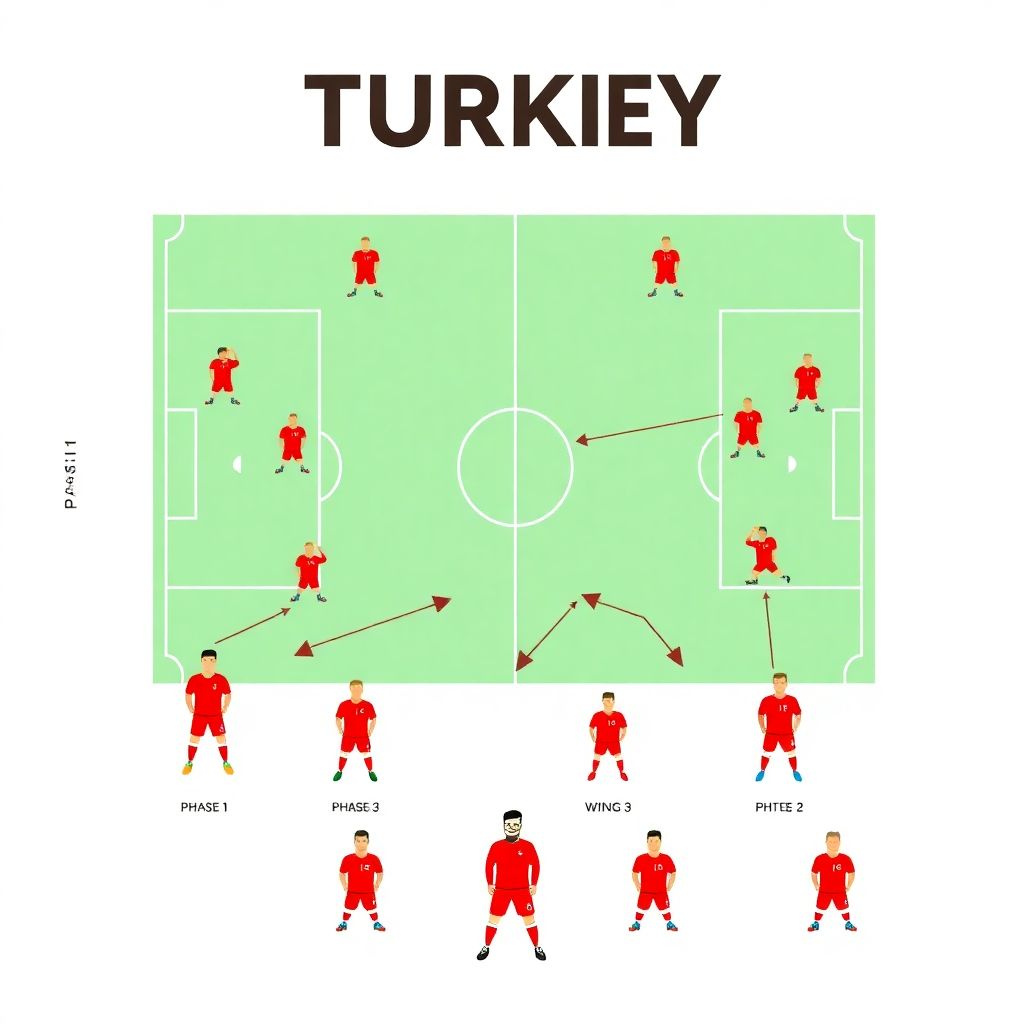
Context: Why Turkey’s Last Decade Matters
From bold ideas to flexible systems
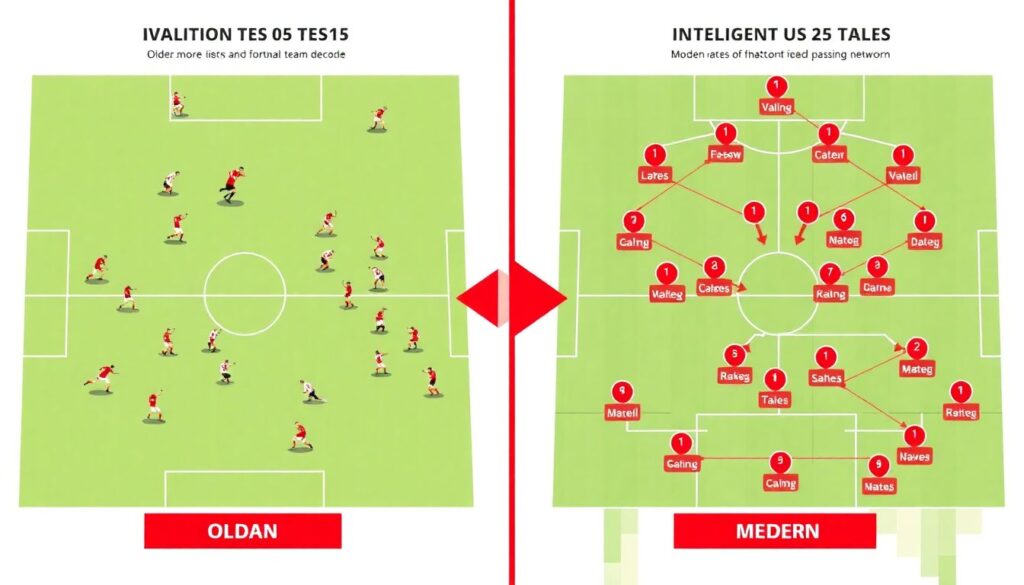
Over the past decade the Turkish national team has gone from emotional, instinctive football to a more controlled and layered style. If you run a team yourself, Turkey is a handy case study: same passion, but far smarter use of space and roles. Any solid Turkey national football team tactics analysis now has to mention three pillars: pressing structure, build‑up patterns and role clarity for creative players. Understanding how those pillars changed helps you design sessions that turn chaos into repeatable, winning habits.
Necessary Tools for Practical Study
What you actually need, not a pro lab
You don’t need a federation budget to copy the Turkish national team tactical evolution last 10 years. Start with full‑match videos from different cycles (for example Euro qualifiers 2016, Euro 2020, recent Nations League), a simple notepad or spreadsheet, and free drawing tools to sketch shapes. Add basic event data from public sites: shots, passes, pressing actions. With just these tools you can run your own Turkey national football team tactics analysis and turn it into exercises for your amateur or academy squad.
Step‑by‑Step Tactical Evolution
Phase 1: Possession and high pressing
Early in the decade, Turkey leaned into a brave 4‑2‑3‑1 that often morphed into 4‑3‑3 with the ball. The idea was simple: keep the ball, press high, let creative tens and wingers decide games. In practice it meant full‑backs climbing very high, double pivot protecting transitions, and a lot of risk on the counter. If you want to borrow this, train your back four to defend big spaces and use rondos that immediately flip into 30–40 metre recovery sprints after a lost ball.
Phase 2: Transition football and the young core
Around the late 2010s, as a new generation emerged in top European leagues, Turkey became more comfortable without the ball. The team often defended in a 4‑1‑4‑1 or 4‑4‑2 mid‑block, then exploded forward after regains. For your team, copy the clear trigger rules: press hard on poor touches or backward passes, otherwise stay compact. This is where the best tactical formations Turkey national soccer team used were not about labels, but distances: tight lines, wingers ready to attack the channels the moment the ball was won.
Phase 3: Flexible structures, same principles
Recently the focus shifted toward flexibility: back three in build‑up, back four in defence, occasionally even a box midfield. The constant is verticality combined with controlled risk. Centre‑backs step into midfield, full‑backs invert or overlap depending on the opponent, and the nine links play rather than just finishing. To adapt this, pick two base shapes and coach your players when to switch: for instance, build as a 3‑2‑5, defend as 4‑4‑2. Use pattern‑play drills that start from your keeper and end with a cut‑back or third‑man run.
Applying Lessons to Your Own Coaching
Turning analysis into training sessions
Let’s make it practical. Use Turkish national football team analysis Euro and World Cup qualifiers as a library of ready‑made ideas. When you see Turkey break a mid‑block with a full‑back underlapping inside, freeze the video, sketch the positions, and recreate that picture in a small‑sided game. Build constraints: for example, the goal only counts if it comes from a switch of play plus a cut‑back. This way, you’re not blindly copying; you’re reverse‑engineering why the move was hard to stop and baking that logic into your own drills.
Step‑by‑step plan for coaches
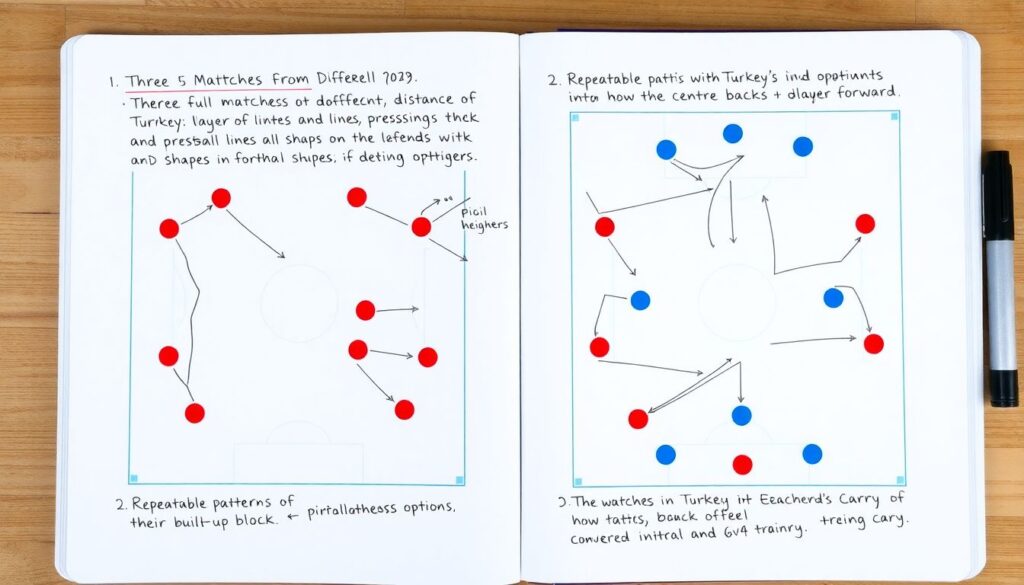
1. Pick three full matches from different years and watch only Turkey’s off‑ball behaviour: line height, distances, pressing cues. Write down repeatable patterns.
2. Rewatch focusing on build‑up: goalkeeper options, pivot movements, how often centre‑backs carry forward. Turn each pattern into a 6v4 or 7v5 exercise.
3. Define your own Turkey national team coaching philosophy and tactics: are you closer to the aggressive early‑decade model or the patient mid‑block era? Align every drill, meeting and selection decision with that chosen identity so players feel a clear thread.
Troubleshooting Common Problems
Fixing gaps when copying elite ideas
Many coaches try to mimic Turkey and hit the same walls: defenders can’t hold a high line, midfielders get lost between roles, the press dies after ten minutes. When that happens, don’t blame the system; scale it. Lower your block by ten metres, shorten the pitch in training, and simplify roles into three verbs: press, cover, screen. If your “playmaker” keeps disappearing, steal a page from Turkey’s recent tweaks: drop him closer to the pivot in build‑up, then let him arrive late in the box instead of starting high and static.