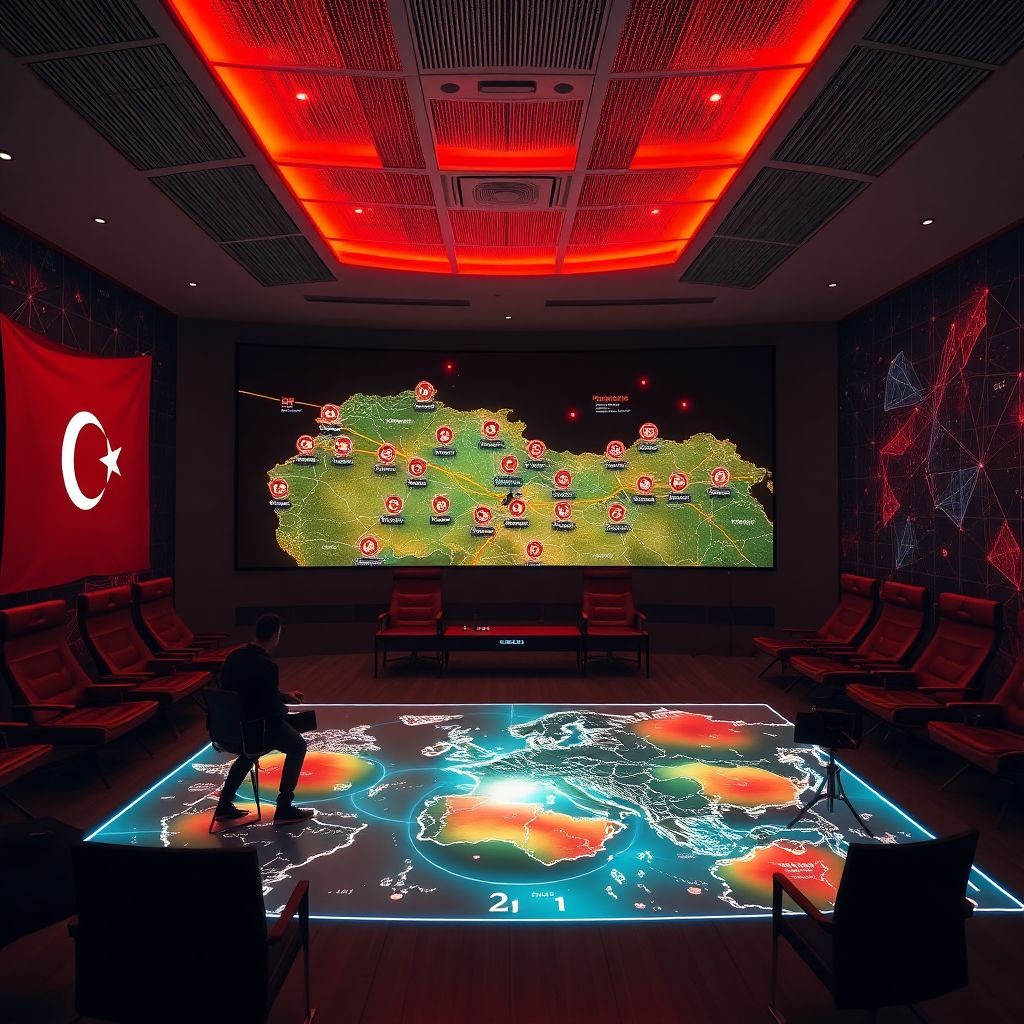
To future-proof Turkish football, combine clear national playing principles, better coach education, smarter scouting, and safer long‑term investment. Borrow Spain’s technical academy model, Germany’s coaching ladder, France’s structured scouting, Dutch possession formats, England’s financial discipline, and Portugal/Belgium’s efficiency, then pilot each idea in limited, low‑risk projects before scaling across Türkiye.
Priority lessons for Turkish football
- Define a Turkish playing identity early in youth and align all football academies in Turkey with it.
- Build a scalable, affordable coach-education ladder connected to existing Turkish football coaching courses.
- Professionalise nationwide scouting with clear data standards and independent audits.
- Use Turkish football analytics and performance tools to guide training, selection, and load management.
- Link financing rules and competition design directly to minutes for domestic youth and B-team pathways.
- Protect budgets with phased pilots, KPIs, and transparent reporting instead of risky big-bang reforms.
- Leverage best football training camps in Turkey to attract know-how, not only tourism revenue.
Spain’s academy blueprint: shaping technical identity from U8 to senior level
This model fits Turkish clubs and regional associations that want a unified, ball-focused style from grassroots to Super Lig, and are ready to invest steadily in method rather than short-term transfers. It is not ideal if a club’s survival depends on immediate results or has unstable leadership changing coaches and styles every season.
Spanish academies built an identity around technical mastery, positional play, and intelligent pressing. For Türkiye, the practical lesson is not to copy Spain’s exact style, but to copy the discipline of one national framework that guides every decision from U8 drills to national team selection.
Apply it in three layers:
- National game model for Türkiye – Define clear principles (e.g., build-up preference, pressing triggers, individual roles in possession and out of possession). These should be short, easy to teach, and consistent with Turkish player strengths.
- Aligned academy curriculum – Ask every licensed academy to map its age-group plans to the national model. Use inspections and collaboration with existing football academies in Turkey to ensure minimum hours of ball mastery, rondos, and small-sided positional games each week.
- Coach and player evaluation – Replace vague talent judgments with checklists linked to the model: receiving skills under pressure, scanning, decision speed, pressing discipline. Connect this to club decisions on contracts and promotions.
When not to push this model hard: during relegation battles, or at clubs with serious financial instability. In those cases, pilot the methodology with just two age groups and one dedicated coordinator instead of forcing a full-club transformation.
Germany’s coach development: creating a scalable education and licensing ladder
Germany’s turnaround was built on a dense network of qualified coaches and a clear licensing ladder. For Türkiye, the priority is not expensive infrastructure, but an accessible pathway and consistent standards that connect grassroots volunteers with elite academy staff.
To adapt this approach, you will need:
- Clear pathway structure
- A staged ladder linked to Turkish football coaching courses: grassroots / youth C, youth B, A, Pro.
- Defined competencies for each level (session design, analysis, leadership, safeguarding).
- Regional education hubs
- Partner clubs and regional associations to run weekend modules and blended-learning formats.
- Use university facilities and best football training camps in Turkey during off-season for intensive blocks.
- Digital learning platform
- Centralised video library of model sessions, Turkish subtitled masterclasses, and practice tasks.
- Online assessments linked to licenses to reduce travel costs for rural coaches.
- Mentoring and practical assessment
- Every new license-holder is paired with a mentor coach for one season.
- Assessment focuses on coaching behaviour on the pitch, not just exam answers.
- Incentives for clubs
- Financial or registration advantages for clubs that meet coach-qualification quotas by age group.
- Public recognition programmes highlighting clubs that invest most in coaching education.
Across all levels, integrate Turkish football analytics and performance tools in the curriculum: basic data literacy, simple post-match reports, and safe workload monitoring for youth players.
France’s scouting engine: integrating multicultural talent and transition pathways
France’s success rests on broad, organised talent identification and clear pathways into pro football. Türkiye has similar demographic diversity and strong regional football cultures; the key is to structure them and avoid blind spots.
Before copying the French approach, acknowledge these risks and limits:
- Over-centralisation may ignore local realities; start with pilots in 1-2 regions before a national rollout.
- Untrained scouts can create bias and ethical issues; basic education and a clear code of conduct are essential.
- Data misuse (rating children too early) can create pressure; limit formal ranking to older age groups.
- Partnerships with professional football scouting services Turkey-based should be transparent and audited.
Then follow this step-by-step approach to a safer French-style scouting engine.
- Map and prioritise talent regions – Identify regions with strong amateur leagues, school competitions, and migrant communities. Start structured scouting in 2-3 priority zones rather than the whole country.
- Use local FAs and school sports bodies to list competitions and teams.
- Agree simple coverage targets (e.g., each priority league watched several times per round).
- Standardise scout education and ethics – Create a basic scouting workshop and certification.
- Teach observation skills, role-specific criteria, and how to document reports safely.
- Add clear rules on contact with families, conflict-of-interest, and player welfare.
- Design unified report templates – Keep reports short and objective.
- Core sections: physical profile, technical strengths, tactical understanding, mentality.
- Use simple rating scales and mandatory written comments, not just numbers.
- Build a shared talent database – A secure, central system to store reports.
- Limit detailed profiles to older age groups to reduce pressure on young children.
- Allow both club scouts and independent professional football scouting services Turkey experts to upload, with clear data-protection rules.
- Create layered pathways, not one door – Offer multiple routes into professional environments.
- Regional centres of excellence partnering with big clubs.
- Links between strong amateur clubs, football academies in Turkey, and pro club B-teams.
- Opportunities via school and university programmes.
- Monitor outcomes and fairness – Regularly review who gets scouted and who signs.
- Check representation by region, background, and club size.
- Adjust coverage where gaps appear instead of pushing more trials at the same clubs.
Support scouts with simple Turkish football analytics and performance tools (e.g., basic event tagging, GPS summaries for older youth) to complement live observation, not replace it.
Netherlands’ playing philosophy: embedding possession principles through youth formats
The Dutch lesson is how competition formats and pitch sizes can teach your game model automatically. For Türkiye, use youth rules and field setups to drive the style you want, instead of relying only on coach speeches.
Use this checklist to evaluate whether possession principles are truly embedded:
- U8-U10 competitions prioritise small-sided games (e.g., 3v3, 4v4, 5v5) on small pitches with many ball touches per player.
- Rules and coaching guidelines reward building from the back rather than constant long balls.
- Every age group has specific learning goals for playing between lines, switching play, and support angles.
- Training plans at academies and best football training camps in Turkey include positional games (rondos, overloads) at least weekly.
- Goal-kick and throw-in rules in youth games encourage playing short and keeping the ball in play.
- Coaches receive simple reference cards linking Turkish football coaching courses content with age-appropriate positional games.
- Clubs track, at least qualitatively, how often teams build through the thirds in matches versus random clearances.
- Parents are briefed to support development goals (decision-making, bravery on the ball) instead of only demanding wins.
- Referees in youth leagues are instructed to protect creative players and discourage dangerous fouls that kill flowing possession.
- There is a visible playing-style continuity between academy teams and the first team in at least a few leading clubs.
England’s financing and competition model: balancing commercial growth with player development
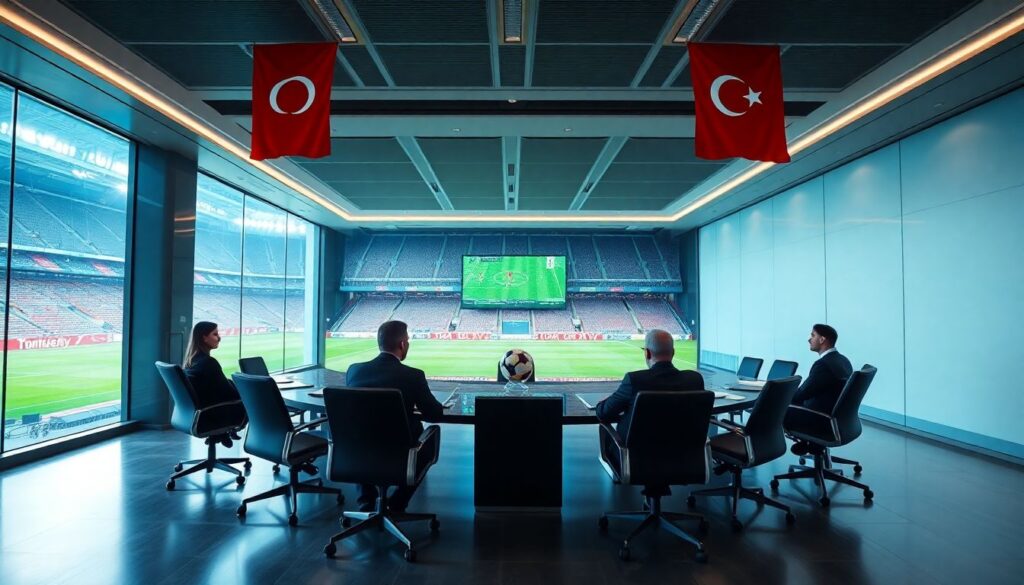
England shows how strong commercial growth can fund infrastructure, analysis, and coaching-but also how money can distort priorities. Turkish football can borrow the best tools while avoiding specific common mistakes.
Common pitfalls to avoid when adapting this model:
- Chasing broadcast and sponsorship money without linking club licensing to minimum youth-development standards.
- Copying foreign league formats and branding without checking Turkey’s travel costs, stadium safety, and fan culture.
- Over-spending TV income on short-term transfers instead of facilities, long-term contracts for coaches, and academy staff.
- Ignoring financial controls: without transparent budgets and basic cost caps, even big clubs can become unstable quickly.
- Launching new youth leagues or cup formats without clear KPIs (minutes for U21 players, academy-to-first-team transitions).
- Spending heavily on foreign consultants while underfunding local expertise, Turkish football analytics and performance tools, and data staff.
- Building elite complexes that are unused for most of the year instead of multi-purpose centres shared with local communities.
- Underestimating match congestion: adding competitions for commercial reasons can overload players and damage development.
- Neglecting safeguarding, education, and dual-career support in the race for higher-intensity schedules.
- Failing to coordinate reforms between federation, leagues, clubs, and government, leading to overlapping, conflicting regulations.
Portugal & Belgium playbook: extracting maximum talent from limited resources
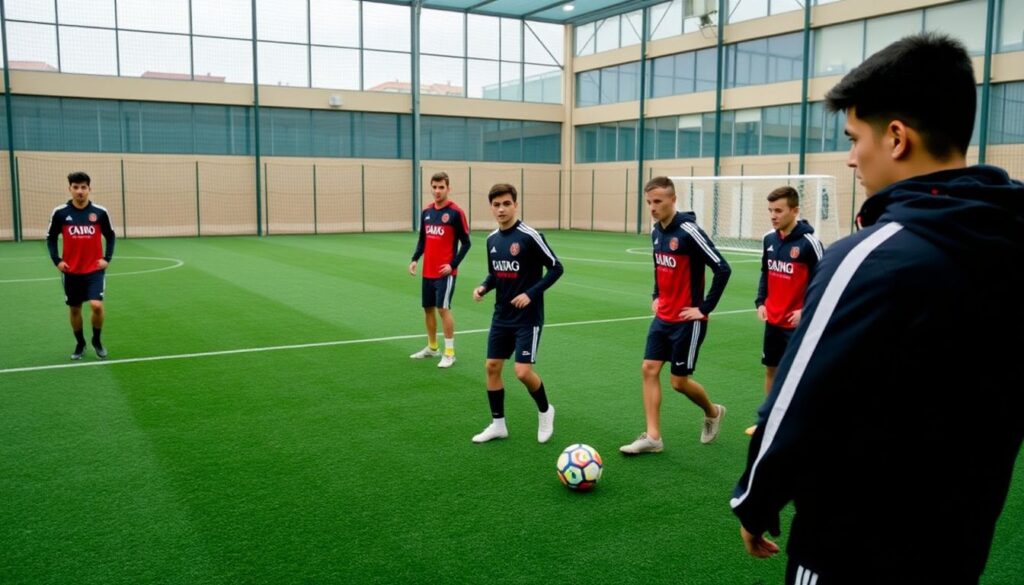
Portugal and Belgium show how smaller systems can produce elite players with smart prioritisation. For Türkiye, the key is not to act like a small country, but to copy their focus and efficiency in specific areas.
Consider these alternative approaches and when they make sense:
- Regional excellence hubs instead of many average academies – Concentrate investment into a limited number of high-standard centres per region.
- Use this when budgets are tight and existing infrastructure is weak.
- Link hubs to surrounding grassroots clubs with clear loan and coaching-support agreements.
- Club partnerships with clear role-sharing – Pair bigger Super Lig clubs with smaller teams.
- Ideal when smaller clubs have strong local scouting but weak facilities.
- Big clubs provide coaching know-how and sports science; small clubs provide minutes for young loanees.
- Data-light, coach-heavy development – When budgets cannot cover full analytics teams, prioritise coach education and simple, low-cost tools.
- Use basic video analysis and free or low-cost Turkish football analytics and performance tools instead of complex custom platforms.
- Train staff to ask better questions first, then add technology gradually when capacity grows.
- Targeted international exposure, not constant foreign tours – Select a few high-quality experiences over many trips.
- Partner with well-run foreign academies for learning exchanges, or host them at best football training camps in Turkey.
- Use these events to train local coaches and referees too, so knowledge stays in the country.
Practical concerns and quick answers for implementation
How should small Turkish clubs start if budgets are very limited?
Focus on coach education and simple training principles first. Use available Turkish football coaching courses, share facilities with schools, and adopt low-cost formats like small-sided games and basic video analysis before investing in larger infrastructure.
What is a safe first step toward a national playing identity?
Agree on three to five core principles (for example, pressing intensity or build-up preference) and ask a small group of pilot clubs and football academies in Turkey to align one age group each. Review results after a season before expanding.
How can we use data without overwhelming coaches and players?
Start with one or two simple metrics connected to your game model, such as final-third entries or successful presses. Use beginner-friendly Turkish football analytics and performance tools and discuss data in short, visual debriefs rather than long reports.
When should we involve professional scouting services?
Bring in professional football scouting services Turkey-based when your internal network cannot cover key regions or older age groups. Ensure contracts define territories, reporting standards, and data ownership, and keep final decisions inside the club or federation.
How do we avoid pressuring young players with scouting and data?
Limit formal ratings to older age groups, avoid publishing rankings, and focus feedback on skills and behaviours they can control. Train scouts and coaches to communicate calmly with families and to emphasise long-term development, not instant selection.
What role can training camps in Türkiye play in this plan?
Use best football training camps in Turkey as laboratories for new methods: mixed-club camps for coach education, trialing new formats, or testing recovery protocols. Collect feedback and basic data, then decide which ideas deserve a full-season pilot.
How long before we see results from these reforms?
Expect visible changes in training culture and match style within a few seasons, but major pipeline improvements will take longer. Set short-term KPIs (coach licenses, minutes for young players) and be transparent that sustainable success requires patience.