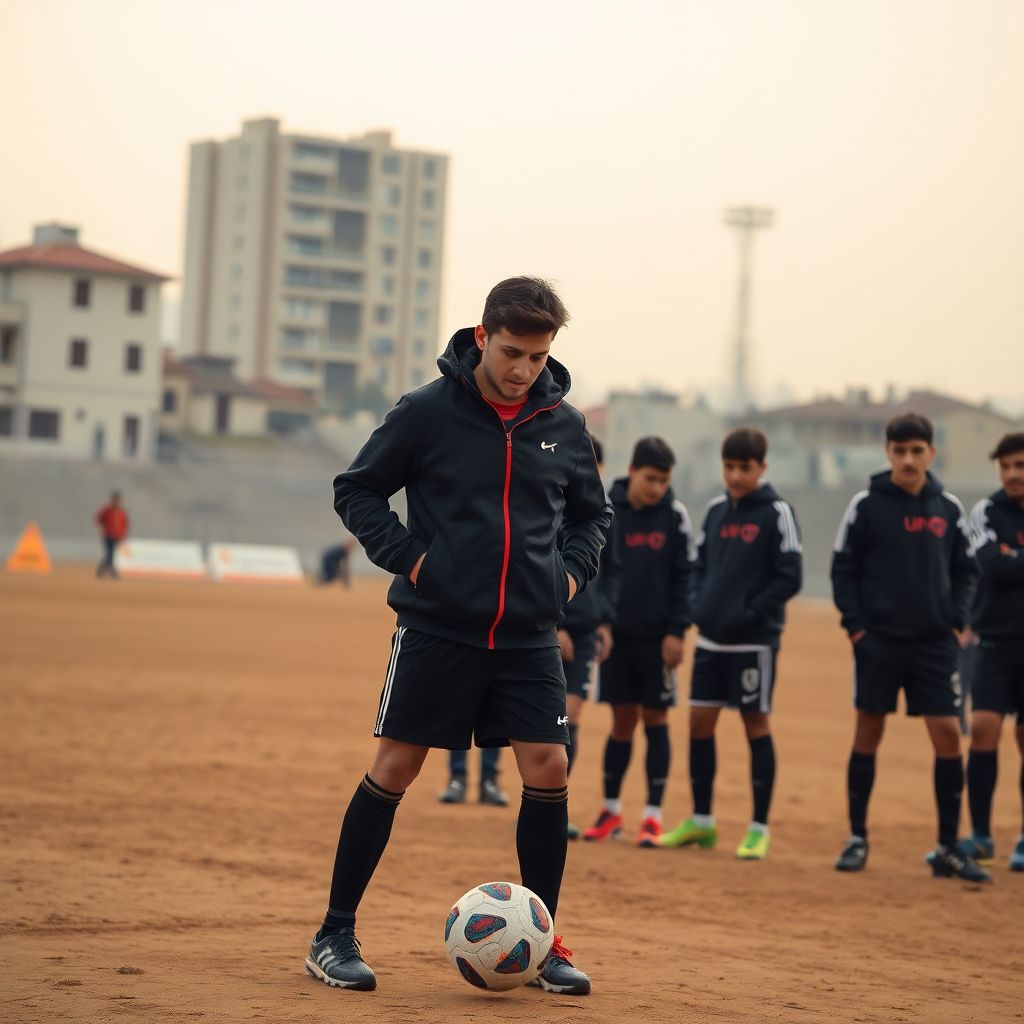
The new generation of Turkish coaches combines modern European tactical ideas with local street‑football creativity, shifting from authoritarian managers to collaborative head coaches. They emphasise pressing, structured possession, and player development, but must work inside financial limits and institutional constraints, especially in Türkiye’s lower leagues and academy environments with restricted resources and technology.
Core Concepts Driving Turkey’s New Coaching Wave
- Shift from result-only, authoritarian leadership to process-focused, collaborative coaching cultures.
- Clear game models mixing pressing, positional play, and flexible hybrid systems tailored to Turkish squads.
- Training built around periodisation, data-informed feedback, and small-sided constraints-based drills.
- Greater attention to academy structures and transition plans from youth to first team.
- Strong influence from European coaching schools, adapted to local football culture and fan pressure.
- Pragmatic solutions for clubs with limited budgets, staff, and technology.
- Continuous learning culture among new generation Turkish football managers at all levels.
Philosophical Shift: From Commanding Managers to Collaborative Head Coaches
In Turkish football, the traditional “manager” model was hierarchical: the coach gave orders, players executed, and short-term results dominated every decision. Training was often generic, communication one-way, and tactical ideas unstable, changing week to week according to pressure from boards and supporters.
The new wave of Turkish coaches playing style and philosophy is different. They work as head coaches in the modern sense: architects of a game model, coordinators of specialist staff, and leaders of a shared process. They seek alignment from academy to first team, link physical, tactical, and mental work, and treat players as active decision-makers, not just executors.
This philosophical shift appears clearly in how they define success. Performance indicators such as pressing effectiveness, chance quality, and progression of young players are tracked alongside points. The coach’s identity is built around clear principles (for example, “high pressing and vertical possession” or “compact mid-block with fast counters”) and is consistent across competitions.
In Turkish reality, this collaboration must still survive strong club politics. Modern coaches negotiate with presidents and sporting directors, use clear tactical analysis clips and data to defend their methods, and build inner leadership groups among players. The best young Turkish football coaches are those who can be modern tacticians while handling this unique environment.
Tactical Innovations: Pressing, Positional Play, and Adaptive Hybrid Systems
Seen through detailed Turkish football coaches tactical analysis, the new generation is defined by how they structure the game in all phases. Common innovations include:
-
Structured pressing and counter-pressing
Use of high or mid-block pressing with clear triggers (back-pass, bad first touch, ball to full-back). Lines move together, and roles are defined for the first, second, and third defenders. -
Positional play in possession
Occupying five vertical lanes, wide wingers, and at least two players between opposition lines. The ball moves to create superiorities (1v0, 2v1, 3v2) rather than just to “get it forward”. -
Flexible build-up structures
In-possession shapes like 2-3-5 or 3-2-5 are used, even if the base formation is 4-2-3-1 or 4-4-2. Full-backs invert, pivots drop or push high depending on press type faced. -
Hybrid defending systems
Combination of zonal marking with specific man-orientations on key opposition players. Many new coaches will press man-to-man on the side where the ball is, while keeping a zonal rest-defence structure on the far side. -
Set-piece specialisation
Greater attention to routines in corners, free kicks and throw-ins, often influenced by European trends. This is an efficient “low-cost” way to gain an edge in Türkiye’s balanced league games. -
Role-based adaptations per opponent
Core principles remain stable, but individual roles (for example, which winger stays high, which eight presses the pivot) change according to opponent’s shape, making Turkish football coaching systems and influences visibly more flexible.
Many of these ideas come from European positional play schools and pressing models, but local coaches reinterpret them to match Turkish player profiles: emotional, technically gifted, and often better at improvisation than at rigid automatisms. This leads to hybrid systems: structured enough to be repeatable, open enough to allow creativity.
Practice Design: Periodisation, Data-Led Sessions, and Skill-Focused Microcycles
Modern Turkish coaches design the week around the game model, not around isolated fitness blocks. Tactical periodisation (under different names) is now normal in elite clubs and spreading into 1. Lig and even some ambitious 2. Lig environments.
Typical applications include:
-
Game model-based weekly structure
Each day has a dominant theme: defensive organisation, offensive organisation, transitions, or set-pieces. Every drill includes the ball, tactical context, and specific physical intensity. -
Data-informed feedback, low-tech or high-tech
In big clubs, GPS and expected goals data guide session intensity and shot quality work. In small clubs, staff still use simple metrics: number of high-speed runs per player, box entries, or successful presses. -
Skill-focused microcycles for key players
Attackers get extra finishing sessions with varied angles and pressure. Full-backs work on underlapping runs and low crosses. Defenders practice 1v1 duels with positional starting points instead of generic fitness runs. -
Integrated conditioning through small-sided games
Conditioning is achieved via 3v3, 4v4+3 or 6v6 games with designed constraints: touch limits, direction, score targets. This matches real match demands and is efficient for teams with limited staff. -
Video and “micro-feedback” blocks
Short video sessions (5-10 minutes) before training highlight one principle for the day. On the pitch, coaches link feedback directly to the clips players saw, making learning faster.
Low-resource alternatives for practice design in Türkiye
For clubs, academies, or amateur teams without technology or large staff, the same philosophy can be applied with simpler tools:
- Use phone or basic camera video from one angle, re-watch with players in the dressing room or even on the bus.
- Track simple match and training metrics on paper: high regains, passes into final third, crosses, shots inside box.
- Design 3-4 “signature” small-sided games that repeat weekly and reflect your game model (for example, 5v5+2 neutral focusing on central overloads).
- Combine physical work with ball work by adjusting pitch size, work/rest time, and number of players.
Mini-scenarios: Applying these ideas with Turkish squads
To connect concepts to practice, consider these example scenarios that coaches across Turkish levels can adapt:
-
Provincial 3. Lig club, limited staff
Weekly microcycle: one main pressing day (11v11, half-pitch, pressing triggers), one offensive day (positional 7v7+3), one mixed day with set-pieces. Data: simple manual count of successful presses and shots from cut-backs. -
Big-city academy U17 in Istanbul
The coach creates a 4-week block on “breaking low blocks”. Each week: repeated rondo-to-positional games, finishing from Zones 14 and half-spaces, plus one classroom session with clips of best young Turkish football coaches applying similar patterns in Süper Lig. -
Amateur adult team with two sessions per week
Session 1: high-intensity small-sided games to train pressing and transitions. Session 2: 8v8 on reduced width focusing on compact block and fast counter-attacks. All strength work is integrated into these games to save time.
Pathways for Talent: Academy Structures, Transition-to-First-Team Models, and Loan Strategies
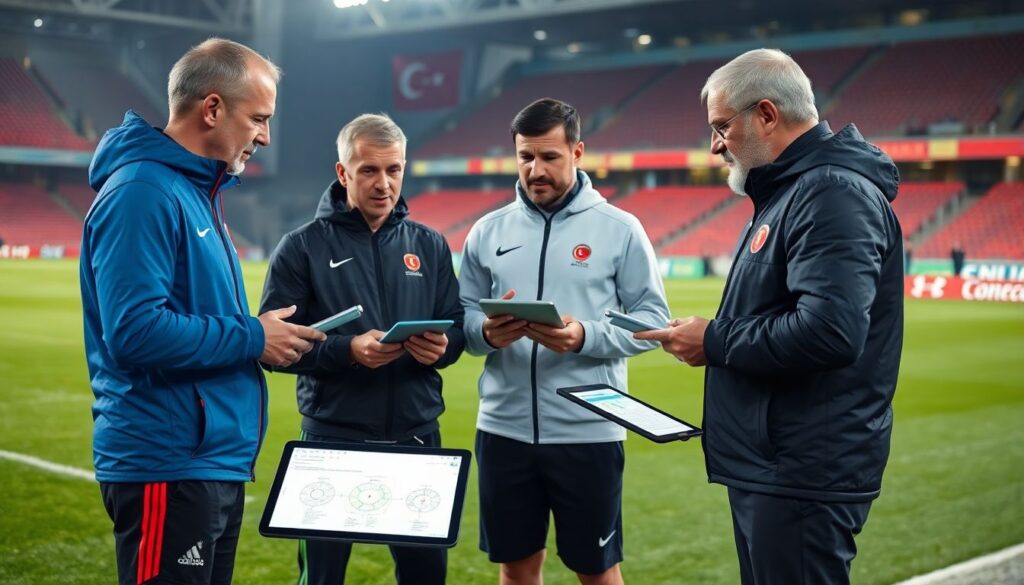
Modern Turkish coaches increasingly see themselves as developers of talent, not just users of ready-made players. They push for aligned academy structures, clear “pathways” from youth to senior football, and smarter loan strategies, even when club politics make it difficult. However, these ideas face structural limitations, especially outside the biggest Istanbul clubs.
Advantages of structured talent pathways in Türkiye
- Aligned principles from U14 to first team reduce adaptation time and tactical confusion for young players.
- Cheaper squad-building: home-grown talent fills rotation roles instead of expensive foreign signings.
- Stronger club identity and connection to local supporters when academy graduates play key minutes.
- Easier individual development plans: clear targets for minutes, positions, and tactical roles per season.
- Loan strategies can place players in systems that match their strengths instead of random placements.
- Coaches gain tactical flexibility with younger players trained in multiple roles and structures.
Limitations, risks, and Turkish-specific obstacles
- High short-term pressure from boards and fans makes it risky for coaches to give minutes to inexperienced academy players.
- Many lower-league clubs lack professional academy infrastructures, forcing talent to leave early or stagnate.
- Inconsistent coaching education across regions leads to big differences in quality of tactical training.
- Loan destinations sometimes prioritise survival over development, misusing young players in unsuitable positions.
- Frequent head-coach changes break long-term plans and force young players to restart under new systems.
- Institutional incentives often reward immediate results rather than strategic use of youth.
External Influences: European Schools, Regional Football Culture, and Institutional Constraints
Turkish football coaching systems and influences are a mix of European education, South American inspiration, and strong local culture. Many of the best young Turkish football coaches study in Germany, Spain, Portugal, or through UEFA courses, then adapt those lessons to the intense emotional environment of Turkish stadiums.
Typical misconceptions and errors include:
-
Copy-paste from top European clubs
Trying to play like elite Champions League teams without having similar players, time, or support staff. Modern Turkish coaches must filter ideas and select what fits their environment. -
Overcomplicating tactics for lower levels
Too many build-up schemes, pressing variants, or set-piece codes confuse semi-professional or young players. Clarity beats complexity when training time is limited. -
Ignoring local player strengths
Some coaches impose rigid positional play and remove the improvisation and 1v1 ability that many Turkish players naturally have, especially wingers and attacking midfielders. -
Underestimating institutional constraints
Financial instability, late salaries, poor pitches, and travel issues can ruin perfect plans. Practical coaches design robust game models that still work with these problems. -
Believing that analytics are only for big clubs
Even without full-time analysts, staff can use basic numbers and low-cost tools for effective Turkish football coaches tactical analysis, making better decisions on training focus and player roles.
Applied Case Studies: Methods and Outcomes from Leading Contemporary Turkish Coaches
To understand new generation Turkish football managers in practice, it is useful to look at their typical methods rather than just their reputations. The following simplified case-style patterns describe approaches seen in modern Turkish environments, from Süper Lig to ambitious lower leagues.
Case Pattern 1: High pressing and vertical attacks in a mid-budget Süper Lig club
Context: Coach takes over a mid-table club with young, energetic players but limited creative midfielders.
Philosophy: Aggressive high pressing, fast vertical attacks, simple but repeatable patterns.
Implementation steps (pseudo-code style):
- Define clear pressing triggers: back-pass to centre-back, sideways pass to full-back.
- Train 7v7+3 games in half-pitch focusing on pressing in three-second windows after loss.
- Use 3-2-5 shape in attack: full-backs very high, wingers inside, one pivot stays as rest-defence.
- Measure per game: high turnovers, shots after regain, opposition long balls forced.
- Adapt for weaker opponents by using a slightly deeper mid-block but keeping the same counter-pressing rule.
Case Pattern 2: Possession-based rebuild at a historically big club
Context: Big club with demanding fans and creative attackers but unbalanced squad.
Philosophy: Controlled possession, patient attacking, stable structure behind the ball.
Implementation steps:
- Define three main attacking patterns from goal-kicks, wide overloads, and half-space combinations.
- Run positional games (5v5+3 and 8v8+2) three times a week, emphasising “third-man” runs.
- Build 2-3-5 attacking shape with one full-back inverting and the opposite full-back overlapping.
- Track: passes into final third, touches in opposition box, and shots from central zones.
- Use video meetings twice weekly to show both successful patterns and breakdowns, building shared vocabulary.
Case Pattern 3: Pragmatic compact block for a relegation candidate
Context: Club fighting relegation with older squad, limited fitness, and low confidence.
Philosophy: Compact 4-4-2 or 5-4-1 mid/low block, fast counters through wings, high emotional intensity.
Implementation steps:
- Set a simple rule: no opponent plays between our lines. Lines stay compact, distances small.
- Train 10v10 in three zones: defend central zone first, allow wide passes, trap in corners.
- Work on 3v2 and 4v3 transition drills starting from ball regain in wide areas.
- Measure: shots conceded, crosses defended, counters created, and points earned from set-plays.
- Emphasise emotional preparation and clear roles more than complexity; success builds confidence fast.
Low-resource adaptation template for coaches in Türkiye
Coaches in amateur or youth setups can borrow from these patterns even without big staff or technology:
- Choose one main defensive idea (for example, mid-block 4-4-2) and one main attacking idea (wide overloads and crosses).
- Create two small-sided games that repeat these ideas weekly; change only small details (for example, touch limits).
- After each match, write down three basic stats manually: chances created, chances conceded, and where ball was lost most often.
- Use these notes as your own mini-analytics to adjust training themes the next week.
Common Practitioner Queries on Adapting These Approaches
How can I apply modern pressing ideas without GPS or analyst staff?
Use small-sided games with clear pressing rules and count only successful regains within three seconds of loss. Track these numbers manually across weeks. Video at one angle on a phone is enough to review compactness and timing with players.
What is the simplest way to start positional play in a Turkish youth team?
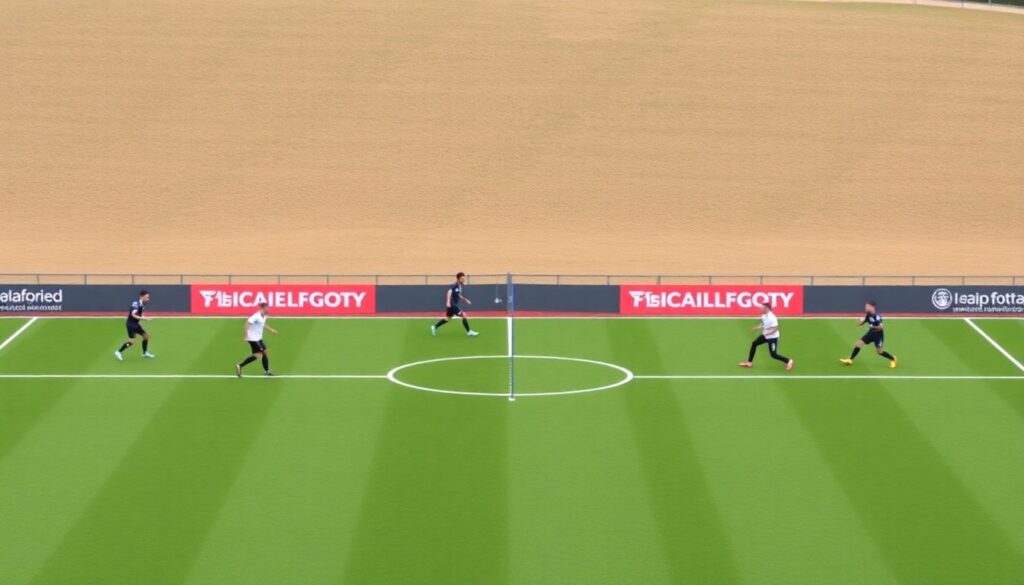
Begin with five-lane pitch markings and basic roles: wingers stay wide, one pivot connects defence and attack, full-backs time overlaps. Use 4v4+3 and 6v6+2 games focusing on keeping width and having at least one player between lines.
How do I convince club management to give minutes to academy players?
Prepare clear individual plans for two or three talents, show management how much the club could save in transfers, and highlight simple metrics such as progressive passes or defensive actions. Start by giving academy players defined roles in easier fixtures or cup games.
Are analytics really useful in lower Turkish leagues?
Yes, if you keep them simple. Track only a few indicators that link directly to your game model, such as high regains, box entries, or shots from good zones. This basic data already supports better training focus and player selection.
How many tactical principles can semi-professional players realistically execute?
Usually a small number executed very consistently is better than many half-understood ideas. Define three to five core principles in possession and out of possession and repeat them in every drill, meeting, and video session across the season.
What should I copy from European top clubs, and what should I ignore?
Copy clear training structures, small-sided game ideas, and communication methods. Avoid copying complex rotations, extreme build-up schemes, or squad management strategies that require budgets, staff, and facilities far beyond your current reality.
How do I keep creativity while using structured systems?
Set non-negotiable principles for team shape and defensive work, then define “freedom zones” where attackers can improvise 1v1 or choose combinations. Train both the structure and the creative actions explicitly so players understand when and where they can take risks.