Turkish club academies combine intensive football training, formal education and supervised dorm life under one system, offering a clearer pathway to professional contracts than private schools or stand‑alone camps. They demand strict discipline, moderate financial commitment, and realistic expectations, especially for foreigners navigating trials, language and visa rules in Turkey’s competitive football environment.
Snapshot of core insights
- Club academies in Turkey are selective, structured and result-driven; they are not paid “football boarding schools” where a fee guarantees a contract.
- Daily routines blend technical, tactical and school work, with microcycles adjusted around weekend league matches and exam periods.
- Compared with school teams or private camps, club academies bring higher development upside but also higher pressure and injury, burnout and relocation risks.
- Foreigners face extra hurdles: visa, language, age limits and stricter rules during turkish football academy trials for foreigners.
- Scholarships exist but are limited; families must understand the real cost of youth football academy training in turkey, including travel, gear and opportunity cost.
- Progression is non-linear: loans to lower divisions, long bench spells and early deselection are common, even at the best football academies in turkey for youth.
Debunking common myths about Turkish club academies
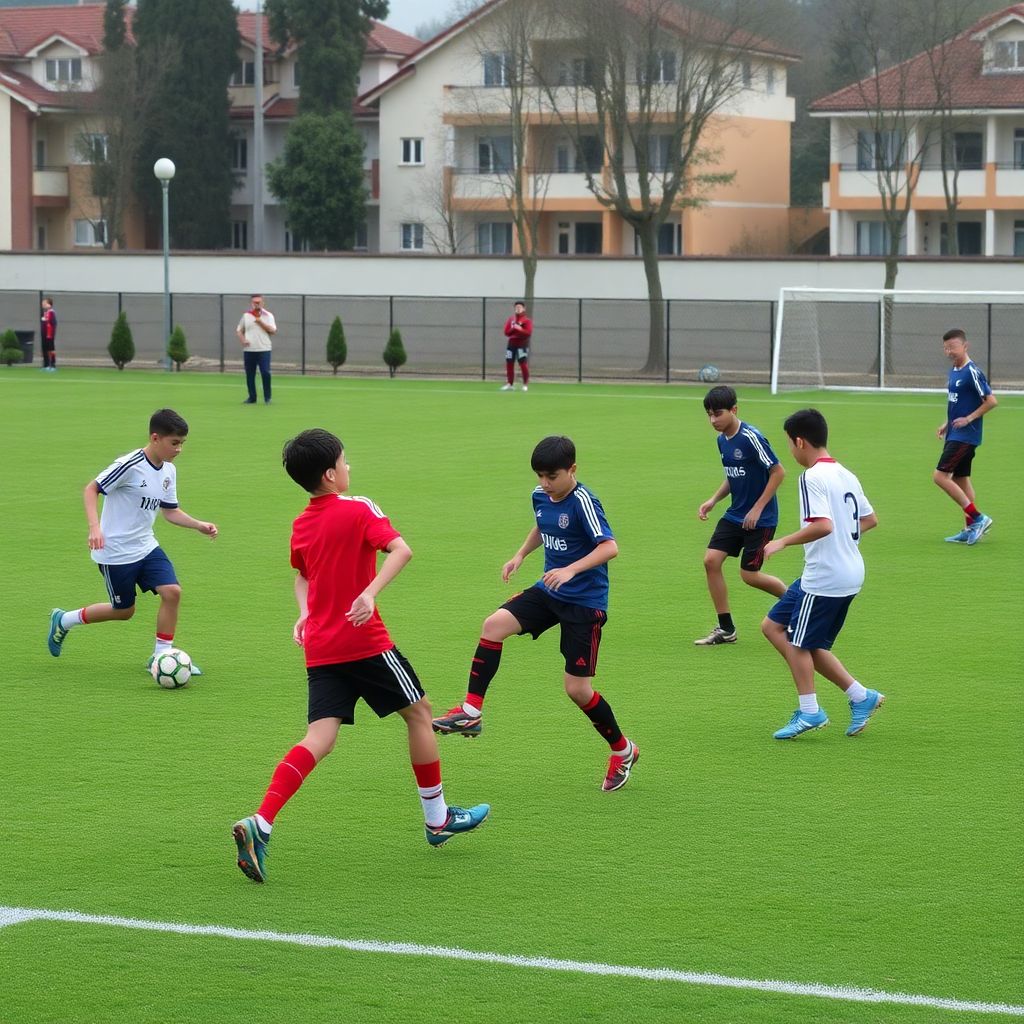
A Turkish club academy is the youth development department of a professional club, usually structured by age groups (for example U12, U14, U16, U19). Players follow a club-wide playing philosophy, train several times per week, compete in national or regional leagues, and are evaluated continually for potential promotion to pro squads.
Many parents treat an academy like a guaranteed elevator to a first-team contract. In reality, it is closer to a high-performance school: a small minority reach the top, some become professionals in lower leagues, others exit entirely. Paying for accommodation, transport or kit does not buy a spot in the team, much less a contract.
Another myth is that turkish football academy trials for foreigners are almost a formality if you have a good highlights video. Turkish clubs are cautious with foreign minors because of federation and FIFA rules, schooling obligations, guardianship and visa issues. For underage foreigners, serious clubs usually prefer long-term observation rather than quick signing after one open trial.
Finally, families often overestimate how to join a professional football club academy in turkey through agents. Reputable clubs prioritise scouted players and those performing in local leagues or school competitions. Genuine agents help with organization and translation but cannot override sporting decisions. The safest implementation path is: play regularly in a local, well-structured team, attend verified trials, and treat any promise of “guaranteed placement” as a major red flag.
- Implementation pointers:
- Define your goal: pro contract, education plus football, or short-term development experience.
- Request written policies on selection, deselection and education before committing.
- Be suspicious of any offer asking big upfront fees in exchange for guaranteed academy access.
Daily training routine: microcycle and session structure
A club academy week (microcycle) in Turkey is usually built around the weekend match. Compared with school teams or private academies, club microcycles are less flexible but more coherent: they integrate physical load, tactical goals and recovery, which reduces random fatigue yet increases the risk of overload if school commitments are ignored.
- Match day (Saturday or Sunday): Warm-up, official league game, cool-down and short debrief. Load is high; other football work that day is minimal. Convenience is low for families due to travel but development impact is high.
- Recovery day: Light jogging, mobility, stretching and video review. Sometimes online tactical meetings to reduce travel. Easy to implement, low injury risk, but many players skip it mentally, reducing long-term benefits.
- Strength and technical focus day: Gym work (age-adjusted), core stability, individual ball work (first touch, passing patterns, finishing). Requires facilities and supervision; when replicated at home without guidance, risk of poor technique and overtraining rises.
- Tactical team training: Phase-of-play exercises, pressing schemes, build-up patterns, set pieces. High cognitive load; convenient within the academy but harder to reproduce in casual or school settings due to lack of consistent tactical language.
- Pre-match activation: Short, sharp, low-volume session with speed, set pieces and mental preparation. Easy to organise; risk lies in doing too much intensity and arriving at the game fatigued.
A typical session combines: (1) 10-15 minutes dynamic warm-up and activation, (2) 15-25 minutes technical drills, (3) 20-30 minutes tactical or game-like exercises, (4) 5-10 minutes finishing or small-sided games, (5) 5-10 minutes cooldown and feedback.
- Implementation pointers:
- At home, copy the structure (warm-up → technical → small game → cooldown), not the full volume.
- For school teams, align the weekly theme (e.g. pressing) with the player’s club focus to avoid contradictory messages.
- Monitor sleep and school workload to reduce the combined risk of burnout.
Technical and tactical curriculum across age groups
Club academies in Turkey use age-specific curricula. Compared to ad-hoc coaching in many school teams, these curricula prioritise gradual complexity and measurable outcomes. Below is a simplified view of how content shifts across age groups and how it compares to alternative environments.
Typical academy curriculum by age
U10-U12: Focus on ball mastery (dribbling, first touch, turning), 1v1 attacking and defending, basic decision making (pass vs dribble), coordination and agility through games. Risk of early over-specialisation in a single position is high if parents push; the academy usually rotates roles to reduce this.
U13-U15: Added emphasis on positional play, group tactics (pressing in small units, combination play), basic video analysis and position-specific skills (e.g. fullback crossing, centre-back building from the back). Implementation requires regular team attendance; missing sessions breaks tactical cohesion.
U16-U19: Advanced team tactics (pressing triggers, build-up structures, game plans vs different systems), physical and mental preparation, and professional habits (pre-activation, individual warm-ups, recovery routines). The risk here is narrow focus on “winning now” for academy league success, which can hurt long-term creativity.
Comparison of development environments in Turkey
| Environment | Curriculum structure | Convenience for family | Development upside | Main risks |
|---|---|---|---|---|
| Club academy | Planned multi-year, age-specific, integrated with competition | Lower (travel, time, strict schedule) | Highest, clear link to pro pathway | Injury, deselection, relocation stress, academic pressure |
| School team | Basic, coach-dependent, less periodised | High (on campus, fits school timetable) | Moderate, depends on coach quality | Inconsistent training, limited tactical depth |
| Private academy / camp | Varies; some elite, some marketing driven | Medium (flexible packages, seasonal) | Variable; good for extra reps | Overtraining, cost without pathway, mixed coaching levels |
- Implementation pointers:
- Before joining, request a written age-group curriculum and examples of weekly themes.
- If using a school team or private camp alongside a club academy, coordinate themes (e.g. both focus on receiving on the half-turn) to minimise confusion.
- Check if the club cooperates with one of the best football academies in turkey for youth as a satellite or partner; this can expand exposure.
Physical conditioning, nutrition and injury management
Physical development in Turkish club academies combines strength, speed, endurance and mobility work. Compared to casual or school environments, loads are monitored more closely, and conditioning is tied to match schedules. This structured approach is effective but can be demanding to implement, especially when combined with outside training or long commutes.
Performance advantages and structured habits
- Age-appropriate strength and conditioning programmes designed or supervised by specialists, not improvised by parents or non-qualified coaches.
- Regular fitness testing (sprint times, change-of-direction, aerobic capacity) to adjust loads and track progress over seasons.
- Basic nutrition education: pre-match meals, hydration plans, avoiding heavy fast food before evening training.
- On-site or partner medical staff for quick assessment of knocks and guidance on return-to-play timelines.
- Education on sleep, screen time and recovery tools (stretching, foam rolling, simple mobility routines).
Limitations, risks and family-level challenges
- Overlapping training: combining academy sessions with intense private coaching increases risk of overuse injuries.
- Inconsistent home nutrition: academy advice is hard to implement if family routines rely heavily on late dinners or low-quality snacks.
- Playing through pain to keep a spot, especially during trial periods or contract years.
- Limited individualisation in large groups; some players may be under-loaded or over-loaded relative to their maturation.
- Cost of regular physiotherapy, supplements and recovery tools, which is rarely fully covered, adding to the overall cost of youth football academy training in turkey.
- Implementation pointers:
- Share the academy’s training calendar with any external coach or PE teacher to avoid double-loading the same days.
- Standardise simple, repeatable meals pre- and post-training (e.g. light pasta plus fruit) that fit your cultural and budget realities.
- Teach your child to report pain early; long-term availability is more important than short-term selection.
Education, language learning and off-field life
Academy life is not only football. In Turkey, most club academies coordinate with state or private schools and, for older age groups, with distance-learning options. The convenience of integrated education is high for local players but may be complex for foreigners who must adapt to language and curriculum differences.
Language plays a central role. Coaches often use Turkish football slang and tactical terms; while some big-city academies offer basic English support, daily life is largely in Turkish. For foreigners, this is both a challenge and a long-term advantage, since adapting increases the chance of integrating with Turkish teammates and staff.
Typical misconceptions and practical pitfalls
- “Football first, school later” mindset: Believing early that a pro contract is guaranteed leads to skipped homework and poor grades. This increases stress if deselected from the academy, because re-entering normal school life becomes harder.
- Underestimating language barriers: Some families assume English is enough. In reality, understanding Turkish tactical instructions and everyday communication is crucial, especially during turkish football academy trials for foreigners where coaches assess communication as well as talent.
- Dorm life idealisation: Shared rooms, strict curfews and limited personal space are not easy. Younger players may struggle with homesickness and academic self-management.
- No clear study plan: Without a fixed daily homework slot and quiet place to study, even disciplined players fall behind, increasing the risk of failing school benchmarks needed for scholarships or alternative pathways.
- Assuming scholarships cover everything: Many turkey soccer academy scholarships for young players cover only tuition or boarding, not all living, travel or gear expenses. Families must budget realistically and compare this with remaining at home and using strong local teams plus extra tutoring.
- Implementation pointers:
- Ask how school timetables are adapted to training and how missed classes or exams are handled.
- Start basic Turkish lessons early; even 10-15 minutes daily online plus practice with teammates improves integration.
- Agree on house rules about phone use, sleep and study time during holidays and off-days to keep habits stable.
Talent progression: contracts, loans and scouting exposure
Progression in a Turkish club academy is multi-step. Compared with staying in school-only football, the pro pathway is clearer but involves higher uncertainty and more decisions under time pressure. Understanding those steps helps families balance the convenience of a structured route with the risks of an “all-in” bet on football.
Typical progression chain in a Turkish club academy
- Local scouting and trials: Players are seen in local leagues, school tournaments or at controlled trials. Knowing how to join a professional football club academy in turkey usually means combining consistent club performance with attendance at trials that the pro club itself advertises, rather than relying solely on private camps.
- Acceptance into youth squads: Initial enrolment often starts at younger ages, but late entries are possible around U15-U17 if performance is outstanding. Competition for spots is intense, particularly at clubs marketed as the best football academies in turkey for youth.
- Youth league performance and internal rankings: Coaches track not only goals and assists but also training attitude, tactical learning and physical progress. Deselection can happen annually, which is emotionally and logistically hard for families who have relocated.
- Youth and professional contracts: For older age groups, clubs may offer youth contracts or pre-professional deals. These define training compensation and future rights. Parents should seek independent legal advice rather than signing quickly out of fear of missing the opportunity.
- Loans and affiliate clubs: Many players are loaned to lower-division teams to gain senior minutes. This expands exposure but adds instability through new cities, coaches and playing styles.
- Senior squad integration or exit: A small fraction reaches the first team; others build careers in 1st, 2nd or 3rd divisions or transition to university pathways, coaching or different careers.
Mini-case: balancing pathways and risks

Imagine a 15-year-old from abroad invited for a three-week trial at a reputable Istanbul club. The family compares three options:
- Move immediately if an offer arrives, relying on partial scholarship.
- Stay one more year at home, improving school language skills and physical strength, then re-apply.
- Decline and focus on local academics and football, using short Turkish camps for experience only.
Option 1 maximises immediate football exposure but has high risks: academic disruption, cultural shock and financial strain if the scholarship is not full. Option 2 is harder emotionally but often safer to implement, especially if the player is still physically maturing. Option 3 is most convenient logistically and academically but reduces long-term chances of entering the Turkish pro system. There is no universal right answer; families should weigh football potential, academic resilience, finances and mental readiness rather than prestige alone.
- Implementation pointers:
- Request clear information about contract types, trial length and realistic timelines before spending on travel.
- For any offer, assess three dimensions: football role and coaching fit, schooling plan, and total yearly family cost.
- Keep parallel plans: university eligibility, vocational training or return to home-country systems if football outcomes differ from expectations.
Concise answers to frequent prospect and parent concerns
How realistic is a pro career from a Turkish club academy?
Only a minority of academy players reach top-flight professional contracts, even in strong systems. A Turkish club academy significantly improves development and visibility but should be treated as one pathway, not a guarantee. Keeping academic and alternative football options open reduces long-term risk.
Are Turkish football academy trials for foreigners worth the trip?
They can be valuable if the trial is directly organised by the club, linked to a clear age group and you already play at a competitive level. Travelling long distances for loosely defined “showcase” events marketed to foreigners carries higher financial and emotional risk with uncertain exposure.
What is the typical cost of youth football academy training in Turkey?
Costs vary widely by club, city and whether boarding is needed. Families need to consider not only academy or school fees but also housing, travel, food, gear, visas and medical expenses. Comparing this with local alternatives and potential scholarships is essential before committing.
How do turkey soccer academy scholarships for young players usually work?
Scholarships may cover tuition, boarding, or part of both, often based on talent and academic standing. They rarely cover all incidental costs. Conditions can change over time, so families should ask what performance, behaviour and academic standards are needed to keep support.
Is it better to choose one of the best football academies in Turkey for youth or stay in a smaller club?
Top academies offer stronger competition, facilities and scouting, but selection and pressure are higher. Smaller clubs can provide more playing time and individual attention. The better choice depends on the player’s current level, personality, academic needs and family logistics.
How to join a professional football club academy in Turkey without an agent?
Play regularly in a strong local team, collect full-match footage, and target official club trials or tournaments where Turkish scouts attend. Communication can be done directly via club channels. An agent is not mandatory; performance, timing and persistence matter more.
Can a strong school team replace a club academy?
A strong school team can develop skills and provide enjoyment, especially where coaching is high quality. However, club academies usually offer more structured curricula, better competition and a clearer link to professional pathways. For serious prospects, combining both, with careful load management, is often ideal.