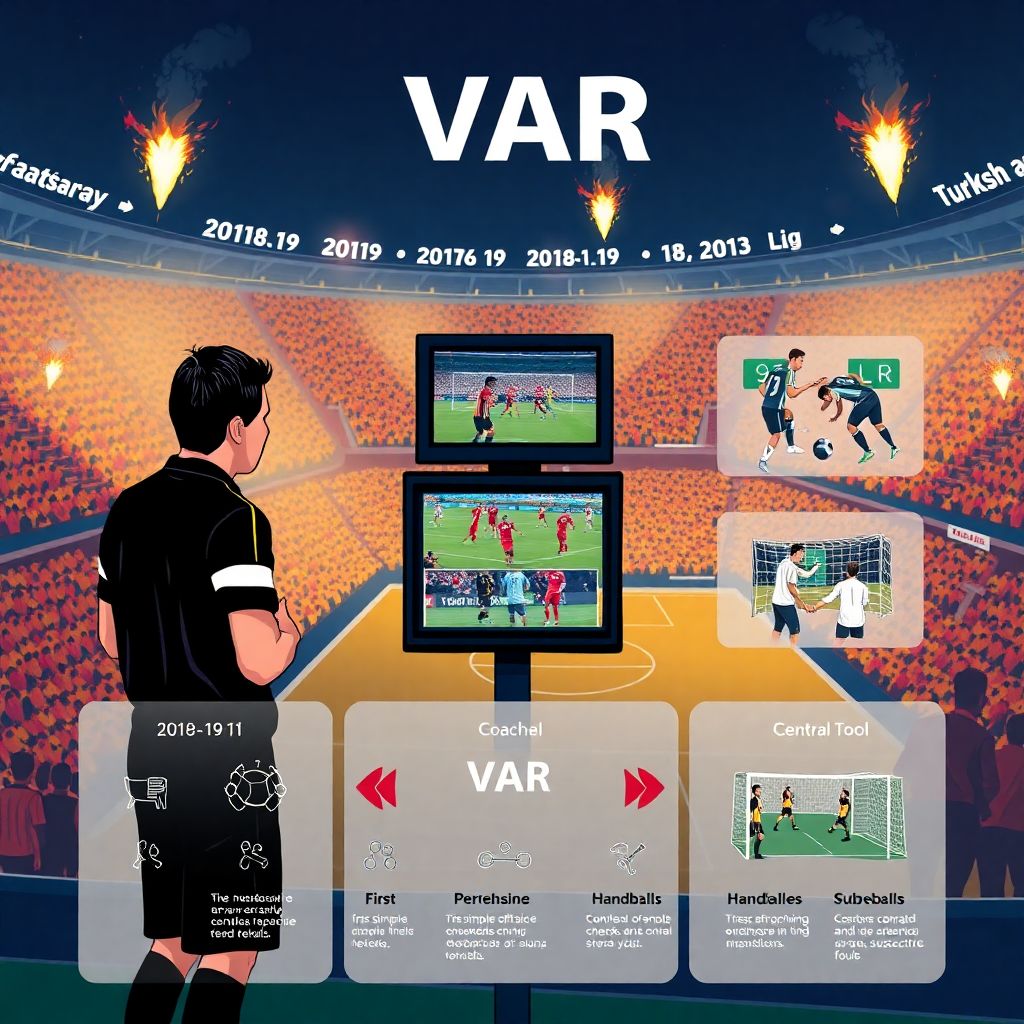
Evolution of VAR in Turkish Football
From Experiment to Central Tool
When VAR arrived in Turkey in 2018–19, most people saw it as a high-tech fire extinguisher: break glass only in case of a big mistake. Very quickly, though, it became the center of almost every debate about refereeing and fairness. The Turkish Football Federation (TFF) expanded the intervention protocol from clear offsides and penalties to a wider set of subjective incidents, and that’s where tension grew. Coaches started tailoring their tactics to possible VAR checks, defenders adjusted body position in the box to avoid handball interpretation, and clubs began hiring analysts whose sole job is tracking var decisions in turkish football analysis to understand how specific referees react in front of the monitor.
Controversies and Case Studies
Landmark Matches and Public Outrage
If you look for a typical turkish super lig var controversy, you’ll find the same pattern: one key incident, two incompatible narratives. Take high‑stakes derbies between Galatasaray and Fenerbahçe, where a delayed offside line or a borderline handball has flipped title races. In one famous match, a last‑minute penalty was first ignored on the pitch, then awarded after a long review, then questioned for days by ex‑referees on TV. Another example is a Besiktas game where a goal was cancelled for a marginal offside, sparking weeks of protests about calibration of the lines. In both cases, the technology itself wasn’t broken; the real issue was trust in the people interpreting the footage.
Fairness, Data and Hidden Patterns
Statistics, Bias and Error Profiles
Behind the noise, data analysts inside clubs quietly monitor turkey super lig var statistics and errors to see if there is systematic bias. Some have found clusters: specific VAR teams that intervene more on handballs, or referees who avoid sending colleagues to the screen in late minutes. Expert consultants advise clubs to maintain an internal “decision log”: minute, score, type of foul, referee, VAR operator, and outcome. Over a season, this log reveals non-obvious tendencies such as “penalties awarded more often against pressing teams” or “soft reds after heated touchline incidents”. This kind of pattern recognition won’t change a single call, but it changes how sporting directors talk to the TFF and how coaches plan risk management in the box.
Betting, Media and Fan Psychology
Markets, Odds and Narrative Shocks
One underrated area is the impact of var on turkish super lig betting. Odds now move sharply after VAR checks, because traders model the likelihood that a goal will be overturned, not just scored. Professional bettors follow which referees use the monitor frequently and adjust live markets accordingly, especially around 70+ minutes when fatigue increases foul risk. On the fan side, every long review adds emotional volatility: stadiums go from euphoria to silence in seconds, TV audiences switch channels during checks, and social media explodes with slow‑motion screenshots. Bookmakers and broadcasters monitor turkish football var news and updates almost in real time, because a single controversial weekend can change betting volume, in-play liquidity and even subscription churn.
Alternative Approaches and Expert Tips
Non‑Obvious Solutions and Pro Lifehacks
Experts who work with clubs suggest several counterintuitive approaches to reduce friction and exploit VAR intelligently:
1. Scenario training – Elite teams stage full match simulations with “fake VAR” interruptions to practice emotional control and tactical reset after a 3–4 minute break.
2. Referee scouting – Analysts build profiles not only for players, but also for VAR crews: tolerance to contact, reaction to crowd pressure, speed of checks.
3. Communication scripts – Captains rehearse short, neutral phrases to use with referees during reviews, avoiding confrontational language that can subconsciously bias officials.
4. Public messaging strategy – Sporting directors pre‑plan press conference templates for different types of errors to criticize process, not integrity, protecting long‑term relationships.
Such non-obvious solutions won’t eliminate disputes, but they help clubs operate rationally in an environment where turkish super lig var controversy is unlikely to disappear.