Setting the stage: why this comparison matters
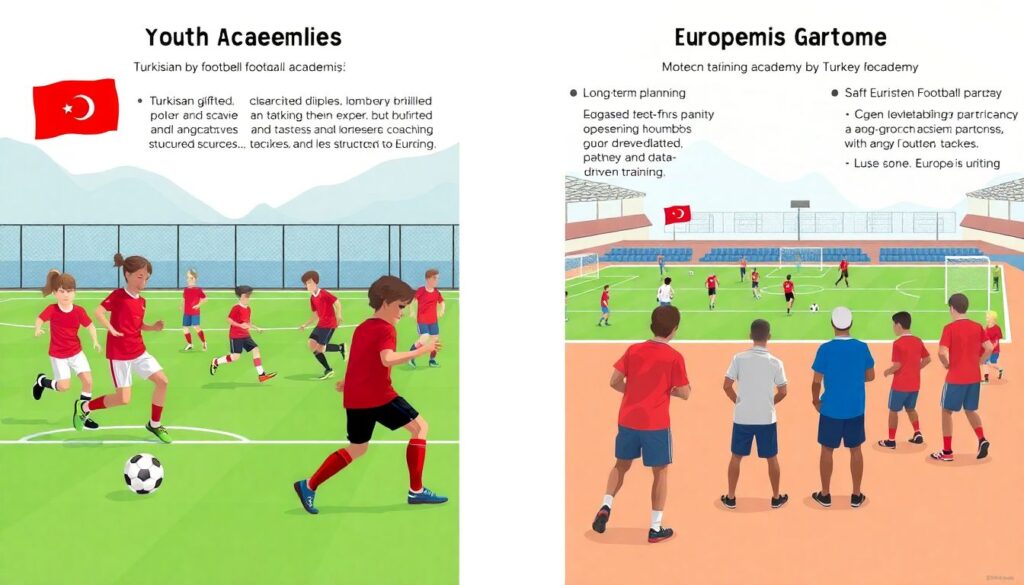
When people talk about youth football academies Turkey vs Europe, they often reduce it to a simple “Europe is better” slogan. Reality is trickier. Turkey produces technically gifted, emotional players, but struggles with consistency and export of talent. Europe’s top schools focus on long‑term planning, data and clear game models. Both systems are under pressure: clubs need to sell players, fans demand instant success, and parents want quick results. So the real question is not “who is stronger”, but which ideas actually help a 13–18‑year‑old become a stable pro in 2026 conditions.
Structural model: club culture vs standardization
If we compare Turkish football academies to European elite clubs, the first contrast is structure. In Turkey, a lot depends on the head coach of the first team: change the coach – change the philosophy down the pipeline. Academy directors often adapt to short‑term needs, like filling positional gaps. In Western Europe, from Ajax to Leipzig, the club philosophy survives several coaching cycles. There’s a written identity: how to train, press, build up, even how to recruit eight‑year‑olds. That stability quietly adds a few percent of quality every season.
Coaching approach: instruction vs guided discovery

In many Turkish setups, coaching is still quite hierarchical: the coach explains, the player executes, mistakes are corrected loudly and quickly. This can raise discipline, but sometimes kills creativity and decision‑making under pressure. The best European football academies for youth development tend to use guided discovery: small‑sided games, problem tasks, players constantly making choices. Coaches intervene less and ask more questions. Over years, that produces midfielders and full‑backs who read the game one step earlier, which is exactly what scouts now pay for.
Training content: physical intensity vs game intelligence
A recurring theme in turkey youth soccer development model analysis is volume. Sessions are intense, running loads are high, and gym work starts early. Youngsters become physically ready for the Süper Lig tempo, but sometimes lack the tactical flexibility to move abroad. European elite youth academy training methods often flip the priorities: lots of position‑specific rondos, tactical scenarios, pressing triggers, plus individualized physical plans. The aim is not just to run more, but to run smarter, at the right moment and angle. That nuance shows when a 19‑year‑old debuts in a top‑five league.
Use of technology: data, GPS and video
Tech is where the gap is obvious. In leading European academies, GPS trackers, wellness apps and video platforms are standard even for U14. Data analysts sit with coaches, helping to plan minutes, shape drills and prevent overuse. Turkey has been catching up, but equipment is often concentrated in big‑city clubs, and not always integrated into daily decisions. Plus, not every coach feels comfortable reading reports. As a result, technology sometimes becomes a flashy add‑on, not a tool that quietly reduces injuries and improves session quality week after week.
Pros and cons of tech‑heavy development
The European model’s strength is individualization: you can monitor growth, sleep, load, and adjust the plan for each kid. On the flip side, an obsession with numbers can sterilize the joy of the game and create anxiety around metrics. Turkish academies, with a more “analog” approach, preserve a street‑football feel, which feeds improvisation and resilience. The downside is uneven workload management and later detection of chronic problems. The ideal scenario is not choosing a side, but combining passion‑driven environments with evidence‑based planning and injury‑risk control.
Pathway to first team: patience vs urgency
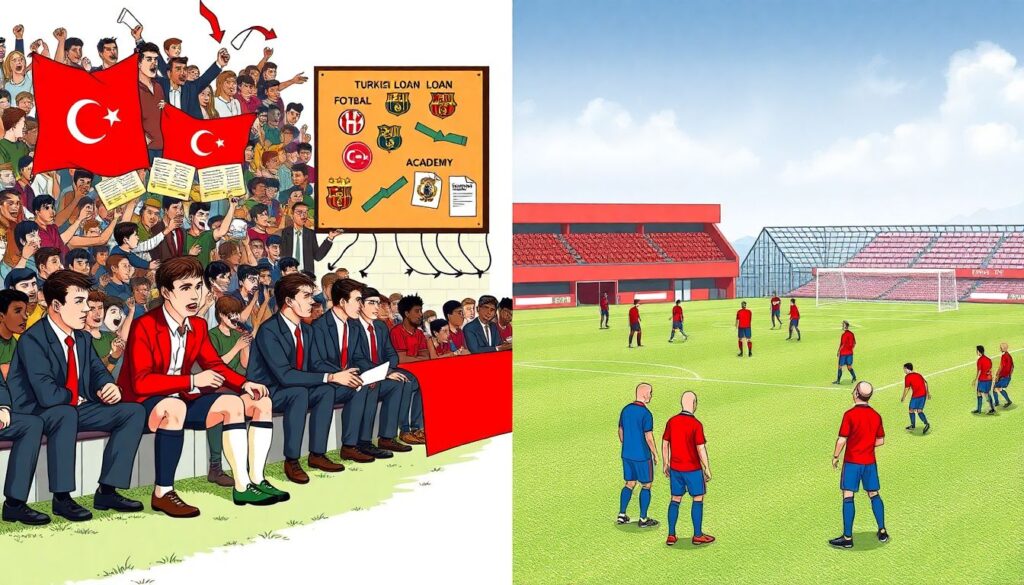
Another big difference appears when a talent reaches 17–19. In Turkey, club boards and fan bases are impatient, and coaches rarely get seasons to build with kids. Prospects might get a few cup games, then are loaned out chaotically. In contrast, if you compare Turkish football academies to European elite structures like Benfica or Dortmund, you see designed pathways: B teams, clear loan networks, gradual integration. That doesn’t guarantee success, but it offers predictable steps, so the jump from youth to senior football is a slope, not a cliff.
How to choose: player profile and family goals
For a family weighing youth football academies Turkey vs Europe, the right choice depends on the player’s profile. A physically strong, late‑maturing defender may benefit from structured European minutes and tactical schooling. A highly technical, instinctive attacker might initially thrive in a more expressive Turkish setup, provided there is a coach who protects his style. Clarify the goal: a stable domestic career, or a shot at moving into the top‑five leagues? From there, check how the academy actually uses data, plays youngsters, and supports education beyond football.
Trends heading into 2026
Looking toward 2026, both ecosystems are shifting. More Turkish clubs are hiring academy directors with foreign experience, importing staff from the best European football academies for youth development and copying elements like position‑specific role profiles. At the same time, European giants are moving closer to Turkey culturally: scouting Balkan and Anatolian markets for emotionally strong players, then polishing them with structure. Expect hybrid models, where Turkish academies borrow sports science, while European ones try to recreate “street” environments inside controlled training grounds.
Future of coaching education and collaboration
One promising trend is cross‑learning. UEFA licences already push a common language, but informal exchanges matter more: Turkish coaches spending time at La Masia or Clairefontaine, and European staff observing intense derby weeks in Istanbul. By 2026, clubs that actively blend these lessons will likely lead development. If Turkey keeps investing in coach education, tech literacy and long‑term planning, while Europe safeguards creativity and risk‑taking, the gap narrows. Ultimately, the player who wins is the one raised at the intersection of structure and freedom, data and feeling.