World Cup 2026: Drama, records and surprises in the opening week
As the first week of the 2026 FIFA World Cup comes to an end, the expanded 48‑team format has already delivered what it promised: more games, more stories and a mix of shock results and individual brilliance across the United States, Canada and Mexico. With all 12 groups having played their opening fixtures, a clearer picture of the tournament’s early dynamics is emerging.
Fiery opening in Mexico: three red cards and a statement win
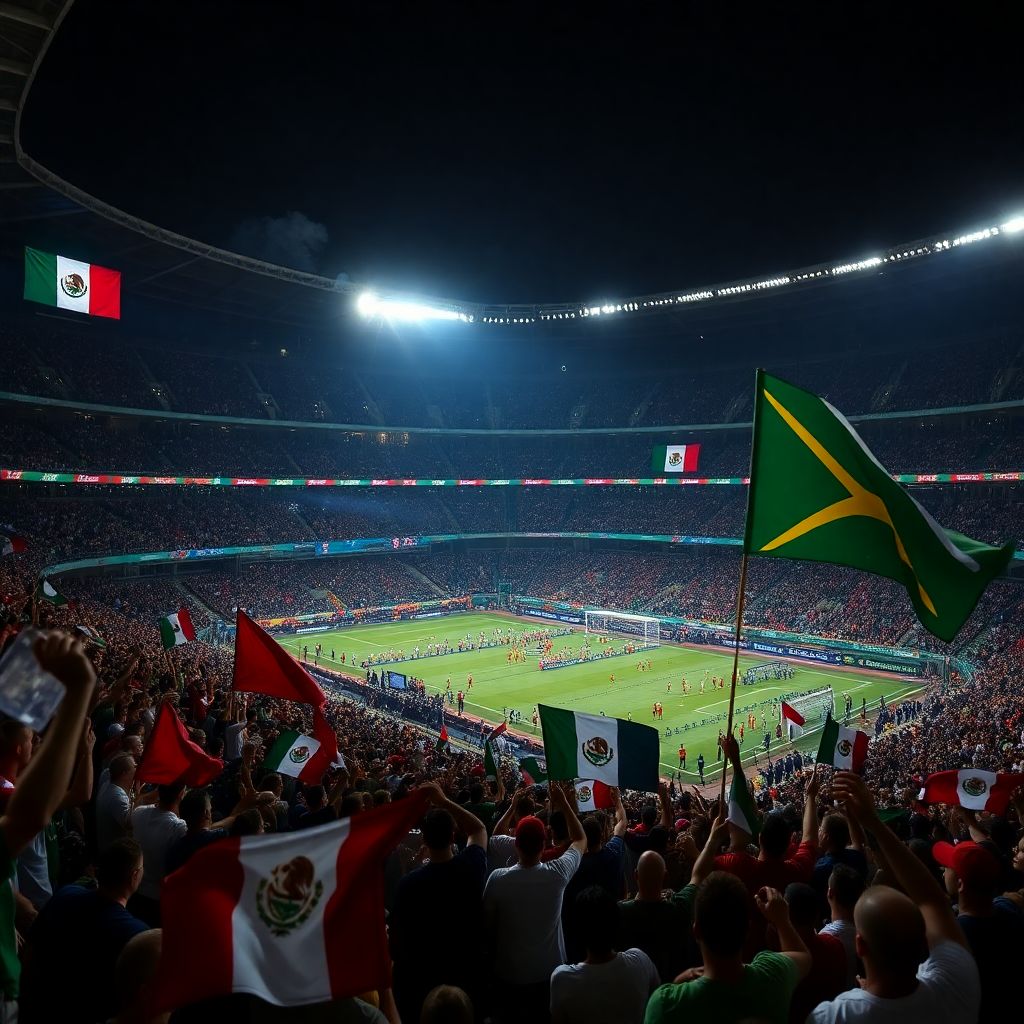
The tournament kicked off in Mexico with a chaotic and emotional opener. One of the host nations, Mexico, started its campaign in front of a roaring home crowd by defeating South Africa 2-0 thanks to goals from Julián Quiñones and Raúl Jiménez.
The match, however, will be remembered as much for its discipline issues as for the scoreline. A total of three red cards were shown, with Mexico finishing the game with 10 men and South Africa reduced to 9. Despite the numerical swings, Mexico managed the chaos better, controlled the ball in key moments and turned the opening fixture into a statement that they intend to go deep in this World Cup.
Turkey’s long‑awaited return ends in disappointment
After 24 years away from the biggest stage, Turkey finally returned to a World Cup match, but the long‑anticipated comeback started on a sour note. Facing Australia in their first group game, Turkey failed to find their rhythm and suffered a 2-0 defeat.
Australian talents Irankunda and Metcalfe scored the goals that decided the match, punishing defensive lapses and a lack of cutting edge from the Turkish side. For Turkey, the loss is a painful reminder that experience and form at this level matter, and it leaves them with little margin for error in their remaining group fixtures.
England edges Croatia in a spectacular goal fest
The standout encounter of the opening week took place in Dallas, where England and Croatia produced one of the most entertaining matches of the tournament so far. In a clash between two strong contenders for the title, England emerged with a 4-2 victory in a high‑tempo, end‑to‑end battle.
England’s attacking unit looked sharp and inventive, frequently stretching Croatia’s defensive line and capitalizing on space between the lines. The win not only gave England a crucial three points but also put them in control of their group, sending a clear message to rivals that their firepower in the final third could be one of the tournament’s defining weapons.
Tactical chess: Brazil and Morocco cancel each other out
One of the most anticipated games of the week saw World Cup giants Brazil face Morocco, the semi‑finalists from the previous edition. In front of a packed crowd at the stadium in New Jersey, the teams delivered a tense, tactical 1-1 draw.
Brazil tried to impose their traditional, possession‑based attacking style, while Morocco once again demonstrated why they are regarded as one of the most organized and disciplined sides in international football. The match was played at an exceptionally high tempo, with both teams alternating periods of dominance. The draw leaves Group dynamics wide open, but also suggests that both sides are equipped to go far in the tournament.
France turn on the style after the break
In Group I, France, one of the last World Cup’s finalists, started their campaign with a confident 3-1 win over Senegal. The African champions approached the game with their characteristic physical intensity, but France gradually imposed their superior technical quality, particularly in the second half.
Kylian Mbappé once again took center stage. With his two goals, he not only secured the win but also reached 58 goals for the French national team, becoming the highest scorer in his country’s history. At World Cup level, these strikes took him to 14 goals overall, lifting him into the company of legends such as Miroslav Klose, Lionel Messi, Ronaldo Nazário and Gerd Müller, and placing him fifth on the all‑time World Cup scorers list at that moment.
Germany run riot, Curaçao make history
The biggest scoreline of the opening week came in Group E, where Germany demolished newcomers Curaçao 7-1. The four‑time world champions showcased their attacking depth, pressing high, forcing turnovers and converting chances with ruthless efficiency.
Yet, amidst the German goal avalanche, Curaçao still enjoyed a historic moment: they scored their first ever World Cup goal in this match. For a small island nation to find the net against one of football’s superpowers is a symbolic achievement and a point of pride, regardless of the final result.
Spain stumble against debutants Cape Verde
Another debutant, Cape Verde, produced one of the most remarkable defensive performances of the week. Facing Spain in their first ever World Cup match, the island nation secured a 0-0 draw, defying expectations and frustrating one of the tournament’s traditional favorites.
The hero of the night was Cape Verde’s 40‑year‑old goalkeeper Vozinha, who made seven crucial saves and repeatedly denied Spain’s attackers from close and long range. With this appearance, Cape Verde not only marked their first steps on the World Cup stage but also joined Curaçao and Iceland as one of the three smallest nations ever to qualify for the tournament by population.
Portugal forced to settle for a draw
Portugal, another of Europe’s heavyweights, could only begin their campaign with a 1-1 draw against DR Congo at the NRG Stadium in Houston. The European side started brightly and took the lead in the 6th minute through Joao Neves, who finished off a well‑constructed move.
However, DR Congo grew into the game and were rewarded in first‑half stoppage time. In the 45+5th minute, Yoane Wissa struck the equalizer, a goal that ultimately decided the final score. The draw leaves Portugal under pressure to win their remaining games, while DR Congo walk away with renewed belief that they can compete with the biggest names.
Argentina and Messi send an early warning
Defending champions Argentina began their title defense in style. Led once again by Lionel Messi, they comfortably defeated Algeria 3-0 in Kansas City. From the opening whistle, Argentina dominated possession, dictated the tempo and rarely allowed Algeria to threaten.
Messi was the undisputed star, scoring all three goals to record the first World Cup hat‑trick of his illustrious career. With these strikes, he moved to 16 World Cup goals overall, drawing level with Miroslav Klose as the joint all‑time top scorer in tournament history. Beyond the statistics, his performance sent a strong signal that Argentina are fully focused on retaining the trophy.
Records, numbers and trends from Week 1
The opening week did not just provide drama; it also reshaped the record books:
– Kylian Mbappé’s brace against Senegal took him to 14 World Cup goals, placing him among the top five scorers in tournament history at that point and underlining his status as the heir to the game’s greatest names.
– Just one day later, Lionel Messi’s hat‑trick against Algeria elevated him to 16 World Cup goals, bringing him level with Klose and jointly at the summit of the all‑time scoring chart.
– Germany’s 7-1 victory against Curaçao was the widest margin of victory in the first week, and it also made Germany the highest scoring team of the opening round.
– The matches Germany 7-1 Curaçao and England 4-2 Croatia were the highest‑scoring games of the week, serving up eight and six goals respectively and showcasing the attacking potential of several leading nations.
– Spain’s goalless draw with debutants Cape Verde was one of the big early surprises, especially given Spain’s dominance in possession but lack of cutting edge in front of goal.
– The new 48‑team format seems to encourage caution: 9 of the 24 opening‑round matches ended in draws. Remarkably, every game in Groups B and G finished level, pointing to finely balanced pools where qualification may be decided by tiny margins.
– Lionel Messi finished the first week as the tournament’s leading scorer with 3 goals, placing him at the top of the early Golden Boot ranking.
How the new 48‑team format is shaping the tournament
The expanded structure has instantly changed the atmosphere of the World Cup. With 12 groups and more nations involved, there is a broader geographic and cultural spread, and small countries like Curaçao and Cape Verde are seizing their chance on the global stage.
At the same time, the higher number of matches means that some teams approach their openers more cautiously, aware that a single defeat no longer guarantees elimination but can still complicate the path to the knockouts. The high draw rate in the first week reflects this tactical prudence: teams are reluctant to take excessive risks early on, preferring to stay in contention and adjust once the group dynamics are clearer.
Underdogs making their presence felt
One of the main stories of the first week is how so‑called smaller teams are refusing to simply play the role of spectators. Cape Verde’s clean sheet against Spain, Curaçao’s historic goal against Germany and DR Congo’s point against Portugal all signal that the gap between traditional powers and emerging nations is narrowing, at least in single‑match scenarios.
Many of these underdogs show strong tactical organization, intense work rate and a clear game plan built around defensive solidity and quick transitions. While they may not dominate possession, they are increasingly capable of executing specific match strategies that neutralize technically superior opponents for long stretches.
Pressure mounting on traditional powers
Despite some strong performances from favorites such as Argentina, France, England and Germany, the opening week has also increased pressure on other giants. Spain’s inability to score against Cape Verde raises questions about their efficiency in the final third, while Portugal’s dropped points against DR Congo suggest potential fragility under pressure.
For teams with ambitions of lifting the trophy, early setbacks can quickly transform calm preparation into urgency. With only two group matches left, coaches are forced to reassess line‑ups and tactical plans, and star players immediately face heightened expectations to respond.
Tactical and physical trends to watch
From a tactical standpoint, several patterns have emerged in the first round of fixtures:
– High pressing and quick counters: Teams like Germany and England use aggressive pressing to win the ball high up the pitch and convert turnovers into immediate scoring opportunities.
– Compact low blocks: Underdogs such as Cape Verde and DR Congo rely on narrow, disciplined defensive shapes, forcing their opponents wide and relying on strong goalkeeping to survive periods of pressure.
– Star‑centric systems: Sides led by global icons – Argentina with Messi, France with Mbappé – often build their attacking structures around these individuals, and so far that approach is paying off.
Physically, the demanding travel schedule across North America and varying weather conditions could become key factors as the tournament progresses. Teams with deeper squads and better rotation may be rewarded in later rounds.
What Week 1 tells us about the title race
It is too early to draw definitive conclusions, but the first week has given important hints about the balance of power. Argentina and France look every bit like contenders, combining individual brilliance with collective cohesion. England’s offensive potential is eye‑catching, while Germany’s ruthless start reminds everyone that they remain a tournament team.
Brazil and Morocco, despite their draw, both showed the tactical and technical qualities needed for a long run. On the other hand, Spain and Portugal will need to find an extra gear if they want to join the inner circle of favorites. With underdogs growing in confidence and the expanded format introducing more variables, the path to the trophy appears more unpredictable than ever.
Looking ahead
As the second round of group matches approaches, the tension will rise. Teams that stumbled in the opening week will chase redemption, while early winners will aim to secure qualification as soon as possible. Stars like Messi and Mbappé will continue to chase history, and new heroes from lesser‑known footballing nations are likely to emerge.
The first week of the 2026 World Cup has already delivered red cards, hat‑tricks, record‑breaking milestones and surprise results. If this opening chapter is any indication, the rest of the tournament promises even more drama, storylines and unforgettable moments.