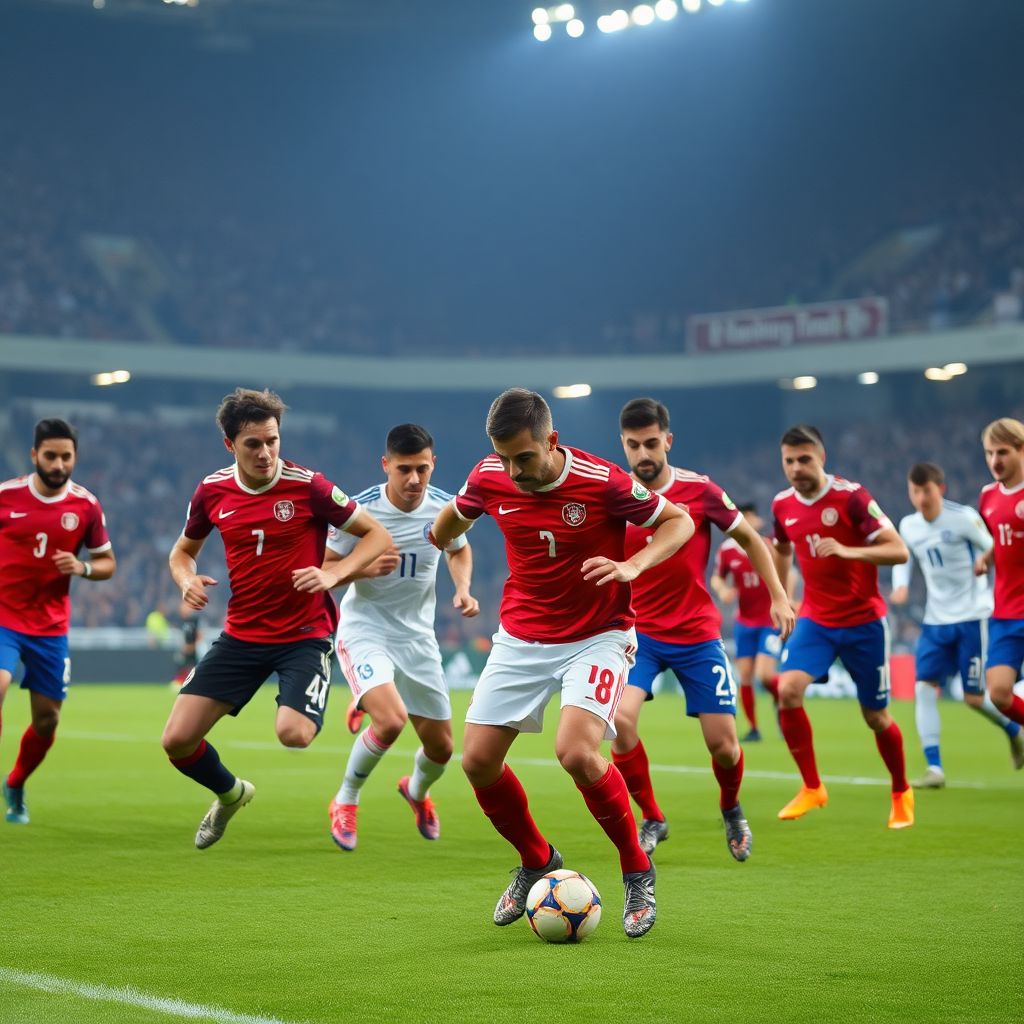
Süper Lig clubs struggle in Europe because finance, tactics, mentality and structure all interact, not because of a single weakness. Domestic revenue limits squad depth, local playing styles do not always translate, psychological pressure is huge, and calendar plus infrastructure issues reduce consistency. Fixing Europe requires coordinated, long‑term change.
Myths first: quick verdicts on why Süper Lig falters in Europe
- Myth: Spending transfer fees guarantees European success. Reality: wage structure, depth and analytics matter more than one expensive star.
- Myth: Turkish tactics are inherently too attacking. Reality: the issue is poor control of transitions and pressing discipline, not attacking ambition itself.
- Myth: Mentality is the only problem. Reality: psychology amplifies or limits existing tactical and structural strengths, it does not replace them.
- Myth: Referees and bad luck are the main reasons. Reality: repeated patterns of defensive errors and fitness drop‑offs show deeper causes.
- Myth: More foreigners will automatically solve everything. Reality: squad construction and rotation planning are as important as foreign‑player numbers.
- Myth: European level is unreachable for Turkish clubs. Reality: targeted investment, better planning and realistic goals can restore competitiveness.
Challenging the myth that money alone determines continental success
The dominant myth says: “If Turkish clubs had Premier League money, they would dominate Europe.” This sounds logical, but it hides how clubs actually use the money they already have and how strategic decisions turn budgets into football power.
European performance depends less on headline transfer spending and more on wage structure, scouting quality, medical and performance departments, data analysis and coherent long‑term planning. A club can spend big fees yet still build an unbalanced squad, overpay ageing stars and underinvest in the training ground.
Take Galatasaray as an example: in several seasons they attracted high‑profile names but struggled with pace, pressing and squad balance against mid‑level European sides. Meanwhile, more modest European clubs used detailed analysis to sign undervalued players who fit a clear tactical model and improved year by year.
Money sets the limits of what is possible; intelligence decides how close you get to those limits. The key takeaway: the first European step for Süper Lig clubs is not “spend more” but “spend with a long‑term game plan, from academy to first team.”
Financial anatomy: broadcasting, sponsorship and transfer-market realities
The next myth says: “Süper Lig broadcasting income alone is enough; clubs just mismanage it.” In reality, European rivals combine several revenue streams more efficiently, and Turkish clubs face structural limits and currency risk that narrow their room for error.
-
Broadcasting and subscriptions.
Domestic TV money is important but fluctuates, and exchange‑rate changes hit hard when wages are in euros. Fans following with a beIN Sports Turkey Super Lig subscription see big crowds, but the underlying revenue still trails major leagues, squeezing budgets for depth and infrastructure. -
Sponsorship and commercial deals.
Shirt deals, sleeve sponsors and domestic partners are growing, yet most clubs lack global brands and coordinated marketing. Without strong international visibility, they lag behind European competitors who monetise worldwide fanbases and sell premium partnerships. -
Matchday and tourism potential.
Ticket income depends on pricing and stadium use. Foreign fans buying Turkish Super Lig tickets online for derby experiences add value, but many fixtures outside the big derbies do not maximise attendance, hospitality or retail, limiting matchday growth. -
Transfer strategy and resale value.
Some clubs specialise in buying established names on short contracts, which brings short‑term hype but low resale income. Others are starting to copy the model of buying young, developing and selling on, but this culture is still stabilising. -
Merchandising and retail.
Even the best Turkish football club merchandise store can only thrive if the club brand is clear and international fans can order easily. Fragmented online shops and inconsistent product quality reduce a revenue stream that European rivals use aggressively. -
Debt and financial discipline.
Many clubs carry legacy debts, so a big part of revenue serves the past instead of the future. Under this pressure, short‑term gambles for European qualification often replace sustainable squad building and academy investment.
Actionable takeaway: financial progress for Süper Lig clubs means diversifying beyond TV money, focusing on digital and international fans, and linking every euro spent on players to a clear plan for either performance or resale value.
Tactical mismatch: how domestic styles break down against European opponents
A popular myth claims: “Turkish football is too emotional and attacking, that is why it fails tactically in Europe.” The real issue is not attacking intent but weak control of transitions, pressing details and game tempo against organised opponents.
-
High‑tempo chaos vs controlled tempo.
In the Süper Lig, a fast, chaotic second half can turn matches around, which suits teams that rely on crowd energy. In Europe, clubs like Fenerbahçe have sometimes found that opponents slow the tempo, force structured build‑up and expose rushed forward passes. -
Pressing triggers and compactness.
Domestic games often tolerate loose pressing lines as long as individual duels are won. Against European sides that use third‑man runs and rotations, a half‑second delay in pressing or a five‑metre gap between lines turns into a free shot or cut‑back. -
Wide defenders and transition defending.
Full‑backs in Turkey are encouraged to attack with early crosses. In Europe, when a full‑back is caught high and the defensive midfielder does not cover, a single vertical pass can create a two‑on‑two. This pattern has hurt clubs like Trabzonspor against mobile forwards. -
Set pieces and rehearsed routines.
European competitors invest heavily in detailed corner and free‑kick schemes. Turkish sides sometimes treat set pieces more traditionally, leading to avoidable goals from blocks, screens and rehearsed movements that are rarely seen in domestic play. -
Game management after taking the lead.
In the Süper Lig, many teams keep “going for the second goal” with numbers forward. In Europe, failing to switch into a more compact, counter‑attacking posture after scoring has cost Istanbul clubs valuable away draws and home wins.
Actionable takeaway: to close the gap, Süper Lig clubs should treat European nights as tactical exams, investing in pressing organisation, transition defence and set‑piece detail rather than changing their attacking identity completely.
Squad construction: depth, rotations and the impact of foreign-player rules
The recurring myth says: “If foreign‑player limits disappear, Turkish clubs will automatically compete with European giants.” In practice, national rules, rotation habits and squad‑building culture all influence how well a team can sustain domestic and European campaigns.
-
Advantages of the current squad models.
- Clubs that mix strong foreign signings with locally trained players can create a clear identity and maintain a domestic core that understands the Süper Lig rhythm.
- Academy graduates offer cost‑effective options for rotation, freeing budget for two or three key foreign players in decisive European positions such as central defence or number six.
- Existing foreign‑player rules encourage some planning about nationality quotas, which can, in theory, protect local development if used intelligently.
- When rotation is planned early in the season, even a limited squad can remain fresh for crucial European qualifiers and group matches.
-
Limitations that hurt European performance.
- Short‑term deals for ageing stars reduce overall athleticism and pressing capacity, which is ruthlessly exposed in high‑intensity European games.
- Unclear succession planning means that when one or two key foreigners leave, the tactical system collapses and must be redesigned from zero.
- Rotation is often reactive, based on fatigue or injuries, instead of pre‑planned, so the “B team” has little experience playing together.
- Foreign‑player limits can tempt clubs to keep technically limited domestic players in key roles, forcing the team to adapt around their weaknesses in Europe.
For example, Başakşehir’s better European runs came in seasons when their squad had clear hierarchy, balanced age profiles and a stable core that played together for several years. Actionable takeaway: success in Europe begins in June, at the squad‑planning table, not in August on deadline day.
Psychology and culture: preparation, expectation management and European know‑how
The romantic myth says: “Our stadium atmosphere alone will scare European teams.” While Turkish crowds are among the most intense in the world, psychological preparation and emotional control often decide whether this energy becomes an advantage or a burden.
-
Overreliance on home advantage.
Some teams prepare as if home legs are automatically won, then panic when conceding an early goal. Recent Galatasaray campaigns showed that when the first 20 minutes do not go as scripted, anxiety from stands and bench can spread onto the pitch. -
Underestimating away goals and margins.
Even after the classic away‑goals rule changed, mentality sometimes looked similar: emotional reaction to conceding instead of calm damage control. A narrow away defeat, well managed, can still be a good platform for the return match. -
Hero culture vs process culture.
Fans and media often focus on a single “hero” player who must rescue the team. European sides that consistently advance usually talk about game plans, automatisms and processes more than individual saviours. -
Pressure from history and narrative.
Long periods without deep European runs can create a self‑fulfilling story that “Turkish teams always fail in spring.” Younger squads feel that burden, tighten up and play safe instead of trusting rehearsed patterns. -
Insufficient mental skills training.
Sports psychology, leadership groups inside the dressing room and scenario training (for example, playing with ten men) are still developing areas. Clubs like Fenerbahçe and Beşiktaş have begun to pay more attention, but consistency is needed.
Actionable takeaway: Süper Lig clubs should invest in mental‑skills coaches, clear communication about realistic goals and internal leadership structures so that emotional stadiums become fuel, not fire.
Structural constraints: scheduling, facilities and federation-level support
The structural myth says: “Once the 11 players are on the pitch, structures do not matter.” In reality, calendar design, travel, training facilities and coordination between club and federation shape how fresh and prepared teams are for European opponents.
Imagine a mini‑scenario around a club chasing both the league and group‑stage qualification. A Thursday away trip in Europe is followed by a Sunday league fixture on a heavy pitch, with a long away journey between. Recovery time is tight, and rotation depth is limited by domestic pressure for results.
Now add training infrastructure: if the club’s pitches or gym facilities are below top European standards, micro‑injuries and fatigue accumulate. Video‑analysis rooms, nutrition plans and sleep management require investment and alignment across the whole organisation, not just the head coach’s wishes.
Federation‑level decisions can also help or hinder. Slightly more flexible scheduling around decisive European ties, support for better pitch maintenance across the league and incentives for clubs investing in academies all contribute indirectly to continental results.
Actionable takeaway: improving European performance is not only a technical‑area job; club boards and federation planners must treat calendar, infrastructure and performance science as part of the same project.
Mini-scenarios: how different people can use this understanding
To close, here are short, practical scenarios that apply these ideas from different perspectives around Turkish football.
-
Visiting fan planning a European trip.
You want to experience a big match in Istanbul and maybe a European night. You check Turkish Super Lig tickets online and see several options. Understanding that league form may dip after European away games, you choose a high‑intensity home match where the team is likely to rotate less, and you budget for potential fixture date changes. -
Neutral viewer following the league on TV.
You subscribe with a beIN Sports Turkey Super Lig subscription and watch both domestic and European fixtures. Knowing the tactical mismatch patterns, you pay extra attention to how a team’s pressing and transition defence in league games could translate to tougher European opponents, making your viewing more analytical. -
Supporter buying club gear.
When you look for the best Turkish football club merchandise store, you now understand how important international sales are for financial stability. You prefer official stores and licensed products, realising that every jersey and scarf you buy can indirectly support better facilities and scouting for European campaigns. -
Casual bettor checking match probabilities.
While scanning Super Lig match betting odds today, you remember how travel, rotation and psychological pressure affect performance after European nights. You do not just look at league table position; you check whether a club had a tiring midweek trip, injuries or key players rested, and you treat the odds with more context. -
Corporate guest considering hospitality.
Your company evaluates VIP hospitality packages Turkish Super Lig clubs offer for entertaining clients. With the structural and financial context in mind, you understand how premium hospitality nights link to revenue that can be reinvested in training centres and youth development, so you see corporate engagement as part of the wider football ecosystem.
Concise answers to recurring practical doubts
Do Süper Lig clubs lose in Europe mainly because they are poor or badly run?
Finances matter, but they are not the only factor. Tactical preparation, squad depth, mental resilience and structural issues like scheduling combine with money. Some well‑run, modest clubs in other countries outperform richer but less organised sides.
Would removing foreign-player limits instantly make Turkish clubs competitive in Europe?
It would change squad‑building options but not guarantee success. Without better scouting, rotation planning and academy integration, unlimited foreign players can simply lead to more short‑term signings and the same structural problems.
Is the Süper Lig’s attacking style the real tactical problem in Europe?
Attacking ambition is not the issue; many top European teams are very attacking. The problem is usually poor control of transitions, pressing and game management. With better organisation in these areas, an attacking identity can still succeed.
Does mentality matter more than tactics for Turkish teams in Europe?
Mentality and tactics reinforce each other. A good plan helps players stay calm under pressure, while strong mentality helps execute the plan when the game becomes chaotic. Treating mentality as a substitute for tactics is a mistake.
Can improving infrastructure really change European results for Süper Lig clubs?
Yes, over time. Better pitches, gyms, recovery facilities and analysis tools reduce injuries and improve consistency. This does not show in one season, but across several years it raises the baseline level of performance.
Are Turkish crowds still an advantage in European home games?
They are a big advantage when the team channels the energy into intensity and focus. If players become too emotional or impatient, the same atmosphere can create anxiety. Preparation and leadership decide which way it goes.
Should fans lower expectations for deep European runs from Turkish clubs?
Expectations should be realistic: consistent group‑stage qualification, occasional knock‑out runs and clear progress in club structures. With long‑term planning, expectations can rise again; without it, big ambitions quickly turn into frustration.