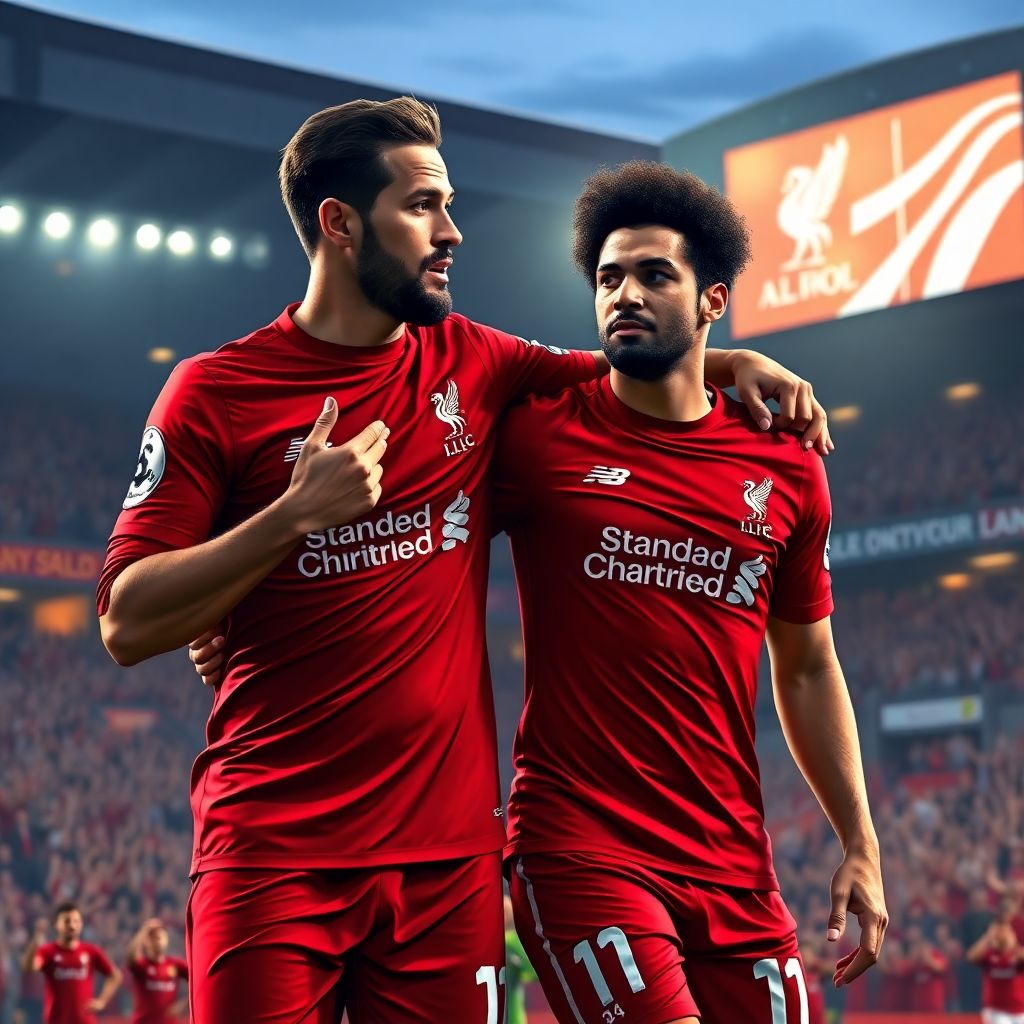
Virgil van Dijk sends clear message on Mohamed Salah’s future
Liverpool captain Virgil van Dijk has made it unmistakably clear where he stands on Mohamed Salah’s future at the club, praising the Egyptian star after his standout display in the FA Cup win over Brighton and insisting he wants him to stay at Anfield.
Speaking after Liverpool’s convincing 3–0 victory over Brighton in the FA Cup, van Dijk highlighted just how decisive Salah continues to be for the team. The 33‑year‑old forward produced yet another influential performance, scoring one goal and providing an assist, effectively orchestrating Liverpool’s progression in the competition.
Salah’s display came in the context of a turbulent period earlier in the season. In December, tensions reportedly flared between the player, the club and manager Arne Slot. The Egyptian forward publicly hinted that he felt “thrown under the bus” during that spell, a rare moment of visible friction from a usually composed figure. Despite those issues, Salah’s response on the pitch has been emphatic.
Since returning from the Africa Cup of Nations, Salah has restored his rhythm and re-established himself as a central figure in Liverpool’s attack. From January onwards, he has started every match in the first XI, underlining both his physical readiness and his tactical importance. His form has coincided with Liverpool’s push across multiple fronts, reinforcing the sense that, even in his mid‑thirties, Salah remains one of the club’s most decisive players.
Van Dijk was keen to stress that Salah’s importance goes far beyond goals and assists. “Mo is still a leader,” the Dutch defender said, underlining the Egyptian’s influence within the squad. According to the Liverpool captain, Salah’s mere presence on the pitch changes the dynamics of the team: defenders are drawn to him, spaces open for others, and the overall level of confidence in the side rises when he is involved.
“It’s not just about the goals,” van Dijk emphasized, pointing out that Salah’s work rate, movement off the ball and standards in training all contribute to the culture within the dressing room. The defender portrayed Salah as one of the key figures who set the tone at the club, demanding more of himself and those around him.
Van Dijk then delivered a direct message about Salah’s future, leaving no room for ambiguity. “I always want Mo to stay,” he said. “He’s a good friend of mine and we’ve been through a lot together over the years. He’s incredibly important for Liverpool and has set the bar unbelievably high.” The captain suggested that Salah’s impact in the final stretch of the season could be decisive, adding, “We will all see how important he still is in the remainder of the campaign.”
Behind these words lies a clear subtext: Liverpool’s senior players, and especially its captain, see Salah as fundamental to the club’s present and near future. For a team navigating a period of transition under a relatively new coach, the presence of an experienced, proven winner like Salah provides stability and continuity, both on and off the pitch.
Salah’s contract runs until 2027, but that has not silenced speculation about a potential departure in the summer. The prospect of him leaving remains very real, largely because of sustained interest from abroad. Saudi Arabian club Al‑Ittihad tried to lure him away in 2023 with a substantial offer, and reports indicate that their admiration for the forward has not faded. With Salah still delivering at the highest level, it is inevitable that clubs with significant financial power will continue to circle.
From Liverpool’s perspective, the situation is delicate. On the one hand, the financial attraction of a major transfer fee for a player in his thirties cannot be dismissed. On the other hand, replacing Salah’s combination of consistency, leadership, popularity and sheer end product would be extremely difficult. Few players in world football can match his level of output over such an extended period.
Salah’s numbers over his Liverpool career have been remarkable: season after season he has been among the team’s top scorers and assist providers, often carrying the attack in crucial moments. Beyond statistics, he has become a symbol of Liverpool’s modern success, central to league titles, European nights and domestic cup triumphs. This legacy is precisely why van Dijk and others are eager to see him remain at Anfield.
The December disagreements with the club and Arne Slot also add another layer to the story. For top players, tension with coaches is not uncommon, especially when expectations are sky‑high and emotions are intense. Salah’s comment about feeling thrown “under the bus” hinted at frustration over how certain issues were handled publicly. Yet his performances since then suggest a professional who has chosen to respond in the most effective way: by proving his worth on the field.
For the dressing room, Salah’s reaction may be just as important as his goals. Young players and new signings see how a senior figure deals with adversity, and that shapes the culture of the team. Refusing to let off‑field noise undermine his contributions, Salah has demonstrated resilience and a commitment to the collective objective, reinforcing his status as a leader.
Van Dijk’s remarks also reflect the bond built between Liverpool’s core players over the years. Shared finals, title races, disappointments and triumphs have created a tight group in which figures like Salah and van Dijk are central pillars. When the captain publicly backs a teammate’s continued presence, it sends a strong message about unity and shared ambition in the squad.
As the season moves into its decisive phase, Salah’s role is expected to become even more critical. In knockout competitions such as the FA Cup, a moment of brilliance can change everything, and Salah has repeatedly shown he can deliver in exactly those moments. In the league, his consistency helps sustain Liverpool’s challenge across a long, demanding campaign.
For the club’s supporters, van Dijk’s words will echo their own hopes. Many fans view Salah not only as a world‑class forward but as part of the identity the team has forged in recent years: aggressive, relentless, fearless in big games. Losing that kind of player would not just alter the starting XI; it would change the emotional landscape of the club.
Ultimately, the coming months will be decisive for both Salah’s future and Liverpool’s trajectory. If he continues to perform at the current level, pressure will grow on the club’s hierarchy to do everything possible to keep him. At the same time, external interest is unlikely to fade, especially if he plays a starring role in any potential silverware.
For now, van Dijk’s message is simple and powerful: Mohamed Salah still leads, still delivers and still sets the standard at Liverpool. And as long as he remains at Anfield, the captain wants him right where he is — at the heart of the team.