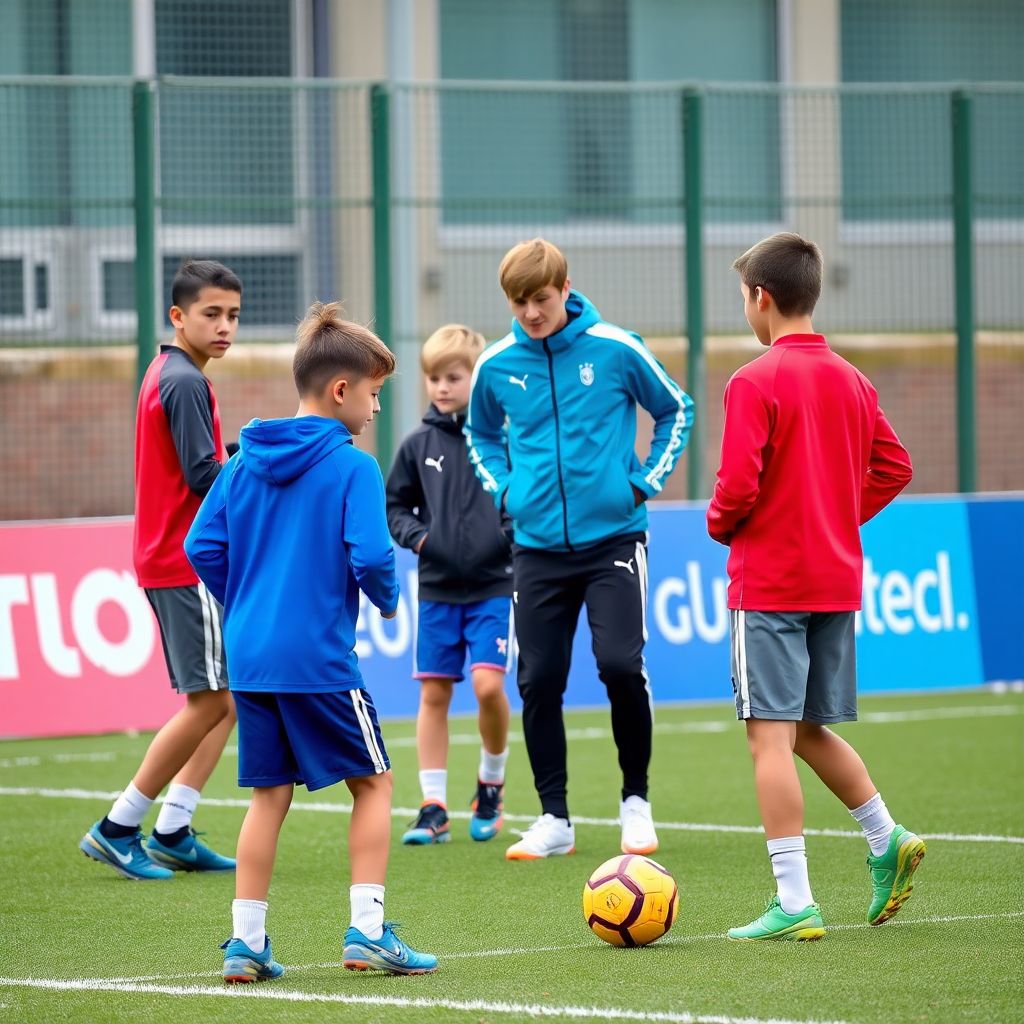
Turkish wonderkids in football are highly promising young players who show above-average technical, tactical, and mental potential relative to their age group. Safely managing their rise means gradual exposure to senior levels, clear development plans, and realistic expectations, while recognising hard limits: not every talent becomes a Turkey national team future star.
Snapshot of Turkey’s Next-Gen Talent
- turkish wonderkids football are emerging from a wider, more structured academy network than a decade ago, especially in major cities.
- The best young turkish football players blend traditional Turkish flair in tight spaces with improved physical preparation and game intelligence.
- Clubs increasingly use data and video-based turkish football talent scouting reports instead of relying only on word-of-mouth.
- Safe development focuses on minutes at the right competitive level, not early transfers abroad or instant stardom.
- Only a small subset of next generation turkish footballers will realistically become turkey national team future stars, even if they look elite at U17 or U19.
- Family, agents, and social media can accelerate or damage careers; clear limits and phased goals reduce risk.
Separating myth from momentum: misconceptions about Turkish wonderkids
The phrase “Turkish wonderkid” is often used loosely by media and fans to describe any teenager with a few highlight clips. For scouts and coaches, the term should be far narrower: a wonderkid is a youth player whose current performance level and development curve project well beyond the age-group norm.
Three boundaries matter. First, age: we are talking primarily about players roughly in the 16-21 window who are still on a steep learning curve. Second, evidence: there must be repeated performance in competitive matches, not just academy friendlies or viral skills videos. Third, projection: the question is not “how good is he now?” but “what is the realistic ceiling if development continues safely?”
Several myths surround turkish wonderkids football. One myth is that technical flair alone is enough; in reality, many gifted dribblers stall without tactical discipline or physical robustness. Another myth is that early debuts in the Süper Lig automatically signal elite potential; in truth, context matters, including game state, opposition level, and role. A final, dangerous myth is that moving abroad as soon as possible guarantees success, when, for many, stable minutes at home would be safer.
To work safely with the next generation turkish footballers, clubs and families need to treat “wonderkid” as an internal working label, not a marketing term. It should trigger structured planning and protective limits: load management, defined off-pitch rules, controlled media exposure, and clear non-football education paths if the player does not reach the expected level.
Demographics, academies and the changing youth landscape
- Broader participation base: Urbanisation and improved access to organised football mean more kids enter club systems earlier. Safe practice demands basic medical screening, appropriate pitch sizes, and trained coaches even at pre-academy level.
- Professionalised academies: Top Süper Lig clubs now run structured age groups with sports science support. However, quality drops quickly outside the elite; a key limitation is the gap between big-club academies and smaller regional setups.
- Earlier talent identification: Players are spotted and registered younger, which helps long-term teaching but raises burnout risk. Limiting weekly training load and enforcing rest periods is crucial for growth and injury prevention.
- Migration and dual nationality: Many of the best young turkish football players grow up in European systems (Germany, Netherlands, etc.). Coordination between federation staff and foreign clubs is essential so that call-ups do not overload players or conflict with their club development plans.
- Data and video infrastructure: More clubs record youth matches, but not all know how to interpret the data. Safe usage means treating metrics as support tools, avoiding labelling a teenager as a “failure” or “star” based purely on early statistics.
- Education and safeguarding: The modern academy must protect children from abuse, exploitation, and academic neglect. Clear codes of conduct, background checks for staff, and guaranteed schooling hours are non-negotiable limits.
Technical and tactical archetypes emerging from Turkey
Several recurring player archetypes appear in turkish football talent scouting reports. Understanding them helps scouts set realistic ceilings and identify what is missing for a safe jump to senior football.
- Creative attacking midfielder between the lines: Traditionally Turkey’s most celebrated profile: strong in tight spaces, good vision, comfortable receiving under pressure. Limitation: many struggle to adapt defensively to modern high-intensity pressing schemes.
- Inverted winger with strong ball-carrying: Right-footers on the left or left-footers on the right, cutting inside to combine or shoot. They need structured work on decision-making and off-ball runs; otherwise, they become predictable at higher levels.
- Deep-lying playmaker pivot: Intelligent distributors dropping between centre-backs to start build-up. Safe development requires progressive exposure to physical duels; overprotecting them in youth games can hide contact weaknesses that surface later.
- Aggressive press-leading forward: Forwards who trigger the press, chase down centre-backs, and create chaos. They can reach senior minutes early because coaches trust their work-rate, but finishing and timing of runs must be refined to avoid plateauing as “only hard workers.”
- Ball-playing centre-back: Comfortable stepping into midfield, breaking lines with passes. Their main limitation in Turkey is often aerial and 1v1 defending due to historically less emphasis on these skills in youth training; safe pathways demand dedicated individual defensive work.
- Box-to-box runner: High-engine midfielders who cover large distances and link phases. Without clear role definition, they risk becoming “busy but inefficient.” Structured tactical coaching is needed to convert running volume into match impact.
Clubs, coaches and programs that consistently produce prospects
Some Turkish clubs and regional centres are more consistent at producing national-team-level prospects, though no single institution “owns” development. Each environment offers advantages and limitations that must be weighed carefully before a young player moves.
Development strengths seen in leading Turkish environments
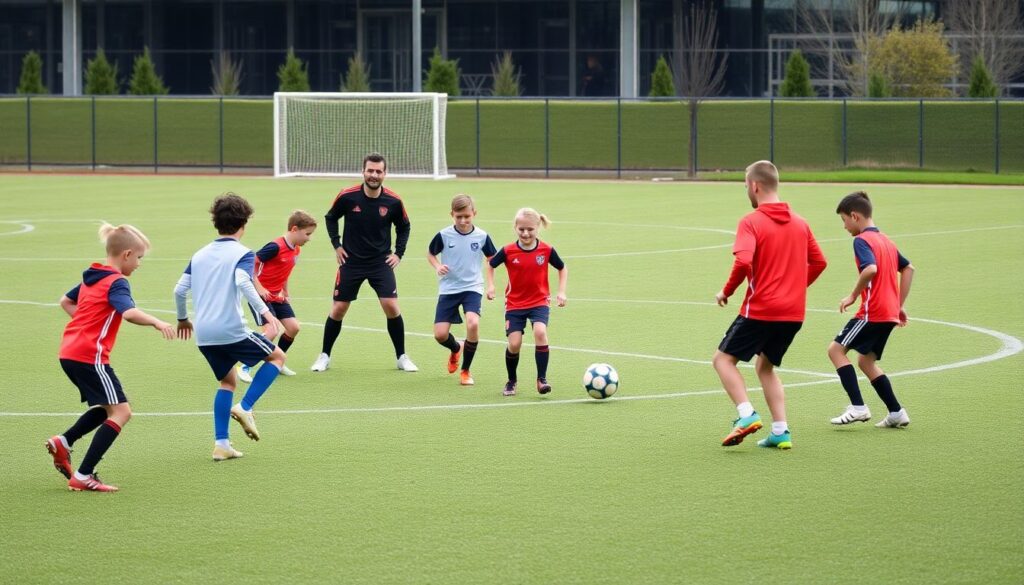
- Structured academies with age-group periodisation and clear game models.
- Access to qualified coaches, sports scientists, and medical staff experienced with youth growth patterns.
- Regular competition against strong domestic and international opponents, helping benchmark talent realistically.
- Transparent processes for promoting players from U19 to reserve and first teams.
- Established relationships with European clubs, easing safe loan moves rather than chaotic last-minute transfers.
Common constraints and risks that need managing
- Short-term pressure on first-team coaches, reducing their willingness to give sustained minutes to young players after a single bad game.
- Inconsistent communication between academy and senior staff, leading to unclear individual plans.
- Over-reliance on one or two “star” age groups while other cohorts receive less attention.
- Strong influence of agents, sometimes pushing moves based on immediate financial gain rather than long-term development.
- Media hype that labels teenagers as turkey national team future stars long before they have proven consistency, creating mental stress.
Five profiles: detailed player dossiers and development metrics
Instead of naming individuals, the following five archetypal dossiers outline how next generation turkish footballers might look on paper and where safe steps and limits should be placed. Each profile shows how to read basic metrics without overreacting to short-term swings in form.
| Profile label | Primary position | Current competitive level | Minutes trend | Key qualitative metrics |
|---|---|---|---|---|
| Profile A – Creative 10 | Attacking midfielder | U19 + occasional senior squad | Gradually increasing over recent seasons | High chance creation, good progressive passes, moderate defensive intensity |
| Profile B – Direct winger | Inverted winger | Second tier senior matches | Stable starter with occasional rests | Strong dribble success, frequent entries into final third, variable crossing quality |
| Profile C – Controlling pivot | Defensive midfielder | U21 with cup appearances | Fluctuating, depending on opponent strength | High passing reliability, good interception positioning, limited long-range threat |
| Profile D – Pressing forward | Centre-forward | Top-division bench + late-game minutes | Short but regular cameos | Intense pressing actions, frequent runs behind defence, inconsistent first touch |
| Profile E – Ball-playing defender | Centre-back | Loaned to lower division | Consistent 90-minute appearances | Safe build-up contributions, good line-breaking passes, developing aerial duels |
Reading these dossiers safely means avoiding five recurring mistakes.
- Overweighting highlights, underweighting habits: Focusing on spectacular assists or goals while ignoring pressing effort, recovery runs, and reactions to mistakes.
- Confusing minutes quantity with quality: Assuming that any rise in minutes automatically means progress. Scouts should ask whether the new role actually stretches the player or merely fills gaps in the squad.
- Ignoring role fit: Labeling a player as a wonderkid because of raw skill, even if their traits do not fit typical roles used by the club or national team.
- Projecting linear growth: Expecting steady improvement every season. In reality, injuries, growth spurts, coaching changes, or tactical shifts can temporarily stall development without killing long-term potential.
- Skipping environment checks: Moving a player to a “big name” club or foreign league without verifying language support, playing style compatibility, or realistic pathway to minutes.
- Equating youth dominance with senior readiness: A player who dominates U19 may still need time to adapt physically and mentally to senior football; safe planning adds intermediate steps.
From youth caps to the senior squad: selection pathways and timelines

Reaching the senior Turkey national team is rarely a straight line. Even highly rated prospects typically pass through several stages: club academy, youth national teams, first professional contract, early senior minutes (often via loans), consistent domestic performance, then gradual integration into the full national team setup.
The safest approach is to think in phases with clear but flexible milestones rather than rigid age targets. A simple pseudo-pathway for a high-potential player might look like this:
- Foundation phase: Secure basic technique, coordination, and enjoyment at pre-academy and early academy ages; limit training and match load to avoid overuse injuries.
- Development phase: From mid-teen years, introduce more tactical complexity, position-specific work, and basic physical conditioning while keeping education and psychological support central.
- Transition phase: Use controlled exposure to senior training sessions and occasional matches; consider strategic loans where the player is likely to play in his best position under a coach who communicates clearly.
- Consolidation phase: Aim for one or two full seasons of reliable senior performances at club level before expecting a stable role with the senior national team.
- Adaptation phase: When joining the national squad, manage minutes carefully across club and country, prioritising long-term health and form over short-term marketing or fan expectations.
For coaches, scouts, and families working with turkey national team future stars, the safest rule is to move only as fast as the player can sustainably handle, always leaving room to pause, step back, or rebuild confidence if the jump proves too big at first attempt.
Practical questions scouts and coaches ask about these prospects
How do I distinguish a genuine Turkish wonderkid from an overhyped academy player?
Look for consistent impact across different matches, competitions, and coaches, not just one standout tournament. Combine live observation, video, and data to see whether the player’s strengths translate against stronger, older opponents and whether weaknesses are improving over time.
What is a safe amount of senior exposure for a promising teenager?
Rather than chasing a specific match count, prioritise controlled minutes in roles the player understands, with adequate recovery between games. Rapid spikes in match intensity or frequent position changes are warning signs that risk physical and psychological overload.
When should a young Turkish player move abroad to maximise development?
The best time is when the player has already proven reliability at domestic senior level and when the foreign club offers a clear, realistic plan for minutes and support. Moving purely for prestige, with no pathway, is one of the most common and risky errors.
How should I use data when evaluating next generation Turkish footballers?
Use data to confirm or challenge what you see, not to replace eyes and context. Track trends in involvement, actions in high-pressure zones, and physical output, while recognising that youth data samples are small and heavily influenced by tactical roles.
What role do families and agents play in safe development?
They can protect the player from distractions and bad deals or, if misaligned, push for short-term moves that harm long-term growth. Clear communication between club, family, and agent is essential so that everyone understands limits, priorities, and timelines.
Can a player still reach the national team if they peak later than their peers?
Yes. Late physical or tactical bloomers are common. Scouts should keep open files, revisiting previous turkish football talent scouting reports rather than closing the door after one quiet youth season, especially for positions that traditionally mature later, like centre-back or defensive midfielder.
How do youth national team caps affect a player’s real chances with the senior side?
Youth caps show recognition but are not guarantees. What matters more is how the player performs when stepping up in level at their club; coaches value adaptability, resilience, and progression more than early fame in youth tournaments.