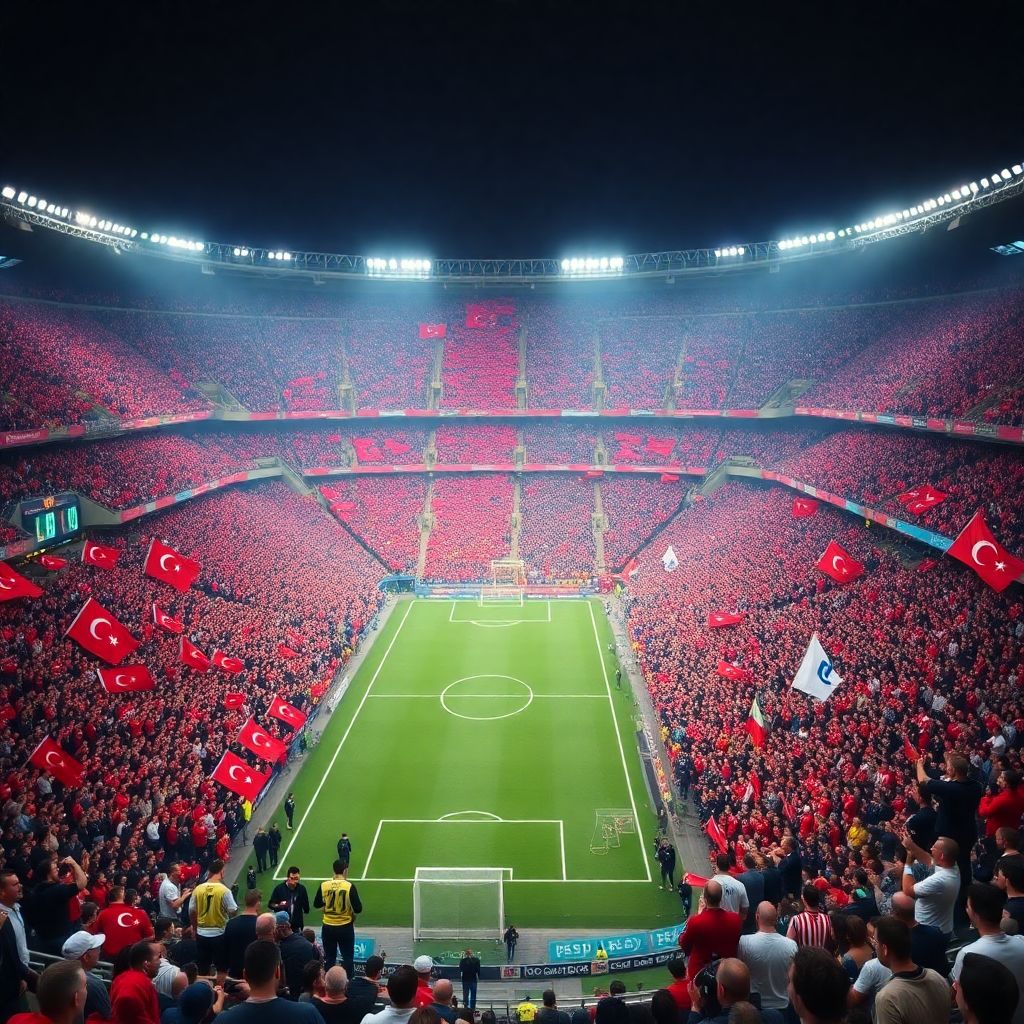
Turkish ultras are generally more politically embedded, emotionally intense and centrally choreographed than most of the biggest football supporter groups in Europe, while European scenes are more fragmented, legally formalised and diversified. The better “fit” depends on your goal: authentic, city-wide mobilisation usually favours Turkish models; stable, club‑managed atmospheres favour Western European variants.
Executive summary: core contrasts between Turkish ultras and major European groups
- In the debate of turkish ultras vs european ultras, Türkiye stands out for dense ties between stands, neighbourhoods and national politics; Western Europe is more regulated and segmented.
- Galatasaray ultras vs european fan groups illustrates a difference between city-wide identity (UltrAslan-style) and multi-club, often commercial fan projects.
- Among the biggest football supporter groups in Europe, some Italian and Balkan groups resemble Turkish intensity, while German and English groups lean towards institutionalised support.
- For security planners, Turkish stadiums combine high choreographic coordination with quicker crowd mood swings; many Western leagues prioritise early de-escalation and surveillance.
- For researchers doing turkish football fan culture comparison europe, Türkiye offers clearer links between supporter practices, urban politics and media narratives.
- Clubs seeking “best football ultras in europe” aesthetics (tifos, pyro) can emulate Turkish visuals but often prefer European-style legal structures to limit risk.
Historical roots and political embedding of Turkish ultras
This section helps you choose which supporter culture to study or collaborate with by clarifying selection criteria.
- Origin in political turbulence vs subcultural style
Turkish ultras grew amid coups, protests and intense party politics; many major European groups formed more around youth style (punk, skinhead, casual) or local pride.
Researcher: Choose Turkish cases when you need clear politics-football linkages; pick Western European groups for subculture-focused work.
Club official: Expect stronger reactions to national issues in Türkiye than in most Western leagues.
Security planner: Monitor political calendars (elections, protests) much more closely in Turkish settings. - Relationship to city and neighbourhoods
Turkish curves often mirror historic mahalle networks; support extends into daily life. In many parts of Europe, ties are looser or more commuter-based.
Researcher: Select Turkish samples to study spatial belonging; select Western groups to study trans-local fandom.
Club official: In Türkiye, any conflict with an ultra group can spill into the city; in some Western leagues, it stays closer to the stadium.
Security planner: Map neighbourhood alliances in Turkish cities; focus on travel routes and pubs in Western contexts. - Role in nation-building narratives
Turkish ultras frequently reference national history and state symbols; many European groups foreground regional or anti-national identities.
Researcher: Use Turkish cases for nation-state framing; use European cases for regionalism/EU/globalisation questions.
Club official: Branding with national symbols is lower risk in Türkiye than for many Western clubs.
Security planner: Be alert when national tensions overlap with high-risk fixtures. - Religious and cultural references
Turkish stands sometimes incorporate religious language and rituals; most Western European ultras lean secular or anti-clerical.
Researcher: Choose Turkish sites to explore religion-sport intersections.
Club official: Messaging around religious holidays is more sensitive in Türkiye.
Security planner: Anticipate flashpoints when religious symbolism is mocked by rivals. - Legal regime and state tolerance
Türkiye combines strict law with variable enforcement; Western Europe generally has clearer, more predictable rule application.
Researcher: Turkish cases suit studies of informal negotiation with the state; Western leagues fit institutional compliance studies.
Club official: In Türkiye, cultivate backchannel communication with authorities; in Western leagues, invest in formal protocols.
Security planner: Build flexible, scenario-based plans in Türkiye; compliance-driven plans in Western leagues. - Media framing over time
Turkish ultras oscillate in media from “guardians of passion” to “threats to order”; in Europe, many scenes are stably framed as either heritage or risk.
Researcher: Focus on Turkish cases if you study moral panics; Western cases for long-term normalisation.
Club official: Prepare rapid-response communication in Türkiye; in Western contexts, leverage heritage narratives.
Security planner: Expect media pressure spikes around high-profile Turkish derbies. - Intensity of intra-city rivalries
Istanbul derbies and other Turkish clashes often carry layered historical and social meanings; some Western rivalries are more event-driven.
Researcher: Pick Turkish derbies for thick rivalry case studies.
Club official: Plan community outreach before and after major Turkish fixtures.
Security planner: Treat even “routine” derbies in Türkiye as elevated risk by default.
Formal and informal organization: leadership, recruitment and networks
This section compares organisational models you will meet when mapping turkish ultras vs european ultras, and helps pick what to emulate or prioritise.
| Variant | Who it suits | Advantages (incl. size, tactics, legal status) | Disadvantages (incl. risk profile, sanctions) | When to prioritise this model |
|---|---|---|---|---|
| Centralised capo-led ultra group (typical large Turkish curve) | Clubs seeking unified visual impact; researchers studying Galatasaray ultras vs european fan groups; security teams who value clear negotiation partners. |
|
|
Choose as primary partner when you need fast, mass choreography and are willing to negotiate informally on displays, political messages and away travel. |
| Decentralised ultra collectives (common across Southern and Eastern Europe) | Researchers interested in internal diversity; clubs in leagues where biggest football supporter groups in Europe operate autonomously; planners facing multiple “firms”. |
|
|
Prefer this model for case studies of internal ultra dynamics, or when you intentionally avoid over-empowering a single group. |
| Club-integrated supporters' association (more typical in Germany, England, Scandinavia) | Club executives needing compliance and sponsorship compatibility; researchers exploring institutionalisation; security teams relying on formal agreements. |
|
|
Adopt or study this when your priority is long-term stability, family-friendly stands and sponsor-safe atmospheres. |
| Casual / hooligan firm (informal, often detach from visual ultra style) | Security planners focusing on high-risk fixtures; researchers of violence; clubs in countries with entrenched hooligan scenes. |
|
|
Prioritise mapping these where violence is your central concern; do not model everyday fan engagement on this variant. |
| Digital-first supporter network (pan-European, social media centred) | Clubs with global reach; researchers of online fandom; safety staff monitoring threats and doxing. |
|
|
Use as a complement when you want to amplify campaigns, not as your only channel for stadium atmosphere or risk assessment. |
Matchday expression: chants, tifos, pyro and stadium culture
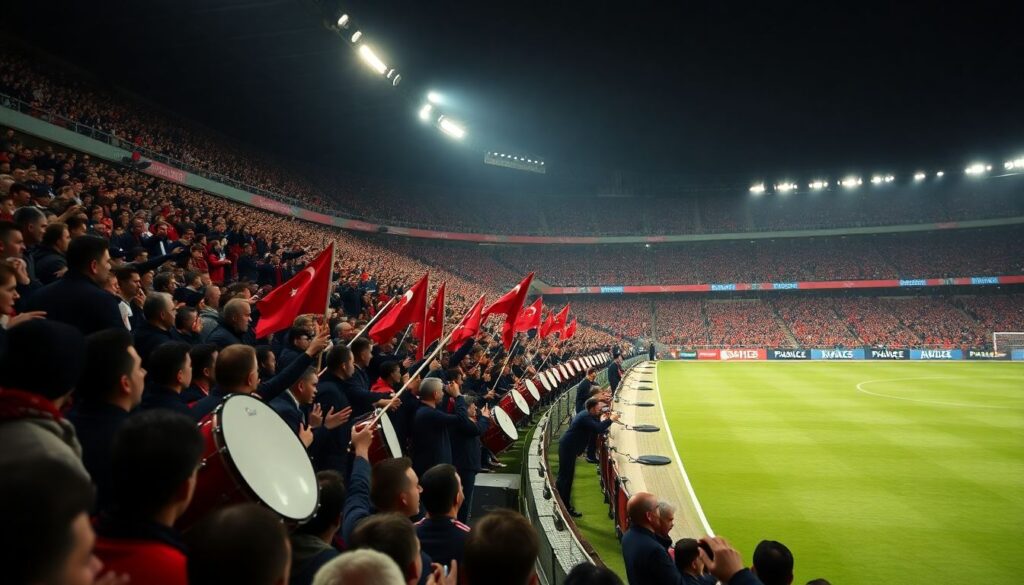
Use these scenario-based guidelines to decide which elements of Turkish or European cultures to lean on.
- If your priority is full-stadium noise from first to last minute, favour Turkish-style capo leadership, drum lines and continuous chants. For clubs referencing biggest football supporter groups in Europe, selectively import German-style singing sections while keeping Turkish intensity benchmarks.
- If your board wants spectacular tifos for TV while minimising pyro sanctions, study Galatasaray ultras vs european fan groups: emulate Turkish banner scale and creative storytelling, but borrow German and Scandinavian practice for early approval, safe materials and club-funded logistics.
- If your main risk is uncontrolled flares and pitch invasions, take Western European models of pyro-negotiation (designated zones, pre-approved quantities, or strict no-pyro policies) and combine them with Turkish-style peer enforcement by respected capos to keep younger fans in line.
- If you manage an ageing or tourist-heavy fan base, use European “singing section” solutions (ticketing clusters, fan-led songbooks) while inviting Turkish ultra groups to run workshops, rehearsals and pre-match gatherings to rebuild organic chanting culture.
- If your research asks which is the best football ultras in europe model for emotional impact, prioritise intense Turkish derbies and Balkan/Italian groups, but include one high-capacity German or Polish example to compare choreography professionalism to raw noise.
- If clashes with rival fans regularly escalate outside the stadium, adopt European-style buffer zones and staggered exits, while using Turkish experience with police-ultra negotiation to pre-agree routes, timings and escort strategies.
Conflict dynamics: hooliganism, state response and policing models
Apply this step-by-step checklist to choose an appropriate mix of Turkish and European approaches.
- Map your risk typology: classify fixtures by rivalry depth, recent incidents and political timing, using Turkish high-derby standards as the top tier, then benchmark against comparable European fixtures.
- Decide your dialogue level with ultras: in Turkey-style contexts, prioritise face-to-face meetings with recognised leaders; in Western-style contexts, blend this with formal fan liaison officers and documented agreements.
- Select your policing posture: for historically tense games, adopt a Turkish-style visible but restrained presence near curves; for lower-risk or highly regulated leagues, lean toward European graded response, keeping riot units out of sight unless escalations occur.
- Define sanction tools before the season: decide when to prefer individual bans (European practice) versus block closures or tifo bans (common in Türkiye), and communicate thresholds clearly to supporter groups.
- Integrate intelligence and community policing: combine Western models of data-driven risk profiling with Turkish-style neighbourhood knowledge, working with local leaders who understand which youth groups may mobilise.
- Plan post-incident learning: after any serious conflict, hold separate debriefs with police, club staff and ultras, following Western review templates but allowing the longer, relationship-oriented negotiations typical in Türkiye.
- Adjust international matches: when Turkish clubs meet biggest football supporter groups in Europe, align on shared protocols early, harmonising pyro rules, escort plans and media messages to avoid cross-cultural misunderstandings.
Media, commercialization and the politics of visibility
Common mistakes when choosing which elements of Turkish and European fan cultures to promote or adopt.
- Assuming that importing visual styles (e.g. a Galatasaray tifo) automatically imports Turkish-level passion, without investing in year-round community ties.
- Over-commercialising ultras in marketing campaigns, particularly in Türkiye, where groups may resist being framed as club “products” and respond with protests or boycott chants.
- Ignoring how turkish football fan culture comparison europe plays out in domestic media, which might frame European-inspired safety measures as “softening” the atmosphere.
- Underestimating digital visibility: copying European social media strategies without factoring in Turkish fans' higher sensitivity to perceived disrespect or censorship.
- Using “best football ultras in europe” rankings in official communication, which can inflame rivalries or be read as siding with one group over others inside your own club.
- Failing to brief TV broadcasters and influencers on fan choreography rules, leading to close-ups on banned banners or pyro that can trigger sanctions after the match.
- Relying solely on English- or German-language narratives about biggest football supporter groups in europe, which often under-represent Turkish, Balkan and Eastern European realities.
- Inviting European ultra groups for friendly matches without clarifying local legal constraints, especially around pyro, political banners and sponsor conflicts.
- Not preparing a crisis-communication plan for incidents involving Turkish away fans in Western cities or vice versa, where national stereotypes can amplify minor clashes.
Community work, digital engagement and evolving supporter identities
For clubs and municipalities wanting deep social impact, Turkish ultras with strong neighbourhood roots are often the best partners. For leagues prioritising legal clarity and sponsor alignment, Western European supporter associations are usually safer. For researchers, mixed cases-where Turkish and European styles meet-offer the richest data on evolving supporter identities.
Practitioners' common queries about comparing supporter cultures
Which model is safer to work with: Turkish ultras or Western European groups?
Neither is inherently safer; outcomes depend on local history, policing style and communication. Western groups usually have clearer legal forms, while Turkish ultras often offer stronger internal discipline when you secure genuine buy-in from leaders.
How should a club choose which ultra group to formalise a partnership with?
Assess each group's track record, internal cohesion, openness to dialogue and influence on the wider curva. Prioritise those willing to sign ground rules without demanding control over tickets or club communications.
What should researchers prioritise when designing a turkish football fan culture comparison europe project?
Define whether you study politics, violence, media or community building first. Then pick contrasting cases: for example a major Istanbul club curve, a German fan project, and one Southern or Eastern European ultra group.
How can security planners prepare for European matches involving Turkish clubs?
Combine European risk classification tools with Turkish-style liaison: early meetings with ultra leaders, clear agreements on pyro, and detailed escort and routing plans for both home and away fans.
Can a club mix Turkish ultra intensity with European-style commercialisation?
Yes, but only gradually. Start by co-producing tifos and community projects, then involve ultras selectively in sponsor campaigns, always leaving them autonomy on core identity symbols and political red lines.
What indicators show that an ultra-club relationship is deteriorating?
Early signs include new protest chants, banner sarcasm, social media boycotts and refusal to participate in club-led displays. Address these quickly through direct meetings before they harden into organised opposition.
Are rankings of the “best football ultras in europe” useful for practitioners?
They can inspire visual ideas but are poor guides for safety or governance. Treat them as aesthetic references, not as models to copy wholesale without local adaptation.