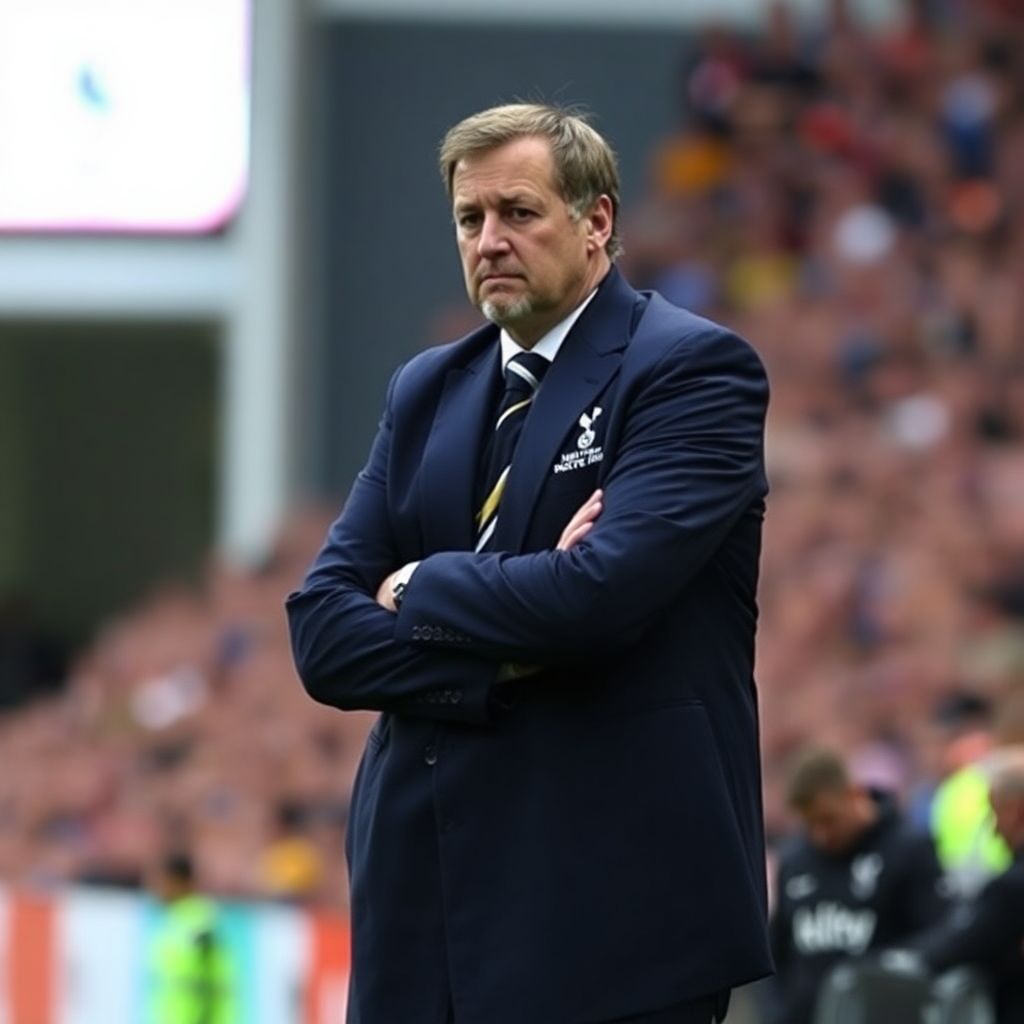
Roberto De Zerbi: Tottenham Must Overcome Psychological Barriers
Tottenham manager Roberto De Zerbi admitted that his team is facing both physical and mental difficulties after a goalless draw with Everton. The result extended the London club’s difficult start to the Premier League season, leaving them without a victory or a goal after four league matches.
Tottenham hosted Everton but could not break the deadlock despite controlling the opening stages of the match. The 0-0 draw means the team has collected only two points from its first four fixtures and currently sits 17th in the table.
For De Zerbi, Tottenham’s problems cannot be explained solely by tactical or physical shortcomings. The Italian coach believes his players must also overcome a psychological barrier created by their lack of wins and goals.
“There is a word in Italian, ‘sbloccarsi,’ which can be translated as unlocking ourselves. We have psychological obstacles in front of us. Four matches, no wins and no goals – that is difficult for the players,” De Zerbi said after the game.
The manager nevertheless insisted that he has confidence in the squad’s ability to improve. He argued that Tottenham possess enough quality to score regularly and begin collecting victories, provided they maintain their belief in the team’s footballing identity.
“This is a very strong team. We can score goals and win matches. We also have to remember that some of the players have not scored many goals during their careers. We need to find those goals, and I believe we can do that through the quality of our play,” he explained.
De Zerbi also pointed to the difficulties Tottenham experienced during their pre-season camp in Australia and New Zealand. Several important players, including Micky van de Ven, Dominic Solanke, James Maddison and Mateus Fernandes, suffered injuries during that period. According to the manager, these setbacks disrupted the team’s preparation and limited the consistency of his selection.
The Italian coach felt that Tottenham made a promising start against Everton. However, the team’s performance declined as the match progressed, with a lack of confidence becoming increasingly visible.
“We played very well during the first 30 minutes. After that, perhaps because of the energy levels or because we were unable to score, some players began to lose confidence. We have to remain realistic rather than simply positive,” he said.
Tottenham’s inability to score has become the most pressing concern. Four consecutive league matches without finding the net indicate that the problem is not limited to one isolated game. The team needs to create more clear chances, but it must also finish the opportunities that arise.
The absence of goals can quickly affect a squad’s mentality. Every missed chance increases pressure in the next attack, while players may begin to choose safer options instead of making decisive moves in the final third. De Zerbi’s reference to a psychological block reflects this growing tension.
The injury situation has made the challenge even more complicated. When key players are unavailable, a coach often has to change the structure of the team, rotate the starting lineup and rely on players who may not yet be fully prepared for major responsibility. Such instability can make it harder to establish rhythm.
Physical readiness is another issue for Tottenham. De Zerbi stated that his players have not yet reached the desired level, suggesting that the team’s intensity, pressing and movement may improve as the season progresses. Better fitness could help Tottenham sustain the strong starts they have shown in matches.
However, physical development alone will not solve the club’s problems. Tottenham must also restore confidence through small positive moments: producing more shots on target, completing attacks effectively and avoiding defensive mistakes that create additional pressure.
The next matches will therefore be crucial for De Zerbi. A first victory could ease the tension surrounding the squad and provide the confidence required to play with greater freedom. On the other hand, another match without a goal would increase scrutiny on both the manager and the players.
The most important task is likely to maintain patience while demanding greater efficiency. Tottenham’s style may provide a foundation for improvement, but possession and attractive build-up play must eventually lead to goals and points.
De Zerbi’s message was clear: the team has quality, but quality must be converted into results. Tottenham now need to remove the mental barrier, regain their physical sharpness and rediscover the attacking confidence that has been missing since the beginning of the campaign.