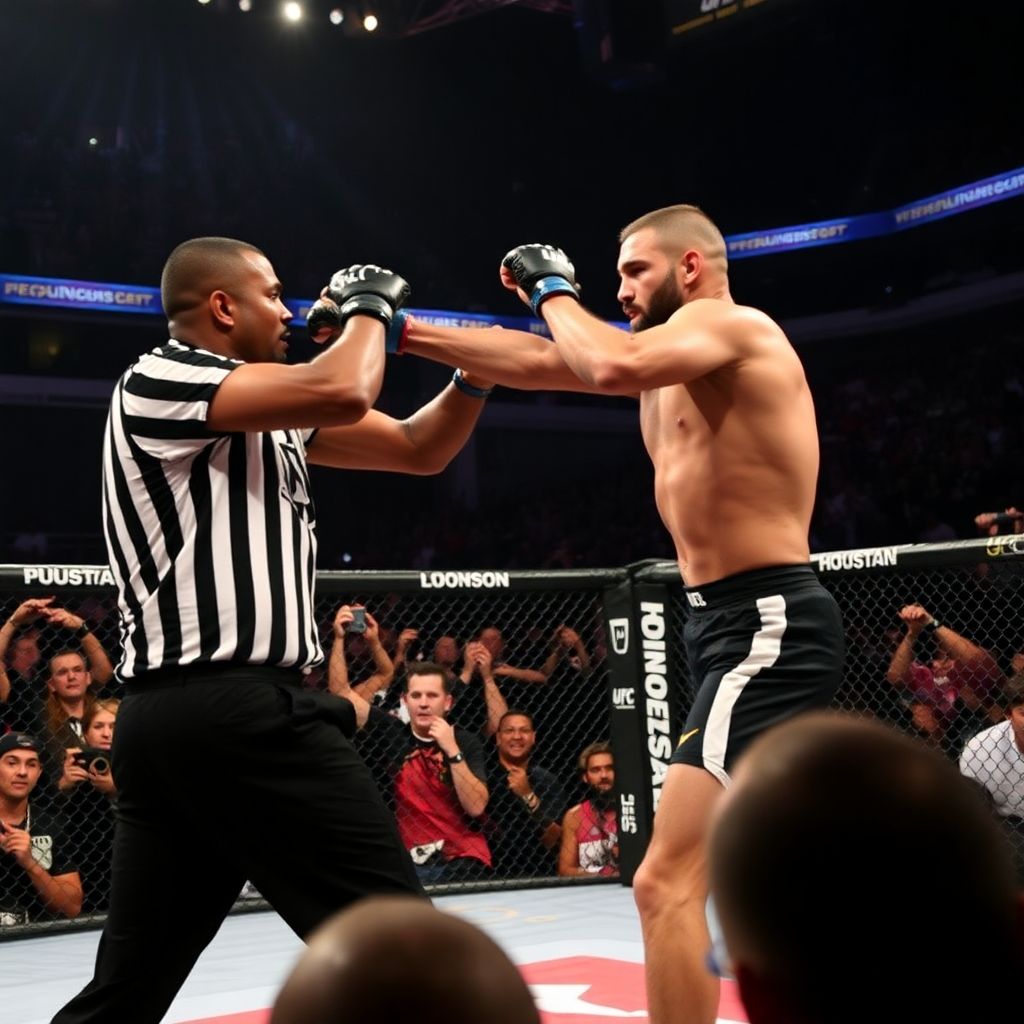
Strickland stops Hernandez in third round at UFC Fight Night
Former middleweight champion Sean Strickland reminded everyone why he once held UFC gold, finishing rising contender Anthony Hernandez in the main event of UFC Fight Night in Houston. The American veteran broke down his opponent round by round, finally securing a decisive stoppage late in the third frame.
The card took place at the Toyota Center in Houston, Texas, with the main card starting in the early hours of Sunday local time. The headline bout was scheduled for five rounds in the middleweight division and carried serious implications for the top of the weight class.
From the opening bell, Strickland imposed his trademark pressure. Known for his high-volume boxing, relentless forward movement and tight defense, he steadily walked Hernandez down, forcing exchanges on his own terms. Hernandez, who came into the fight riding a long winning streak and a wave of momentum, tried to respond with combinations and level changes, but struggled to disrupt Strickland’s rhythm.
As the fight progressed, Strickland’s experience in long main-event bouts became more and more obvious. Instead of chasing a quick finish, he carefully picked his shots, mixed his jab with straight rights and occasional kicks, and constantly forced Hernandez to work off the back foot. The cumulative damage began to mount, with Hernandez visibly slowing and absorbing cleaner strikes.
The decisive sequence came in the third round. By that point, Strickland had already downloaded Hernandez’s timing and tendencies. He began to sit down more on his punches, finding gaps in the guard and punishing every attempt by Hernandez to reset in the center of the cage. A series of accurate, powerful shots broke Hernandez’s resistance, leading the referee to step in and wave off the fight near the end of the round.
With this clinical finish, Strickland improved his professional MMA record to 30 wins, 7 losses and 0 draws. The victory reestablishes him as a central figure in the middleweight title picture and a dangerous obstacle for any contender looking to climb the rankings.
For Hernandez, the defeat marked the end of an impressive eight-fight winning streak. Before meeting Strickland, he had built a reputation as one of the most promising and aggressive fighters in the division, combining strong grappling with ever-improving striking. Losing to a former champion does not erase that progress, but it does force him to regroup and refine his approach at the elite level.
Despite the setback, Hernandez remains a compelling name at 185 pounds. At 30 years of age and with a modern all-around skill set, he still has time to rebound, learn from the loss and adjust his game for future top-10 opportunities. Fights against other ranked contenders coming off defeats, or surging prospects on the edge of the rankings, would be logical next steps.
Strickland, on the other hand, likely strengthened his claim for another high-profile bout – whether against a top-three opponent or in a title eliminator. His ability to shut down dangerous, in-form rivals reinforces his image as one of the most difficult style puzzles in the division: cardio for five rounds, constant pressure, durable chin and disciplined boxing fundamentals.
Beyond the main event, the UFC Fight Night card in Houston delivered several notable results on the main card across different weight classes:
– Middleweight: Geoff Neal vs. Uros Medic – Neal secured a knockout victory, adding another powerful finish to his résumé and reminding fans of his dangerous striking.
– Featherweight: Dan Ige vs. Melquizael Costa – Ige earned a TKO, once again showcasing his explosive power and veteran savvy at 145 pounds.
– Heavyweight: Sergey Spivak vs. Ante Delija – The heavyweights collided in a physically intense matchup, with Spivak using his grappling and size to control key moments and secure the win.
– Middleweight: Jacobe Smith vs. Josiah Harrell – Smith claimed a knockout, a significant result in a division already packed with finishers.
– Middleweight: Zachary Reese vs. Michael Pereira – Reese and Pereira delivered another hard-fought middleweight contest, underlining just how deep and unpredictable the 185-pound division has become.
Taken together, the main card highlighted why UFC events continue to attract global attention: varied styles, unexpected finishes and fighters at very different stages of their careers all sharing the spotlight in one night.
Strickland vs. Hernandez in particular serves as a textbook example of what often separates established champions or ex-champions from surging contenders. Hernandez entered the cage with momentum, hunger and an extended win streak, but Strickland had been through five-round wars, main events and title fights. That experience allowed him to stay composed under pressure, manage his energy, and slowly dismantle a younger, more explosive opponent.
From a technical standpoint, Strickland’s success came from basics executed at a high level rather than highlight-reel flash. His jab disrupted Hernandez’s entries, his footwork cut off the cage instead of chasing, and his defensive shell minimized the damage he took in return. For aspiring fighters and keen observers, this fight underlines how far sound fundamentals and fight IQ can carry a competitor in modern MMA.
The clash also emphasizes how unforgiving the middleweight division is. A single defeat can halt an impressive run, while one big win – especially over a streaking opponent – can propel a fighter back into contention. Strickland’s path back toward the top of the division will likely be shaped by the schedule of other elite middleweights, but this performance clearly keeps his name in every matchmaking discussion.
For fans, nights like this illustrate the broader growth of MMA worldwide. The sport has moved from niche status into the mainstream, with athletes becoming recognized professional stars and major arenas regularly selling out for UFC events. Each card offers a mix of knockouts, submissions, tactical battles and dramatic momentum swings, feeding a growing appetite for combat sports entertainment.
In addition to the UFC, fight enthusiasts now follow a wide selection of other major MMA promotions and series around the world. Events such as Dana White’s Contender Series, Bellator, Brave, PFL and its Challenger Series, Jungle Fight, ACA, Rizin, Oktagon League, Cage Warriors, KSW, Centurion FC, LFA, Hex FC and Tuff-N-Uff give a platform to fighters at different levels of their careers – from hungry prospects chasing a contract to established veterans seeking new challenges.
For viewers, this diversity means there is almost always a card to watch somewhere in the world, covering every style and division. Some events focus on polished contenders at the top, others on discovering new talents, but all contribute to the constant evolution of the sport. Today’s undercard fighter in a regional promotion can quickly become tomorrow’s main-event attraction in a global organization.
The rise in MMA’s popularity has also changed how fans consume the sport. Pre-fight analysis, tale-of-the-tape breakdowns, live statistics and post-fight data now play a major role in how audiences understand what happens inside the cage. Striking accuracy, takedown defense percentages, control time and other metrics help tell the story behind a victory or defeat beyond what is visible in a single highlight.
Strickland’s win over Hernandez, for example, can be broken down not only by the eventual stoppage, but also by the number of significant strikes landed, his ability to avoid takedowns, and his success in dictating where the fight took place. These measurable details reinforce what viewers see with the naked eye: a methodical, intelligent performance that wore down a dangerous rival.
Ultimately, the Houston card will be remembered most for the statement made in the main event. Sean Strickland walked into the Toyota Center as a former champion looking to reassert his place at the top, and left with a convincing finish over an opponent many believed could be the future of the division. Anthony Hernandez, despite the loss, remains a name to watch – a fighter who has already proven he can win consistently and now must show he can bounce back from adversity.
In a sport as volatile and competitive as MMA, careers are often defined not just by win streaks, but by how fighters respond when those streaks end. The aftermath of this Fight Night will shape both men’s next moves, adding another intriguing chapter to the constantly shifting landscape of the UFC middleweight division.