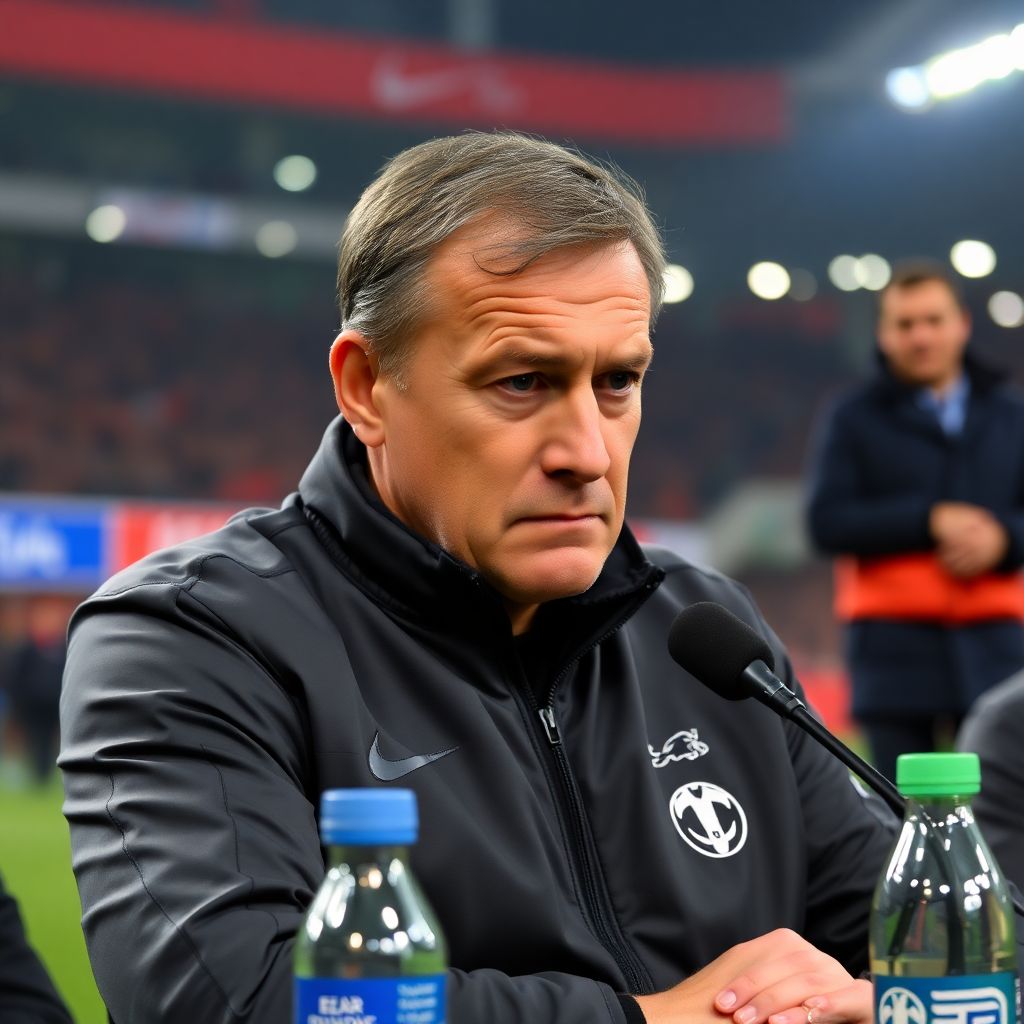
Recep Uçar: “We Created Chances but Failed to Finish”
Çaykur Rizespor head coach Recep Uçar reflected on his team’s 1-0 away defeat to Trabzonspor in week 26 of the Trendyol Süper Lig, underlining that his players produced clear goal opportunities but lacked the finishing touch to turn them into goals.
Before speaking about the match, Uçar began his press conference by sharing an emotional message of condolence for two prominent figures who had recently passed away: Trabzonspor assistant coach Orhan Kaynak and renowned historian and academic Prof. Dr. İlber Ortaylı.
“Before talking about football, it was a night overshadowed by the deep sadness of losing my dear brother and former teammate Orhan Kaynak,” Uçar said. “I pray for God’s mercy upon him. He was a good person and a very decent coach. We played together for a year at Istanbul Büyükşehir Belediyespor and stayed in close contact ever since. I know how much he contributed to this football community, both as a coach and as a person. I offer my condolences and wish patience to his grieving family, to Trabzonspor, and to the entire Turkish football community. May his place be in heaven, and may his soul rest in peace, he was a truly good human being.”
Uçar then extended his condolences to the family and admirers of Prof. Dr. İlber Ortaylı: “We have also lost İlber Hoca, a figure of immense significance for our country. He was not only an important historian but also an intellectual and a scientist with a broad vision. He had ideas that could guide many people, especially the younger generations, in various fields. His loss is extremely painful as well. I offer my condolences for him, too.”
“We Deserved at Least a Point”
Turning to the game itself, Uçar stressed that his team traveled to Trabzon well-prepared and with confidence, especially after a strong recent run.
“We came into this away match having prepared thoroughly,” he explained. “Both teams arrived here after winning their last three matches. We had even managed to win our games without conceding a goal. Yes, we had some missing players, but I don’t want to hide behind that. To be very honest, from my perspective we did enough to deserve at least a point.”
According to Uçar, Rizespor matched Trabzonspor in most key areas and even managed to carve out clear scoring chances.
“In many parameters we did not fall behind Trabzonspor,” he said. “We created very clear goal opportunities but simply could not convert them. That was the decisive factor. Football is a game of details: you can be organized, disciplined, and brave, but if you don’t finish, you pay the price. Today we closed this chapter here, but the feeling remains that we should have taken something from this match.”
Despite his frustration, Uçar showed sportsmanship by congratulating the hosts: “I congratulate coach Fatih and Trabzonspor on their victory. They acted in good faith and tried to do their best on the pitch. I wish them success in the rest of the league race.”
Criticism of Added Time: “Three Minutes Cannot Be Justified”
One of the key issues Uçar highlighted after the match was the amount of stoppage time added by the referee. Only three minutes were shown at the end of the second half, something he found hard to accept given the number of interruptions.
“There is one point I want to express some discontent about,” he noted. “I also mentioned it to the broadcaster just now. This is not a direct criticism of Trabzonspor; I am speaking in general terms. Yes, on the pitch there are always ‘grey’ situations-fouls that can go one way or the other. Today, apart from the added time issue, I don’t think these calls were overwhelmingly against us. I even congratulated referee Çağdaş after the match. But no one can convincingly explain to me how, in a game where play stopped five times for substitutions-ten players in total were changed-where play was halted for about one and a half minutes due to Augusto’s injury, and there were several other smaller injury breaks and moments when Onana was warned more than once, only three minutes of additional time could be given.”
Uçar underlined that, in modern football, the effective playing time is increasingly scrutinized and that decisions on stoppage time can directly influence results.
“In today’s game, where everyone talks about fair play and increasing effective playing time, such a short amount of added time after so many stoppages raises questions,” he added. “We are not asking for favors, only for a balanced and consistent approach. When you’re chasing a result, every extra minute can be crucial.”
Missed Chances Define the Night
Although Uçar did not go into detailed play-by-play descriptions, his emphasis on “clear chances” reflects a recurring theme for Rizespor this season: the inability to turn promising build-ups into goals in difficult away fixtures.
Rizespor managed to reach the final third on several occasions, especially in transition, but often lacked the final pass or composure in the penalty area. Whether through shots going off target, poor decision-making in key moments, or well-timed interventions from Trabzonspor’s defense, the visitors left the pitch without a goal despite having opportunities to change the outcome.
From a tactical standpoint, Rizespor tried to stay compact without the ball and hit quickly when they regained possession. This approach did create spaces behind Trabzonspor’s lines, yet Uçar’s post-match assessment suggests that his players were not ruthless enough when those spaces appeared.
Mental and Psychological Aspect
Uçar’s comments also point to a psychological side of the defeat. Coming into the game with a three-match winning streak and clean sheets, Rizespor had reason to feel confident. However, failing to reward themselves for their work with a goal can damage belief, especially in hostile environments like Trabzon.
When a team plays well for long stretches but still loses, it can create a sense of injustice or frustration. Uçar tried to strike a balance between acknowledging that they “deserved a point” and preventing his squad from slipping into a victim mentality. His deliberate choice to avoid “hiding behind missing players” is aimed at keeping standards high in the dressing room.
For a coach, maintaining this balance is crucial: he must show his players that their efforts are recognized and that their game plan can work, while at the same time emphasizing that efficiency in front of goal and focus until the very last whistle are non-negotiable.
What This Result Means for Rizespor
In terms of the league picture, losing away at Trabzonspor is never catastrophic in isolation, but it represents a missed opportunity when the team is in form. Results like this often separate sides that merely play well from those that actually climb higher in the table.
For Rizespor, the key takeaway from Uçar’s words is clear: performance levels in general are acceptable, but the team must become more clinical. Turning one of those “clear chances” into a goal could have completely changed the narrative, from a narrow defeat to a hard-fought draw or even a celebrated victory.
Such matches also provide valuable data for the coaching staff: which players handle pressure better in front of goal, how well the team manages game states when chasing a result, and what types of combinations or attacking patterns are most likely to result in quality shots.
Focus on Finishing and Decision-Making
Going forward, Rizespor will likely place additional emphasis on finishing drills and decision-making exercises in the final third. Coaches often respond to games like this by simulating high-pressure situations in training: quick attacks against a recovering defense, limited time and space to shoot, and scenarios where players must choose between passing and shooting in a split second.
Improving composure in these critical moments is not only a matter of technique but also of habit and confidence. The more frequently players find themselves in realistic goal-scoring scenarios during training, the more natural it becomes to pick the right solution during matches.
Uçar’s insistence that his team “did not lag behind Trabzon in many parameters” implies that the general structure of the team is sound. Therefore, the primary challenge is not to overhaul their style of play, but to sharpen the edge in front of goal.
Managing External Factors Like Added Time
Uçar’s remarks on stoppage time also reflect a broader reality of football: some factors lie outside a team’s control. Referee decisions regarding added time, minor fouls, and the management of injuries are part of the game’s uncontrollable elements.
For coaches and players, the challenge is to minimize the impact of those external factors on their mentality. While Uçar openly criticized the three minutes of added time, he did so without turning it into an excuse for the entire result. This approach sends a message both to his squad and to observers: yes, there are controversial aspects, but responsibility for not scoring lies first with the team.
Clubs that consistently succeed are often those that respond to such frustrations by increasing their own efficiency, rather than dwelling excessively on officiating issues.
Respect and Sportsmanship Amid Sadness
Another notable aspect of Uçar’s appearance was the way he combined competitive criticism with respect and empathy. On a night marked by the loss of two respected figures, he managed to express both his sporting disappointment and his appreciation for the hosts.
He reiterated that his comments about stoppage time were “not a criticism of Trabzonspor as a club,” but a general observation. At the same time, he made sure to congratulate Trabzonspor and coach Fatih for their victory, highlighting that they “did their best in good faith.”
In a football culture where post-match statements can quickly become heated or accusatory, Uçar’s tone stood out as measured yet honest-critical of what he found unjustifiable, but careful to separate tactical or refereeing issues from personal respect.
Looking Ahead
For Çaykur Rizespor, the focus will now turn to the upcoming fixtures. Uçar made it clear that they are “closing this chapter” and moving on, a phrase that underlines the need to avoid letting one painful defeat overshadow the positive trajectory of recent weeks.
Maintaining the defensive solidity that produced three consecutive clean-sheet wins, while adding greater precision in front of goal, will be central to their ambitions in the remainder of the season. If Rizespor can turn performances like the one in Trabzon into points, they will not only stabilize their position in the table but also gain the belief needed to challenge higher.
In the end, Uçar’s summary of the night can be reduced to a simple football truth: his team did many things right, but in elite competition, matches are decided in the penalty areas. Until Rizespor start converting the chances they work so hard to create, nights like this will continue to feel like missed opportunities.