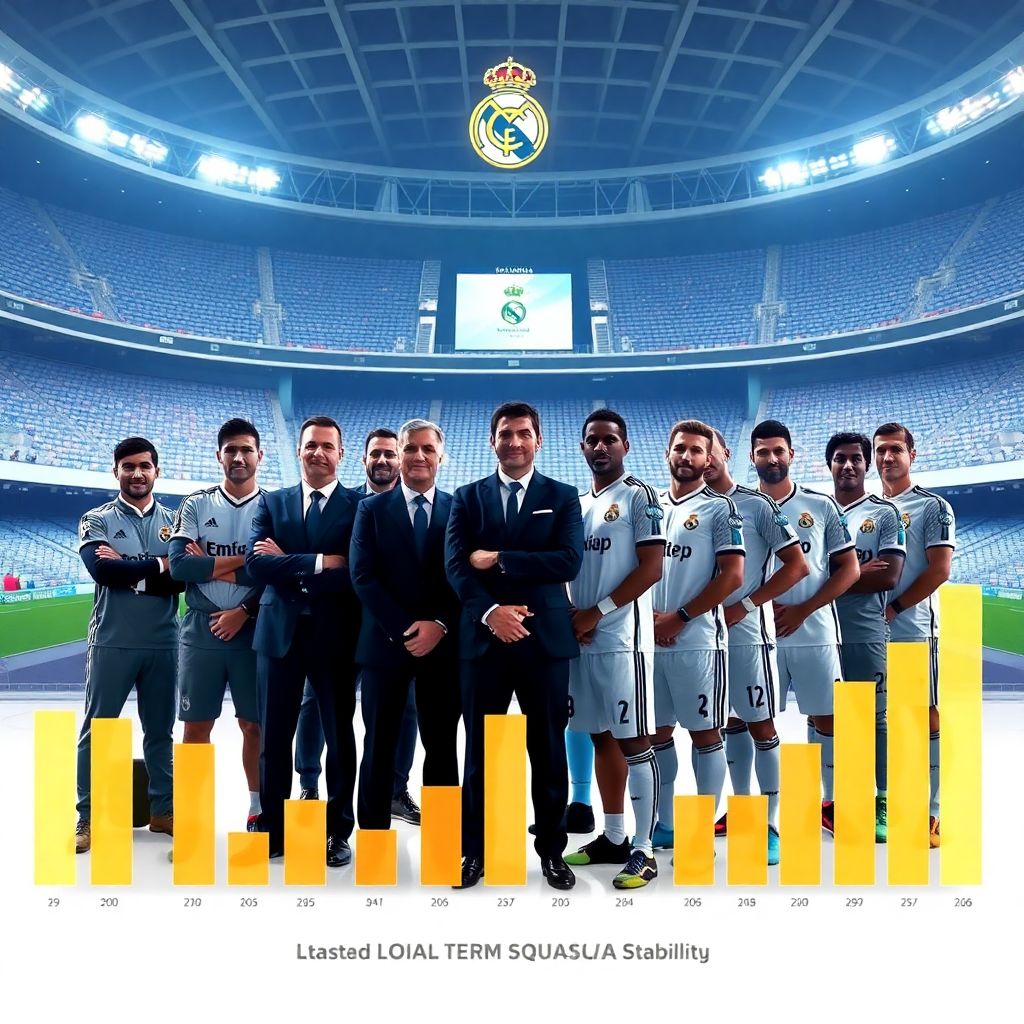
The most stable squad management in world football currently belongs to Real Madrid. According to the latest report from the CIES Football Observatory, the Spanish giants are the club that most effectively applies a long‑term strategy in their squad planning, outperforming teams from both Europe and the Americas.
The study evaluated clubs based on several indicators related to continuity and planning: the number of players used in league matches over the last three seasons, the average length of time players have been at the club, the duration of existing contracts, and the average age of incoming transfers. When all these elements were combined into a single index, Real Madrid emerged at the top of the global ranking.
Behind the La Liga powerhouse, the English Premier League side Brentford claimed second place, underlining how a data‑driven, carefully structured project can rival the resources of Europe’s traditional giants. Third on the list was Athletic Bilbao, another Spanish club renowned for its unique philosophy of prioritising players with roots in the Basque region, which naturally encourages long-term squad building.
The top five was completed by two representatives from Major League Soccer: Seattle Sounders and Philadelphia Union. Their appearance so high in the ranking highlights how MLS clubs are increasingly investing in stable, sustainable structures instead of relying on short‑term overhauls and frequent squad turnover.
Outside Europe’s traditional “big five” leagues, several clubs also distinguished themselves with their consistency. Shakhtar Donetsk from Ukraine, Club Brugge from Belgium, AZ Alkmaar from the Netherlands and Zenit from Russia all managed to break into the top 20 of the CIES index. From South America, the best‑ranked club was Brazilian side Palmeiras, which occupied the 61st position, illustrating how difficult it is in that market to maintain long-term stability amid intense transfer activity.
The report did not limit itself to the overall ranking. It also highlighted specific clubs that excel in individual criteria. In terms of player continuity – that is, keeping the core of the team together over multiple seasons – Seattle Sounders stood out as the benchmark. Finnish club SJK Seinajoki was singled out for having the lowest average age in incoming transfers, signalling a clear commitment to building around young talent rather than short‑term veteran signings.
Chelsea were recognized for having the longest average contract durations in their squad, a reflection of the club’s recent strategy of tying players down to very long deals. This approach aims to provide cost control, stability and the possibility of either long‑term sporting contribution or future transfer profit. Meanwhile, Dynamo Kyiv and Paraguayan side Club Libertad were identified as the leading clubs in the use of non‑academy players, indicating a heavy reliance on external recruitment rather than homegrown talent.
From a Turkish perspective, the report delivered some striking conclusions. Within Turkey, Samsunspor topped the national standings with an index score of 61.4, being labelled the club with the most stable squad management in the country. The Black Sea side was followed by İstanbul Başakşehir and Alanyaspor, both of which have built a reputation for structured planning and smart transfer activity in recent years.
This focus on stability reflects a broader trend in modern football. Clubs are increasingly judged not only on immediate results but also on how effectively they manage resources over time. Long-term contracts, coherent transfer strategies and consistent use of a core group of players can reduce costs, improve tactical cohesion and help young footballers develop in a more predictable environment.
Real Madrid’s position at the top of the index is no coincidence. In recent seasons, the club has carefully blended experienced stars with a new generation of young talents. Rather than constantly overhauling the squad, Madrid have gradually renewed key positions, investing in players who can contribute for many years. This controlled evolution – instead of revolution – is exactly the type of planning the CIES index rewards.
Brentford’s high ranking demonstrates that stability is not just a luxury for rich clubs. Through a disciplined recruitment model, heavy use of analytics and a clear sporting identity, the English club have limited unnecessary transfers and focused on players who fit their system both tactically and financially. By avoiding panic buys and short‑term fixes, they have managed to stay competitive while maintaining a coherent squad structure.
Athletic Bilbao’s presence in the top three underlines how a clear institutional philosophy can naturally lead to stability. Their self‑imposed constraints in the transfer market force the club to rely on long-term development, careful scouting in their local talent pool and strong contract planning. As a result, player turnover is lower, and many footballers spend a large part of their careers at the club.
The prominence of MLS clubs such as Seattle Sounders and Philadelphia Union points to the league’s growing maturity. Salary caps and roster rules push American clubs to think ahead, plan contract lengths precisely and manage succession within the squad. Stability there is not simply a choice, but a necessity to remain competitive within strict regulatory limits.
Examples like Shakhtar Donetsk, Club Brugge, AZ Alkmaar and Zenit show that outside the richest leagues, continuity can be a powerful tool to stay relevant on the European stage. With more limited budgets, these clubs compensate by building long‑term projects, trusting coaches for extended periods and polishing players over several seasons instead of constantly entering bidding wars.
In South America, where economic pressure often forces clubs to sell talent early, Palmeiras’ relatively high position is particularly noteworthy. To rank 61st in such a volatile market suggests a well‑structured academy, smart contract management and a deliberate effort to keep a competitive core together despite strong interest from abroad.
The Turkish case, with Samsunspor leading the way domestically, illustrates how stability can be a competitive advantage even outside the continent’s spotlight. Clubs that maintain a consistent squad can adapt more quickly to tactical changes, create deeper understanding between players and lower the risk associated with constant rebuilding processes.
Ultimately, the CIES Football Observatory’s findings emphasise that success on the pitch is increasingly linked to what happens off it. Clubs that think several seasons ahead, protect their assets with appropriate contract lengths and recruit with a clear plan in mind are better equipped to withstand the financial and sporting turbulence of modern football. Real Madrid’s top ranking symbolises the reward for patience, structure and a long-term vision – elements that are becoming as important as any tactical innovation or star signing.