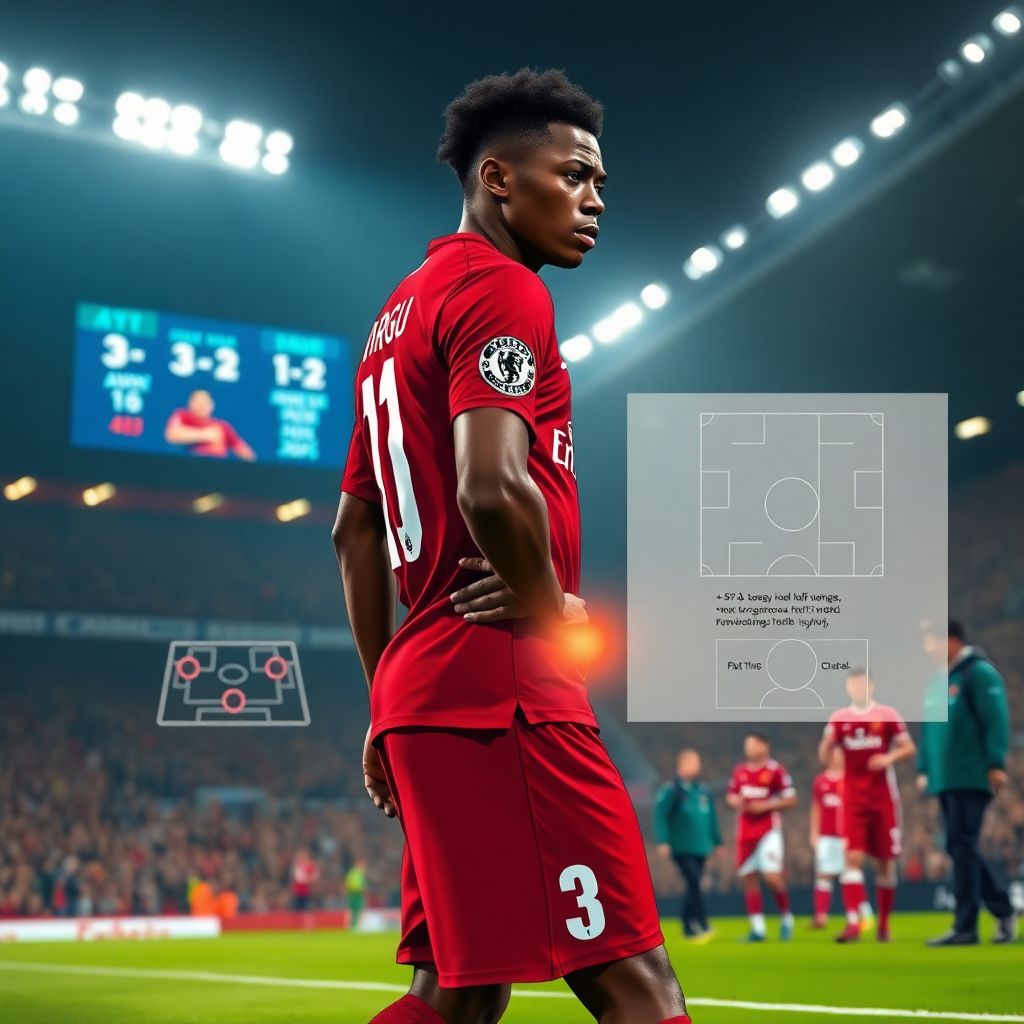
Patrick Dorgu ruled out for around 10 weeks with hamstring injury
Manchester United have been dealt a significant blow as 21-year-old rising star Patrick Dorgu is expected to be sidelined for roughly ten weeks due to a hamstring injury. Early estimates suggest the young winger will be out for about two and a half months, keeping him away from action during a crucial phase of the season.
The injury occurred on Sunday during United’s dramatic 3–2 away win over league leaders Arsenal. Dorgu pulled up while chasing a long ball in the second half and was forced to leave the pitch. Until that moment, he had been one of the standout performers of the match, scoring with a superb half-volley from outside the penalty area to help United secure a vital victory.
Medical staff at the club are still closely assessing the full extent of the damage, and the exact recovery timeline could yet change depending on how the muscle responds to treatment. However, the initial diagnosis points to a significant hamstring strain, serious enough to rule him out for approximately ten weeks and to send him straight onto an already worrying injury list.
For United, Dorgu’s absence comes at a particularly bad time. The versatile 21-year-old had recently become a key part of interim manager Michael Carrick’s plans. Previously used primarily as a wing-back under former head coach Ruben Amorim, Dorgu was redeployed as a left winger in Carrick’s preferred 4-2-3-1 system. The tactical switch unlocked more of his attacking potential and immediately paid off.
Dorgu was in outstanding form in recent weeks, starting and scoring in back-to-back statement wins over Manchester City and Arsenal. His direct running, energy down the left flank and improved end product had made him one of the first names on Carrick’s teamsheet. Losing such a dynamic presence, just as he was hitting his stride, will force a rethink in United’s attacking setup.
The projected ten-week layoff means Dorgu is expected to miss United’s next eight matches across all competitions. If his rehabilitation goes according to plan, the target is for him to make his return shortly after the March international break, with the 11 April clash against Leeds United pencilled in as a realistic comeback date. That fixture is now being quietly circled within the club as a potential turning point in his season.
Speaking after the Arsenal game, Carrick initially downplayed the severity of the problem, suggesting Dorgu had left the field “probably with cramp.” Subsequent tests have revealed that the issue is more serious than first feared, turning what looked like a minor concern into a major selection headache. The manager will now have to find a way to replace not only Dorgu’s goals but also his work rate and versatility.
The young attacker joins defender Matthijs de Ligt on the treatment table. The Dutch centre-back has been unavailable since the beginning of December due to a back problem and has already missed 11 consecutive matches. With both players out, United’s squad depth will be tested in multiple areas of the pitch, particularly on the left side and in central defence.
Statistically, Dorgu’s season underlines why his injury is seen as such a setback. He has featured in 22 Premier League matches so far, contributing three goals and three assists. Beyond the raw numbers, he has often changed the tempo of United’s game with his aggressive pressing, ability to beat his man one-on-one and willingness to track back defensively. Those intangibles are harder to replace than statistics suggest.
Hamstring injuries are especially concerning for players who rely on explosive pace and sudden changes of direction, as Dorgu does. The medical team will likely focus not only on healing the muscle but also on strengthening the surrounding areas to reduce the risk of recurrence. A rushed return would carry a high chance of relapse, which could turn a ten-week absence into a much longer problem, so the club is expected to be cautious with his workload.
In tactical terms, Carrick now faces some important decisions. Without Dorgu on the left, United may have to adjust their attacking patterns. They could opt for a more traditional winger to hug the touchline, or choose an inverted forward who cuts inside to shoot, changing the balance of the front four. Another option is to push an attack-minded full-back higher up and use a more conservative wide midfielder to maintain defensive stability. Each solution comes with trade-offs in terms of pressing intensity, width and defensive cover.
This period will also be an opportunity for other members of the squad to step forward. Fringe wingers, young academy graduates or even attacking midfielders who can operate from the flank may find themselves with increased minutes. Such injuries often reshape internal hierarchies: a strong run of form from a replacement could complicate the picture for Dorgu once he recovers, while a lack of impact from others would highlight just how important he has become.
From a psychological standpoint, the setback will be a test of character for the 21-year-old. He had just enjoyed one of the best spells of his young career, playing decisive roles in victories over both Manchester City and Arsenal, two of the league’s strongest sides. Being forced to stop at such a high point can be frustrating and emotionally draining. Support from coaches, medical staff and senior teammates will be crucial to keep him focused and confident during rehabilitation.
For the team as a whole, Dorgu’s absence could subtly change the way opponents prepare for United. Recent performances had made him a marked man on the left wing, drawing extra attention and sometimes double-marking. Without him, rival managers may feel more comfortable pushing their right-backs forward or narrowing their defensive lines, potentially squeezing space for United’s central attackers. How Carrick adapts to these tactical shifts will influence United’s results in the coming weeks.
The timing of the injury, with an international break on the horizon, does offer one small silver lining. The pause in club fixtures in March effectively gives United a window in which Dorgu can continue his recovery without missing additional league matches. If his rehab remains on schedule, he could return at a point when the season is reaching its decisive final stretch, with fresh legs and a strong desire to make up for lost time.
From a long-term perspective, the club will undoubtedly monitor how this hamstring problem affects their broader planning with the player. Dorgu is widely regarded as one of the most promising young talents in the squad, and his adaptation from wing-back to winger has opened new possibilities for his role in coming seasons. Ensuring that this injury does not become a recurring issue will be central to how his workload and training regime are managed once he is fit again.
For now, Manchester United must navigate a demanding run of fixtures without one of their brightest young performers. The next two and a half months will reveal whether the squad has the depth and tactical flexibility to cope with the loss, and whether Dorgu can return in April ready to pick up where he left off: scoring crucial goals, stretching defences and justifying the growing excitement around his name.