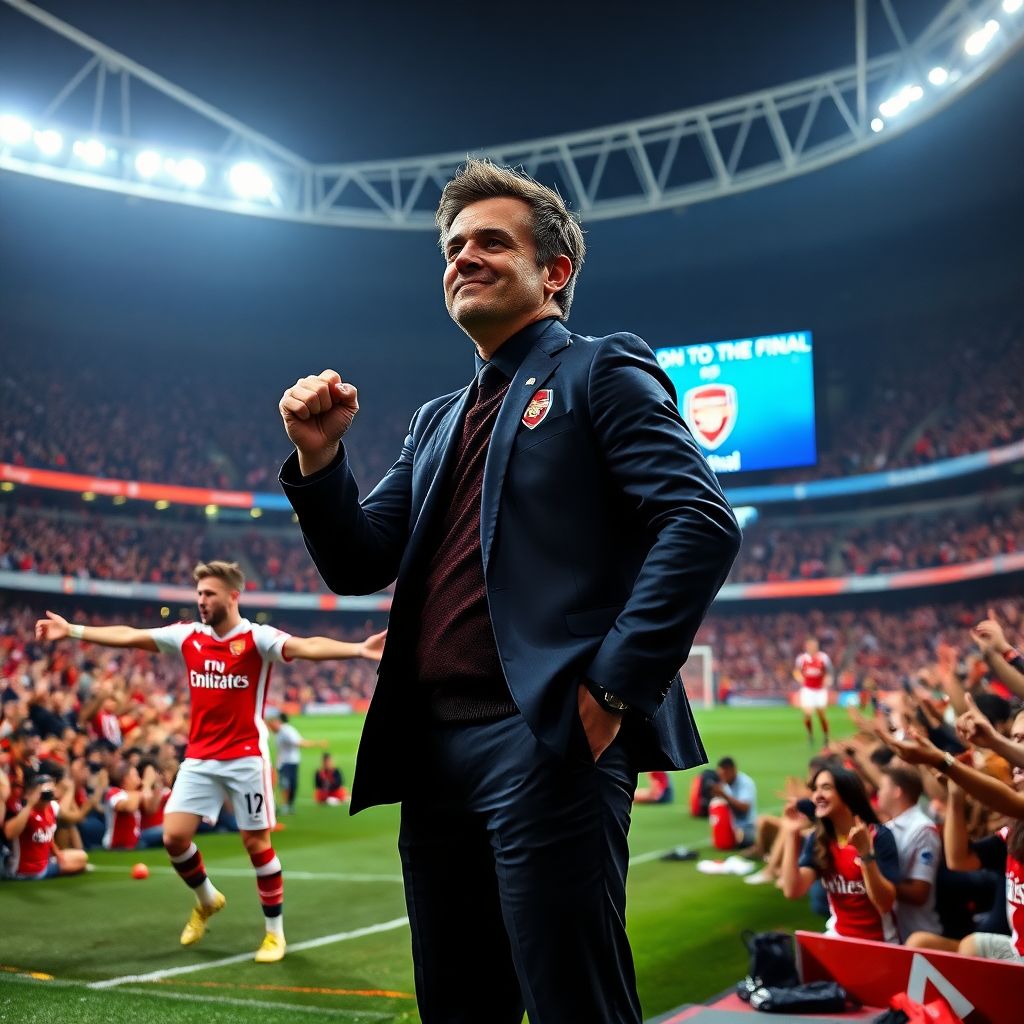
Mikel Arteta: Wembley is a huge source of motivation for Arsenal
Arsenal manager Mikel Arteta believes reaching Wembley by knocking out Chelsea in the League Cup will act like a “vitamin boost” for his squad during one of the most demanding periods of the season. The North London side booked their place in the final, where they will face the winner of the Manchester City–Newcastle United tie, and their coach sees this as far more than just another fixture on the calendar.
Arsenal advanced to the showpiece match by eliminating Chelsea 4–2 on aggregate in the semi-finals. After a hard‑fought 1–0 victory in the second leg at the Emirates Stadium, Arteta underlined how important this achievement is for the group’s mentality and energy levels, especially with games coming thick and fast every few days.
Speaking after the match, Arteta stressed the impact that Wembley qualification can have on a squad stretched by injuries and a congested fixture list. “In a period where we are playing every three days, this is the best vitamin we could possibly get,” he said. “It’s an incredible energy source for our players.” According to the Spanish coach, the sense of reward and the tangible goal of a trophy help the team maintain focus and intensity despite physical fatigue.
For Arteta personally, returning to Wembley carries an extra emotional weight. He guided Arsenal to FA Cup glory in 2020, when they also defeated Chelsea in the final. Remembering that night, he pointed out how special it is to be back on the same stage. “Going back to Wembley is a magical feeling,” he noted. “But this time it’s not just about being there. Now we must go there and win the trophy.”
The win over Chelsea also allowed Arsenal to break a frustrating pattern. Before this tie, they had lost four consecutive semi‑finals in all competitions — two in the League Cup and two in Europe. Ending that negative streak was vital, both for the club’s confidence and for changing the narrative around Arteta’s team in high‑pressure knockout games. Progressing to a final gives the squad a concrete sign that their development is heading in the right direction.
The defining moment of the second leg came in the closing stages, at a point when Chelsea were throwing everything forward in search of an equaliser. Ironically, it was a former Chelsea player who dealt the decisive blow. Kai Havertz, who has missed much of the season through injury, stepped up in the dying minutes to score the only goal of the night and effectively seal Arsenal’s trip to Wembley.
Arteta highlighted the emotional dimension of Havertz’s contribution. Scoring a crucial goal against his old club, after such a disrupted season, made the moment even more significant. “It’s a special moment for him,” Arteta said. “I hope he enjoys it to the fullest.” Beyond the sentiment, the goal could mark a turning point for Havertz’s confidence, as he looks to re-establish himself as a key figure in Arsenal’s attack for the remainder of the campaign.
The manager also emphasised how nights like this can bind a team together. A late winner, a place in a final, and the chance to lift silverware — all of these elements create a shared experience that strengthens the dressing room. For younger players in particular, stepping onto the Wembley pitch for the first time will be a milestone in their careers and a powerful lesson in handling big-game pressure.
From a tactical perspective, the tie against Chelsea tested Arsenal’s ability to manage different phases of a knockout match. In the second leg, they had to balance protecting their aggregate advantage with the need to threaten on the counter. Arteta’s side showed greater maturity than in some of their previous semi-final exits, keeping their composure under pressure and waiting for the right moment to strike. That development in game management is something the coach has been pushing for since taking over.
Wembley also represents an important benchmark for the club’s wider project. Since Arteta’s arrival, Arsenal have been reshaping their squad, investing in younger players and trying to forge a new identity both on and off the pitch. Reaching a domestic final is tangible evidence that the rebuild is producing results. Winning the trophy would not only bring silverware but also reinforce the belief that this group can compete regularly for honours.
The psychological effect of a final appearance should not be underestimated. Players often speak about how the prospect of a big occasion helps them get through the grind of a long season: extra training sessions, long trips, and playing while carrying minor knocks all become easier when a trophy is within reach. Arteta’s “vitamin” metaphor captures this idea — Wembley gives the squad a mental injection that helps them cope with fatigue and maintain intensity.
For the supporters, the return to Wembley is equally meaningful. Recent years have brought both hope and disappointment, with progress in league performance sometimes offset by painful exits in cup competitions. A chance to fill the stands at a national stadium, to watch their team fight for a trophy again, reconnects fans with the club’s tradition of competing at the highest level. That bond between team and supporters can itself become a factor on the pitch, providing the emotional backdrop that fuels players in the defining moments of a final.
Looking ahead to the showdown with either Manchester City or Newcastle United, Arteta is fully aware that the hardest part is still to come. Both potential opponents present very different, but equally demanding, challenges. Manchester City bring experience and a proven winning mentality, while Newcastle offer intensity, physicality, and a growing ambition to claim major honours. Preparing for each scenario will require detailed tactical work and careful squad management in the weeks leading up to the final.
At the same time, the Arsenal manager has to keep his players grounded. One of the key tasks now is to ensure that the excitement of reaching Wembley does not distract from the immediate league and cup fixtures. Arteta will look to use the final as a motivational tool without allowing complacency to creep in. The message is likely to be simple: reaching Wembley is an achievement, but it only becomes truly meaningful if Arsenal finish the job and bring the trophy home.
In that sense, the League Cup run can serve as a rehearsal for future success. Many great teams have used this competition as a springboard — a first step towards building a trophy-winning culture. For Arsenal’s relatively young squad, experiencing a final together, handling the build-up, the pressure, the national attention, and then performing on the day, could be invaluable preparation for bigger stages in seasons to come.
Ultimately, Arteta’s comments reveal how he views football not only in terms of tactics and results, but also as a series of psychological and emotional battles. Wembley, in his eyes, is more than just a stadium and more than just a final: it is a symbol of progress, a source of energy, and a test of whether his team can transform potential into concrete success. Now, with Chelsea behind them and a negative semi-final history overturned, Arsenal stand one decisive match away from turning that motivation into a trophy.