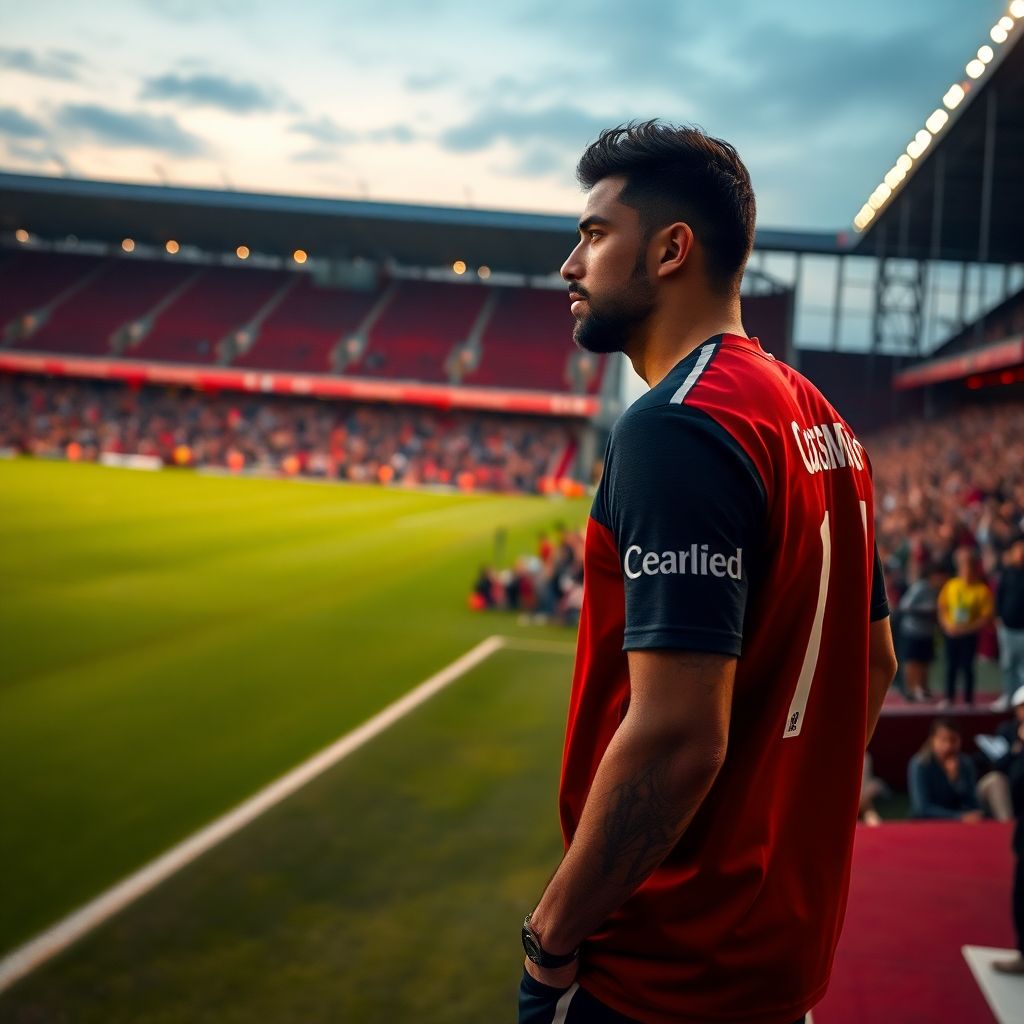
Manchester United stand firm on Casemiro decision
Manchester United have reportedly decided to stick with their initial stance not to renew the contract of experienced midfielder Casemiro at the end of the season, despite his recent upturn in form and growing support from fans and teammates.
The Brazilian star, whose deal is set to expire at the conclusion of the current campaign, is not expected to receive an offer for a new contract. At 34, Casemiro is widely anticipated to leave the club once the season finishes, bringing his Old Trafford spell to a close.
According to reports from the English press, the stance of the United hierarchy is tied largely to financial and strategic considerations. Casemiro’s high salary had already been a subject of internal debate, and the club’s leadership is said to be focused on reducing overall wage costs while reshaping the squad with a longer-term vision in mind. In that context, allowing an aging, high-earning player to depart is seen as consistent with their broader restructuring plan.
Club sources indicate that the decision was not made lightly and that it aligns with a push toward creating a younger, more sustainable core group of players. United are understood to be targeting a more dynamic and physically robust midfield profile in upcoming transfer windows, with an emphasis on players who can serve the club for several seasons rather than short-term solutions.
While Casemiro has delivered several impressive performances this season, those displays have not shifted the position of the board. The decision is described as “final,” and the club is keen to avoid any ambiguity around his future. By clarifying matters well before the season’s end, United hope to limit distractions in the dressing room and allow both the player and the club to plan their next steps calmly and professionally.
On the pitch, however, Casemiro continues to prove his worth. In recent weeks he has shown improved form, highlighted by a crucial goal against Aston Villa that drew particular attention. Following that match, supporters gave the midfielder a warm reception, chanting his name and clearly signaling that a large section of the fanbase would prefer to see him stay.
The affection is shared inside the squad. Club captain Bruno Fernandes publicly expressed his wish for Casemiro to remain at Old Trafford, emphasizing the Brazilian’s leadership qualities, experience in high-pressure matches, and ability to guide younger teammates. Young defender Leny Yoro also voiced his support, noting the calming influence Casemiro provides on the pitch and in the dressing room.
Interim head coach Michael Carrick acknowledged both the club’s clear stance and the player’s importance. He stressed that once a decision has been taken at the organizational level, everyone involved understands and respects it, even if they might personally feel differently. Carrick underlined that Casemiro’s impact has gone far beyond the stat sheet, pointing to decisive goals and key interventions in tight matches. In his words, Casemiro’s presence and contributions “have been extremely valuable” for the team.
Why United are moving on despite good performances
From a sporting perspective, Casemiro still offers top-level reading of the game, positional intelligence, and big-game experience. However, United’s decision is driven by a combination of age, wage structure, and long-term planning. At 34, his physical peak is naturally behind him, and the club wants to avoid being tied to another high-salary deal for a player who may see a gradual decline in minutes and influence.
There is also a strategic push at Old Trafford to rebalance the squad’s age profile. Recent recruitment has targeted younger talents who can develop over several years. In that framework, keeping a veteran on a premium contract can block the pathway of emerging midfielders and limit room for new signings. Freeing up Casemiro’s salary could allow United to bring in one or two younger players with resale value and long-term upside.
The emotional versus the rational side of the decision
The situation highlights a familiar tension in modern football: the emotional pull of a popular, successful player versus the cold calculations of squad management. Fans and teammates see the leader, the fighter, the winner of multiple trophies, and the man who scores vital goals in big games. The front office sees wage bills, contract length, and the necessity of planning two to three years ahead.
Casemiro’s track record in Europe and at international level makes him a symbolic figure in the dressing room. For youngsters, he’s a reference point on how to train, prepare, and compete at the highest level. Letting such a figure go is never simple, even when the logic behind it is financially and strategically consistent.
Possible next steps for Casemiro
With the club’s stance increasingly clear, attention will naturally shift to Casemiro’s next destination. Given his pedigree, several scenarios are realistic:
– A move to another top European league where his experience and reading of the game remain highly valued.
– A transfer to a league with strong financial power, where veteran stars are in demand and long-term contracts for players in their mid-30s are more common.
– A return to a club in his home country at a later stage, should he prioritize family and lifestyle over the highest level of competition.
Whichever direction he chooses, Casemiro is likely to remain a sought-after name in the market, especially for teams looking for a short-term leader who can immediately raise standards and stability in midfield.
What this means for Manchester United’s midfield
For United, Casemiro’s expected departure creates both a gap and an opportunity. The gap is obvious: losing a seasoned defensive midfielder with a wealth of Champions League experience means the team will need to replace not just his ball-winning abilities, but also his mentality and leadership.
At the same time, his exit opens space for:
– Greater responsibility for younger midfielders who need consistent minutes to develop.
– A fresh signing that fits the club’s new physical and tactical demands in the center of the pitch.
– Tactical evolution, with the coach potentially opting for a more mobile, press-oriented midfield trio.
United’s recruitment team will be under pressure to ensure that the transition is managed smoothly, so the team does not suffer a drop in stability when Casemiro leaves.
Managing the dressing room during the transition
Another delicate aspect is the psychological impact of the decision within the squad. When a respected senior figure is known to be leaving, clubs must ensure that motivation and unity are preserved until the final whistle of the season. By communicating early and clearly, United aim to avoid rumours, uncertainty, and distractions.
Carrick’s public comments about everyone understanding the decision are a key part of that process. They send a message that, while individual opinions may vary, the group is aligned behind the club’s direction. For Casemiro himself, clarity can help him focus on finishing his United chapter with professionalism and pride, rather than constantly addressing speculation about his contract.
The fan perspective and legacy questions
From the stands, such decisions are often judged less by wage structures and more by memories. If Casemiro continues to deliver strong performances and crucial contributions until the end of the season, many fans will feel that he deserved another year. That emotional angle feeds the debate around whether clubs sometimes act too strictly in pursuit of long-term planning.
In terms of legacy, much will depend on how this final phase unfolds. Should he maintain his standards and leave on good terms, Casemiro is likely to be remembered as a player who brought elite mentality and important moments, even if his stay was relatively short compared to club legends. A dignified send-off, with appreciation from both fans and teammates, would help underline the positive side of his time in Manchester.
A measured farewell rather than a sudden break
What stands out in this case is the measured nature of the separation. Instead of last-minute negotiations, abrupt announcements, or mid-season drama, both sides appear to be preparing for a controlled, respectful conclusion. The club safeguards its long-term plans and finances; the player retains his dignity and time to assess future options; the squad and fanbase can gradually adapt to the idea of his departure.
In modern football, where coaching changes, ownership shifts, and short-term results often create chaos, such structured exits are increasingly seen as a sign of professional management-even when they are emotionally unpopular.
Conclusion
Manchester United’s refusal to reconsider their decision on Casemiro’s contract reflects a broader commitment to wage discipline, squad renewal, and long-term planning. Despite his strong performances, vocal support from fans, and public backing from teammates like Bruno Fernandes and Leny Yoro, the club is determined to move into a new cycle with a different midfield structure.
For Casemiro, the coming months will likely be about balancing present commitment with future planning: continuing to deliver on the pitch while quietly preparing for the next chapter in his career. For United, the challenge will be to ensure that the qualities he brought-experience, leadership, and a winning mentality-are successfully passed on to the next generation.