“I can’t believe I’m second in the standings.”
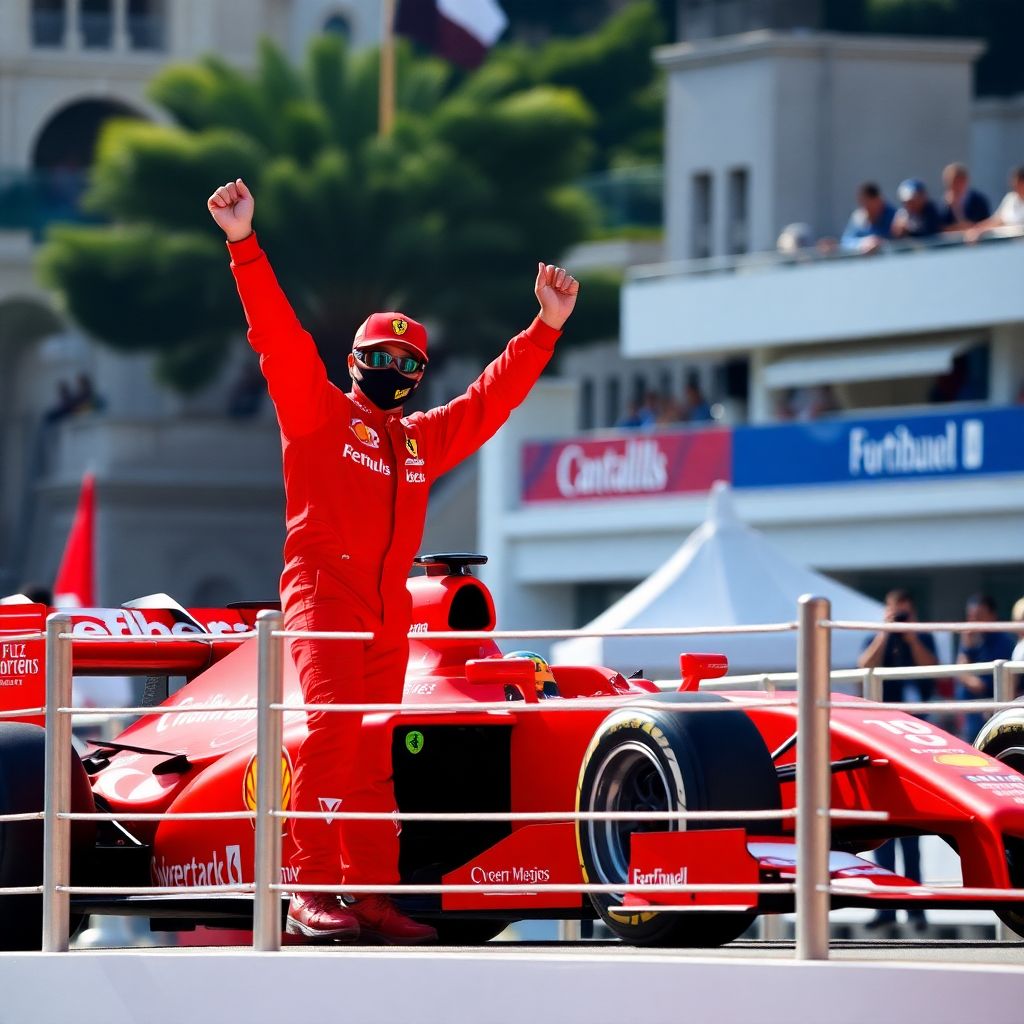
Lewis Hamilton left the streets of Monaco both surprised and energized. After finishing second in the Monaco Grand Prix behind Kimi Antonelli, the seven-time world champion admitted he did not expect to be this competitive so early in his second year with Ferrari, especially after a turbulent debut season with the Italian team.
The British driver, who openly criticized his own level and the team’s performance in 2025, now feels he is finally rediscovering his best form. The podium in Monte Carlo was more than just a result for Hamilton; it was proof that the work done over the winter is paying off.
In Sunday’s race, Hamilton followed Antonelli home to secure P2, a result that lifted him to second place in the drivers’ championship. Speaking after the podium ceremony, he underlined how important the support around him has been during the difficult months.
“Last year the fans kept reminding me who I am,” Hamilton said. “Week after week they were telling me not to give up, to keep fighting. Now I’m going out every weekend trying to show everyone – and myself – that I’m still that driver. I’m still capable of fighting at the front.”
Hamilton also took time to publicly thank Ferrari team principal Frédéric Vasseur, highlighting the internal changes that have transformed the atmosphere and competitiveness of the Italian squad.
“Last year was incredibly tough for us,” he recalled. “There were things in the team and with the car that I felt had to change. I was very clear about what I wanted, and Fred listened. He pushed through those changes, and now we’re finally seeing the rewards. I can at last deliver proper results for the team.”
The outcome in Monaco had immediate consequences in the championship picture. With the 18 points for second place, Hamilton climbed to P2 in the drivers’ standings. At 41 years old, he now sits 66 points behind championship leader Antonelli, while also moving two points clear of his former teammate George Russell.
“I honestly can’t believe I’m second in the championship,” Hamilton admitted. “That makes me really happy. We’re still at an early stage of the season, and anything can still happen. The only thing we can do is keep pushing, keep fighting every weekend. I believe we can bring Ferrari closer to the very top.”
Despite the upbeat mood, Hamilton did not hide the scale of the challenge facing Ferrari as they chase Mercedes and Antonelli. Watching the race winner disappear up the road was a stark reminder of the current performance gap.
“I saw him just pulling away,” Hamilton said of Antonelli. “Their performance is on a completely different level right now. Especially in terms of downforce, they’re clearly ahead of us. When it came to traction out of the slow corners, the difference between us was like night and day.”
For Hamilton, this contrast is both frustrating and motivating. On one hand, it highlights the limits of what he and Ferrari can currently do on pure pace; on the other, it gives the team a clear direction for development. Improving mechanical grip and traction, particularly at low speed, has now become a priority if Ferrari want to consistently challenge for wins on tight circuits like Monaco.
Behind the scenes, Ferrari engineers have already been working on a series of updates aimed at closing that gap. According to Hamilton, the biggest step forward this year has not been a single breakthrough, but rather a smarter way of understanding the car and translating his feedback into concrete changes.
He has often spoken about trust and communication as key elements of success. After a first year marked by adaptation and mutual frustration, the relationship between driver and team now appears far more aligned. Hamilton feels that his requests regarding balance, tyre management and setup direction are being implemented more effectively, resulting in a car that finally behaves in a more predictable way over a race distance.
The psychological dimension of this turnaround is also crucial. Hamilton arrived at Ferrari with enormous expectations – both from the outside world and from himself. When results failed to match the hype, criticism was swift. The podium in Monaco and the current position in the standings are therefore not just numbers; they serve as a form of validation that the decision to join Ferrari can still be a successful chapter in his career.
Another key factor in Hamilton’s resurgence is his approach to pressure. Rather than obsessing over the title from the first race, he has repeatedly emphasized the importance of focusing on execution: maximizing each session, minimizing mistakes, and consistently scoring points. This mentality is particularly important in a season where Mercedes currently seem to hold a clear performance edge.
For Ferrari, Hamilton’s experience in championship battles is invaluable. He knows what it takes to sustain a title challenge over a long campaign: reliability, strategic sharpness, consistent car development and, above all, mental resilience when results fluctuate. Even if Antonelli and Mercedes appear out of reach on some circuits, Hamilton’s presence in second place shows that accumulating strong finishes can keep him in contention if opportunities arise later in the year.
The duel with his former teammate George Russell adds an extra narrative layer. Hamilton’s narrow advantage over Russell in the points is a personal marker in a season where comparisons with Mercedes are inevitable. Every weekend offers new data about whether Hamilton’s switch to Ferrari is bringing him closer to, or further from, the level he once enjoyed with his previous team.
Looking ahead, Hamilton expects the season to be decided not only on pure speed but also on development races between the top teams. He has stressed that Ferrari must keep bringing upgrades, especially for medium- and high-speed tracks where aerodynamic efficiency plays a bigger role. At the same time, he believes circuits with higher tyre degradation could offer Ferrari more chances, provided they can continue to manage tyres as well as they did in Monaco.
The streets of Monte Carlo have often been a mirror of Hamilton’s career phases: he has known dominant victories, painful defeats and now this symbolic comeback podium in red. Standing on the rostrum again, second in the race and in the championship, he looked less like a legend in decline and more like a champion quietly building a new story.
Whether this story will end with another title remains uncertain, but Hamilton’s own verdict on the situation is clear: he feels back in the fight. The disbelief at being second in the standings is mixed with a renewed hunger. For Ferrari, that combination – a motivated Hamilton and a car that is finally responding to his touch – might be the most encouraging sign of all as the season moves toward its decisive stages.