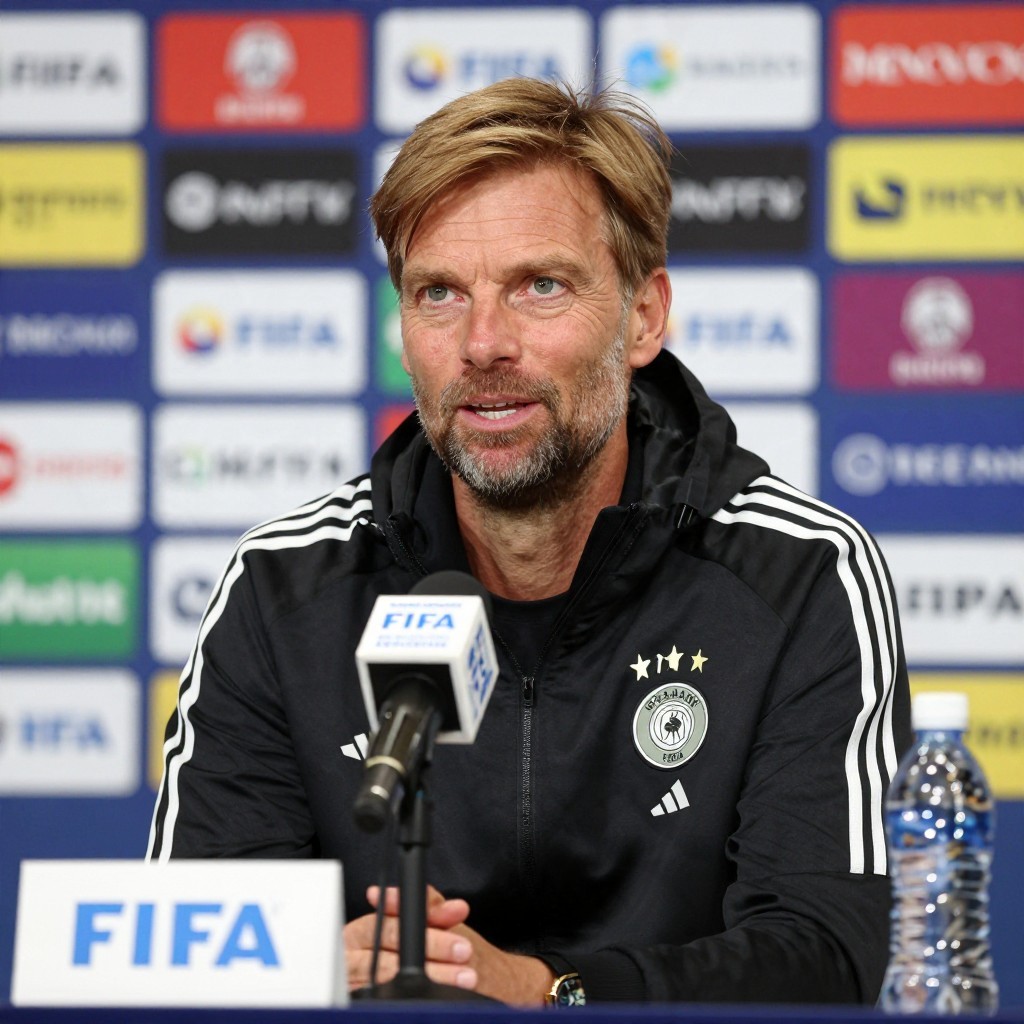
Klopp Calls for Change at FIFA
Jürgen Klopp has urged FIFA to consider a change in leadership, adding his voice to the debate over the organization’s direction under president Gianni Infantino. The former Liverpool manager did not name Infantino directly, but argued that a new approach at the top could benefit football.
Klopp shared his view at a press conference ahead of Germany’s UEFA Nations League match against the Netherlands. Asked about criticism of FIFA’s leadership, he said there was a widespread feeling that a change might be sensible. He also questioned whether the organization had improved since Sepp Blatter left the presidency.
“We thought things couldn’t get any worse after Sepp Blatter, but we managed to prove that wrong,” Klopp said.
He stressed that the people leading football’s governing bodies should put the sport ahead of commercial interests. In his view, individuals who care about football and have no financial interests of their own could bring a positive change if they took on senior roles at FIFA.
Infantino became FIFA president in 2016, succeeding Blatter, and was returned to the position without opposition in 2019 and 2023. He is reportedly aiming to stand for a fourth term in an election planned for March. His leadership has faced criticism over several issues, including FIFA’s commercial strategy and its handling of major competitions.
One controversy involved a reported telephone call from U.S. President Donald Trump concerning American player Folarin Balogun. Balogun had received a red-card suspension, which was subsequently overturned. Reports that Trump contacted Infantino about the case fuelled questions about the relationship between political influence and decisions involving football.
FIFA has also faced resistance over plans to transfer some commercial activities and World Cup-related rights to private investors. The proposal, known as FIFA Forward Enterprises, drew objections from several confederations. UEFA raised the possibility of boycotting FIFA competitions amid the dispute, and the project was later cancelled.
The debate reflects a broader concern about how football can balance revenue growth with the interests of players, supporters and national associations. Major tournaments generate enormous commercial value, but critics argue that financial expansion should not come at the expense of sporting priorities or transparent governance.
Klopp’s remarks focus on the qualities he believes FIFA’s leadership should have: independence from private financial interests and a clear commitment to the game. A change in personnel alone, however, would not necessarily resolve disputes over commercial rights, tournament decisions or the influence of political figures. Any new leadership would also face pressure to explain how decisions are made and whose interests they serve.
For national federations and confederations, the central issue is whether FIFA’s policies give them a meaningful role in shaping the sport’s future. Disagreements over investment plans and competition strategy can become especially contentious when organizations believe that important decisions are being made without sufficient consultation.
The wider question raised by Klopp is therefore not simply who should lead FIFA, but what principles should guide its leadership. Greater transparency, clear safeguards against conflicts of interest and a stronger focus on football’s sporting needs could help address some of the concerns surrounding the organization. Whether those changes require a new president or a different approach from the current administration remains a matter of debate.