“We Were Not at Our Best on the Floor”: Jasikevicius Warns Fenerbahçe Ahead of Cup Final
Fenerbahçe Beko head coach Sarunas Jasikevicius delivered a clear and self-critical message after his team’s 86-78 victory over Türk Telekom in the Ziraat Bankası Turkish Men’s Cup Final Four. Despite securing a place in the final, the Lithuanian coach underlined that the level of basketball his team showed in the semifinal will not be enough to lift the trophy.
Speaking after the game at Sinan Erdem Sports Hall, Jasikevicius openly admitted that Fenerbahçe did not present their true identity on the court. “We were not on the floor at our best,” he said. “Our physical intensity and the way we competed today are not at the standard required for a final. The Beşiktaş GAİN vs Anadolu Efes game was played at a much higher level. We are in the final and have a chance to win the cup, but if we repeat the kind of basketball we played today, it will not be sufficient.”
The coach’s remarks highlighted two main concerns: the team’s physical level and their intensity in the duels. For Jasikevicius, who has built a reputation on discipline, aggressiveness, and attention to detail, the lack of sharpness was evident. While the scoreboard reflected a win, his focus remained on the quality of the performance rather than the result alone.
Jasikevicius also drew attention to the contrast between Fenerbahçe’s game and the other semifinal. In his view, the clash between Beşiktaş GAİN and Anadolu Efes set a higher bar in terms of tempo, energy, and overall quality. By emphasizing that comparison, he subtly sent a message to his players: reaching the final is not enough; they must significantly raise their level if they want to compete with teams playing at such intensity.
American guard Talen Horton-Tucker, who played an important role in Fenerbahçe’s victory, echoed some of his coach’s sentiments while also underlining the positive side of the night. He stressed that the team largely followed Jasikevicius’ game plan. “I’m happy that we won, but we know a very tough game is waiting for us,” Horton-Tucker said. “We have to prepare for that now. I tried to do everything I could to help the team win. Coach motivated me a lot for this role, and I’m really grateful to him for that.”
Horton-Tucker’s words shed light on the internal dynamics of the team. The American guard emphasized how much trust and responsibility he has been given, pointing out that his coach’s belief in him pushes him to contribute on both ends of the floor. His gratitude suggested a strong relationship between player and coach, something crucial before a high-stakes final.
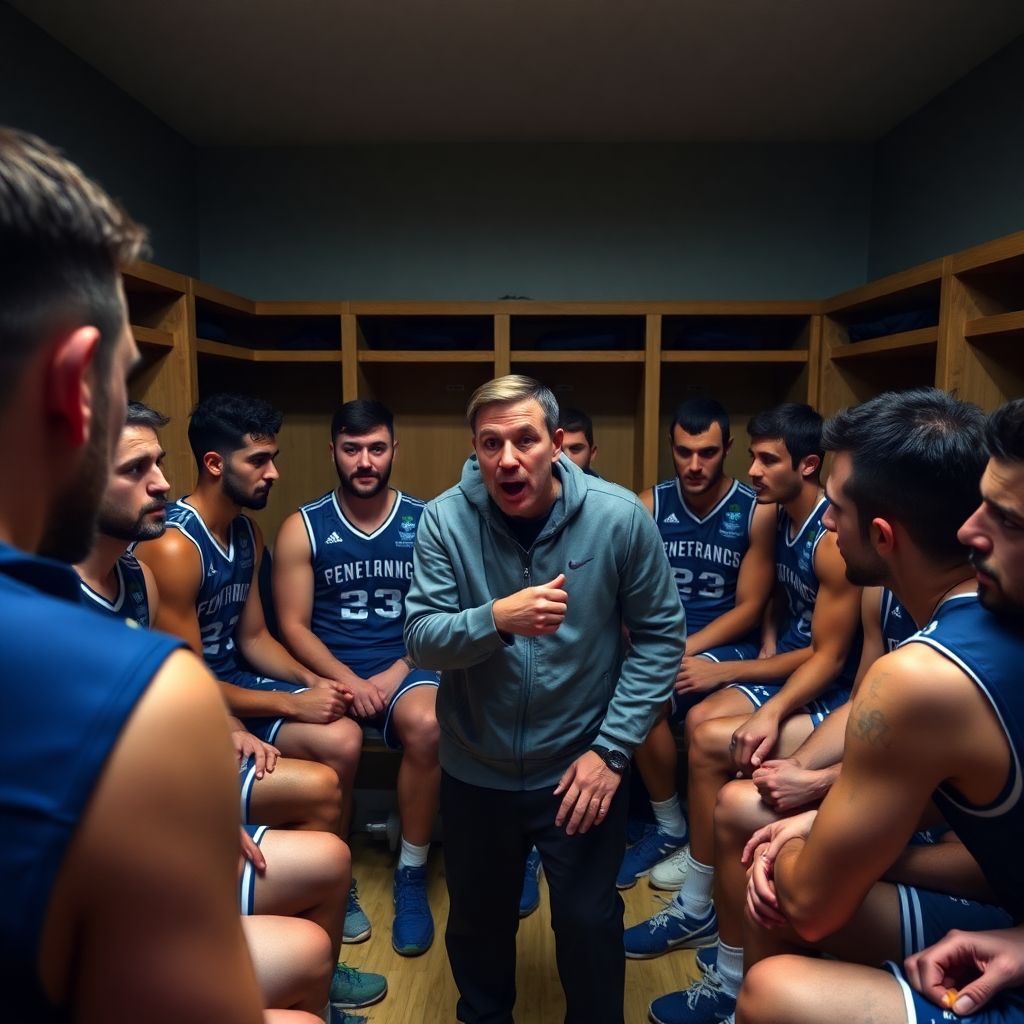
Behind the scenes, Jasikevicius’ criticism can be read as a calculated move. By publicly stating that his team was below its best, he is not only being honest but also trying to provoke a reaction from the locker room. Coaches of his profile often use such messages to wake up players, sharpen their focus, and make sure no one is satisfied just with reaching the final. The objective is clear: transform a warning into a response on the court when it matters most.
From a tactical standpoint, Fenerbahçe showed flashes of their potential against Türk Telekom: effective ball movement in stretches, individual scoring runs, and the ability to control the decisive moments of the match. However, there were also visible lapses in concentration, defensive breakdowns, and moments when their physical presence under the rim weakened. These inconsistencies are precisely what Jasikevicius wants to eliminate before the final tip-off.
The coach’s reference to physicality is particularly important in the context of modern European basketball. In a final, where every possession can decide the outcome, teams must not only be tactically prepared but also able to constantly win physical battles: boxing out on rebounds, fighting through screens, pressuring the ball, and contesting every shot. Jasikevicius clearly believes that Fenerbahçe can do much more in these areas than they showed in the semifinal.
For Fenerbahçe supporters, this mix of victory and criticism sends a double message. On the one hand, the team is exactly where it wanted to be: one win away from lifting the Turkish Cup. On the other hand, the coaching staff refuses to let the group relax. The standard is not simply to win, but to play in a way that reflects the club’s ambitions in both domestic and continental competitions.
The final now becomes not only a battle for a trophy, but also a test of character. Will Fenerbahçe be able to respond to their coach’s challenge? Players like Horton-Tucker, who already spoke about their determination to “do everything” for the team, will need to back up their words with intensity, concentration, and leadership on the floor. Role players will also be crucial, especially in defense and in the little details that rarely show up on the stat sheet but decide high-level games.
Mentally, the short time between semifinal and final is a critical window. The technical staff must quickly correct errors, analyze matchups against the opponent, and adjust rotations if necessary. At the same time, they must ensure the team doesn’t carry any complacency into the final. Jasikevicius’ statements suggest that the main message in the locker room will revolve around humility, hunger, and the need to play with a much higher edge.
Horton-Tucker’s performance and comments also highlight another key factor: the importance of adaptation. Coming from a different basketball environment, the American guard is still building chemistry within the team, yet he already feels trusted and valued. That sense of responsibility can become a weapon in the final, especially if he continues to buy into the coach’s demanding approach and uses that motivation to impact the game in multiple ways.
Ultimately, the semifinal against Türk Telekom will likely be remembered less for the score and more for the warning that followed it. Jasikevicius has set the tone: being “good enough” to win a semifinal is not the goal. Fenerbahçe is expected to chase excellence, especially on nights when a trophy is on the line. How the team responds to this challenge will define not only the outcome of the Turkish Cup final, but also send a signal about their ambitions for the rest of the season.