“I trust the federation president”
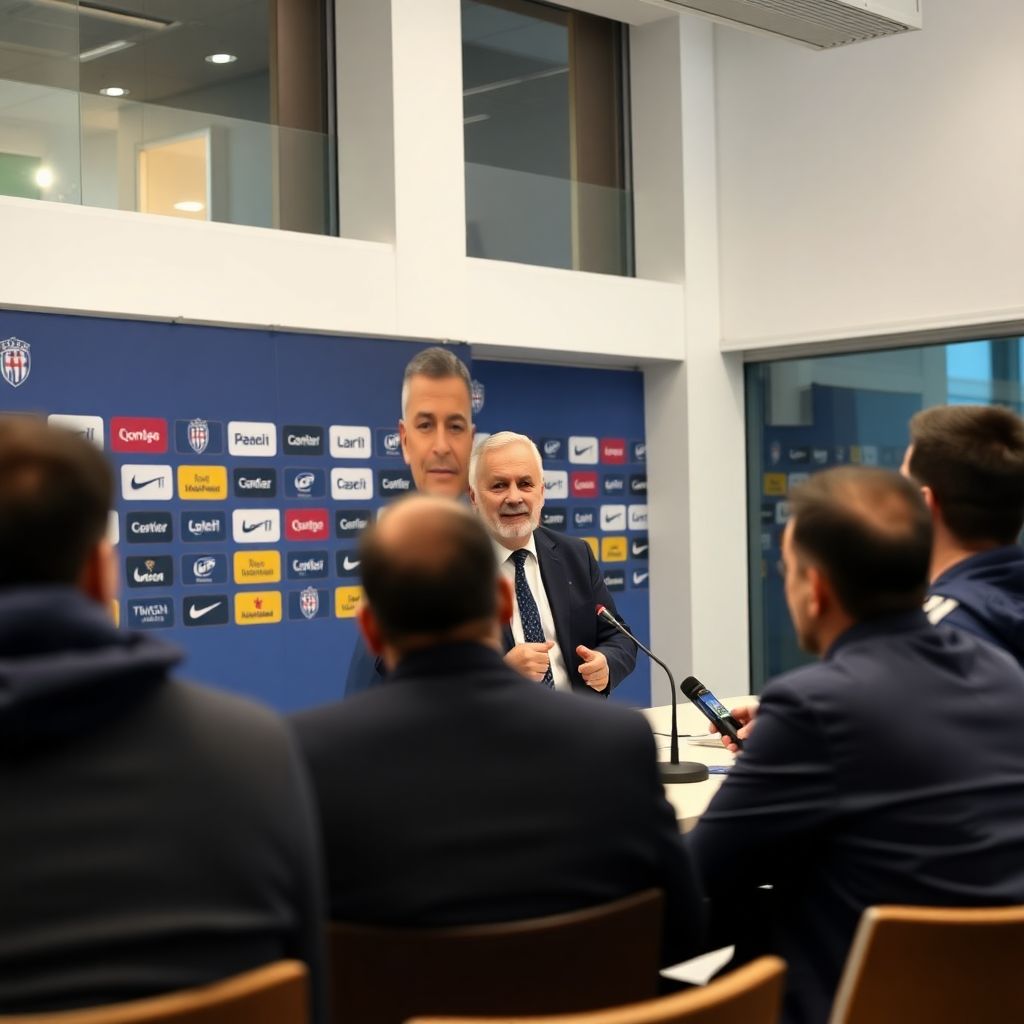
Fenerbahçe president Sadettin Saran met with journalists covering the yellow‑navy club and drew clear lines about his priorities, his stance on refereeing, the Turkish Football Federation and the pressure surrounding the team’s title race.
The meeting took place at the Fenerbahçe Faruk Ilgaz Facilities, with board members Ali Gürbüz, Burçin Gözlüklü and Gürhan Taşkaya also present. Speaking openly and answering questions at length, Saran underlined that, for the moment, his life is entirely shaped around Fenerbahçe.
“At this moment I’m not thinking about anything other than Fenerbahçe,” he said. “Not my companies, not my business. My first priority is my family, my second priority is Fenerbahçe. We are completely focused on the team. That’s why talking about elections serves no purpose. I don’t plan to speak about that until May.”
Warm atmosphere in Samandıra
Saran reminded that they recently held a meeting with the players at the Samandıra training facilities and emphasized that the atmosphere there was very positive and sincere. According to him, the face‑to‑face contact and direct communication with the squad are key in such a tense and demanding season. He underlined that unity inside the dressing room will be one of the decisive factors in the title race and that he is trying to be present around the team without creating extra pressure.
“There is a serious problem in the Referees Committee”
One of the most striking parts of his speech concerned refereeing performances and the Central Referees Committee (MHK). Saran made it clear that he had deliberately refrained from harsh public criticism for a long time, but feels the latest events have crossed a line.
“I’m not sorry that I didn’t talk about referees earlier. My style is different,” he noted. “I’ve never seen shouting and screaming actually change anything. I tried hard to avoid that. I asked for tolerance, unity and solidarity. I tried not to speak, but in the last two weeks very strange things have happened. Not giving a yellow card to Torreira is something that just shouldn’t happen. There is a serious problem in the Central Referees Committee. In my opinion, Mr. Ferhat is managing it very poorly.”
Saran pointed out the inconsistencies by referring to incidents where Lucas Torreira climbed the fences to celebrate without being punished, while similar or even lighter actions elsewhere were sanctioned. He also mentioned that Matteo Guendouzi compared these situations and shared his surprise with them. According to Saran, Fenerbahçe lost points unjustly and reacting to this is “completely natural.”
“Ninety percent of the clubs are unhappy with the MHK”
The Fenerbahçe president stated that the discomfort around the current refereeing structure is not limited to his own club.
“About 90 percent of the clubs are unhappy with the MHK,” he stressed. “For us, it’s a mystery why Mr. Ferhat is still in that position. I think this situation is also damaging the federation. We convey all of this to the federation through Mr. Taner Sönmezer. We don’t conduct our dialogue through the media; we express it directly there.”
He revealed that they have prepared a comprehensive file on refereeing, a process that began even before winning the elections at Fenerbahçe. Instead of “reinventing the wheel,” as he put it, Saran believes Turkey can learn from existing models.
“In Europe, there are not this many problems around referees. It’s something that can be managed. The system there is not perfect either, but it’s more stable and predictable. We have suggestions. We brought examples from similar systems around the world to the table. There is serious support for Mr. Ferhat to remain in place and we don’t understand it. With such obvious mistakes, this position harms not only those who are wronged, but ultimately those who support him as well.”
Pressure on young players in Kadıköy
Saran also focused on the psychological aspect of the game and especially on how young players are affected by the environment in Fenerbahçe’s home stadium.
“There is serious pressure on young players at Kadıköy,” he admitted. “When the team can’t find a goal and that murmur appears in the stands, it would be a lie to say it doesn’t affect their psychology. We have expert support teams working on this. There is an accumulated frustration and trauma of eleven years. Expectations are enormous.”
He recalled that when the current administration came in, many people did not realistically expect an immediate championship. According to Saran, they could have lowered the pressure with messages like “not this year, next year,” but that is not in his nature.
“We are playing for the title,” he said. “When this is the declared target, mistakes on the pitch are unfortunately not tolerated as easily. That’s the reality of a big club, and we have to help our players cope with it.”
Psychological support and mental resilience
Expanding on the mental side, Saran stressed that modern football is no longer just about tactics and physical condition. Building mental resilience, especially in a demanding fan environment like Kadıköy, is now a strategic priority for the club. He indicated that sports psychologists and performance experts are working closely with the squad to manage anxiety, expectation and the weight of the club’s history.
In particular, young players and new foreign signings are being monitored closely, with individualized programs to help them adapt. Sessions on handling criticism, focusing under pressure and separating personal self‑worth from match results are part of this process. According to Saran, if Fenerbahçe can strengthen the mental toughness of its roster, the team will perform more consistently in critical moments of the season.
Transfers and finances: “Not blocked by money”
Saran also rejected the claim that Fenerbahçe failed to complete certain transfers due to financial reasons. He insisted that the narrative suggesting deals collapsed “because of money” does not reflect the truth, although he did not go into specifics regarding names or negotiations. For him, the club’s transfer strategy is guided by long‑term planning, not short‑term populism, and must stay within a sustainable financial framework.
He reminded that sporting success directly eases cash flow problems: more wins and trophies mean increased revenues from prize money, match days and commercial activities. “That’s why our first priority is sporting success,” he emphasized. “When you succeed on the pitch, the financial side becomes much more manageable.”
“I trust the federation president”
Asked bluntly whether he trusts the president of the Turkish Football Federation, Saran gave a nuanced but ultimately positive answer.
“I trust the federation president,” he said. “There are things I disagree with, things I find wrong. But at his core, I believe he is a good person. I don’t think he has a hidden agenda; I think he is transparent. Compared to previous federation presidents, I find him more sincere.”
At the same time, Saran made it clear that trust does not mean unconditional approval. Criticism of the MHK, the demand for a more consistent refereeing system and the call for fair competition will continue. Still, his willingness to differentiate between individuals and institutional problems shows that Fenerbahçe is trying to maintain a line of communication rather than entering a permanent state of confrontation.
Transfer plans and new projects
Looking ahead to the summer, Saran confirmed that transfer activity will continue in June. He also spoke about numerous infrastructure and investment projects the club is working on.
“We have a lot of projects,” he said. “There are plans related to Samandıra as well. We are also looking at new land. Soon we will announce a revenue‑generating project. We are working together with a major real estate company. We have lands in different parts of Turkey. We started working on this before we came into office and now we are working day and night.”
He added that many projects that had been launched in the past “just for the sake of starting something” have been stopped or reassessed. The goal now is to focus on initiatives that bring tangible benefits: regular income, better facilities for the team and a more modern club structure capable of competing with European giants.
Belief that Galatasaray is being favored
Saran did not avoid the sensitive topic of the title race with Galatasaray either. He openly stated that he believes their rivals have benefited from favorable treatment.
“All we want is fair competition,” he insisted. “If Skriniar had not been injured and Alvarez had not undergone surgery, we would still be three points ahead, so it’s not my style to blame everything on referees. I am not someone who hides behind excuses. But that doesn’t mean there is no injustice. Yes, I believe Galatasaray is being favored.”
With these words, Saran tried to strike a balance: he acknowledged the role of injuries, squad depth and performance, while also highlighting what he sees as structural imbalances and refereeing decisions that have influenced the race. For him, the central demand remains unchanged: clear rules, equal application and an environment where champions are decided on the pitch rather than by external factors.
Election agenda on hold, but preparations done
Regarding internal club politics and possible elections, Saran reiterated that electoral debates are not on his agenda at the moment, though that does not mean the club is unprepared.
“We are not thinking about elections right now, but we have made all the preparations,” he explained. “We consider every scenario and work accordingly. All my life I have told this to my daughter as well: ‘Do the best you can, hope for the best, but be prepared for the worst.’ I usually try to see the light at the end of the tunnel.”
This approach reflects his broader management philosophy: planning for all outcomes while projecting confidence and ambition. In his view, the best answer to any internal or external challenge is to build a competitive, resilient team and a financially sound, professionally run club.
Fenerbahçe’s broader vision
Beyond the immediate title race, Saran’s comments reveal a wider vision for Fenerbahçe. He wants a club that not only wins domestically but is also structurally aligned with European standards: transparent governance, data‑driven decision‑making in transfers, modern facilities and a strong youth development pipeline.
He repeatedly comes back to the idea that success on the pitch and institutional stability off it must go hand in hand. Investing in infrastructure, mental support, and better refereeing structures may not create headlines like a big‑name transfer, but in his eyes these are the foundations that will allow Fenerbahçe to stay at the top for years, not just a single season.
Under Saran’s leadership, Fenerbahçe’s path is clearly defined: fight for the championship now, push for a fairer system in Turkish football, and build a club strong enough to withstand pressure, crises and changing conditions. Whether in his belief in the federation president’s intentions, his harsh stance on the MHK, or his insistence on psychological support for the players, the same message comes through: controlled emotion, long‑term planning and unyielding demand for justice.