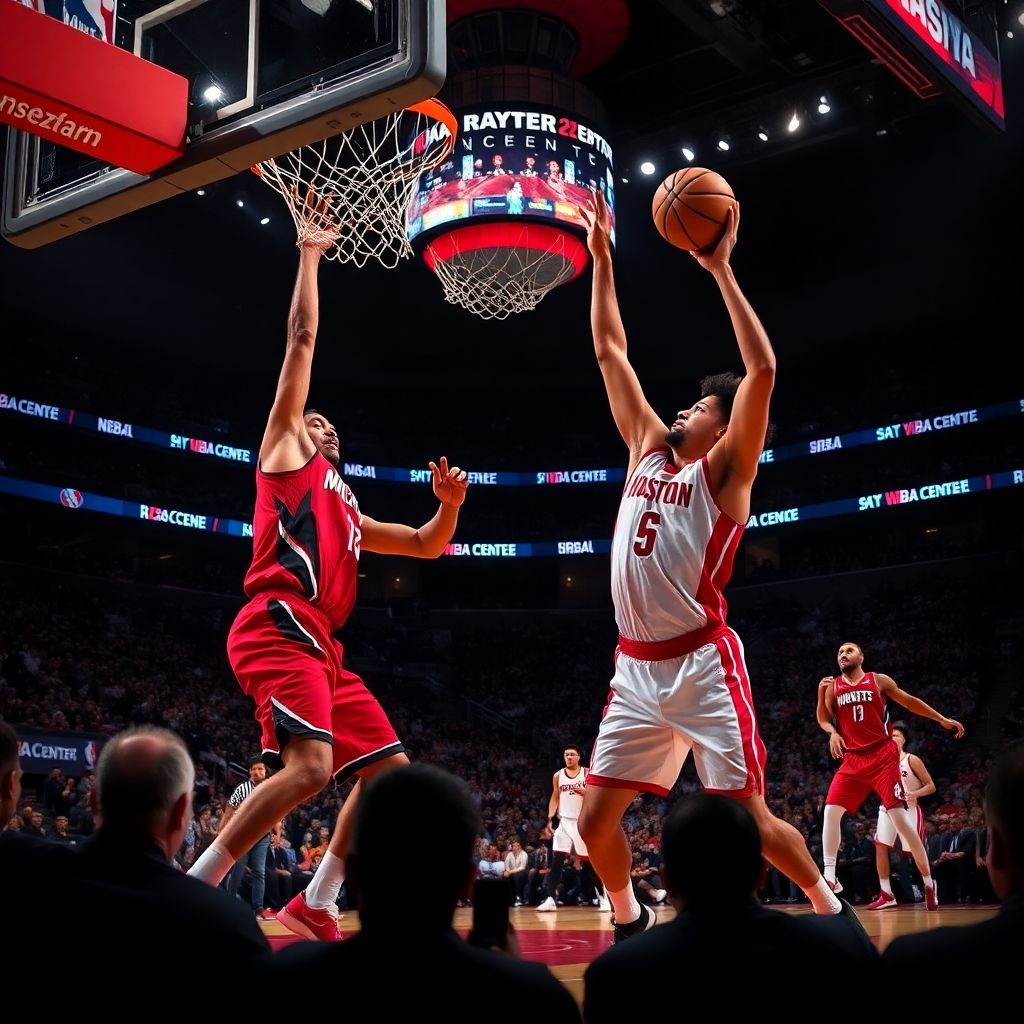
Houston Rockets fall to Miami Heat despite Alperen Şengün’s all-around effort
Houston’s bid to keep pace in the Western Conference hit a bump with a 115-105 road defeat to the Miami Heat at Kaseya Center, in a game where Turkish center Alperen Şengün once again showcased his versatility but couldn’t change the outcome.
Şengün finished the night with 13 points, 6 rebounds and 3 assists, offering his usual mix of playmaking from the post and scoring in the paint. However, Miami’s deeper, more balanced showing at both ends proved decisive, handing the Rockets their 22nd loss of the season.
Heat’s frontcourt dominates the glass
Miami’s interior presence was the biggest difference-maker. Bam Adebayo delivered a commanding performance with 24 points and 11 rebounds, controlling the paint on both offense and defense. Rookie big man Kel’el Ware added a powerful double-double of his own with 13 points and 15 rebounds, repeatedly giving the Heat second-chance opportunities and limiting Houston’s clean looks at the rim.
On the perimeter, Pelle Larsson provided a crucial scoring spark for the Heat, chipping in 20 points and stretching Houston’s defense with timely perimeter shots and efficient drives. With those contributions, Miami secured its 32nd win of the season, reinforcing its status as a serious contender in the Eastern Conference playoff race.
Rockets can’t capitalize on scoring outburst
Houston had moments where the offense clicked. The team’s leading scorer poured in 32 points, setting the tone with aggressive drives and perimeter shot-making that kept the Rockets in touch for much of the night. Amen Thompson added his own all-around imprint, posting 20 points and 11 rebounds for a well-earned double-double. His energy in transition and activity on the boards stood out as one of Houston’s bright spots.
Despite these individual performances, the Rockets repeatedly struggled to string together defensive stops. Miami punished defensive lapses with efficient half-court sets, using Adebayo in pick-and-rolls and high-post actions that forced Houston into tough rotations and mismatches.
Jabari Smith sidelined, frontcourt depth tested
One of the key subplots for Houston was the absence of Jabari Smith, who missed the contest due to a right ankle injury. Without his length, floor spacing and rebounding, the Rockets’ frontcourt rotation was thinner and more vulnerable on the glass. That lack of depth was especially visible whenever Şengün sat, as Miami took advantage of smaller lineups and attacked the rim more aggressively.
Smith’s ability to defend multiple positions and stretch the floor is an important pillar of Houston’s two-way identity. His absence forced the coaching staff to shuffle minutes and roles, which likely contributed to some of the defensive breakdowns and mismatched lineups seen over the course of the game.
Key stretches that decided the game
Houston stayed competitive through most of the first half, matching Miami’s intensity and keeping the margin within single digits. Şengün helped initiate offense from the high post, finding cutters and spot-up shooters, while Thompson and the leading scorer carried the bulk of the scoring load.
The turning point came in the second half, when Miami tightened its defense and began to control the tempo. A sequence of consecutive defensive stops, followed by transition baskets and a barrage of second-chance points, allowed the Heat to open up a double-digit lead. Houston’s response was largely individual shot-making rather than cohesive team offense, which wasn’t enough to swing momentum back.
Whenever the Rockets appeared poised for a run, the Heat answered with a key three-pointer, a strong drive to the basket, or a timely offensive rebound. That ability to respond under pressure ultimately preserved Miami’s advantage down the stretch.
What the loss means for Houston
This defeat highlights several recurring themes for the Rockets. While the offense can be explosive in spurts, consistency and defensive focus remain issues, particularly against disciplined, playoff-caliber opponents like Miami. Allowing multiple big men to record double-doubles on the opposing side underlines the need for better rebounding schemes and more physicality in the paint.
For Şengün, the numbers may not have been his most eye-catching of the season, but his all-around influence remains central to Houston’s identity. As the primary hub in many of their offensive sets, his decision-making and touches often dictate how fluid the Rockets look. Increasing his involvement during key stretches, especially when the offense bogs down into isolation play, could be one adjustment moving forward.
Şengün’s evolving role and expectations
Şengün’s growth is one of the franchise’s most important storylines. He has already shown that he can score inside with crafty footwork, hit mid-range shots and serve as a secondary playmaker. The next step is learning how to take over games against elite defenses, demanding the ball in crucial possessions and imposing himself more consistently on the glass.
Defensively, his positioning and timing are improving, but games like this-where opposing bigs pile up points and rebounds-serve as a reminder of the work still to be done. Houston’s scheme, communication and perimeter containment all affect how often Şengün is left on an island near the rim, but individual progression in rim protection and lateral quickness will be vital if the Rockets want to build a top-tier defense around him.
Miami’s win in the broader Eastern Conference picture
For the Heat, this victory is more than another number in the win column. It reinforces their identity as a rugged, disciplined unit that can dominate physically when needed. Adebayo’s continued evolution as a two-way star, complemented by the emergence of contributors like Ware and Larsson, suggests Miami has the depth to withstand the grind of the regular season and still enter the postseason with momentum.
Controlling the rebounding battle and dictating the pace showed that they can adjust to different styles. Against a young, fast, energetic Rockets team, Miami slowed the game when necessary, then selectively pushed in transition after strong defensive sequences. This tactical flexibility is something that separates real contenders from middle-of-the-pack playoff teams.
Adjustments Houston must consider going forward
From a coaching and strategic standpoint, Houston will need to address several areas:
– Rebounding schemes: With or without Jabari Smith, the Rockets must commit more guards and wings to crashing the boards, especially against teams with multiple strong rebounders.
– Rotational balance: Ensuring at least one primary playmaker is on the floor at all times will help prevent offensive droughts when Şengün or the team’s top scorer sits.
– Defensive communication: Too many breakdowns occurred on screens and switches. Sharper communication can reduce open looks and second-chance opportunities.
– Shot selection in crunch time: Late in the game, Houston drifted into forced jumpers and early-clock attempts. More structure-using Şengün in post or elbow actions-could lead to better, higher-percentage shots.
If the Rockets can translate these lessons into tangible adjustments, losses like this can serve as valuable learning experiences for a young core still figuring out how to win consistently on the road against proven opponents.
—
Lakers cruise past Warriors in dominant road win
In another marquee matchup, the Los Angeles Lakers delivered a convincing 129-101 victory over the Golden State Warriors at Chase Center, underscoring their offensive firepower and depth when everything clicks.
Los Angeles controlled the game from early on, combining efficient shooting with strong defense on Golden State’s perimeter threats. The team’s leading scorer finished with 26 points, setting the tone with aggressive drives and perimeter shooting. LeBron James added 22 points, orchestrating the offense and punishing mismatches, while Austin Reaves provided an important secondary scoring punch with 18 points.
Warriors struggle to keep pace offensively
Golden State never quite found its offensive rhythm. Gui Santos led the team with 14 points, while Moses Moody and Gary Payton each contributed 12, but the usual avalanche of three-pointers and ball movement that has defined the Warriors’ identity was largely missing.
Credit goes to the Lakers’ defense, which closed out hard on shooters, limited backdoor cuts and stayed attached to screens more effectively than in many of their previous outings. By taking away easy perimeter looks and forcing Golden State into more difficult, contested shots, Los Angeles steadily built and then protected a sizeable advantage.
Implications for both West contenders
For the Lakers, this kind of comprehensive road win is the blueprint they will want to replicate. Balanced scoring, strong bench contributions and a focused defensive approach against a historically explosive offense are all encouraging signs. When their stars are supported by efficient role players and the defense holds, Los Angeles looks capable of challenging any team in the conference.
For the Warriors, the loss raises familiar questions about consistency, depth and defensive stability. While individual efforts were solid in stretches, they were not enough to offset the Lakers’ sustained pressure at both ends of the floor. To keep pace in a crowded Western Conference, Golden State will need sharper execution, especially against opponents who target their defensive weaknesses and physicality.
—
Taken together, these two games highlight the different trajectories of four franchises. The Heat and Lakers look closer to fully realized versions of themselves, leaning on experience, structure and star power. The Rockets and Warriors, meanwhile, sit at more transitional points: one as a rising young team still learning how to win big road games, the other as a veteran group working to recapture the consistency that once made it dominant.
For Houston, in particular, the path forward will continue to revolve around maximizing Alperen Şengün’s unique skill set, integrating injured contributors like Jabari Smith back into the rotation and tightening the defensive details that so often swing tight contests on the road.