Football columnists dissect Fenerbahçe’s win over Gaziantep FK: tactics, stars and lingering doubts
On matchday 27 of the Turkish Süper Lig, Fenerbahçe hosted Gaziantep FK and walked away with a convincing 4-1 victory. The scoreline was shaped above all by Dorgeles Nene, who delivered a remarkable hat-trick, and by Marco Asensio, who orchestrated much of Fenerbahçe’s attacking play. Despite the comfortable result, the comments from leading Turkish sports writers show that the win has not erased all concerns around the team’s overall state, mentality and structure under coach Domenico Tedesco.
A fragmented Fenerbahçe and an absent “12th man”
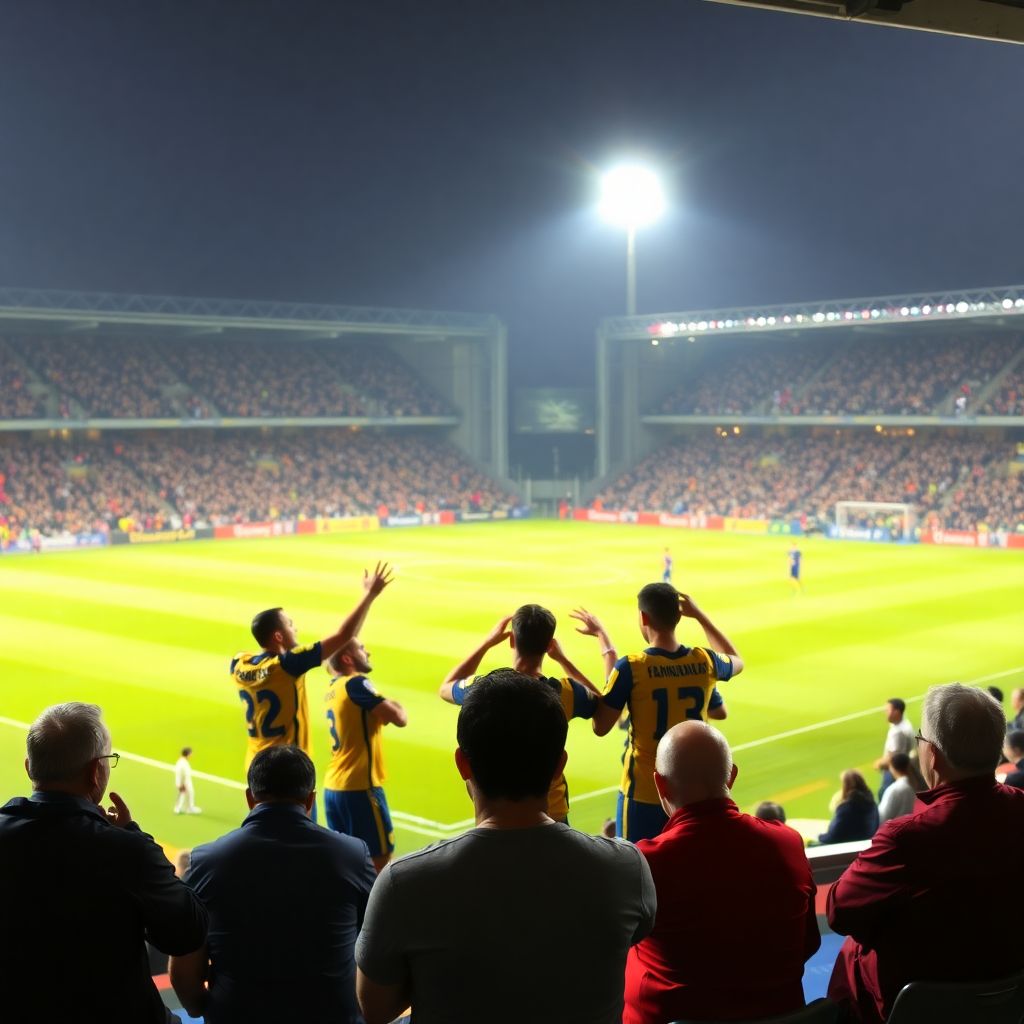
Cem Dizdar underlines that, behind the emphatic victory, there is still a picture of a club and a team in disarray. He points out that more than half of the so‑called “12th man” – the passionate Fenerbahçe supporters – stayed away from the stadium. For a club that traditionally draws strength from its fanbase, this empty‑seat reality is seen as symbolic: a side that appears fragmented “in every sense” is now performing in front of a half‑full home ground.
According to Dizdar, Tedesco did not take over a balanced, well‑functioning squad. He inherited a team that was already scattered in terms of game idea, squad cohesion and dressing‑room stability. Shortly after his arrival, another wave of change swept through the club at boardroom level, further unsettling the environment. In his view, any technical analysis that ignores this institutional turbulence is incomplete at best and dishonest at worst.
He criticises those who target Tedesco as the main culprit after every bad result, while praising him only in passing after wins. These “football experts”, as he calls them, happily reduce everything to tactical diagrams and player choices, refusing to see that the origins of Fenerbahçe’s problems are not purely on the training pitch. To understand this, Dizdar suggests, it is enough to take a careful look at the sequence leading to the first goal against Gaziantep: the issues and the solutions visible there go beyond simple formation adjustments and touch deeper, structural layers.
Tedesco settles on a main plan
Uğur Meleke reads something positive into Tedesco’s recent statements: for the first time in a while, Fenerbahçe appear to have a clear main game plan. The coach himself openly acknowledged that constant changes in shape and system had damaged the team’s rhythm, creating confusion and inconsistency. Against Gaziantep, he therefore returned to a more classical and stable structure: the well‑known 4‑2‑3‑1.
In this setup, Asensio operated in the central “number 10” role behind the striker. Meleke highlights how influential the Spanish playmaker was once again: he linked midfield and attack, found pockets between the lines and continually set the tempo in the final third. His football intelligence, combined with high technical quality, made him the reference point for almost every meaningful attacking move.
At the same time, Nene thrived in transitions and in runs behind the defensive line. Whenever Fenerbahçe found space to counter or to send vertical balls into the channels, the Malian forward punished Gaziantep’s back line with his speed and timing. With three goals to his name and Asensio contributing two assists, Meleke has no hesitation in naming this duo the undisputed stars of the night.
Guendouzi in his natural role, Kante finds confidence
Another key element for Meleke was Matteo Guendouzi playing once again in his ideal position. Used correctly, the Frenchman’s energy and aggression become a major asset rather than a liability. Positioned in his natural zone, he could press forward, recover balls and immediately convert these into constructive passes. Meleke stresses that Guendouzi once more demonstrated how influential he can be when not forced into unfamiliar tasks or zones.
N’Golo Kanté, meanwhile, boosted his own confidence by getting on the scoresheet. For a player who often does the “dirty work” in midfield without being in the spotlight, a goal can serve as a psychological reset – a reminder that his contribution is valued not only for ball‑winning but also for impacting the game in the final third when opportunities arise.
Cherif also receives a mention: he was directly involved in the build‑up to the first goal and, in the opening ten minutes, drew two fouls in dangerous areas, both leading to threatening free‑kicks. His capacity to win set pieces in advanced zones added another dimension to Fenerbahçe’s attacking arsenal.
Nene’s reward for intelligent movement
Gürcan Bilgiç focuses on the Guendouzi-Asensio axis as the main engine of Fenerbahçe’s performance. He notes that both players were willing to shoulder responsibility, constantly demanding the ball and distributing it to the right teammates at the right time. Their passing choices gave structure to Fenerbahçe’s possession and allowed the forwards to attack space effectively.
Bilgiç draws attention to Gaziantep’s choice to play at home with a low‑contact, relatively passive approach, preferring to avoid too many physical duels. That decision gave Nene the perfect context. Attacking the space behind defenders who did not aggressively close him down, he repeatedly ran onto balls played into the channels and the area between full‑backs and centre‑backs. His three goals, Bilgiç argues, were the logical consequence of these smart off‑the‑ball movements: he simply collected the reward for his relentless work.
When it comes to Kanté, Bilgiç recalls a key moment of tension with the stands. At a phase of the match when the whole team was positioned high up the pitch, Kanté opted to play a safe pass to Ederson instead of attempting a more vertical, riskier option. The crowd reacted with the first audible wave of murmurs of discontent. For the experienced midfielder, this was a clear signal from the terraces: the fans demand more courage and ambition in home games. Ironically, the goal he later scored came almost “out of traffic”, from a crowded situation, as if the match itself answered the earlier complaints.
Space‑hungry attackers show their potential
İlker Yağcıoğlu emphasises how much players like Cherif, Nene and Musaba depend on space to reveal their full potential. When given room to accelerate, dribble or run in behind, they become significantly more dangerous. Against Gaziantep FK, they finally found the conditions they crave: defensive lines left gaps, transitions were frequent, and wide zones opened up.
In midfield, Guendouzi again stood out for his dynamism and impact during transitions from defence to attack. He served as a bridge, collecting the ball from deeper areas and driving it forward with purpose. Alongside him, Kanté brought balance by covering both defensive and offensive responsibilities, often filling holes left by more adventurous teammates and ensuring that Fenerbahçe did not lose their shape when pushing forward.
Yet, for Yağcıoğlu, the evening unequivocally belonged to Nene. His hat‑trick did more than boost his statistics; it encapsulated the essence of his game: clever positioning, relentless sprints into space and clinical finishing when chances arrived. Each goal told a part of his story as a forward who thrives on timing and depth rather than constant touches of the ball.
He also underscores the strategic importance of this win. With the season entering its decisive stretch, three points against Gaziantep FK are not just another line in the table: they keep Fenerbahçe firmly in the race and might prove crucial when the final weeks arrive and margins become razor‑thin.
—
Tactical lessons from the 4-1 scoreline
Beyond individual performances, the match offered several tactical lessons that could shape Fenerbahçe’s approach in the upcoming fixtures. Firstly, the 4‑2‑3‑1 structure seems to bring clarity to player roles. With two central midfielders protecting the back line and a defined playmaker behind the striker, lines between responsibilities are clearly drawn. This reduces confusion and allows players like Asensio and Nene to act with more freedom in the attacking third.
Secondly, the importance of verticality was once again highlighted. Fenerbahçe were at their most dangerous when moving quickly from back to front, using Guendouzi’s ball recoveries and Kanté’s interceptions as launchpads for direct, purposeful attacks. Nene’s pace and diagonal runs are tailor‑made for this style. If Tedesco continues to build around fast transitions instead of slow, sterile possession, the team’s strengths might come to the fore more consistently.
Thirdly, the game reinforced how crucial it is to match the intensity of opponents. Gaziantep chose a less aggressive, contact‑averse approach, and Fenerbahçe immediately looked superior when they raised their own physical level. In more demanding clashes, however, they will need the same commitment without relying on the opponent’s passivity.
The emotional disconnect with the stands
One of the most worrying subtexts of the evening remains the half‑empty stadium. The absence of a large portion of the “12th man” is not just a visual problem; it reflects accumulated frustrations over results, management decisions and frequent structural changes. Even as the team wins, the emotional bond with fans appears weaker than in previous seasons.
The murmurs directed at Kanté for his conservative pass to Ederson show how thin the patience has become. The supporters crave aggressive, front‑foot football and, above all, a sense that the players are ready to take risks to dominate at home. If Tedesco wants to fully restore the atmosphere, he will need not only results, but also a style of play that resonates emotionally with the stands: high pressing, quick ball recoveries, visible fighting spirit and clear attacking intent.
Over time, consistent performances like the one against Gaziantep FK, especially in big games, could help rebuild trust. The hat‑trick from Nene and the creativity from Asensio are the kind of individual displays that can reignite enthusiasm, but they must be sustained if the empty seats are to be filled again.
Squad balance and the role of new signings
The Gaziantep match also shed light on how new and existing signings might be integrated more harmoniously. Guendouzi and Kanté offer a complementary blend in midfield: one more adventurous and vertical, the other more disciplined and positionally intelligent. If Tedesco continues to use them in their best roles, Fenerbahçe can control the centre of the pitch more reliably.
Further up, Cherif and Musaba showed that, given space, they can significantly influence games, whether by creating set‑piece situations, stretching defences or driving at full‑backs. The challenge for the coaching staff will be to adapt game plans so that these players are not only effective against open, passive opponents, but also against teams that defend deep and compact, leaving little room to run.
Rotation will also be key. With a long season and high expectations in both league and other competitions, managing physical load while preserving chemistry will demand careful planning. The performance against Gaziantep can serve as a reference for how to balance the starting eleven, but depth players must stay ready to maintain intensity when called upon.
Psychological impact and momentum
From a psychological standpoint, a 4-1 victory with standout individual contributions can act as a turning point. For Nene, the hat‑trick might be the moment that firmly establishes him as one of the team’s primary offensive leaders. For Asensio, consecutive matches with high influence reinforce his status as the creative brain of Fenerbahçe’s attack.
For Kanté and Guendouzi, scoring or dominating in their respective roles helps silence some doubts and external criticism. Confidence is a fragile currency; when it rises collectively, the tempo of passes, the willingness to press and the bravery to attempt risky plays all improve.
However, the true test of this psychological boost will come in the next fixtures, especially against stronger, more aggressive opponents. If Fenerbahçe can reproduce the same intensity and clarity of ideas without relying on the weaknesses of the rival, then this Gaziantep victory will be remembered as a foundational step rather than a one‑off display.
Structural problems still require solutions
Despite the shine of the 4-1 win, the concerns raised by columnists like Cem Dizdar remain. Frequent managerial and administrative changes have left deep marks on the club’s internal workings. Tedesco’s task is not limited to designing match plans; he must also create stability in a context that has lacked it for years.
This means establishing a clear hierarchy in the dressing room, defining non‑negotiable principles of play and standing firm against external noise whenever results wobble. If every setback leads to renewed calls for yet another change on the bench or in the boardroom, long‑term progress will be impossible. The match against Gaziantep shows what this team can do when the pieces fall into place, but whether they can keep them aligned is a different question entirely.
What Fenerbahçe must carry into the coming weeks
Looking ahead, the main takeaways from the Gaziantep FK game can be summarised as follows:
– Stick with a clear, stable system like the 4‑2‑3‑1 that maximises key players’ strengths.
– Keep Guendouzi and Kanté in roles that match their natural profiles, preserving balance and aggression in midfield.
– Continue to build attacking patterns around Nene’s vertical runs and Asensio’s creativity between the lines.
– Work on breaking down compact, physical teams, not only those that offer space.
– Reconnect with the fans through both results and a proactive style that reflects the club’s identity.
If these elements are consolidated, the 4-1 win over Gaziantep FK may be remembered not just for Nene’s hat‑trick, but as the night when Fenerbahçe finally began to look like a coherent, ambitious side again – on the pitch, in the dugout and, eventually, in the stands.