The Money Reality Behind the Badge
Talk to any fan in Istanbul, Trabzon or Ankara and you’ll hear the same paradox: the stadium is full, the passion is off the charts – and the club is nearly broke.
Turkish football clubs financial problems didn’t appear overnight. They are the result of years of risky spending, political pressure, currency shocks and a delayed reaction to modern financial management. On TV you see flashy transfers and European nights; on the balance sheet you see debt restructurings, covenant breaches and “going concern” warnings from auditors.
This article walks through how the money actually works, why UEFA’s rules matter so much, and which survival strategies are starting to separate the better‑run clubs from the rest.
—
Where the Debt Mountain Came From
From sporting ambition to debt spiral
For almost two decades, the “business model” of many big Turkish clubs was frighteningly simple:
borrow, spend, hope to qualify for the Champions League, repeat.
Long paragraph first:
Clubs like Galatasaray, Fenerbahçe and Beşiktaş chased short‑term sporting success with long, expensive contracts in euros, while a large share of their income remained in Turkish lira. When the TRY/EUR and TRY/USD exchange rates blew up after 2013 and especially around 2018, financial costs exploded. Interest expense, FX losses and overdue payables turned what looked like manageable loans into a structural crisis.
Shorter explanation:
The moment the lira dropped, the wage bill effectively went up 30–40% in a single season, even if salaries on paper stayed the same.
turkish super lig club debt statistics: the scale of the problem
By the late 2010s, aggregate debt of the “Big Four” (Galatasaray, Fenerbahçe, Beşiktaş, Trabzonspor) was commonly estimated in Turkish media and audited reports in the €1.5–2.0 billion equivalent range when converted from lira at then‑current rates.
To give a sense of proportion, for several seasons the combined annual revenues of these four clubs struggled to keep pace with:
– Gross financial debt (bank loans, bonds)
– Trade payables (agents, other clubs, suppliers)
– Overdue taxes and social security liabilities
That meant leverage ratios (Net Debt / EBITDA) well above 6–8x for some clubs – territory that, in corporate finance, would usually trigger restructuring or a change of control.
> Technical detail:
> – Gross Debt: includes bank loans, leasing and sometimes factoring liabilities.
> – EBITDA: earnings before interest, tax, depreciation and amortization; proxy for cash generation from operations.
> – When Net Debt / EBITDA > 3x in football, red flags start waving; above 6x is a warning siren.
—
How UEFA Fair Play Changed the Game
From “sugar daddy” era to regulated spending
Before UEFA intervened, as long as a bank or a wealthy backer kept financing the deficit, clubs could keep inflating the wage bill. That changed with the introduction of Financial Fair Play.
For uefa financial fair play rules turkish clubs, the key point is the “break‑even requirement”: over a rolling multi‑year period, football‑related expenses cannot massively exceed football‑related revenues, beyond small allowable losses. On paper it’s simple; in practice it reshaped how Turkish clubs think about transfers, wages and accounting tricks.
Shorter view:
It’s no longer enough to have a friendly bank manager. You need an actual plan.
Sanctions and close calls
Several Turkish clubs have been monitored, fined or restricted in squad registration under UEFA rules. The mechanisms were usually:
– Settlement agreements with UEFA, capping wage growth and net transfer spend
– Limits on the number of registered players for European competitions
– Fines and conditional “suspended” penalties tied to future compliance
This forced clubs to do something they had avoided for years: recognize losses, restructure debt, and cut unsustainable contracts.
> Technical detail:
> – UEFA looks at football-related income (matchday, broadcasting, sponsorship, commercial) vs football-related costs (wages, transfers, agent fees).
> – “Acceptable deviation” allows limited losses if funded by secure equity, not debt.
> – Creative accounting (inflated sponsorship deals from related parties, aggressive asset revaluations) is now closely scrutinized.
—
Three Main Approaches to Survival
1. Banking restructurings and “extend and pretend”
The first response in Turkey was not radical reform, but large‑scale debt restructuring with state‑influenced banks. Instead of painful bankruptcies, big clubs negotiated long‑term repayment plans.
In practice, this meant:
– Consolidating various loans into a single, longer‑dated facility
– Lower near‑term instalments in exchange for longer maturity
– Often, some degree of interest capitalization (interest added to principal)
Short but clear:
The can was kicked down the road, but the can got bigger.
Pros of the restructuring model
– Immediate liquidity relief to pay wages and avoid defaults
– Keeps clubs technically alive and licensed to compete
– Buys time to grow revenues (new sponsorship, broadcasting cycles)
Cons in real life
– Does not by itself fix the negative operating cash flow
– Interest expense keeps piling up; long‑term solvency barely improves
– Reduces pressure on governance reform because the crisis feels “managed”
> Technical insight:
> Many restructurings did not substantially haircut principal. Economically, this is more a maturity transformation than true deleveraging.
> Without a structural improvement in operating margin (wages / revenue, net transfer balance), Net Debt / EBITDA ratios remain dangerously high.
2. Selling assets and cutting squads
The second strategy was more painful but more sustainable:
accept that the club cannot outspend Western Europe, and start living within its means.
Typical elements:
– Offloading high‑earners, even if they’re fan favorites
– Letting contracts run down instead of renewing on higher terms
– Prioritizing free transfers and loan deals with wage sharing
– Negotiating performance‑based bonuses instead of fixed salaries
Short example:
Several Super Lig clubs moved from 3‑year guaranteed contracts in euros to 1+1 or 2‑year deals with lira‑denominated wages and heavy appearance bonuses, sharing risk with the player.
Pros
– Direct, visible impact on the wage bill
– Easier to comply with UEFA and local licensing rules
– Forces coaching staff to integrate academy players
Cons
– Immediate sporting risk if replacements are cheaper and weaker
– Fan backlash when icons are sold to rivals or abroad
– Requires strong communication from management, which is often lacking
3. Building a transfer‑trading model
The third path – and arguably the most modern – is treating player recruitment as a portfolio of assets.
Instead of buying aging stars at high wages and zero resale value, some Turkish clubs are experimenting with:
– Scouting undervalued markets (Africa, Balkans, lower European leagues)
– Signing players at 20–23, not 29–32
– Using Super Lig visibility and continental competitions as a shop window
– Selling on at a profit to top‑five European leagues
Short version:
Buy young, develop, sell high – repeat.
This approach has already produced concrete results: clubs like Başakşehir, Trabzonspor and others have recorded sizeable transfer profits in single seasons, which improved their break‑even results and funded further recruitment.
> Technical detail:
> – Transfer trading generates capital gains (profit on disposal of intangible assets) in the income statement.
> – These gains count positively under Financial Fair Play, smoothing volatility in operating results.
> – The challenge is sustainability: one or two bad windows can swing the club back into deficit.
—
Ownership Models: Who Actually Controls the Clubs?
Association model vs company model
Most traditional Turkish giants are still controlled by member associations:
thousands of voting members elect a president, who then appoints the board. The professional football branch may be a separate joint‑stock company, but ultimate control lies with the association.
Short description:
In theory it’s democratic; in practice, elections every 2–3 years encourage short‑term populism and big promises before each vote.
Private‑company or hybrid models – like İstanbul Başakşehir – allow tighter control and faster decision‑making, but raise questions about political influence and transparency.
turkish football club ownership and investment opportunities
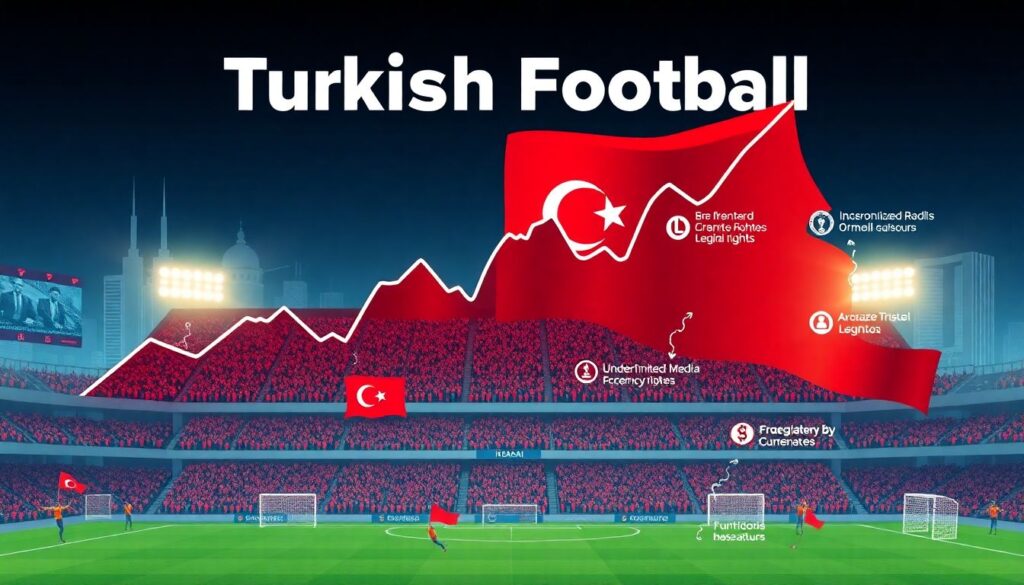
From an investor’s point of view, Turkish football looks like a high‑risk, high‑volatility asset class:
– Passionate fan bases and big city markets
– Chronic under‑monetization of media and digital rights
– Currency risk and regulatory uncertainty
– Governance fragmentation at association‑controlled clubs
Foreign funds and strategic investors do look at turkish football club ownership and investment opportunities, but they tend to demand:
– Clear separation between the football company and multi‑sport entities
– Stronger minority rights and board representation
– Predictable state and federation policy on media rights and stadium usage
> Technical insight:
> Equity investment only makes sense if new money is used to deleverage (repay expensive debt), not to inflate the wage bill again.
> A classic structure is:
> – Investor injects capital into the football company
> – Proceeds used to retire bank loans or convert them into longer, cheaper facilities
> – Investor receives preferred dividends and veto rights on key financial decisions
—
Revenue Side: The Narrow Funnel
Matchday and broadcasting limits
Compared to the Premier League or La Liga, the Turkish Super Lig generates far less from its core products. Stadium attendances have recovered in some cities, but ticket prices remain relatively low in real terms, and corporate hospitality is underdeveloped outside Istanbul.
Broadcasting is the biggest line item but has faced:
– Renegotiations and disputes over contract values
– Fluctuating lira value undermining long‑term planning
– Fragmented digital distribution and piracy issues
Short summary:
When your wage bill is partly in euros and your TV deal is mostly in lira, every devaluation shrinks your real income.
Commercial and internationalization
Sponsorship offers one of the few scalable revenue levers. Shirt deals, betting companies, crypto exchanges, naming rights – all have come and gone with varying degrees of success.
The clubs that stand a chance to escape the debt trap are those that:
– Build a coherent brand identity beyond local politics
– Focus on digital engagement, not just traditional media
– Monetize their global diaspora fan bases through e‑commerce and content
Here, the gap between the top four and mid‑table clubs is massive. But even the giants still underperform relative to their international visibility.
—
how turkish football clubs survive financial crisis: comparing strategies
Short‑term survival vs long‑term reset
When we talk about how turkish football clubs survive financial crisis, there are essentially three archetypes, often mixed in practice.
1. The “political‑bank” club
– Relies heavily on state‑linked banks for refinancing
– Keeps chasing titles with expensive squads
– Treats financial fair play as an external constraint to be navigated, not a philosophy
This model can work as long as access to credit remains and political support continues. But it is extremely vulnerable to macroeconomic shocks and regulatory tightening.
2. The “austerity‑first” club
– Aggressively cuts wage bills and offloads stars
– Accepts mid‑table finishes for a few seasons
– Focuses on stabilizing cash flow and paying down debt
Financially, this is cleaner. Sportingly, it’s unpopular. Without consistent communication and a clear story, presidents using this approach are often voted out before the benefits fully materialize.
3. The “portfolio and pipeline” club
– Uses data‑driven scouting and youth development
– Intentionally runs a positive net transfer balance over cycles
– Invests in analytics, sports science and academy infrastructure
This is closest to the models used by clubs in Portugal, the Netherlands or Belgium. Profitability depends on regularly selling 1–2 players per year at significant fees, but it creates a sustainable path if embedded in club culture.
Which approach works best in the Turkish context?
In the short run, the political‑bank model can still deliver titles and European participation – and therefore headlines and votes. But from a technical financial standpoint, it simply delays the reckoning, especially when interest rates are high and the currency is volatile.
The austerity‑first approach fixes the balance sheet but risks sporting irrelevance if not paired with smart recruitment. Without a narrative (“we’re rebuilding the club, not cutting for its own sake”), fans and media quickly turn on management, and pressure ramps up to start overspending again.
The portfolio‑and‑pipeline model is the only one that directly aligns football strategy with financial logic:
– Younger squads are cheaper and have resale value
– Transfer profits support wage growth for key retained players
– UEFA compliance becomes easier because capital gains cushion bad seasons
> Real‑world pattern:
> In seasons where Turkish clubs reach the Champions League group stage with a reasonably balanced squad, the extra €15–30m revenue can significantly narrow losses.
> But when qualification fails, only clubs with a functioning transfer‑trading or academy pipeline can compensate. Others fall straight back into red ink.
—
What Needs to Change Next
Governance and transparency
No financial strategy will stick without better governance. That means:
– Longer, more stable presidential terms with clear performance metrics
– Independent financial committees with veto power over unsustainable budgets
– Transparent, timely publication of audited accounts in both lira and euros
Short thought:
You can’t run a nine‑figure budget like a fan club and expect professional outcomes.
Regulation that rewards discipline
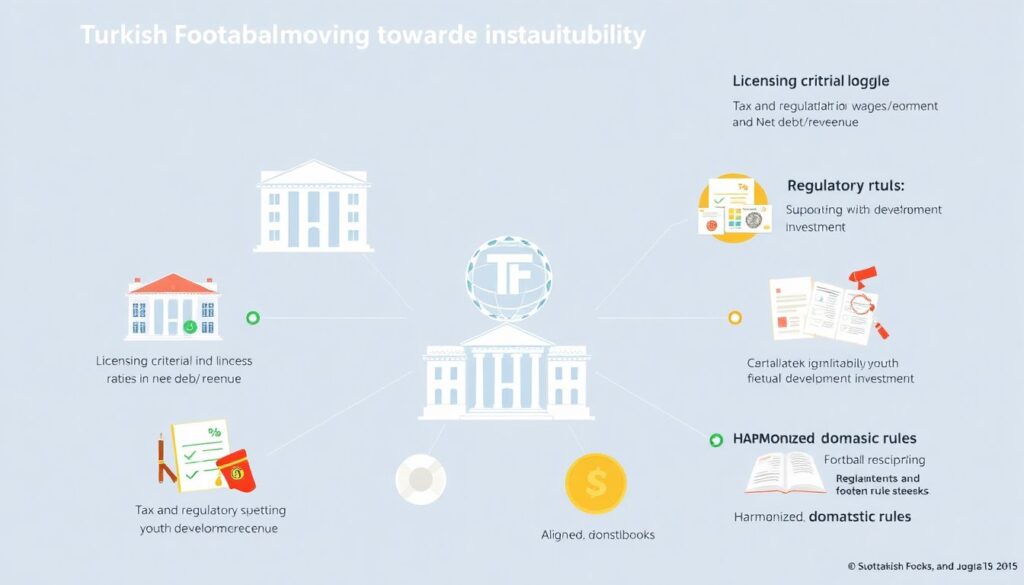
The Turkish Football Federation and state institutions can tilt the field toward sustainability by:
– Linking licensing criteria to concrete financial ratios (wages/revenue, Net Debt/Revenue)
– Offering tax and regulatory incentives for youth development investment
– Making domestic rules compatible with UEFA’s evolving squad‑cost‑ratio regulations
If clubs know that exceeding certain thresholds means automatic, predictable sanctions – not ad‑hoc interventions – they are more likely to internalize discipline.
—
Conclusion: A Different Kind of Derby
The real competition in Turkish football is no longer just Fenerbahçe vs Galatasaray or Trabzonspor vs Beşiktaş. It’s short‑term populism vs long‑term solvency.
– One side keeps promising instant glory, financed with more debt and creative accounting.
– The other side tries to build academies, scouting networks and sustainable wage structures, even if that means fewer big‑name signings today.
The clubs that accept financial reality, learn to work within UEFA Financial Fair Play constraints and treat players as assets rather than just heroes on posters will gradually pull ahead – not only on the balance sheet, but on the pitch, too.
Because in modern football, the league table and the income statement are more connected than ever. In Turkey, the clubs that understand that connection soonest will shape what the next decade of the Super Lig actually looks like.