Sports columnists dissect Fenerbahçe’s latest European stumble – an away draw against FCSB in the UEFA Europa League group stage – with a common theme: a point gained on paper, but a performance that rings alarm bells for the future. Between tactical confusion, low energy, and individual underperformance, only one name truly stands out in a positive sense: goalkeeper Ederson.
From Bucharest, the picture painted is almost uniformly gray. Commentators underline that especially in the second half, the scene resembled Fenerbahçe’s previous limp outings against Dinamo Zagreb and Viktoria Plzen in European competition. The expectation was that coach Domenico Tedesco would inject fresh energy from the bench, yet beyond Asensio and Oğuz there were virtually no real game-changing options. That lack of depth became painfully obvious as the game wore on.
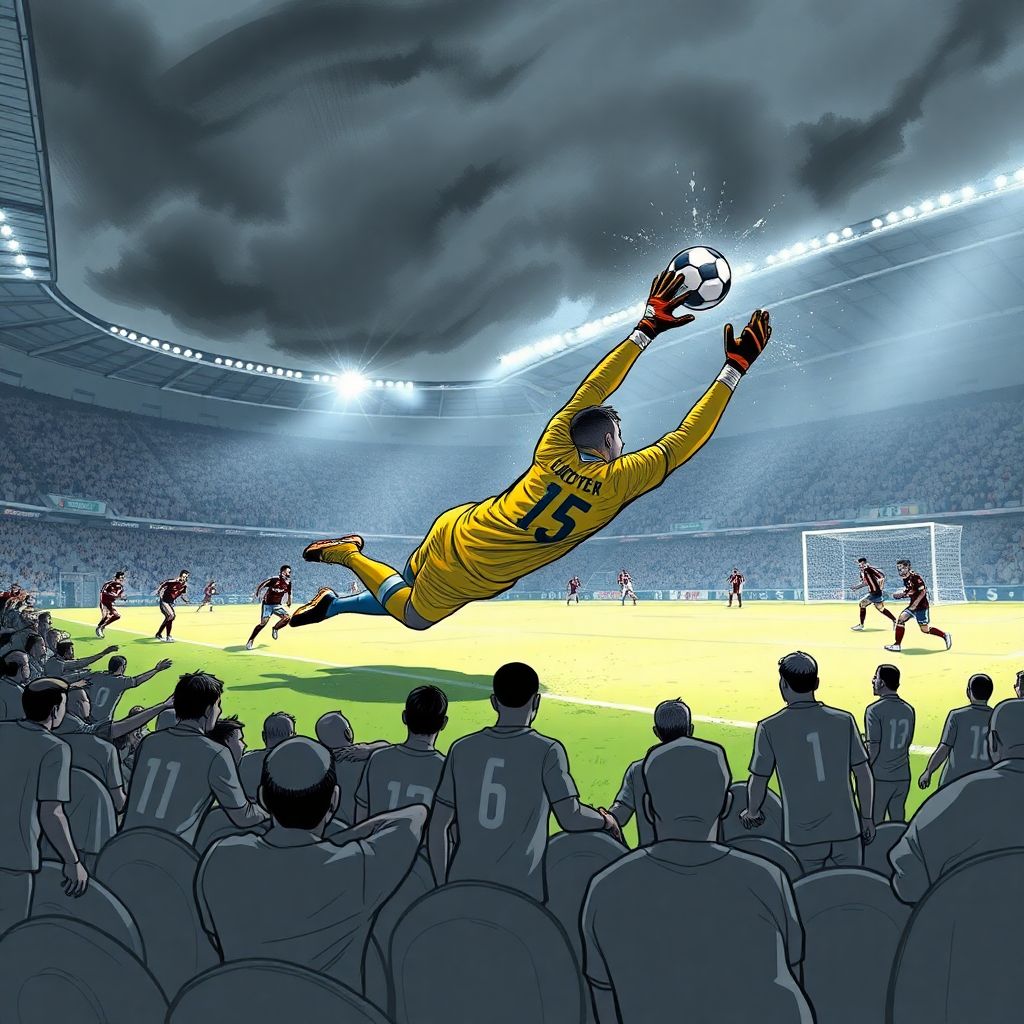
Ederson, however, refused to let the team collapse. The Brazilian keeper made a series of decisive stops that kept Fenerbahçe alive. Several writers stress that without his interventions in crucial moments, the team could easily have returned from Bucharest empty-handed. His total of six major saves tells the story: he single-handedly delayed the inevitable until the seventh clear chance finally resulted in a goal. Even then, he pulled off one more big save in the dying seconds to prevent outright defeat.
Up front, En-Nesyri was one of the few outfield players who tried to lift the overall tempo. In the opening hour, the Moroccan striker showed desire, worked hard, and attacked space with his characteristic diagonal runs. He got into several good positions, but either strayed narrowly offside in two critical moments or was denied by the FCSB goalkeeper when he finally connected with a solid effort. Columnists highlight that while his finishing and timing were imperfect, his work rate and contribution to pressing and link play stood out in an otherwise lethargic Fenerbahçe side.
The statistical dominance in possession masked deeper structural problems. For the first 25 minutes, Fenerbahçe controlled the ball with around 66% possession and appeared to be dictating the rhythm. Yet this control rarely translated into clear chances. The breakthrough came not from fluent combination play, but from a set piece: a well-taken corner and an excellent headed goal from İsmail Yüksek, who timed his run and leap perfectly. In that moment, it looked as if the match could tilt decisively in Fenerbahçe’s favor.
Instead, after taking the lead, Fenerbahçe lost their defensive balance and allowed FCSB to repeatedly break through in transition. Between the 25th and 50th minutes, the Turkish side gifted six dangerous opportunities to the home team. Ederson saved five of them; the warning signs were clear, yet Fenerbahçe failed to adjust. Even after the 50th minute, when they again appeared to dominate in terms of territorial advantage and ball circulation, it was FCSB who continued to generate the cleaner goal chances.
The ending was almost scripted: Ederson made his sixth major save, but had no answer for the seventh big chance as FCSB finally found the net. That goal cost Fenerbahçe two points and, according to several analysts, put them on a path to face much tougher opponents in the next round. The consensus: this draw feels more like a defeat, not only because of the result, but because of what it revealed about the team’s fragility.
Individual assessments from the commentators are harsh. Kerem, for instance, found himself in two scoring positions but failed to convert either. Beyond those misses, his influence faded completely. Writers question whether a winger who cannot beat his man one-on-one can really justify his place at this level. On the left, it was actually the right-footed full-back Mert Müldür who provided the main overlapping runs, rather than the nominal attacking wide players, exposing a structural imbalance on the flanks.
Semedo, returning from injury, looked well below the required physical level and struggled to cope with the pace and intensity. Nene is labeled by some as a “second-tier” winger – industrious at times, but lacking the quality and decisiveness expected from a starter in a club with Fenerbahçe’s ambitions. Fred, once a driving force in midfield, is described as merely “managing” the game rather than taking true responsibility; his influence, so vital in previous seasons, appears to have diminished.
İsmail Yüksek provokes mixed feelings. On the one hand, critics continue to admire his engine, timing in the box, and contribution to the opener. On the other, they question his game intelligence and professionalism. After scoring a fine goal and putting his team ahead, he needlessly picked up a yellow card, and later in the first half committed a challenge that easily could have earned him a second caution. The referee decided to let it go, but the risk was unjustifiable in a match of this significance.
Talisca comes in for particularly pointed criticism. Several writers note that he spent much of his time “walking” across the pitch, failing to offer defensive support or drive the team forward between the lines. For a player expected to be a difference-maker in the final third, his passivity was glaring. When the game demanded leaders to take initiative, he remained peripheral, leaving others to shoulder the burden.
Confusion also surrounds Tedesco’s tactical decisions. After İsmail’s withdrawal, the coach shifted to a back three, a move that even seasoned observers struggled to understand. At a time when the team already showed signs of unease in defense, tinkering with the structure mid-game only increased the uncertainty. With Skriniar suspended and key players like Brown, Levent, and Alvarez out injured, the central defensive zone was already weakened; changing the system further destabilized a unit described as a “time bomb” waiting to explode.
The absence of several important names compounded these issues. Skriniar’s suspension, along with the injuries to Brown, Levent, and Alvarez, left the squad stretched, while Guendouzi and Musaba were unavailable due to registration rules. To make matters stranger, Jhon Duran was not included in the matchday squad at all, reportedly by his own preference. In that context, the presence of En-Nesyri – a player many had been eager to see moved on – became one of the few positives, as he at least tried to fight for every ball.
Some columnists resort to irony to describe the evening. They suggest that the “old Fenerbahçe” – the dominant, aggressive side fans remember – has long since vanished. Even so, they argue, this Fenerbahçe, despite their poor display, could still have won comfortably had they simply raised their game slightly. The paradox of the night: a very weak opponent playing badly, facing a supposedly stronger team playing just as poorly, in a match where quality moments were almost entirely limited to the goalkeepers.
Defensively, the lack of composure was striking. Observers remark that once anxiety, inexperience, and a general lack of confidence crept in, Fenerbahçe’s players struggled with even basic actions: simple passes went astray, clearances were mistimed, and positioning faltered under pressure. Whenever FCSB players accelerated or pressed more aggressively, Fenerbahçe’s back line appeared panicked, with hands and feet metaphorically “getting tangled” in critical situations.
Mert Müldür, usually valued as a reliable squad player, made his “classic mistake” by losing track of his man at a key moment in the box. Kerem, already under scrutiny for his anonymous display, looked increasingly lost, unable to decide whether to tuck inside, hug the touchline, or attack the space behind the defense. Talisca, again, failed to “put his hand under the stone,” meaning he declined to share the defensive and creative workload when the team needed collective effort.
In contrast, Fred and En-Nesyri are singled out as the only outfield players who consistently showed visible effort throughout the game. Their shortcomings in end product or decision-making are acknowledged, but their willingness to run, press, and try to alter the rhythm is praised. This underlines a broader criticism: too many in this squad seem to stand back when adversity hits, leaving a small core to fight an unequal battle.
Pundits strongly reject the idea that absences or injuries could be used as an excuse. While the list of unavailable players is long, Fenerbahçe still possess one of the deepest and most expensive squads in the group. According to this view, failing to beat what they describe as the “weakest team in the group” is inexcusable, especially when the opponent themselves are a faint shadow of the once-feared Steaua Bucharest. The verdict is that Fenerbahçe “surrendered” to a poor team, gifting them a result they scarcely deserved.
Beyond the immediate criticism, the match raises worrying questions about the club’s direction. Commentators argue that such performances are not isolated incidents but signs of a deeper malaise: tactical inconsistency, mental fragility away from home, and a squad where several key roles are filled by players either out of form or not suited to the system. Without a clear identity on the pitch, Fenerbahçe risk repeating the same pattern whenever confronted by disciplined, energetic opponents.
For the coaching staff, the key takeaway is the urgent need to rebuild defensive stability. The absence of Skriniar exposed how heavily the team depends on his leadership in the back line. When he is missing, communication breaks down and spacing between defenders becomes erratic. Resolving this cannot rely solely on individual returns from injury; it will require coherent training ground work, clear roles, and perhaps a more conservative approach in away European fixtures.
From a squad-planning perspective, several positions clearly demand reinforcement or internal restructuring. The wings, in particular, appear problematic: Kerem and Nene struggle to consistently beat their markers, while the full-backs are often forced to provide width on their own. This leaves the attack predictable and easy to neutralize. Unless the club finds more incisive wide players or adapts the system to better suit the existing personnel, the same offensive stagnation is likely to persist.
Mentally, Fenerbahçe must also address their recurring issues with discipline and focus. Needless bookings like İsmail’s, careless marking, and sudden drops in concentration after scoring are recurring themes in their recent European outings. Psychologically conditioning the squad to manage leads, handle pressure, and maintain intensity for 90 minutes could make as much difference as any tactical tweak.
Finally, critics suggest that the club’s decision-makers should use this match as a reference point when evaluating the current roster. The final minutes in Bucharest – full of panic, misplaced passes, and desperate defending – are, in their eyes, a snapshot of what happens when a team coasts on individual talent instead of a robust collective structure. Showing these “minutes of shame” to players during contract talks or internal reviews is proposed as a brutal but necessary reality check.
In the end, the Bucharest trip leaves Fenerbahçe with one point, a man-of-the-match goalkeeper, and a pile of uncomfortable questions. The Europa League campaign continues, but if the team aspires to do more than simply scrape through the group, they will need far more than Ederson’s heroics. They will need clear ideas from the coach, greater accountability from senior players, and a squad-wide shift from passive survival to active domination, especially in games that, on paper, they should control with authority.