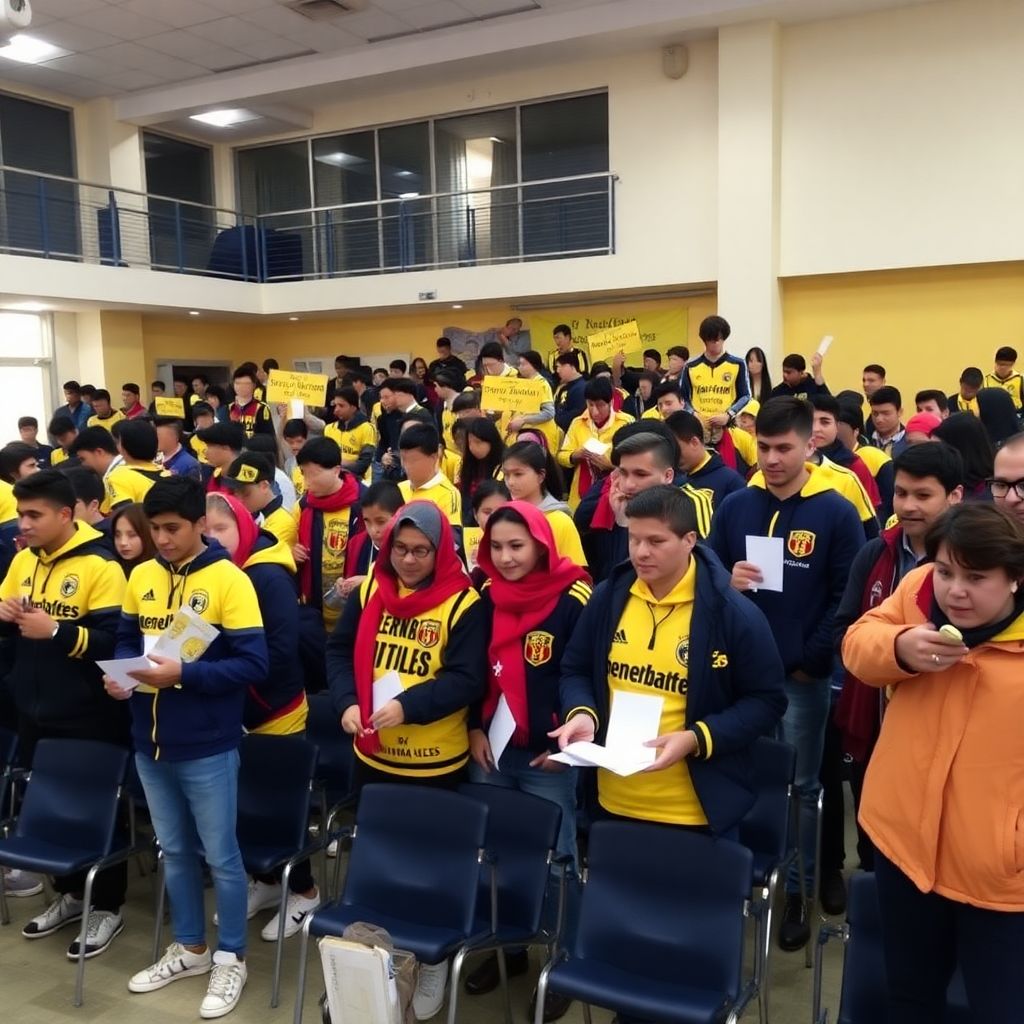
Election day at Fenerbahçe: the club chooses its new president
An extraordinary electoral general assembly is taking place today at Fenerbahçe, where club members will decide who will lead the yellow‑navy giants in the coming term. Two candidates are on the ballot for the presidency: former long‑time president Aziz Yıldırım and challenger Hakan Safi. By the end of the day, Fenerbahçe will have a new chairman at the helm.
The voting process is being held on the premises of Kenan Evren High School, located next to the Chobani Stadium. Ballot boxes opened at 10:00 in the morning and will remain accessible until 17:00. Throughout these seven hours, registered congress members will cast their votes and shape the future direction of one of Turkey’s most prominent clubs.
According to the official figures for this extraordinary congress, 44,741 members have the right to vote. This large electorate underlines how significant and wide‑reaching the decision is, not only for the football team but for the entire multi‑sport club structure. A high turnout is expected, as both candidates have conducted intense campaigns and presented detailed projects for the upcoming period.
Symbolically, each candidate is represented by a different color ballot paper. Aziz Yıldırım’s list is marked with a yellow ballot, while Hakan Safi’s list uses white. Members will pick their preferred list and place the corresponding colored paper into the ballot box, a traditional and highly visual element of Turkish club elections that often becomes part of the election‑night imagery.
Aziz Yıldırım is a familiar name for every Fenerbahçe supporter. He previously served as the president of the club for 20 years, overseeing some of the most successful and turbulent periods in Fenerbahçe’s modern history. His candidacy represents continuity, experience, and a promise to restore past glory using a well‑known management model and long‑established networks within Turkish and international football.
Opposing him is Hakan Safi, who positions himself as the representative of renewal and change. Safi’s campaign focuses on a more modern governance style, stronger financial discipline, and transparent decision‑making structures. His supporters emphasize the need for a fresh approach to keep pace with contemporary football, both on the sporting and commercial sides.
The composition of the candidate boards is critical, as these names will be responsible for daily club management, financial planning, transfer policies, and long‑term strategy. Yıldırım and Safi have each assembled a team of principal (asil) and substitute (yedek) members, reflecting their priorities and areas of confidence.
Aziz Yıldırım’s principal board members are:
Barış Göktürk, Mahmut Nedim Uslu, Nihat Özbağı, Mustafa Çağlar, Ahmet Önder Fırat, Cihan Kamer, Fatih Öztürk, Batuhan Özdemir, Tanju Kaya, Ahmet Murat İman, Özgür Peker, Yusuf Buğra Tanık, Mehmet Aydın, Mehmet Selim Kosif.
His substitute members are:
Fatih Aslan, Volkan Akan, Mustafa Aydın Acun, Barış Karagöz, Savaş Adalet, Demre İşcan, Yasemin Babayiğit.
Hakan Safi’s principal board members are:
Ali Aytemiz, Metin Doğan, Agah Ruşen Çetin, Metin Sipahioğlu, Dağlarca Çağlar, Rahmi Mertay Türk, Mustafa Ömer Topbaş, Özgür Özaktaç, Mehmet Atakan Altınbaş, Orhan Turan, Selahattin Süleymanoğlu, Ogün Doğan, Şanser Özyıldırım, Taha Gökberk Doğan.
His substitute members are:
Esra Öztürk Çilingir, Ahmet Bulut, Ahmet Murat Emanetoğlu, Ertuğrul Eren Ergen, Barış Öztürk, Mustafa Enes Yıldırım, Aras Bağ.
The election is not just about choosing a figurehead; it will define Fenerbahçe’s strategy in the Turkish Süper Lig and in European competitions over the next years. Sporting objectives, transfer politics, investment in youth development, and the approach to financial fair play are all being indirectly decided with this vote. Both candidates have stressed the importance of building a squad capable of consistently competing for the league title and making deeper runs in European tournaments.
Another key aspect is the club’s financial structure. Like many big clubs, Fenerbahçe faces significant economic challenges: high wage bills, transfer expenditures, and the need to balance debts with new revenue streams. Voters are closely examining each candidate’s roadmap for sustainable finance, including potential sponsorships, academy development, and more effective use of stadium and merchandising revenues.
The location of the vote, on the Kenan Evren High School grounds near the stadium, is also important in practical terms. It allows large numbers of members to attend without overwhelming the stadium itself and offers easier logistical management of ballot boxes and queues. Security and order are strictly maintained throughout the day to ensure a transparent and credible process, with observers checking that all procedures comply with club regulations.
The time window from 10:00 to 17:00 has been chosen to give members coming from different parts of Istanbul and other cities a reasonable chance to reach the polling area. Early hours usually see a slower pace, while a heavier turnout is expected toward midday and the final two hours. After the last member votes, ballot counting will begin, and an intense wait will follow as the club, its fans, and the wider football world look for the first official results.
These elections also carry a symbolic meaning for Turkish football. Fenerbahçe is not only one of the country’s biggest clubs in terms of trophies and fan base; it is also a powerful institution within the broader sporting and social landscape. The style and stability of its leadership can influence broadcasting negotiations, league competitiveness, and even the balance of power among the major clubs.
Beyond football, the incoming president and board will also oversee the club’s activities in basketball, volleyball, and other branches, all of which have their own financial and sporting demands. The management model chosen today will therefore affect athletes, coaches, and staff across multiple disciplines, not just the flagship football team.
For Fenerbahçe supporters, this day represents a chance to turn a page. Some are looking for a return to the stability and familiarity associated with past leadership, believing experience is crucial in a volatile football environment. Others argue that global football has changed dramatically, insisting that only a new style of governance and more modern structures can keep the club competitive and ambitious.
As the votes are cast one by one, the central question remains the same: which vision will guide Fenerbahçe into its next chapter? Whether members opt for the seasoned leadership of Aziz Yıldırım or the promise of change offered by Hakan Safi, today’s choice will echo far beyond the ballot boxes, shaping the future of the yellow‑navy club in the Turkish Süper Lig and on the international stage.