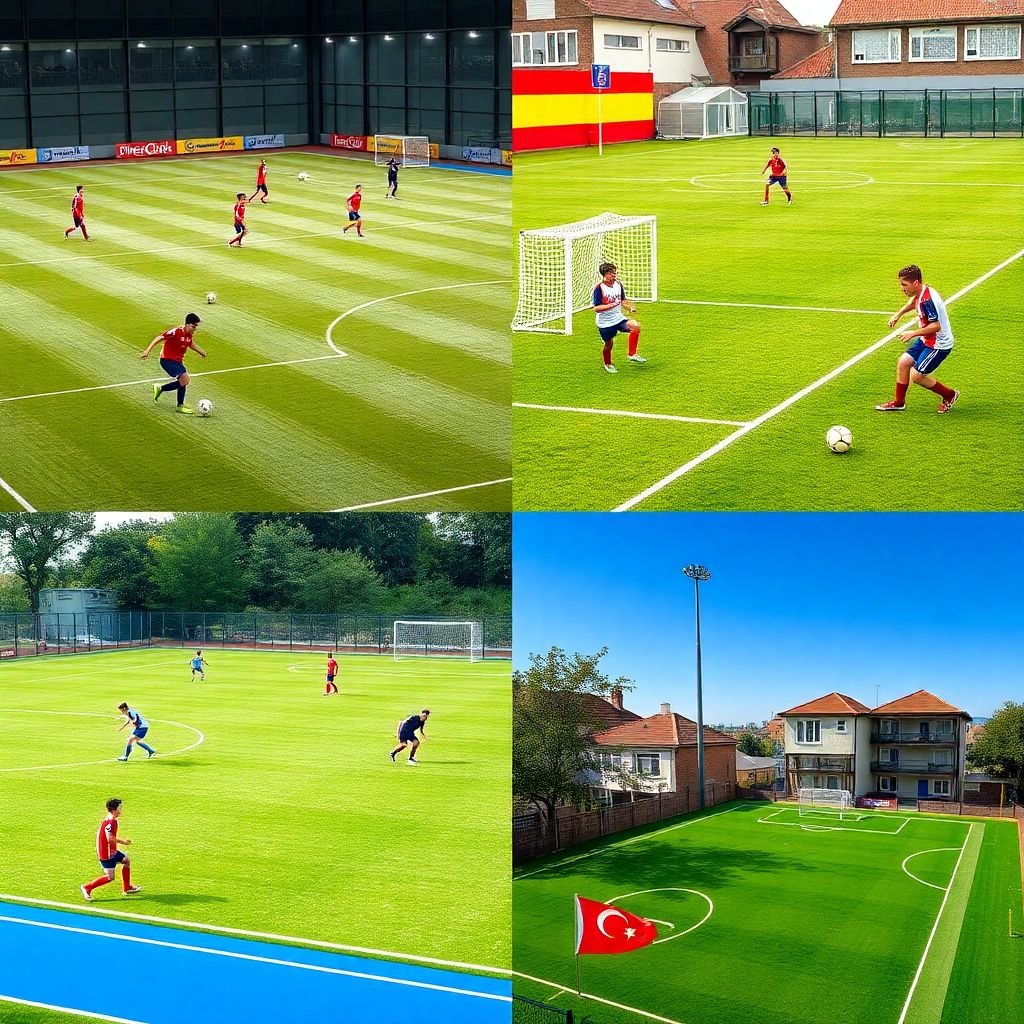
For a Turkish context, the most practical mix is: German-style institutional discipline and coaching pathways, Spanish regional flexibility and small-sided play, English club-led scouting for top talents, plus a locally funded grassroots base. There is no single “winner”; the best model depends on budget, federation strength, and club cooperation levels.
Comparative Snapshot: Core Outcomes and Performance Indicators

- Germany delivers the most coherent national pathway from grassroots to professional, making it a strong template in any best youth soccer development systems in Europe comparison.
- Spain’s regional federations and club canteras excel in technical mastery and game intelligence, especially through small-sided, possession-based training.
- England’s Premier League-linked academies are strongest in talent identification, competition structures, and off-field support (education, sports science).
- Turkey has improving facilities and passionate participation but still fragmented pathways and weaker transitions from youth to elite senior football.
- For limited public budgets, hybrid solutions (central standards + local autonomy) are more realistic than copying any single country wholesale.
- For elite players, understanding how to join elite youth football academies in Germany Spain England Turkey requires aligning family, schooling, and federation rules.
Policy Origins and Historical Pathways in Turkey
When using a football youth academy Germany vs England vs Spain vs Turkey lens, Turkish decision-makers should evaluate models against these criteria:
- Governance clarity: How clearly are roles divided between the Turkish Football Federation (TFF), clubs, municipalities, and schools?
- Coach education pipeline: Is there a structured path from volunteer coach to professional youth specialist with continuous upskilling?
- Regional equity: Do Anatolian regions receive similar opportunities, competitions, and scouting attention as Istanbul, Ankara, and Izmir?
- Club-school integration: Can youth players combine academic education with intensive training without early school drop-out?
- Pathway transparency: Do players and parents understand the stages from grassroots license to professional contract in Turkey?
- Financial sustainability: Are academies funded by predictable, multi-year mechanisms, or short-term sponsorships and transfer windfalls?
- Data and monitoring: Are there centralized databases for player minutes, training loads, injuries, and transition rates to senior football?
- Cultural fit: Do imported Germany Spain England Turkey football academy training methods respect local context (travel distances, school timetables, family expectations)?
- Talent retention: Can Turkish clubs offer competitive development conditions to reduce early migration of top talents abroad?
Institutional Design and Youth Systems in Germany
Germany offers several institutional design ideas that can inform any European youth football academies ranking and comparison, especially when adapting for Turkey.
| Variant | Best suited for | Advantages | Limitations | When to choose |
|---|---|---|---|---|
| Centralised federation-led model | Strong TFF leadership, clear national strategy, high coordination capacity | Unified standards, nationwide data, coherent coach education, easier monitoring of outcomes | Slower decision-making, risk of bureaucracy, less regional experimentation | When Turkey wants consistency first and can enforce mandatory licensing and curriculum |
| Club-owned elite academy network | Süper Lig and 1. Lig clubs with stable budgets and strong local brands | High commitment to talent, strong club identity, clear path to professional teams | Risk of excluding smaller clubs and regions, uneven quality across the country | When a few leading clubs can act as regional hubs under TFF quality control |
| Hybrid club-school partnership | Cities with strong public schools and universities willing to collaborate | Balances education and football, easier access to facilities and teachers, supports dual careers | Complex coordination, dependence on local education authorities and principals | When protecting education is a political priority and early specialization must be limited |
| Community-based regional hub model | Resource-limited regions needing shared infrastructure (municipality + clubs) | Cost sharing, inclusive participation, good for late developers and broad scouting | May lack elite intensity, difficult to maintain high standards without strong oversight | When Turkey aims to expand the participation base before chasing immediate elite success |
For a best youth soccer development systems in Europe comparison, Germany’s success comes from combining these variants: clear federation standards, mandatory licensing, a dense competition pyramid, and constant feedback between national teams, clubs, and regional centres.
Regional Governance and Program Diversity in Spain
Spanish practice offers useful “if-then” scenarios that a Turkish planner can adapt:
- If your region has several ambitious clubs but weak coordination, then copy Spanish regional federation leagues with common rules, while allowing each club to run its own cantera style.
- If you want to prioritise technical mastery over physicality, then emphasise small-sided games, rondos, and possession-based Spain-style microcycles from early ages.
- If metropolitan Istanbul districts are overcrowded, then use Spanish urban models: many small local academies feeding one higher-intensity training centre three to four times a week.
- If you manage a less-populated Anatolian region, then mirror Spain’s provincial hubs: one main centre per province, with satellite school pitches and scheduled talent days.
- If clubs fear losing players they develop, then adapt Spanish compensation rules and solidarity mechanisms to protect investment while still encouraging mobility to top environments.
- If you compare Germany Spain England Turkey football academy training methods and value creativity, then borrow Spain’s focus on free play, decision-making, and position-specific game models.
England’s Academy Structures and Talent Identification
- Define your club tiers. Map Turkish clubs into clear categories (elite, aspiring, regional) similar to English academy categories, with corresponding obligations and standards.
- Standardise scouting processes. Set national guidelines for age ranges, scouting regions, and reporting formats, inspired by England’s structured talent ID networks.
- Align league formats with development goals. Use English-style age-banded leagues, mixed with festival formats for younger ages, to create regular, appropriate competition.
- Integrate support services gradually. Start with basic sports medicine and education support for top academies, then extend psychology and performance analysis as budgets grow.
- Create clear exit routes. Following English practice, ensure released players can move to lower-tier academies or strong amateur clubs without stigma.
- Central audit but local delivery. Use an independent English-style audit body (possibly within TFF) to evaluate academies regularly, while letting clubs design their own training culture.
- Use data to refine scouting. Collect simple KPIs (minutes played, injury days, progression) and feed them back into scouting and retention decisions over time.
Financing, Monitoring, and Measurable Impact Across Systems
- Relying only on transfer revenue to fund academies, instead of committing base public or federation funding.
- Copying foreign structures without adapting to Turkish travel distances, school calendars, and club financial realities.
- Underinvesting in coach education and overinvesting in buildings and branding.
- Failing to define measurable outcomes (for example, youth minutes in senior teams) before launching new programs.
- Ignoring injury, burnout, and drop-out data, which undermines long-term player pools.
- Allowing political or short-term club interests to dominate over national pathway coherence.
- Underestimating the cost of proper monitoring systems and data management.
- Not communicating clear benefits to parents and schools, which reduces support for intensive youth programs.
- Using European youth football academies ranking and comparison narratives only for PR instead of honest internal benchmarking.
- Neglecting smaller regional clubs, which in Turkey are crucial for widening the early talent base.
Decision Matrix: Selecting Components for Local Implementation
- If your priority is system coherence and coach quality, lean towards the German-style centralised standards plus club-owned academy network.
- If your priority is creative, technically gifted players, integrate Spanish-style small-sided training and regional hubs.
- If your priority is early identification of elite talents and strong off-field support, copy key elements of the English academy framework.
- If your priority is broad participation and regional inclusion within Turkey, strengthen community-based hubs and school partnerships.
For Turkish program managers, the best overall configuration is: German-like governance and coach education for structure; Spanish-inspired regional diversity and technical training for creativity; and England’s club-led academy categorisation for elite pathways. Local Turkish realities-budget, geography, and federation capacity-should decide how strongly each component is weighted rather than chasing a single “perfect” foreign model.
Practical Implementation Questions for Program Managers
How should Turkey adapt elements from Germany’s youth system?
Focus on replicating Germany’s clarity of roles, mandatory coach education, and national curriculum, not every organisational detail. Start with realistic standards for facilities and staffing, then gradually add nationwide data systems and performance reviews.
What can Turkish clubs realistically copy from Spanish academies?
They can copy Spain’s emphasis on ball mastery, small-sided games, and consistent game models across age groups. Full residential canteras are expensive; instead, build part-time regional centres that bring the best players together several times per week.
How can smaller Turkish cities work with England’s club-led model?
Use a tiered system: big-city clubs run top academies, while smaller cities create partner centres with clear pathways upward. Borrow English audit criteria to evaluate all centres, but scale requirements to local budgets and infrastructure.
Which KPIs matter most when comparing youth development models?
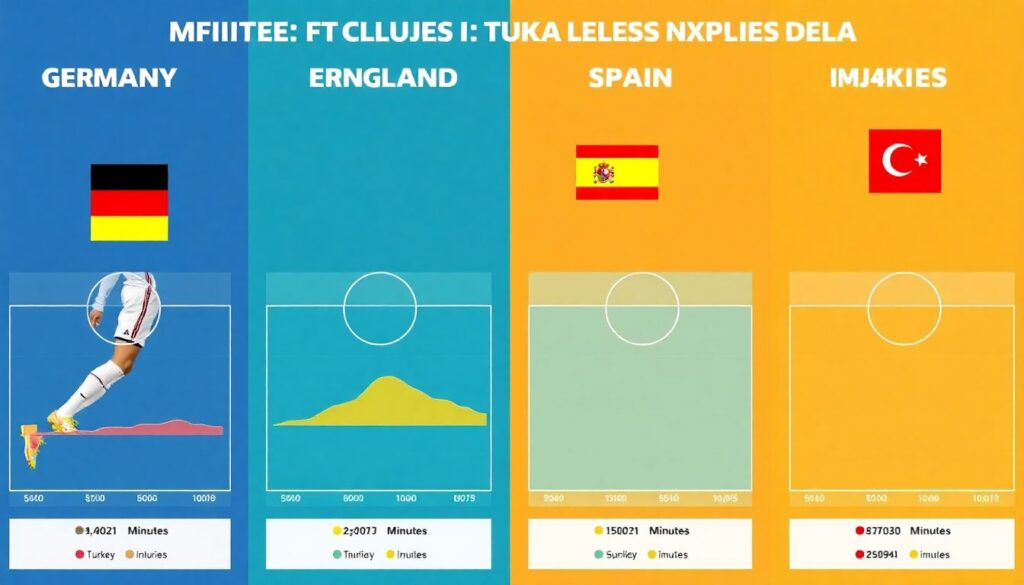
Key KPIs include youth minutes in senior teams, number of players progressing between age groups, coach qualification levels, and injury and drop-out rates. These indicators allow a fair football youth academy Germany vs England vs Spain vs Turkey comparison over time.
How to join elite youth football academies in Germany, Spain, England, and Turkey?
Families should study each country’s rules on foreign minors, schooling, and residency before moving. In practice, it is often better for Turkish players to develop at strong local academies first, then target elite opportunities abroad in older age groups.
How can Turkey finance a modern youth system sustainably?
Combine federation funding, club contributions, municipal facility support, and targeted sponsorships. Lock in multi-year agreements so academies can plan, and link part of the funding to measurable development outcomes rather than short-term match results.
How should program managers use international comparisons without copying blindly?
Treat a best youth soccer development systems in Europe comparison as a menu, not a blueprint. Identify two or three core principles from each country that fit Turkish realities, test them in pilot regions, then scale gradually based on evidence.