Bengisu Avcı shatters world record at Winter Swimming World Championships
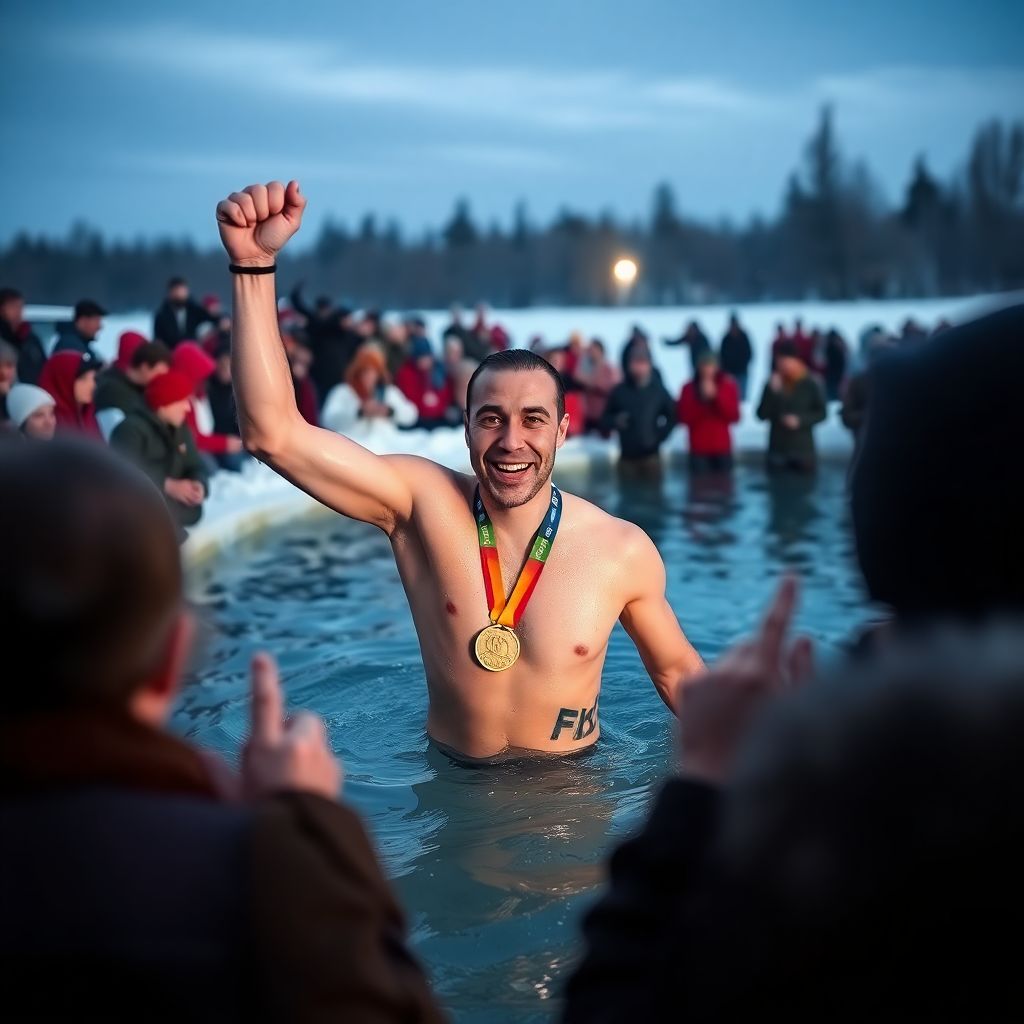
Ultra-marathon swimmer Bengisu Avcı has written her name into the record books at the 2026 World Winter Swimming Championships in Finland, breaking a world record and returning home with multiple medals. Competing in the icy waters of Oulu, she set a new world record in the women’s 30-39 age category in the 200-metre breaststroke, stopping the clock at 3:07.83 and claiming the gold medal.
The championship, organised by the International Winter Swimming Association in the northern Finnish city of Oulu from 2 to 8 March, brought together more than 2,000 athletes from 50 different countries. In this highly competitive field, Avcı’s performance stood out as one of the most remarkable of the entire event.
Her success was not limited to the 200-metre breaststroke. In the 100-metre breaststroke, Avcı also delivered a top-level performance, finishing with a time of 1:29.17. This result earned her the silver medal and the title of world runner-up in her age group, underlining her consistency across multiple distances and confirming her status as one of the leading figures in winter swimming.
In a statement shared through her communications office, Avcı emphasized how far Turkey has come in the discipline of ice and winter swimming in a relatively short time. She described the days spent in Finland as “historic,” not only for herself but for Turkish swimming as a whole.
Avcı noted that in the past, Turkey was represented in winter swimming by only one or two individual athletes, whereas this year the national delegation arrived with 11 swimmers and returned with medals. For her, this transformation is both emotional and symbolic: a sign that what was once an almost unknown niche sport in Turkey is now becoming a structured and promising field.
Highlighting the breadth of the Turkish team, Avcı proudly pointed out the wide age range among the athletes: from a 17-year-old swimmer just starting to build an international career to a 68-year-old competitor still racing on the world stage. She described this diversity as “incredible,” arguing that it proves winter swimming is not just for a narrow group of elite professionals but can be embraced by people at very different stages of life.
Avcı also underscored the rapid progress of Turkish athletes who only recently set foot in winter swimming. Some team members, she explained, were training at ice swimming camps and educational programs just yesterday, and today they are stepping onto the podium at one of the biggest competitions in the world. For her, watching this accelerated development and determination turn into medals is an indescribable source of joy.
Expressing her emotions, Avcı said she struggled to find words strong enough to describe their happiness. She is convinced that Turkey’s journey in winter and ice swimming is only beginning. According to her, the country will reach much higher levels in the coming years, and many more Turkish swimmers will win medals on the international stage as the sport gains recognition, structure, and institutional support.
The Turkish squad in Oulu was not limited to Bengisu Avcı. On the women’s side, İrem Damar, Melisa Uluarslan, İrem Ergin, Şükriye Öz, Eda Savcıgil, and Selin Cansu Demircioğlu also took to the freezing waters, representing their country in various events and distances. Among the men, Sabri Murat Ersöz, Güçlü Baytekin, and Nevzat Arda competed, helping solidify Turkey’s presence at the championship and adding breadth and depth to the national team.
The significance of Avcı’s record for winter swimming
Bengisu Avcı’s world record is much more than a single successful race; it represents a milestone for winter swimming as a developing discipline. The 30-39 age category is one of the most competitive brackets, combining experience, physical strength, and tactical awareness. Setting a world record in this group demonstrates not only Avcı’s personal capacity but also the growing level of professionalism in training methods for winter swimming.
Her times in both the 200-metre and 100-metre breaststroke underline her ability to adapt classic pool techniques to extreme open-water conditions. Breaststroke in near-freezing water demands a unique blend of strength, control, and breathing technique, and Avcı’s results indicate that she has found an effective way to translate pool skills into harsh natural environments.
Why winter swimming is so demanding
Competing in winter swimming is radically different from racing in standard pool conditions. Water temperatures are often close to freezing, forcing the body to fight not just for speed, but for thermal stability and basic function. Swimmers must develop strong mental resilience in addition to physical conditioning; the shock of cold water can disrupt breathing, heart rate, and muscle coordination within seconds.
Athletes like Avcı undergo specialised training that includes controlled exposure to cold, breathing exercises, and gradual adaptation to icy environments. Preparation also involves close monitoring of health parameters, as the line between challenging limits and risking health is very thin in such conditions. That is why world records in winter swimming, especially at longer distances like 200 metres, carry a particular weight in the sporting world.
Turkey’s rapid rise in ice and winter swimming
Turkey has traditionally been associated more with pool swimming and open water marathons in milder conditions. The emergence of a structured winter swimming movement marks a notable shift. In just a few years, the country has moved from sending a couple of individual enthusiasts to major events to fielding a complete team consisting of both women and men across multiple age groups.
This expansion suggests that swimming clubs, coaches, and federations have started to see winter swimming as a serious area with international potential. The presence of athletes ranging from teenagers to veterans over 60 also signals that the sport is attracting a wide demographic base, which is critical for long-term development and for building institutional support and funding.
Role models and inspiration for younger athletes
By breaking a world record and winning medals at a major championship, Bengisu Avcı has positioned herself as a powerful role model for aspiring swimmers in Turkey and beyond. Young athletes, especially girls and women, can now point to a Turkish ice swimmer who competes at the very top international level and achieves historic results.
Such figures tend to have a multiplier effect: they inspire new participants, encourage existing swimmers to try new disciplines, and attract the attention of coaches and sponsors. As stories about Avcı’s achievements spread, more children and teenagers are likely to become curious about winter swimming and other endurance sports, enriching the country’s athletic ecosystem.
The strategic importance of international success
Medals and records at world championships also have a strategic dimension. They help national federations justify investments in infrastructure, coaching, and international participation. Avcı’s success and the strong showing of the Turkish team in Oulu can become arguments for developing specialised training camps in colder regions, expanding scientific support for athletes, and creating national competitions in winter and ice swimming.
Over time, this could lead to Turkey being seen not only as a country of strong open-water and pool swimmers, but also as a key player in winter swimming. That, in turn, would attract foreign athletes and coaches, contributing to knowledge exchange and helping the sport evolve domestically.
Psychological strength behind the medals
Behind every medal in winter swimming lies an intense psychological journey. Entering icy water demands control over instinctive reactions like panic and hyperventilation. Avcı’s ability to deliver precise, measured performances over 100 and 200 metres suggests not only physical readiness but also a high level of mental discipline.
Visualisation techniques, breathing routines, and strict pre-race rituals often play a crucial role in such sports. While records highlight the final outcome, the real foundation of Avcı’s achievements is built in countless training sessions where she has repeatedly confronted cold, discomfort, and fatigue. Her statements about not finding words to describe her happiness reveal how emotionally charged this path has been.
A watershed moment for Turkish winter sports
The 2026 World Winter Swimming Championships in Oulu may be remembered as a turning point for Turkey’s broader winter sports ambitions. Success in a demanding, cold-related sport like winter swimming can help break the perception that Turkish athletes are mainly competitive only in warm-weather disciplines. Avcı’s world record and the team’s strong presence offer a new narrative: Turkish athletes can adapt, excel, and lead even in the harshest conditions.
If this momentum is maintained, future championships could see an even larger Turkish delegation, more diversified disciplines, and a growing collection of medals. The foundation has been laid by pioneers like Bengisu Avcı and her teammates; the next step will depend on how effectively this breakthrough is transformed into sustained programs, structures, and long-term planning.
Bengisu Avcı’s performance in Finland thus stands at the intersection of personal triumph and national progress. Her world record, gold medal, and silver medal are immediate achievements, but their impact reaches far beyond a single competition. They open the door to a new era for Turkish winter swimming and set ambitious standards for the generations that will follow.