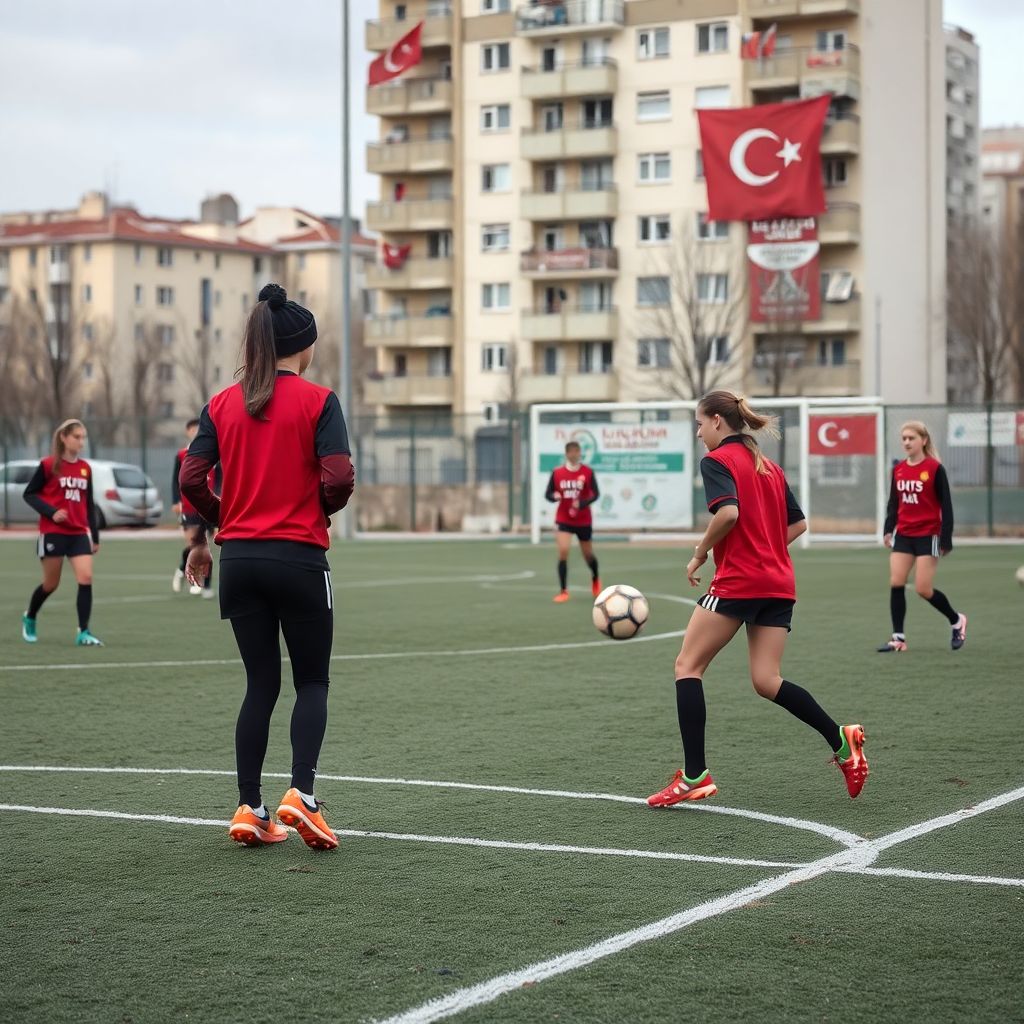
Women’s football in Turkey is growing but constrained by weak structures, limited investment, and patchy pathways from youth to elite level. Progress in the Turkish women’s football league, women’s football clubs in Turkey, and the Turkey women’s national football team is real, yet sustainable impact needs coordinated policy, funding, and grassroots action.
Snapshot: Current landscape and strategic highlights
- Women’s football Turkey has moved from marginal to semi-professional, but institutional backing still lags behind men’s football and regional peers.
- The Turkish women’s football league and national team now offer clearer elite pathways, yet youth systems and school links remain fragmented.
- Commercially, sponsors and broadcasters are testing the waters, but revenue models are fragile and highly club‑dependent.
- Grassroots initiatives and women’s football academies in Turkey are driving participation, though quality control and coaching standards vary widely.
- Future growth depends on balancing low-risk, easy-to-implement measures (school programs, coach education) with higher-risk, higher-reward moves (league restructuring, major media deals).
Historical trajectory: milestones that shaped women’s football in Turkey
Women’s football in Turkey has evolved through alternating phases of enthusiasm and institutional neglect. Early informal teams and local tournaments gradually gave way to more organized structures, culminating in the creation and later reformatting of the Turkish women’s football league under the Turkish Football Federation (TFF).
Key milestones include the formal recognition of women’s competitions, the gradual integration of women’s sections within established men’s clubs, and the international debut and subsequent rise in visibility of the Turkey women’s national football team. Each step expanded the player base but also exposed gaps in infrastructure, governance, and public support.
More recently, higher-profile women’s football clubs in Turkey, especially those linked to major multi-sport clubs, have accelerated professionalization, improved training conditions, and attracted limited but growing media interest. Yet grassroots and regional development still trail behind elite centres in big cities like Istanbul, Ankara, and Izmir.
Recommendation: map local and national milestones in one shared timeline to clarify what worked, where setbacks appeared, and which patterns can guide the next phase of policy and investment.
Institutional and structural barriers limiting growth
- Fragmented governance and inconsistent policy: Overlapping responsibilities between TFF, ministries, municipalities, and schools create gaps in accountability. Without a unified long-term plan, funding cycles, competition formats, and club licensing rules change too often for stable growth.
- Limited infrastructure and access: Many women’s teams share poor-quality pitches and facilities with multiple users, often at inconvenient hours. Travel costs and lack of safe, reliable transport especially restrict girls’ participation outside big cities.
- Underdeveloped coach and referee pipelines: Few women hold advanced coaching or refereeing licenses compared with the men’s game. This slows quality improvements and limits role models, particularly in conservative regions.
- Social norms and low family support: Persistent stereotypes about women’s sport reduce parental backing and local sponsorship, even where basic facilities exist. This hits entry-level participation hardest.
- Data and monitoring gaps: Reliable statistics on participation, injury patterns, drop-out rates, and club finances are scarce, making it hard to design evidence-based interventions or persuade sponsors.
Recommendation: create a single, time-bound national roadmap with clear targets on facilities, coach education, and participation, and assign lead responsibility for each objective.
Pathways for talent: youth development, academies, and coaching gaps
Youth pathways hinge on how schools, clubs, and women’s football academies in Turkey connect. Where partnerships exist, girls can move from school tournaments to club teams and into regional selections with minimal friction. Where they do not, promising players disappear from the system between childhood and late teens.
Typical practical scenarios illustrate these pathways and gaps:
- School-to-club bridge: A state school regularly sends players to a nearby club’s youth team. Easy to implement and low risk, this model requires basic agreements on training times, safe transport, and academic support, but brings immediate participation gains.
- Club-run academies with education support: A professional club runs an in-house academy, aligning training loads with schooling and offering study spaces. Higher resource demands and reputational risk require stronger governance but produce more elite-ready players.
- Regional talent centres: The federation or municipality creates regional hubs where the best players from smaller women’s football clubs in Turkey train together. Implementation is moderate in complexity; main risks are unequal access and over-centralization.
- Coach-development focus: Instead of building more teams, a region prioritizes training female coaches and PE teachers. Implementation is relatively simple and low risk, and it multiplies long-term impact across many schools and clubs.
Recommendation: prioritize low-cost, low-risk school-club collaborations nationwide, while piloting a smaller number of regional elite hubs with clear evaluation criteria.
Competitive ecosystem: leagues, clubs, and performance indicators
The competitive ecosystem for women’s football Turkey spans the top national divisions, regional leagues, cup competitions, and international fixtures for club sides and the Turkey women’s national football team. Its strength depends on balanced competition, clear promotion-relegation rules, and realistic financial requirements for clubs at each level.
Different development approaches carry distinct implementation challenges and risk profiles. Comparing them side by side helps administrators and investors choose realistic steps instead of copying models from men’s football that may be unsustainable for the women’s game.
| Development approach | Ease of implementation | Main risks |
|---|---|---|
| Incremental improvement of existing Turkish women’s football league formats | High – uses current structures and stakeholders | Limited impact if financial and grassroots issues remain unchanged |
| Rapid expansion of number of professional women’s football clubs in Turkey | Medium – requires licensing and club commitment | Financial overreach, short-lived projects, quality dilution |
| Performance-focused investment in Turkey women’s national football team | Medium – centralized control, fewer actors | Success may not trickle down; grassroots can stagnate |
| Regionalized leagues with shorter travel and more local derbies | High – administratively straightforward | Uneven competition levels between regions, slower elite readiness |
- Competitive advantages:
- Regular, tiered competition raises tactical and physical standards across age groups.
- Clubs tied to big multi-sport institutions benefit from shared facilities and medical staff.
- National-team participation boosts visibility and can attract short-term sponsorship and municipal support.
- Key limitations:
- Travel costs and long distances between clubs strain budgets and player well-being.
- Uneven professionalism means some teams are semi-pro while others are essentially amateur.
- Match data, scouting reports, and analytics capacity are limited outside top-tier clubs.
Recommendation: favour evolutionary reform of league formats with targeted support for financially weaker clubs, rather than high-risk, top-down overhauls.
Commercial forces: media exposure, sponsorship, and revenue models

- Myth: visibility must come only from big broadcasters – In reality, clubs and leagues can start with low-cost streaming and social media content. Waiting for a major broadcast deal is easy but risky; self-produced content is easier to implement and builds a direct fan base.
- Myth: women’s football cannot attract sponsors – Sponsors increasingly look for authentic, values-driven partnerships. Local businesses, municipalities, and universities may see women’s teams as a safer, lower-cost entry into sport sponsorship than men’s top-tier clubs.
- Mistake: copying men’s revenue structures – Over-reliance on ticketing and large shirt deals is risky. Diversified models (community memberships, small packages for SMEs, joint campaigns with NGOs) are easier to launch and more resilient to economic shocks.
- Mistake: undervaluing data and audience insights – Not tracking attendance, digital reach, and fan demographics weakens negotiations. Even simple metrics from social channels and online ticketing can significantly strengthen the commercial story.
- Myth: commercial growth must wait until on-field success – Commercial and sporting progress can develop in parallel; small, well-structured deals today reduce pressure and risk when bigger sponsors arrive later.
Recommendation: start with low-cost digital exposure and small, multi-year local sponsorships, then scale toward riskier national broadcast and headline deals once stable audiences are proven.
Scaling forward: practical interventions for policy, investment, and grassroots
Scaling women’s football in Turkey requires matching each intervention with its practical complexity and risk profile. Policymakers and investors can blend quick, low-risk wins with bolder bets that reshape structures over time, while grassroots actors ensure cultural acceptance and sustained participation.
Consider a simplified mini-case that combines these layers:
- Policy layer (medium difficulty, moderate risk): The federation issues a regulation that every top-division men’s club must operate a women’s team within a defined timeframe. This accelerates growth but risks poorly planned, short-lived projects if not backed by technical and financial guidelines.
- Investment layer (higher difficulty, higher risk): A corporate sponsor funds a three-year program across several women’s football academies in Turkey, tying money to coaching qualifications and participation targets. Implementation is complex, but if managed well, it professionalizes key hubs and creates exportable best practices.
- Grassroots layer (low difficulty, low risk): Municipalities create weekend football festivals for girls, linking school PE teachers with nearby clubs. Costs are modest, political risk is low, and immediate visibility encourages families to support their daughters’ participation.
In practice, a mixed strategy might run as follows:
Pseudo-roadmap:
- Year 1: Launch municipal grassroots festivals and school-club partnerships in selected districts.
- Year 2: Expand coach-education subsidies and set minimum standards for clubs entering the Turkish women’s football league.
- Year 3: Formalize federation regulations on club women’s sections and negotiate a modest, multi-year media package based on proven audience growth.
Recommendation: prioritize a portfolio approach-three to five coordinated initiatives with different risk levels-rather than betting on a single large reform or sponsorship deal.
Practical questions and quick clarifications
How strong is the current competitive level in Turkish women’s football?
The technical and tactical level is improving, especially at top clubs and within the national team setup, but depth remains limited. Addressing coaching standards and competitive balance in lower divisions is essential for long-term quality.
What is the easiest starting point for a new women’s football club in Turkey?
The simplest entry is forming a youth-focused team linked to an existing amateur or semi-pro men’s club, sharing facilities and administration. This limits financial risk while testing local demand.
How can schools contribute without large budgets?
Schools can organize regular girls’ tournaments, coordinate training schedules with nearby clubs, and encourage PE teachers to attend basic coaching courses. These steps are low cost and create sustainable participation pipelines.
Is investing in the Turkey women’s national football team enough to grow the game?
National-team investment is important for visibility but insufficient on its own. Without parallel support for grassroots, leagues, and academies, progress will be fragile and may not survive generational turnover.
What role can municipalities realistically play?
Municipalities can provide free or low-cost pitch access, safe transport to training, and small grants for equipment and local festivals. These measures are relatively easy to implement and politically visible, with limited financial risk.
How should small sponsors approach women’s football projects?
Small sponsors should focus on multi-year, clearly scoped agreements with local clubs or academies, emphasizing community impact and visibility at events. This controlled approach balances manageable budgets with measurable outcomes.
Are dedicated women’s football academies always the best option?
Dedicated academies work well where there is sufficient demand and coaching capacity, but they require sustained funding. In many areas, strengthening school-club links and coach education is a more realistic first step.