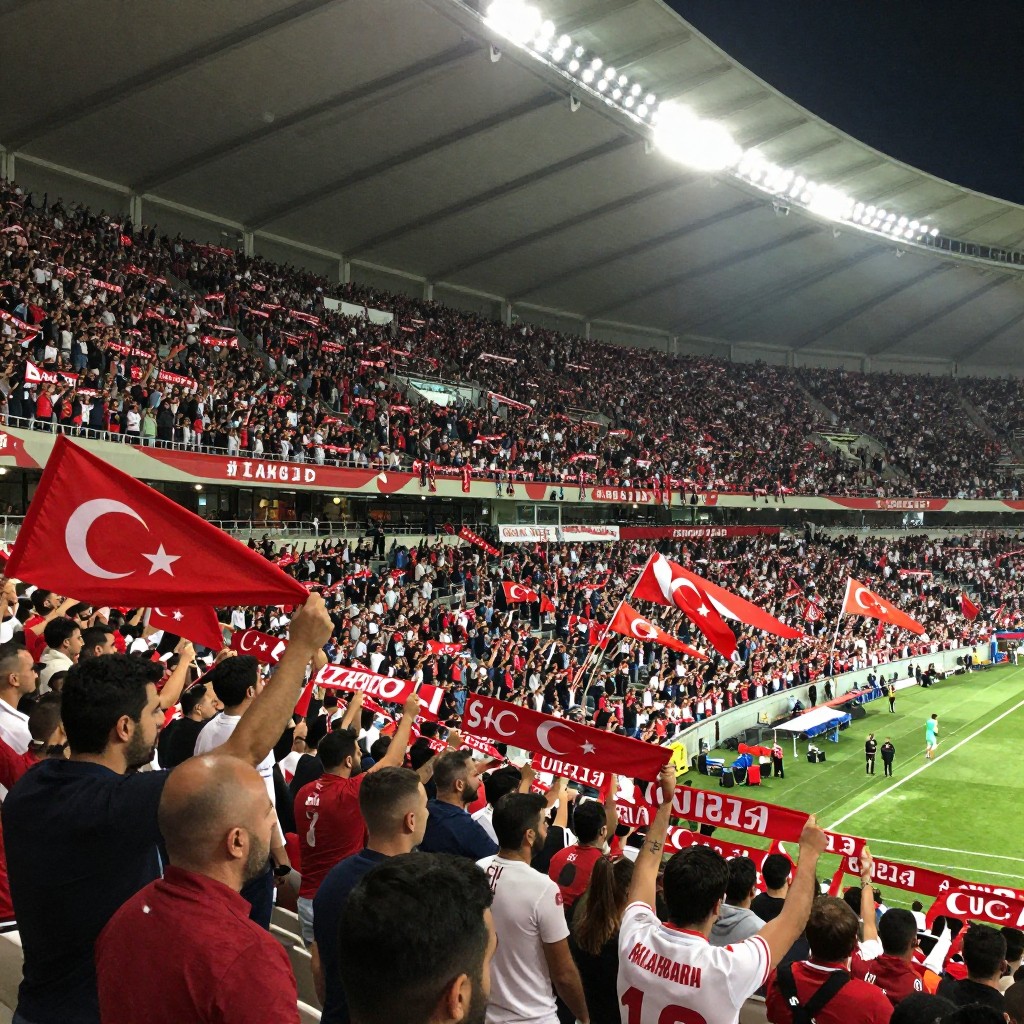
Turkish stadium atmospheres are often described as intimidating because coordinated chants, sustained noise, emotionally charged rivalries and close crowd-to-pitch layouts can create persistent pressure. The effect is real but not automatic: it varies by match, venue and team, and crowd noise alone does not determine the result. “Feared” describes a reputation, not a measurable ranking.
The forces behind Turkey’s intimidating matchdays
- Noise is often sustained through chants and responses rather than limited to isolated reactions.
- Supporters can turn match events into shared rituals that reinforce the crowd’s energy.
- Compact stands and stadium acoustics may make crowd sound feel especially close to the pitch.
- Rivalry and expectation can heighten the emotional stakes for players and spectators.
- The pressure is contextual: it changes with the fixture, crowd, venue and flow of play.
What makes a Turkish stadium atmosphere feel so intense
The phrase describes a matchday environment in which crowd participation is prominent, emotionally expressive and capable of continuing through long stretches of play. In Turkey, the reputation is particularly associated with the passionate support surrounding major clubs and high-stakes fixtures.
Intensity is not simply loudness. Chants, whistles, applause and sudden collective reactions can make the atmosphere feel active and responsive, especially when the crowd reacts to a tackle, a decision or a shift in momentum.
The label should not be treated as a claim that every Turkish ground is equally intimidating, or that visiting teams are certain to struggle. A quieter fixture, a strong away performance or a home side playing poorly can all change what the atmosphere feels like.
How football culture turns crowd noise into collective ritual
Shared routines help turn individual voices into a coordinated presence. A typical matchday can build through several familiar mechanisms:
- Repeated chants: Familiar lines give large groups an easy way to join in and sustain support.
- Call and response: Sections of a crowd answer one another, making participation feel active across the ground.
- Key moments: A goal, a controversial decision or a spell of pressure can trigger an immediate surge of sound.
- Visible coordination: Clapping, scarves and other shared gestures give the crowd a common rhythm and focus.
- Rivalry and occasion: Derby matches and important fixtures can raise expectations and sharpen emotional responses.
Why stadium design can amplify the roar
Stadium architecture can shape how crowd noise is experienced, although no design feature guarantees a particular atmosphere. The effect is most noticeable in scenarios such as:
- Stands that bring spectators close to the playing area, making crowd reactions feel immediate.
- Seating configurations that keep large groups visually and acoustically connected.
- Covered sections that reflect some sound back into the stadium rather than letting it dissipate as quickly.
- Compact grounds where chants from different sections can overlap and build together.
These factors can make noise feel more concentrated from the pitch. They do not establish that one venue is always louder than another; attendance, crowd participation and the match itself also matter.
Brief matchday scenarios
- Early away possession: A confident opening from the home side may prompt a loud response that keeps pressure on the visitors.
- A disputed call: A collective reaction can make the next passage of play feel more charged, even though the decision itself does not change.
- A late home attack: As the match reaches a decisive phase, a crowd may become more vocal and focused on each action.
How sustained pressure affects visiting players
Possible advantages for the home side
- A loud crowd can make communication between visiting players more difficult, particularly when they are already under pressure.
- Repeated reactions may add emotional weight to set pieces, tackles and decisions.
- Home players may draw energy from the crowd’s response and feel a stronger connection with supporters.
Limits of crowd pressure
- Noise does not directly dictate a player’s decisions or guarantee mistakes.
- Experienced visitors can prepare communication routines and focus on tactical instructions.
- Home expectations can become pressure on the home team if performance falls short.
The practical effect depends on how players respond and what is happening on the pitch. Atmosphere can shape the conditions of a match; it does not replace tactics, skill or execution.
What away teams encounter before and during kickoff
For visiting teams and supporters, preparation helps separate useful matchday planning from dramatic stories about hostile grounds. Common mistakes and myths include:
- Assuming every fixture will be equally intense: The atmosphere varies with the opponent, occasion and crowd participation.
- Treating reputation as proof of an inevitable result: A formidable crowd does not make a loss certain.
- Ignoring communication plans: Teams may need clear, rehearsed ways to communicate when the crowd is loud.
- Leaving ticket arrangements late: Supporters looking for Turkish football tickets, Istanbul football tickets, Galatasaray tickets, Fenerbahçe tickets or Beşiktaş tickets should check official club channels for current sales rules, availability and entry requirements.
- Confusing matchday atmosphere with logistics: Travel, access and stadium policies should be checked separately for the specific fixture.
Quick practical tips
- Check the club’s official ticket information and stadium entry guidance before travelling.
- Allow time to reach the ground and locate the correct entrance.
- For teams, agree on concise communication signals and rehearse them in noisy conditions.
- Judge the atmosphere on the day rather than relying on a venue’s reputation alone.
Where reputation ends and matchday reality begins
Consider an away side arriving for a high-stakes fixture. The crowd builds through chants, the stands respond to early challenges, and communication becomes harder during a home spell of pressure. If the visitors stay organised and keep possession, the noise may remain intense without deciding the contest. If the home side creates chances, the same crowd response can make the moment feel more consequential. That is the distinction: atmosphere can amplify pressure, but the match still turns on what players do.
Questions that put Turkey’s stadium reputation in context
Why are Turkish stadium atmospheres considered intimidating?
Coordinated chants, sustained crowd reactions, strong rivalries and stadium layouts that can concentrate sound all contribute to the reputation. The effect varies by match and venue.
Does crowd noise make visiting teams lose?
No. Noise can make communication and concentration more demanding, but it does not determine the result or guarantee errors.
Are all Turkish stadiums equally intense?
No. Atmosphere depends on the fixture, crowd participation, venue and match situation. A club’s reputation cannot describe every matchday.
How can visiting players prepare for a loud crowd?
Teams can agree on concise communication routines and rehearse them in noisy conditions. Tactical organisation and composure remain essential.
What should a visiting supporter check before buying tickets?
Check official club information for ticket availability, sales rules, stadium entry requirements and fixture-specific guidance before travelling.
Is “feared” an objective ranking of Turkish stadiums?
No. It is a common description of perceived pressure, not a standardised measurement or proof that Turkish grounds outrank all others.