Video Assistant Referee (VAR) in Turkish football has reduced some clear, match‑changing errors, but it has not ended var controversy in turkish football. Available evidence and expert reviews suggest fewer obvious mistakes, more consistent offside and penalty checks, yet new frustrations about delays, communication, and perceived bias remain strong among fans and clubs.
Concise findings on VAR’s measurable impact
- VAR in Turkey mainly corrects clear, objective mistakes (offsides, handballs, mistaken identity) but struggles with grey, subjective fouls.
- Qualitative turkish super lig var statistics show fewer uncorrected, clear errors yet persistent debate around close penalty calls and red cards.
- Match flow is disrupted by checks, but added stoppage time partially compensates, so total playing time is not dramatically reduced.
- Effect of var on super lig refereeing decisions includes more second looks at critical incidents and slightly more caution in awarding penalties on first view.
- Perceived fairness has improved in some cases, but distrust in institutions means many supporters still view VAR decisions through club loyalties.
- Safe progress requires clearer communication, transparent post‑match reports, and consistent education for referees, players and media.
Persistent myths about VAR in Turkish football – what the claims say
In the Turkish Süper Lig, VAR is often treated as a magic solution or as a conspiracy tool, depending on the weekend. To analyse the real video assistant referee impact on turkish league, it helps to separate common myths from what the protocol actually allows referees to do.
Myth 1: VAR checks everything. In reality, VAR is limited to four categories: goals, penalties, direct red cards, and mistaken identity. It does not re‑referee every duel or tactical foul. Many controversial situations that fans argue about on TV simply do not fall under the VAR remit.
Myth 2: VAR decisions are based on opinion only. Some incidents (offsides, ball in or out of play) are largely factual, using calibrated lines and multiple camera angles. Others (fouls, handballs, challenges) are value judgements where the on‑field referee still has the final word after an on‑field review.
Myth 3: VAR has made Turkish refereeing worse. The system exposes mistakes that in the past might have gone unnoticed. This visibility can make errors feel more frequent. When we look at structured turkey super lig var mistakes analysis, the pattern is usually fewer uncorrected, obvious errors but more public discussion of the remaining borderline calls.
Statistical trends since VAR implementation in Süper Lig and cup competitions
Even without exact numbers, several stable patterns emerge from season reports, referee briefings, and independent reviews of turkish super lig var statistics. These trends describe how decisions and match dynamics changed when VAR entered the Süper Lig and domestic cups.
- Higher rate of corrected key incidents – Goals and penalties are more often reviewed before the restart, reducing the chance that a clear mistake stands uncorrected.
- Shifts in penalty awards – Some seasons show more penalties due to handball and contact in the box being re‑checked; other seasons show similar totals but with a different mix of given vs overturned decisions.
- Offside accuracy improved – Tight offside calls are more consistent because VAR uses frame‑by‑frame checks and lines, even if camera angles in some Turkish stadiums are not perfect.
- More stoppage time – VAR checks and reviews pause the game; referees respond with longer added time, so the total minutes played stay broadly similar even if rhythm suffers.
- Referees delay the whistle – To allow VAR to intervene if a goal is scored, referees often keep the play going longer, especially in attacks that might end with a goal.
- Documented interventions cluster around big clubs – Because high‑profile matches get more cameras and scrutiny, a larger share of recorded VAR interventions happens in these fixtures, feeding narratives about bias despite the protocol being the same.
| Metric | Pre‑VAR Süper Lig (qualitative) | Post‑VAR Süper Lig (qualitative) |
|---|---|---|
| Uncorrected clear offside goals | More frequent, often noticed only after replays | Less frequent, usually corrected via VAR check |
| Penalties given without second viewing | Almost all decisions based on single on‑field look | Many critical penalties reviewed on monitor before confirmation |
| Match interruptions for decisions | Shorter, but with occasional long protests | Longer formal delays for checks and reviews |
| Public visibility of referee errors | Lower; some errors remained unnoticed by most viewers | Higher; every slow‑motion replay is dissected by TV and social media |
| Club complaints about bias | Common, focused on individual referees | Still common, now extended to VAR room and technology |
Match-changing VAR interventions: categorized cases and quantitative outcomes
Match‑changing interventions are the most visible effect of var on super lig refereeing decisions. Even without exact match counts, we can group typical scenarios where VAR has the strongest impact on the scoreline and league narrative.
-
Goals awarded or disallowed after offside review
The classic situation: a team scores, the assistant raises the flag late, and VAR checks the offside line. Goals are either restored or cancelled, directly affecting points and goal difference. -
Penalties given after missed fouls
A foul in the box is missed in real time. When the ball goes out of play, VAR recommends an on‑field review. The referee awards a penalty that was previously invisible to many fans, shifting match momentum. -
Penalties cancelled after soft contact
The referee gives a penalty live for minimal contact. On slow‑motion replay the contact looks exaggerated, leading to an overturned decision. Supporters of one team feel justice; the other side sees inconsistency. -
Red cards upgraded from yellow
A reckless tackle initially earns a yellow. VAR intervenes to show the severity: studs up, high force. The card is upgraded to red, leaving one team with ten men and dramatically changing match balance. -
Mistaken identity corrected
In crowded penalty‑area incidents, the wrong player can be cautioned. VAR replays help find the correct offender, protecting players from unfair suspensions while maintaining the intended sanction. -
Off‑the‑ball violent conduct detected
Cameras pick up incidents behind the play: elbows, stamps, confrontations during set‑piece preparation. VAR can lead to red cards that would previously be invisible to the referee team.
Referee behavior, stoppage time and disciplinary metrics after VAR
VAR changes how referees manage risk, discipline and time. Understanding these shifts helps interpret modern Süper Lig matches, especially when evaluating turkey super lig var mistakes analysis and comparing current decisions to pre‑VAR habits.
Observed advantages and constructive changes
- Referees are more willing to let critical attacks continue, reducing the chance of wrongly stopping a promising move that ends in a goal.
- Yellow card management improves when referees know they can correct cases of mistaken identity and upgrade clear reds after review.
- Assistants keep flags down longer on tight offsides, which supports attacking football and avoids stopping legitimate chances too early.
- End‑of‑game timekeeping becomes more explicit, with longer added time acknowledging delays from VAR checks.
- Referee education in Turkey now includes systematic video debriefs, making learning from errors more structured.
Structural limitations and new issues
- Stadium camera infrastructure varies across the Turkish league, so not every ground offers equally clear angles for all incidents.
- Communication in Turkish between VAR room, on‑field referee and TV audience is limited; fans often do not understand what exactly was checked.
- Subjective fouls, handballs and holding in the box still depend on interpretation, so disagreements persist despite video replays.
- Frequent stoppages can break match rhythm, frustrating players and supporters, especially when final decisions still appear marginal.
- Psychological pressure increases on referees, who know every decision will be frozen, zoomed and slowed down on national TV.
Spectator, media and club sentiment versus empirical signals
Public opinion in Turkey often treats each weekend as proof that VAR works perfectly or fails completely. Yet the broader video assistant referee impact on turkish league is more nuanced than individual controversies suggest.
- Clubs tend to focus on decisions that hurt them, rarely counting calls that went in their favour, biasing perception of overall fairness.
- Media debates highlight spectacular mistakes rather than the quieter, routine corrections that prevent scandals.
- Social networks amplify anger clips more than balanced analysis, making individual incidents feel like systemic patterns.
- Fans sometimes misinterpret the protocol, expecting VAR to review incidents that are outside its limited remit.
- Season‑long reviews generally indicate fewer uncorrected, obvious errors, but this improvement is overshadowed by a small number of highly emotional match incidents.
Policy implications: fairness, competitive balance and recommendations
For league organisers, refereeing committees and clubs, the main question is not whether to keep VAR, but how to use it more safely and transparently so that it genuinely reduces var controversy in turkish football instead of simply moving debates from the pitch to the screen.
- Standardise technology across stadiums
Ensure a minimum camera standard in all Süper Lig grounds so that critical angles for offsides and penalty‑area incidents are consistently available. - Publish clear post‑match VAR reports
For each match, summarise which incidents were checked, which were reviewed on screen, and why decisions were made. This makes future turkish super lig var statistics and analysis more transparent. - Educate players and coaches
Offer regular briefings on VAR protocol, with Turkish‑language examples showing when VAR can and cannot intervene, reducing unrealistic expectations. - Improve fan communication
Use stadium screens and broadcasters to show short explanation graphics (for example, “check in progress: possible offside”) so spectators understand delays and decisions. - Audit VAR performance independently
Invite external experts to conduct periodic turkey super lig var mistakes analysis, classifying interventions as correct, missed, or unnecessary, and publish aggregated findings. - Limit on‑field review time
Set a soft time target for on‑field reviews to protect match rhythm while still allowing referees enough time for a careful second look.
A short illustrative scenario shows how these recommendations interact. Imagine a potential penalty for a top Istanbul club in a tight title race match: the referee lets play continue, then is called to the monitor. With standardised cameras, clear angles reveal minimal contact. A brief review under a time guideline leads to a decision of no penalty. Post‑match, the VAR report lists the check and the reasoning. Supporters still debate the call, but analysts evaluating the effect of var on super lig refereeing decisions can see a transparent chain: factual replays, clear protocol, limited delay, and documented explanation.
Practical clarifications on VAR application and data interpretation
Does VAR actually reduce controversial decisions in the Turkish Süper Lig?
VAR reduces some types of controversy, especially around clear offsides and obvious missed penalties, but it does not remove debate. Arguments shift toward marginal fouls, handballs, and interpretation of the VAR protocol itself.
Why do fans still feel VAR is biased against their club?
Supporters remember decisions against their team more strongly than favourable ones. Combined with intense rivalries and historical distrust of refereeing, this selective memory fuels ongoing narratives about systematic bias, even when season‑long data suggests mixed outcomes.
Can VAR review every foul or yellow card in Turkish matches?
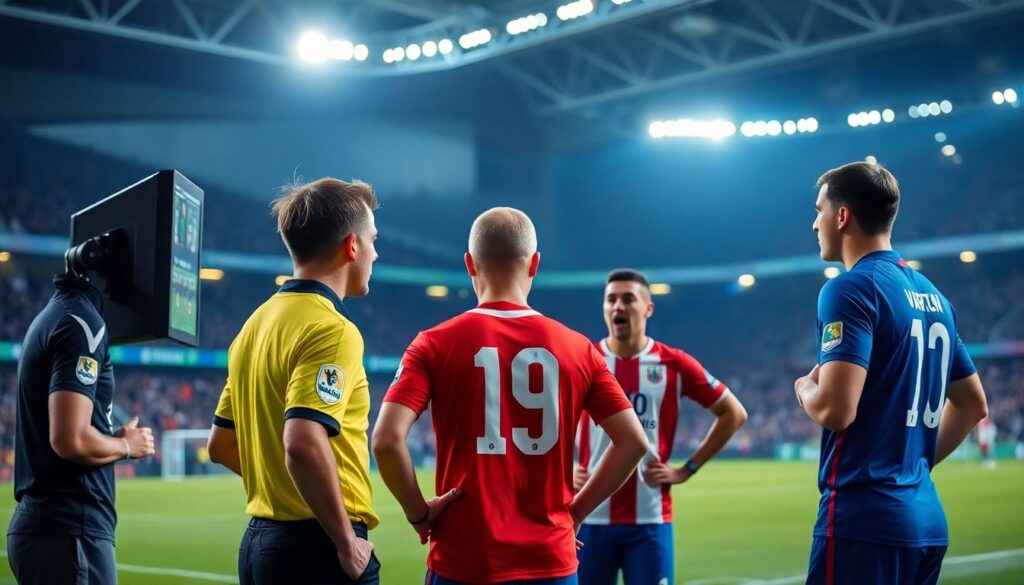
No. VAR is restricted to goals, penalties, direct red cards and mistaken identity. Most fouls and yellow cards, even if they look wrong on TV, are outside VAR authority unless they involve a potential red card upgrade.
Why do some VAR checks in Turkey take so long?
Delays often come from finding the best camera angle, drawing offside lines, and synchronising frames. In some stadiums, limited camera coverage complicates this process, and officials are cautious because final decisions will be heavily scrutinised.
How should I read VAR statistics for the Süper Lig safely?
Look at season‑wide trends rather than single rounds. Compare numbers of interventions, confirmations and overturns, and consider context like rule changes or emphasis on certain fouls. Avoid judging fairness only from one high‑profile match.
Is it realistic to expect VAR to eliminate refereeing mistakes?
No system can guarantee perfection. VAR lowers the rate of clear, factual errors but cannot unify opinions on subjective decisions. Treat it as an extra safety net, not a promise that every judgement will be universally accepted.
What can clubs do to reduce VAR‑related tension?
Clubs can invest in rule education for staff and players, communicate responsibly after matches, and support independent performance reviews instead of relying only on emotional reactions. This approach encourages measured debate instead of permanent crisis.