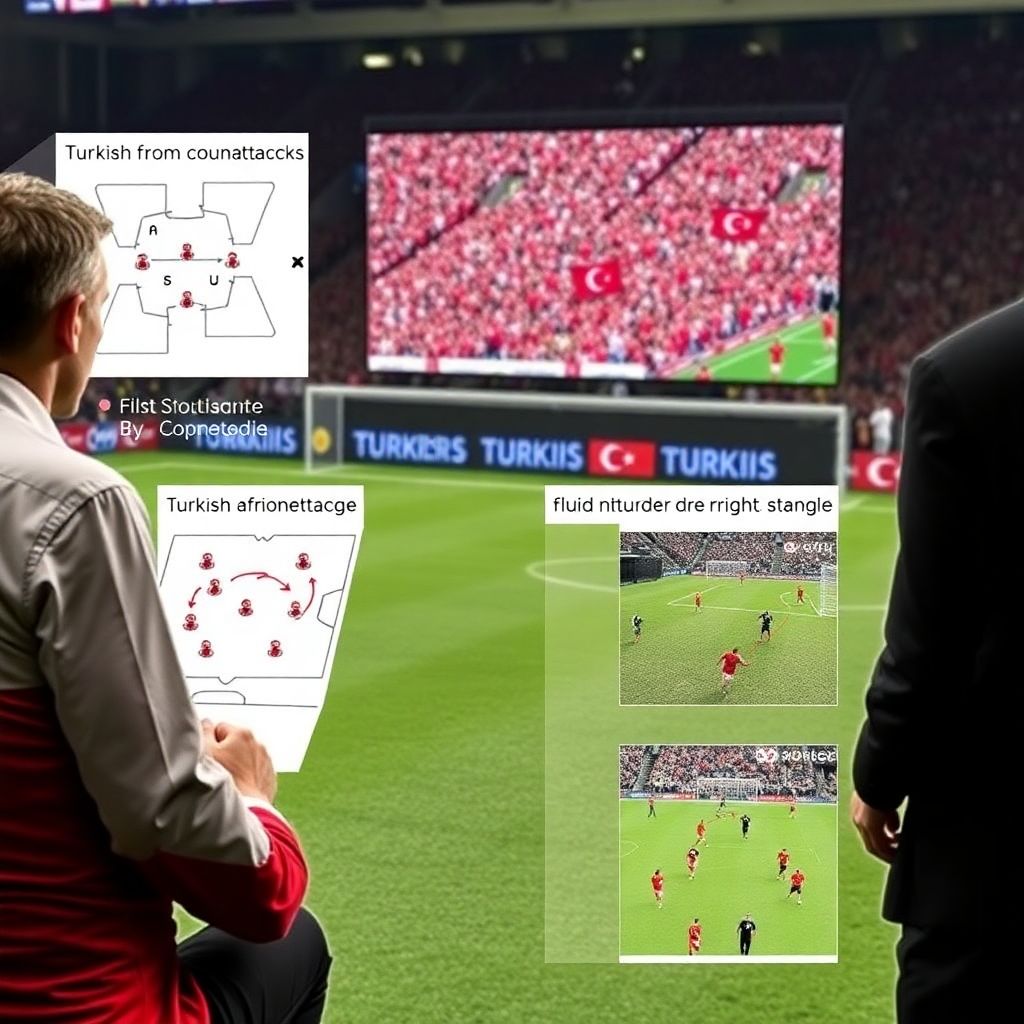
The tactical evolution of the Turkish National Team over the last decade is a shift from a rigid, counter-focused 4‑2‑3‑1 to more flexible hybrid structures, tailored pressing and structured build-up. Understanding this journey helps coaches, analysts and advanced fans read Turkey’s current game model and design training or match plans that exploit clear patterns.
Concise overview of Turkey’s tactical trajectory
- Core identity moved from deep 4‑2‑3‑1 defending and transition attacks to more proactive, ball-oriented football.
- Pressing evolved from mid-block containment to situational high pressing with clearer triggers and cover.
- Build-up improved via goalkeeper involvement and wider centre-back positioning to escape pressure.
- Wide play shifted towards advanced full-backs and inverted wingers, creating interior overloads.
- Set-piece routines gained structure but still fluctuate with coaching changes and player profiles.
- Coaching turnover periodically reset principles, while the recent period under Vincenzo Montella seeks continuity.
Formational foundations: from rigid 4-2-3-1 to hybrid blocks
Across the last decade, any serious Turkey national team tactics analysis starts with the default 4‑2‑3‑1 that anchored the side for many cycles. The double pivot screened the defence, the number 10 linked transitions, and wingers attacked space behind full-backs. Out of possession, the team often dropped into a narrow 4‑4‑1‑1 mid-block.
As opponents adapted and Turkey’s player pool changed, coaches experimented: 4‑3‑3 to stabilise central zones, 4‑4‑2 for simpler pressing, and occasional back-three systems in qualification campaigns. These were rarely pure system overhauls; rather, they were hybrids built from the same core pieces (double pivot, wide dribblers, full-backs that can cross).
The more recent tactical evolution of Turkish national football team structure is about flexible blocks: 4‑2‑3‑1 in possession that shifts into 4‑4‑2 or 4‑1‑4‑1 against the ball, depending on the role of the number 10 and nearest winger. This allows Turkey to press higher lines while still protecting central channels and the half-spaces.
Turkey national football team under Vincenzo Montella tactics continues this hybridisation. Nominally a back four, but with one full-back staying deeper to form a back three in possession, the shape becomes a 3‑2‑5 or 2‑3‑5 in attack. The nominal formation on paper matters less than the occupation of five vertical lanes upfield.
- Identify whether Turkey are in 4‑2‑3‑1, 4‑3‑3 or a back three, then track how this changes between phases.
- Watch the number 10’s role: second striker in pressing, extra midfielder in build-up or pure creator between lines.
- Note which full-back stays deeper; this usually signals the side where Turkey will not overload.
- Use the off-ball block (4‑4‑2 vs 4‑1‑4‑1) as a clue for where pressing traps are set.
Pressing and counter-press: defensive triggers and spacing
A strong Turkey national team playing style and formation breakdown must cover how pressing has changed from reactive to more proactive. Instead of waiting in a low block, recent teams look to win the ball higher, but only when certain triggers appear and spacing is compact enough to support the press.
- Back-pass trigger: When the opponent plays back to the goalkeeper or centre-back under light pressure, the nearest Turkish forward accelerates, the weak-side winger tucks in, and the ball-near full-back pushes up to lock the touchline.
- Wide-trap trigger: If the opposition full-back receives facing their own goal, Turkey’s winger jumps, the number 10 slides across, and the pivot shifts to block the inside pass. The aim is to funnel play into a 3v2 on the flank.
- Pressing from a mid-block: Lines stay compact at first. When the ball crosses the halfway line towards the wing, the front unit springs forward. If the ball switches quickly and spacing stretches, the order is to drop instead of chase.
- Counter-press after loss: In the attacking third, when Turkey lose the ball, the closest three players immediately close the receiver, while the rest hold a very high line to compress space. This short, sharp counter-press lasts only a few seconds; if broken, the team retreats.
- Risk management: Against high-quality build-up sides, the pressing height is adjusted. Turkey may only jump on clear loose touches or aerial second balls, preferring a stable block over constant high pressure.
- Before a match, define which pressing triggers you expect Turkey to use (back-pass, wide trap, poor touch).
- Check vertical distances between Turkey’s lines; if stretched, pressing intensity usually drops.
- Track how many seconds Turkey counter-press after losing the ball before dropping off.
- In your own game model, borrow the wide-trap pattern but adapt it to your players’ speed and stamina.
Build-up evolution: goalkeeper distribution and centre-back positioning
Much of the best analysis of Turkey football tactics last 10 years highlights a clear shift in first-phase build-up. Earlier teams kicked long more frequently, relying on second balls and wide dribblers. Recent sides, especially those comfortable in possession, involve the goalkeeper as an extra passer and stretch the first line.
Scenario 1 – Short build vs passive press: When rivals sit off, Turkish centre-backs split wide, the pivot drops between or alongside them, and full-backs take higher lanes. The goalkeeper plays short, creating a 3v2 or 4v3 against the first pressing line.
Scenario 2 – Short build vs high press: If pressed aggressively, one pivot stays close to the goalkeeper while the other moves behind the first pressing line. Turkey try to lure opponents towards one side before playing long diagonals into advancing full-backs or wingers.
Scenario 3 – Mixed build after goal-kicks: Goal-kicks under pressure often use mixed strategies: the goalkeeper shapes for a short pass, draws the press, then hits a clipped ball into the half-space for a forward or the number 10 attacking the second ball.
Scenario 4 – Late-game control: When protecting a lead, the centre-backs stay narrower, the pivot avoids dropping into the back line, and the goalkeeper prioritises secure passes into feet. The goal is to slow tempo and force opponents to chase without easy pressing cues.
Scenario 5 – Adapting to ball-playing defenders: When a centre-back comfortable on the ball plays, Turkey may build with asymmetry: that defender steps into midfield, while the opposite full-back stays deeper to maintain balance.
- Observe the goalkeeper’s starting position: deeper on the line suggests longer build, higher suggests short combination play.
- Map which players form the first line in possession (2, 3 or 4 players) and how this changes under pressure.
- Use goal-kicks as reference moments to decode Turkey’s preferred build-up risk level.
- In training, rehearse both short and mixed build-up patterns inspired by Turkey’s recent matches.
Wide dynamics: full-back advances, inverted wingers and overloads
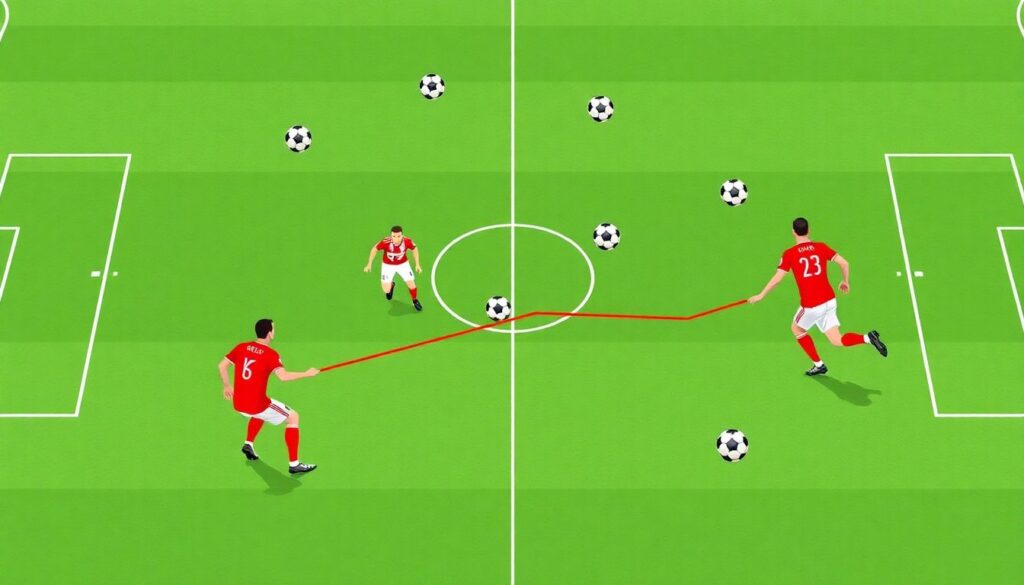
Many Turkey national team playing style and formation breakdown discussions focus on wide lanes, because this is where the side most consistently threatens. Historically, full-backs overlapped and crossed early, while wide forwards attacked the box. More recently, wingers often invert, opening corridors for underlapping or overlapping full-backs.
These wide relationships are critical to how Turkey pin opponents back and create central shots. They also determine how exposed the team becomes on defensive transitions, especially when both full-backs push high simultaneously. Coaches must therefore balance the freedom of attacking full-backs with the security of a holding midfielder or weak-side defender.
Offensive strengths of current wide patterns
- Inverted wingers receiving in half-spaces allow Turkey to combine centrally and shoot from zone 14.
- Overlapping full-backs provide width, stretching back lines horizontally and opening cut-back lanes.
- Weak-side winger often arrives at the back post for crosses, a consistent source of chances.
- Rotations (winger wide, full-back underlapping inside) disturb man-marking schemes and create free players.
Defensive risks and structural limitations
- When both full-backs advance together, counter-attacks into the channels behind them become dangerous.
- Inverted wingers sometimes leave full-backs isolated 1v2 against overlapping opponents.
- If the pivot cannot cover wide spaces quickly, the back line is forced to drop, shrinking counter-pressing potential.
- Cross-heavy attacks risk predictability against tall, compact defences.
- Define which side is the primary overload wing in any given Turkey match and track rotations there.
- Evaluate how often the weak-side full-back stays deeper to protect against counters.
- Plan defensive schemes that either deny inverted receptions in half-spaces or block overlaps wide.
- In your own team, copy one wide rotation pattern rather than all, to keep roles clear.
Set-piece design and situational attacking routines
Set-pieces are a volatile part of the tactical evolution of Turkish national football team play. Different coaches brought different dead-ball ideas, from simple outswinging corners to more elaborate screens and late runs. Because of turnover and varying specialist coaches, consistency has sometimes been an issue.
Common misunderstandings can obscure what Turkey are actually trying to achieve from these situations and from specific attacking patterns in different scorelines or match states.
- Myth: Corners are always aimed at the tallest centre-back. In practice, near-post flick-ons and blockers that free a late runner have been just as common, especially against zonal-defending opponents.
- Myth: Turkey rarely use short corners. Short routines appear particularly against teams that leave one player out for counters, creating temporary 3v2 overloads near the corner flag.
- Myth: Long throws are a constant weapon. They have been used selectively, usually when trailing late, not as a primary chance-creation method.
- Mistake: Ignoring free-kick variations. Analysts sometimes overlook rehearsed cut-backs from wide free-kicks, where a disguised cross is instead squared to the edge of the box.
- Mistake: Overlooking match-state routines. Turkey adjust attacking risk at 0‑0 versus when chasing a game, for example by adding an extra runner into the box from deep or letting a centre-back stay high after a previous set-piece.
- Catalogue Turkey’s corner types (inswing, outswing, short, near-post flick, screens) across several recent games.
- Pay attention to match state: note how set-piece risk changes when leading or trailing.
- In training, replicate one or two of Turkey’s short-corner or disguised free-kick patterns.
- Adjust your defensive scheme to Turkey’s most frequent delivery zones rather than to individual names.
Coaching influence: tactical philosophies, staff continuity and player roles
Changes in head coach have strongly shaped the Turkey national team tactics analysis over the last decade. Each staff brought their own risk profile, pressing height and trust in young players. The repeated challenge was to maintain a recognisable identity while adapting to new ideas and tournament demands.
Turkey national football team under Vincenzo Montella tactics offers a practical case. He generally seeks compactness without abandoning proactive play. That means shorter team distances, clearer pressing cues and a more structured possession game, with defined roles for a ball-playing pivot, aggressive half-space runners and at least one conservative full-back.
A simplified pseudo-“algorithm” helps to see how coaching choices translate into on-pitch roles:
IF opponent sits deep THEN
    push both wingers inside
    advance one full-back high
    keep pivot screening in rest-defence
ELSE
    keep one winger wide for counters
    step centre-back into midfield in build-up
    press only on back-pass or wide trap
END IF
This illustrates how staff define conditional behaviours rather than fixed positions. Better staff continuity would allow Turkey to refine such rules over several cycles, instead of resetting every few years and re-teaching basic patterns.
- Map each coach’s typical formation and pressing height to understand long-term trends.
- When analysing a match, identify 2-3 simple “if-then” rules that seem to govern Turkey’s behaviour.
- Track which player roles (pivot, number 10, conservative full-back) stay consistent across coaching changes.
- Use these patterns as templates when assigning roles in your own team’s tactical plan.
Self-check guide for applying these insights
- Can you explain Turkey’s current base shape and how it morphs between possession and pressing phases?
- Have you identified specific pressing triggers and counter-press behaviours in recent Turkey matches?
- Do you know which build-up structure (short, mixed, long) Turkey prefer against different opponents?
- Can you sketch their wide rotations and main set-piece routines from memory before preparing a match plan?
- Have you linked these patterns to particular coaching periods across the last decade?
Clarifications on recurring tactical debates
Is Turkey fundamentally a counter-attacking or possession-oriented team?
Across the last decade, Turkey have shown phases of both. Recent trends point towards more structured possession, but the team still values fast counters when space opens. The balance depends heavily on the opponent and the coaching staff’s risk tolerance in that cycle.
How crucial is the number 10 role in Turkey’s current system?
The number 10 is a key tactical lever: supporting the striker in a 4‑4‑2 press, dropping as a third midfielder in build-up, or staying between lines to link play. Adjusting this role often changes Turkey’s entire attacking and defensive behaviour.
Why does Turkey sometimes struggle to press high consistently?
Pressing requires compact spacing, synchronised triggers and fitness. Turkey occasionally lose compactness between lines, especially when chasing a game, which makes high pressing risky. Coaches then instruct the team to drop into a mid-block instead of continuing to hunt high.
Are back-three systems a long-term solution for Turkey?
Back-three shapes have been used as situational tools rather than permanent identities. They can stabilise build-up and give wing-backs clear roles, but their success depends on having the right profiles at centre-back and wing-back, which is not guaranteed every cycle.
How different are Montella’s ideas from previous coaches?
Montella emphasises shorter team distances, clearer pressing structures and a more patient build-up compared with some more transition-oriented predecessors. However, he still preserves Turkey’s historical strengths: aggressive wide play and quick attacks when turnovers occur.
Can club tactical issues in the Süper Lig explain national team inconsistencies?
Club contexts matter, but national-team windows are short. Inconsistent club defensive coaching or pressing intensity can make it harder to implement complex national-team schemes, yet well-defined, simple rules at national level can still produce cohesive performances.
What is the most practical way to study Turkey’s tactical evolution for coaching?
Pick a handful of matches from early and late in the decade, and from key tournaments, then focus on formation changes, pressing height and wide patterns. Comparing these games side by side gives a clearer, more actionable picture than isolated highlights.