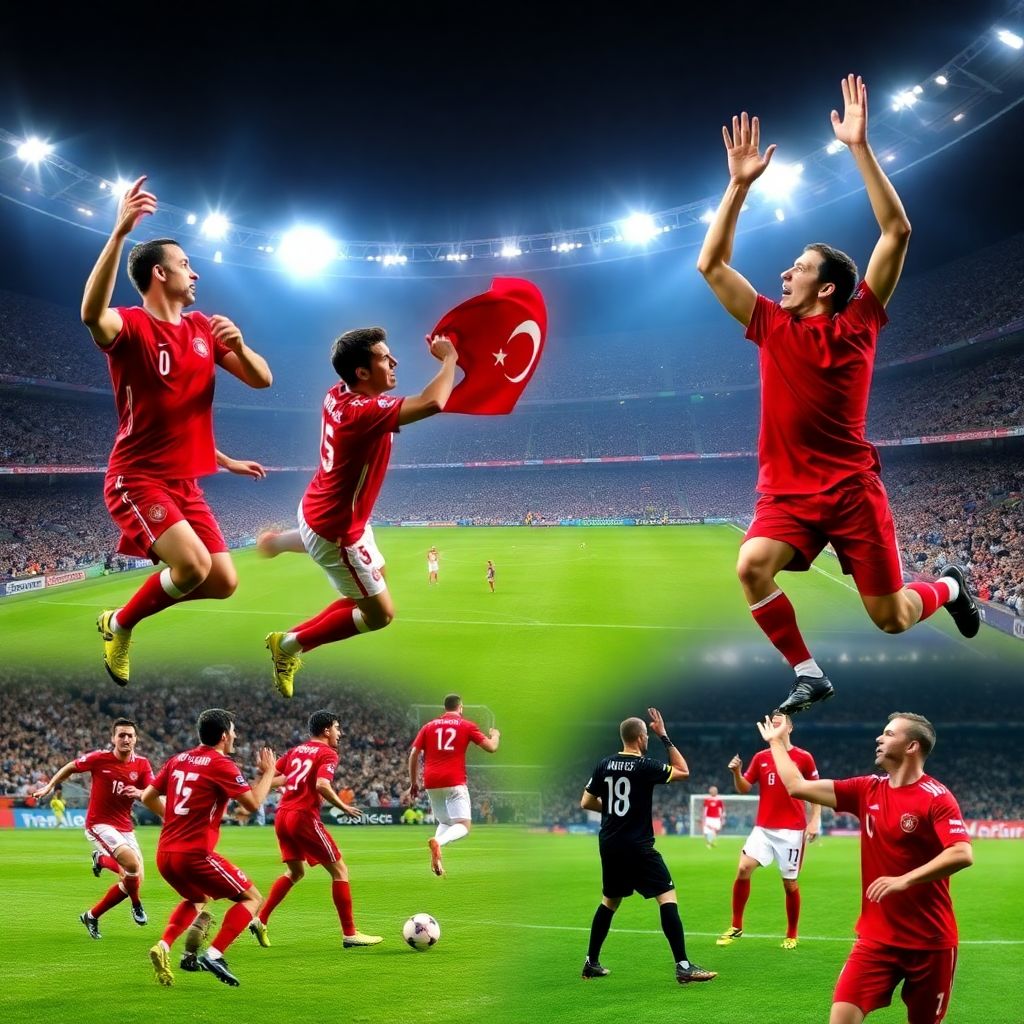
The top 10 unforgettable moments of the Turkish National Team in international tournaments are not just nostalgia; they are practical case studies in mentality, game management, and tactical risk. Coaches, analysts, and fans can mine these games to better understand late comebacks, underdog strategies, penalty psychology, and how stars perform under extreme pressure.
Myths, Misconceptions and a Compact Overview
- Myth: Turkey only overperforms in short bursts. In reality, Turkey national football team history in World Cup and Euro tournaments shows repeating patterns of tactical adaptation and mental resilience.
- Myth: The 2002 World Cup run was luck. The data and match footage show a clear game model: compact defending, quick wide attacks, and efficient set pieces.
- Myth: Euro 2008 comebacks were chaos. Most late goals followed structured risk-taking and pre-planned substitutions, not random attacking.
- Myth: Penalty shootout failures prove mental weakness. They actually reveal preparation gaps, role uncertainty, and execution issues that can be trained systematically.
- Myth: Giant-killing nights were pure emotion. Upsets over top-ranked opponents usually combined targeted pressing, tailored player roles, and opponent-specific analysis.
- Myth: Iconic individual performances are unrepeatable magic. Most came from clear tactical frameworks that amplified key strengths of star players.
- For fans, these Turkey national team best moments are a roadmap: what to rewatch, what to learn, and how to analyze Turkey national team highlights international tournaments more critically.
2002 World Cup: Turkey’s breakthrough and the march to third place
The first misconception about 2002 is that it was a one-off miracle disconnected from broader Turkey national football team history in World Cup and Euro campaigns. In fact, the third-place finish built on tactical consolidation in the late 1990s and a growing core of players used to European club competitions.
Definition-wise, the 2002 World Cup run is best understood as Turkey’s benchmark performance on the global stage: a sequence of high-intensity, tactically disciplined matches where the team repeatedly outperformed pre-tournament expectations. This period defines what “peak Turkey” means for later comparisons and for scouting current squads.
Key matches include the narrow group-stage loss and later win against Brazil, the knockout victory over Japan, the controlled performance against Senegal, and the final classification match versus South Korea. Across these games the recurring pattern was compact defense, fast transitions through the flanks, and ruthless use of set pieces.
For practical learning, coaches and analysts can use these games as a template when preparing underdog teams in modern tournaments. When you watch Turkey national team matches live or on replay from 2002, focus on: distances between lines, staggered pressing triggers, and how the ball was moved quickly from ball-winning zones to final-third runners.
UEFA Euro 2008: Dramatic comebacks and the run to the semifinals
Many fans describe Euro 2008 as “pure drama” as if there was no structure behind the late goals. In reality, most comebacks followed repeatable tactical patterns and clear psychological scripts that can be applied by modern teams in adverse situations.
- Context: Group-stage survival scenarios – Turkey repeatedly entered must-score situations late in matches. The staff accepted defensive risk and prioritized multi-forward setups, crowded penalty areas, and second-ball hunting around the box.
- Key players in late turns – Impact substitutes and versatile midfielders drove the comebacks. Practically, this underlines the value of having at least two players on the bench who can add directness and chaos without losing tactical discipline.
- Structured late pressure – Instead of random crosses, Turkey used recurring patterns: wide overloads, cut-backs from the byline, and late-arriving midfield shots. Coaches can build these as specific “last 10 minutes” attacking drills in training sessions.
- Psychological preparation – The squad entered games with the belief that scoring very late was realistic, not miraculous. In training terms, that means simulating scoreboard pressure, time pressure, and fatigue, then measuring decision quality under those constraints.
- Risk management model – As the clock ran down, the staff deliberately traded central defensive security for extra bodies in and around the box. Analysts today can tag Euro 2008 clips to teach defenders and midfielders how to handle “all-in” scenarios-both when chasing and when protecting a lead.
- Communication templates – Bench, staff, and leaders on the pitch aligned quickly on formation shifts. Teams can copy this by pre-defining two or three emergency game plans with simple code words or hand signals to avoid confusion.
- Takeaway – If you rewatch Euro 2008 as part of Turkey national team highlights international tournaments, focus on the mechanics of the turnarounds, not only on the goals themselves, and translate them into clear training exercises.
Penalty shootouts and heartbreaks that shaped the nation’s psyche
Penalty exits are often labeled as bad luck, but for Turkey they reveal patterns that can be corrected. These shootouts influence how fans see the team and how players feel when tournaments go to the wire.
- Qualification play-offs under pressure – When decisive matches went to penalties, Turkey sometimes arrived emotionally drained, with unclear hierarchy of takers. Practical lesson: define and rehearse a ranked list of five primary and two backup takers months before tournaments.
- Goalkeeper preparation – Shooters are studied in detail at club level, but national teams sometimes underinvest in penalty scouting. Turkey’s mixed record shows how crucial specific pre-shootout briefings are: preferred corners, run-up patterns, and psychological cues.
- Captaincy and body language – In heartbreaking exits, visual anxiety spread quickly. Teams can use those clips to coach captains in calming rituals: controlled breathing, clear instructions, and shielding younger players from external noise before their kicks.
- Training design – Many squads take “fun” penalties after training. Tournament history suggests Turkey, like many nations, benefits more from structured sessions: penalties at the end of fatiguing drills, with teammates watching and consequences for misses.
- Fan expectations – Because of remembered heartbreaks, stadiums and online audiences often tense up when games head toward penalties. Educated supporters, aware of these patterns, can consciously maintain positive noise levels instead of collective panic.
- Long-term mindset – The real impact is philosophical: seeing penalties not as a lottery but as a separate, trainable phase of play that belongs alongside set pieces in any performance plan.
Giant-killing nights: Upsets over top-ranked opponents in major tournaments
Another misconception is that Turkey’s best wins over elite teams came from pure passion. In reality, most “giant-killing” nights combined detailed opponent study with game plans that squeezed strengths out of available players. These matches are especially useful for coaches guiding underdog squads.
Strategic advantages of giant-killing performances
- Reputation building – Beating top-ranked teams on the World Cup or Euro stage repositions Turkey globally, helping players move to stronger clubs and raising internal expectations.
- Tactical clarity – Against stronger opponents, Turkey often shows its clearest structure: mid-to-low blocks, targeted pressing traps, and rapid counters into vacated spaces.
- Player belief – These matches become mental anchors. When new generations watch Turkey national team best moments, they internalize the idea that underdogs can impose a plan on favorites.
- Scouting templates – Analysts can reuse specific match plans as templates when facing teams with similar styles or key threats.
Constraints and hidden costs of upset-focused strategies
- Transferability limits – A game model optimized for upsets (deep defending, counter-attacks) does not always translate to qualifying matches where Turkey must dominate possession.
- Physical demands – High-intensity transitions and long defensive phases are hard to replicate match after match in short tournaments.
- Selection bias – If staff constantly prepares “giant-killer” plans, they may overlook developing patterns for controlling games against equal or weaker teams.
- Public narrative pressure – Upset wins raise expectations that every big game can be repeated drama, making rational, low-event draws look like failures in the eyes of some supporters.
Iconic individual performances that rewrote Turkey’s international reputation
People often talk about star performances as if they were solo acts disconnected from tactical context. Yet Turkey’s most iconic nights came when coaching plans and player skill aligned perfectly, especially in World Cup and Euro tournaments.
- Error: Ignoring the surrounding structure – Fans sometimes remember only the dribble or the long shot and forget the spacing, decoy runs, or pressing scheme that made that action possible.
- Error: Over-generalizing from one game – A player who peaks in a single tournament match is not automatically the solution for every future scenario; selection must still respect role fit.
- Myth: “Give the ball to the star and hope” – Tournament footage shows that Turkey’s big performers thrived when they had clearly defined zones and support runners, not when the plan depended on constant improvisation.
- Myth: Club form guarantees national impact – Several cases show players in excellent club shape who struggled when their national team role duplicated someone else’s tasks or did not suit their habits.
- Error: Underestimating defensive contributions – Some legendary Turkish displays in international tournaments came from defenders or goalkeepers; analysts should track interventions, positioning, and leadership, not just goals and assists.
- Practical lens – When you revisit Turkey national team highlights international tournaments, catalog each star performance as a combination of role, support, and opponent weaknesses instead of a stand-alone masterpiece.
Turning points and tactical innovations shown on the biggest stages
It is easy to frame Turkey’s biggest games in emotional terms only, but the most durable value comes from tactical shifts that later became standards in domestic and youth setups. These turning points connect storytelling with practical coaching blueprints.
Consider the following compact mini-case that links several of the top 10 unforgettable moments into one usable pattern:
Situation – Turkey is trailing late in a knockout game at a major tournament. Possession is sterile, time is short, and the opponent has retreated into a compact block to protect the lead.
Key tactical response – Historically, successful Turkish comebacks have combined three moves:
- Shift to a back three to push wing-backs higher, ensuring continuous width and crossing threats.
- Introduce at least one extra striker or attacking midfielder to attack the box, prioritizing second balls and rebounds.
- Direct more play toward strong crossers and set-piece takers, increasing the volume of deliveries rather than waiting for perfect openings.
Pseudo-pattern for coaches and analysts
// Late-game chase model inspired by Turkey's big-tournament moments
if (minute >= 75 && scoreline == "trailing") {
    changeShape(3,4,3);          // add third centre-back, free wing-backs
    addAttacker();               // +1 in the box
    focusOnWideEntries();        // quick switches, early crosses
    prioritizeSecondBalls();     // midfielders push up to edge of box
    assignSetPieceSpecialist();  // corners, free-kicks, long throws
}
Lasting impact – This pattern, visible in several Turkey national team best moments, has influenced how Turkish coaches structure late-game scenarios. When fans rewatch or watch Turkey national team matches live, noticing these shifts helps them understand that comebacks are built on concrete tactical levers, not only on passion.
From the supporter side, knowing these patterns turns you from passive viewer to active analyst. While you compare line-ups, tactical shapes, and substitutions, commercial elements such as searching “Turkey national team jerseys buy online” or choosing which service to use to watch Turkey national team matches live become part of a deeper, more informed engagement with the team’s identity.
Clarifying disputed stories and lingering questions about those moments
Did Turkey’s 2002 World Cup success depend mainly on an easy route?
No. While the bracket matters in any tournament, Turkey faced strong opposition in both the group stage and knockouts. The run reflected consistent tactical discipline rather than a uniquely soft path.
Were the Euro 2008 comebacks mostly about luck and referee decisions?
Close calls always exist, but video analysis shows repeatable patterns in substitutions, structure, and late pressure. Even if individual decisions helped, the overall trend was built on deliberate risk-taking and clear attacking plans.
Is it true that Turkey is “cursed” in penalty shootouts?
No. The record is mixed rather than uniformly negative. Outcomes are better explained by preparation quality, clarity over designated takers, and goalkeeper scouting than by any notion of a curse.
Do giant-killing wins prove that Turkey should always play purely defensive football?
Those wins show that a compact, counter-attacking style can work against stronger sides, but qualification and group stages often require more proactive play. The optimal approach depends on opponent, squad profile, and tournament context.
Are iconic individual performances impossible to reproduce with current players?
Exact replicas are unrealistic because football and squads evolve, but the underlying principles-clear roles, complementary partnerships, and exploiting specific opponent weaknesses-are fully repeatable with modern generations.
How can regular fans use these historical games to understand tactics better?
Choose a match, pause before goals, and predict what will happen based on shape, spacing, and player movements. Then compare your expectations with the actual outcome and adjust your understanding over time.
Is it still useful to study old tournaments when modern tactics keep changing?
Yes. Core ideas like space control, pressing triggers, and set-piece design remain relevant. Historic Turkey matches offer practical case studies that can be adapted to today’s speeds and formations.