
Anatolian clubs used to be treated as underdogs that occasionally upset the Istanbul giants; now they’re increasingly seen as factories that mass‑produce talent for Turkey and Europe. To understand how this happened — and how scouts, investors, young players and even parents can navigate it — it helps to break the story into clear, practical steps.
—
Step 1. See how the power balance in Turkish football shifted
For decades, the narrative in Turkey was simple: if you wanted to “make it”, you aimed for Galatasaray, Fenerbahçe or Beşiktaş. Everyone else, especially the provincial sides, lived off loans, veterans and leftover talent. The turning point came when TV money grew, the Turkish Super Lig expanded its exposure, and financial fair play constraints forced smaller sides to professionalise their youth development instead of relying on short‑term foreign signings and last‑minute deals. Slowly, the competitive gap narrowed, and Anatolian clubs realised their comparative advantage would be in creating, not buying, players.
As debts ballooned at some big clubs, mid‑tier teams from Konya, Sivas, Bursa, Antalya and İzmir had to build sustainable models to survive. That pressure produced structure: proper academies, data‑driven scouting and coaching methodologies that treat each youth player as a long‑term asset. The phrase “Turkish football talent scouting Anatolian clubs” stopped being theoretical and became a weekly reality; European clubs, agents and even domestic giants systematically began to monitor these regional teams, because that’s where the next wave of undervalued prospects was emerging.
—
Step 2. Understand what makes football academies in Anatolia Turkey different
The best way to think about football academies in Anatolia Turkey is as regional R&D labs for talent. They operate under resource constraints, so they optimise processes ruthlessly. Travel distances, smaller local populations and fewer sponsors might sound like drawbacks, yet they actually force these clubs to specialise. Coaches know their catchment areas intimately, recognise local playing styles — whether that’s more physical in central Anatolia or more technical near the Aegean coast — and build training plans accordingly, instead of trying to copy‑paste a generic “big club” model.
Another structural advantage is lower noise around young players. In many Istanbul environments, a 16‑year‑old with one good U19 match suddenly has agents calling and media attention. At a provincial club, that same player can quietly get 1–2 seasons of structured development in U17 and U19 squads and then graduate into the first team with less pressure. This calmer ecosystem means more minutes, fewer distractions and better adaptation to tactical systems. That’s why some of the best Anatolian clubs for young football players in Turkey actually look boring from the outside: fewer headlines, more repetition, video analysis and individual skill work behind the scenes.
—
Step 2.1. Financial logic: why developing players is a survival strategy
From a technical perspective, Anatolian clubs rely on player trading as a core revenue stream. Matchday income and sponsorship in smaller cities rarely cover operating costs, so boards build budgets assuming at least one major sale every 1–2 seasons. This pushes sports directors to create robust pipelines from U14 to first team rather than gambling on short‑term fixes. A successful academy graduate is essentially a long‑dated financial instrument: low up‑front cost, years of on‑field value, then a transfer fee that can fund the next generation of prospects.
An important by‑product is that these clubs tend to prioritise clear tactical identities. If you want to sell a player abroad or to bigger domestic teams, it helps if scouts can quickly understand his role. That’s why you often see Anatolian sides commit to defined models — pressing‑heavy 4‑2‑3‑1, transition‑oriented 4‑4‑2, or possession‑based 4‑3‑3 — and train academy players from early age in the same patterns. When a 19‑year‑old breaks through, he’s not improvising; he’s slotting into a system that has pre‑programmed habits and positioning rules attractive to buyer clubs.
—
Step 2.2. Scouting networks and regional data
Modern scouting in Anatolia is less about a single coach “with a good eye” and more about network and data integration. Many clubs now maintain databases of players seen in regional tournaments, school leagues and amateur sides, tagging them with physical metrics, dominant foot, positional versatility and growth trends. The more advanced setups run standardised performance tests — sprint times, repeated‑sprint ability, small‑sided game metrics — and align them with video observations, so technical staff get both quantitative and qualitative views of each prospect.
Regional partnerships also matter. A common pattern is one professional club partnering with several amateur academies and school programmes, offering coaching education and occasional equipment in exchange for first refusal rights on players. This structure distributes risk, lets the pro club monitor a wider base of youngsters and reduces the chance of missing late‑developing talents. In practice, this means a talented 14‑year‑old in a small Anatolian town is more likely than ten years ago to be tagged early and funneled into a professional environment before his development stalls.
—
Step 3. How Turkish football talent scouting Anatolian clubs actually works
From the outside, scouting can look mysterious, but for Anatolian clubs it’s become a cyclical, almost industrial process. First, internal scouts continuously watch local youth matches, school tournaments and lower‑division games. They filter prospects based on physical potential and game intelligence rather than polished technique alone, knowing that many regional kids have had limited access to structured coaching. Promising players are then invited for trial periods or training camps, where staff can measure adaptability, learning speed and psychological resilience.
Second, once a player enters the academy, external scouting kicks in. Domestic giants and foreign clubs know that Turkish Super Lig transfers from Anatolian clubs can be highly profitable, so they maintain their own observers and use analytics providers that track running metrics, duels won, progressive passes and other indicators even in mid‑table sides. When a 19–20‑year‑old racks up consistent minutes in the Super Lig or 1. Lig, his data profile often triggers deeper video scouting by outside clubs. This is why Anatolian teams try to give real league minutes to academy graduates: visibility in high‑frequency datasets dramatically accelerates transfer interest.
—
Step 3.1. Case example: Altınordu’s long‑term experiment
Altınordu, based in İzmir, is probably the most cited example when people talk about talent factories outside Istanbul. The club made a strategic decision: no foreign players, heavy investment in youth, and a clear selling model. From this system emerged players like Çağlar Söyüncü and Cengiz Ünder, who moved from Altınordu to bigger Turkish sides and quickly onto the Bundesliga and Serie A, before further moves to the Premier League and Ligue 1. The transfer chain illustrated a full development cycle: discovery at regional level, systematic academy work, exposure in 1. Lig, then targeted international placements.
Internally, Altınordu built a methodology around individual development plans, where each youth player had objective targets for technical skills, positional understanding and physical benchmarks. Video sessions began at U13, something still not universal even today. For scouts and investors observing from outside, Altınordu provided a proof of concept: if you design an academy around clear principles and accept you are a selling club, you can create a repeatable talent production line rather than depending on one “golden generation”.
—
Step 3.2. Case example: Bursaspor’s academy legacy
Bursaspor, despite recent financial and sporting turbulence, offers another strong case study. The club’s academy produced players like Ozan Tufan and Enes Ünal, who both transitioned from youth teams to starting roles in the first team before commanding notable transfer fees. Bursaspor invested in regional scouting across Marmara and inner Anatolia, creating a network that fed into age‑group squads with consistent coaching philosophies. Even during seasons when the senior team struggled, academy outputs remained one of the few steady assets.
The key lesson from Bursa is that academy success can outlive short‑term first‑team results if the underlying structure is robust. Even relegation didn’t erase Bursaspor’s reputation among scouts looking for technically sound midfielders and forwards. For outsiders assessing where to invest in Turkish football talent from Anatolian clubs, this kind of resilience is significant: a club might be underperforming on the table yet still be an efficient producer of players because its youth development architecture remains intact.
—
Step 3.3. Other Anatolian pathways: Konya, Sivas, Trabzon
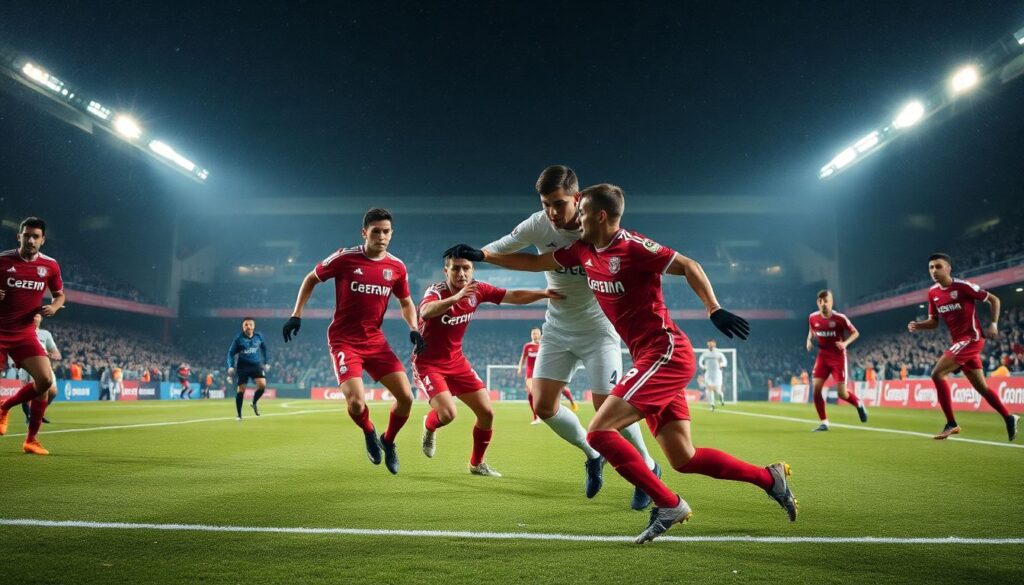
Konyaspor and Sivasspor have quietly built reputations for giving meaningful Super Lig minutes to younger local players, often in physically demanding tactical systems. Their environments test prospects under pressure — hostile away atmospheres, tough winter conditions, high‑intensity duels — which creates robust profiles appealing to top‑flight recruiters. Meanwhile, Trabzonspor, although historically a big club in its own right, is geographically and culturally Anatolian and has long drawn on Black Sea region talent. Graduates like Abdülkadir Ömür and Yusuf Yazıcı show how a strong regional identity, combined with a clear playing model, can generate exports to Ligue 1 and beyond.
What connects these varied examples is process, not luck. Each club invests in coaching education, tries to stabilise academy staff turnover and uses objective criteria for promotion from youth to senior squads. For scouts and analysts, this repeatability is a green flag: if a club has a history of producing multiple professionals over a decade, the probability that the next promising 17‑year‑old there is a serious prospect rises substantially.
—
Step 4. Practical guide: how to engage with Anatolian talent factories
Whether you’re a young player, parent, agent or small‑scale investor, there are concrete steps you can follow to interact intelligently with this ecosystem. Treat Anatolian clubs not just as “stepping stones” but as specialised development platforms whose constraints and strengths you must understand. The more you grasp their operational logic — budget cycles, coaching styles, regional cultures — the better your decisions around trials, contracts and partnerships will be.
1. Map the club’s track record.
2. Analyse the pathway from academy to first team.
3. Evaluate coaching quality and stability.
4. Understand the club’s financial model.
5. Assess exposure: minutes, league level, media.
Each step reduces uncertainty. For example, knowing that a club tends to promote two U19 players to the first team each season tells you more about your chances than any marketing slogan. Conversely, a side that constantly changes coaches and tactical systems may not be ideal for a developmental phase, even if it looks glamorous from the outside.
—
Step 4.1. For young players and parents: how to choose wisely
From a player‑centric view, the core metric is not the name on the badge; it’s the probability of consistent training quality and actual playing time. When evaluating academies, look at how many recent graduates are currently playing professional football, not only at elite level but across 1. Lig and 2. Lig. A broad output indicates systematic development rather than sporadic success. Also observe training structure: are sessions dominated by fitness laps and random drills, or is there clear progression in technical, tactical and cognitive components throughout the week?
Parents should remain wary of promises based on emotional appeal, such as “we’ll send your child to Europe in two years.” Instead, request concrete information: the number of UEFA‑licensed coaches, how often individual feedback sessions happen, what kind of educational support is provided. Good Anatolian academies usually demonstrate organisation: medical screening routines, clear codes of conduct, and transparent policies regarding game time and discipline. These operational details matter more than glossy social media posts about youth tournaments.
—
Step 4.2. For agents and smaller investors
For intermediaries and investors, Anatolian clubs can be ideal partners if expectations are aligned. Smaller budgets mean they are often open to performance‑based contract structures, sell‑on clauses and co‑ownership of economic rights (within regulatory limits). Before committing resources, though, quantify risk: check historical financial statements when available, unpaid salary disputes, and disciplinary records with the Turkish Football Federation. A club that struggles to meet payroll is more likely to face point deductions or transfer bans, which directly affect your asset — the player.
When building a portfolio around Anatolian prospects, diversification is crucial. Rather than concentrating on a single club, spread exposure across regions and playing styles. One centre‑back from a defensive, deep‑block team like some central Anatolian sides will have a different adaptation curve compared to a full‑back from a possession‑oriented coastal club. Understanding these context effects helps you project how a player will translate to new environments, which is essential in valuing potential Turkish Super Lig transfers from Anatolian clubs and any onward European moves.
—
Step 5. Common mistakes and how to avoid them

Many outsiders misread the Anatolian environment because they import assumptions from bigger European leagues. They either underestimate the competitive intensity or overestimate how quickly a prospect can “jump” from a provincial club to a top‑five league. Recognising these recurrent errors can save time, money and careers.
1. Chasing the club brand instead of the development pathway.
Players often push for early moves to Istanbul giants or foreign clubs, skipping critical growth stages. Without a refined tactical base, they become rotational options, lose momentum and stall. Staying one or two extra seasons at a well‑structured Anatolian side, logging 3,000+ league minutes, frequently yields a stronger long‑term trajectory than warming the bench at a bigger name.
2. Ignoring fit between playing style and player profile.
A high‑pressing, transition‑oriented club in Anatolia may not be the right fit for a technically gifted yet physically late‑maturing midfielder. Forcing that combination leads to underperformance and mis‑labelling of the player as “not ready” when the actual issue is systemic mismatch. Always analyse tactical demands — pressing triggers, build‑up patterns, defensive schemes — before committing to a transfer.
3. Underestimating off‑field factors in regional cities.
Living conditions, education options and distance from family can strongly influence a teenager’s adaptation at an Anatolian club. If a 15‑year‑old moves from a metropolitan centre to a remote town and struggles socially, performance will drop regardless of coaching quality. Structured support — dormitory standards, psychological services, schooling — should be evaluated as carefully as training pitches and gym equipment.
4. Over‑reliance on highlight videos and tournament performances.
Scouting based on one youth tournament or a flashy compilation ignores the everyday reality of league play. Anatolian environments can be physically demanding, with heavy pitches and intense atmospheres. A player who looks spectacular in ideal conditions might struggle in routine away fixtures. Prioritise longitudinal data and full‑match video from league games over short‑term showcase events.
5. Assuming all Anatolian clubs are equally professional.
The label “Anatolian” covers a wide range: from meticulously run academies with GPS tracking and analytics departments to semi‑professional setups with inconsistent training schedules. Treat each club as a distinct case. Conduct due diligence instead of assuming the entire region follows the same standards or philosophy.
—
Step 6. Building a long‑term perspective on Anatolian talent factories
Looking ahead, the logic underpinning the rise of these clubs suggests their role in Turkish football will keep expanding. Broadcasting revenues remain uneven, and economic volatility pushes more teams toward self‑sufficiency via youth development. At the same time, European recruitment strategies are increasingly data‑driven, and Anatolian players provide appealing risk‑reward ratios: competitive league experience, relatively modest wages and transfer fees, and cultural adaptability to both Eastern and Western football contexts.
For young athletes, that means the pathway to a professional career is now less centralised. Instead of seeing only three destinations in Istanbul, realistic options include multiple regional hubs where the probability of structured development and playing time is higher. For scouts, analysts and investors, the question is not whether Anatolian clubs will produce talent, but which of them are currently optimising the pipeline most effectively. Monitoring coaching stability, academy investments and recent transfer patterns offers robust signals.
In practical terms, if you want to identify the best Anatolian clubs for young football players in Turkey or decide where to commit resources, focus on evidence: repeatable production of professionals, coherent tactical identities and transparent development structures. Behind every headline move from a provincial side to a top league lies a decade of incremental work in training grounds across central and coastal Turkey. Understanding that hidden architecture is the real key to benefiting from the ongoing rise of Anatolian clubs as talent factories in Turkish football.