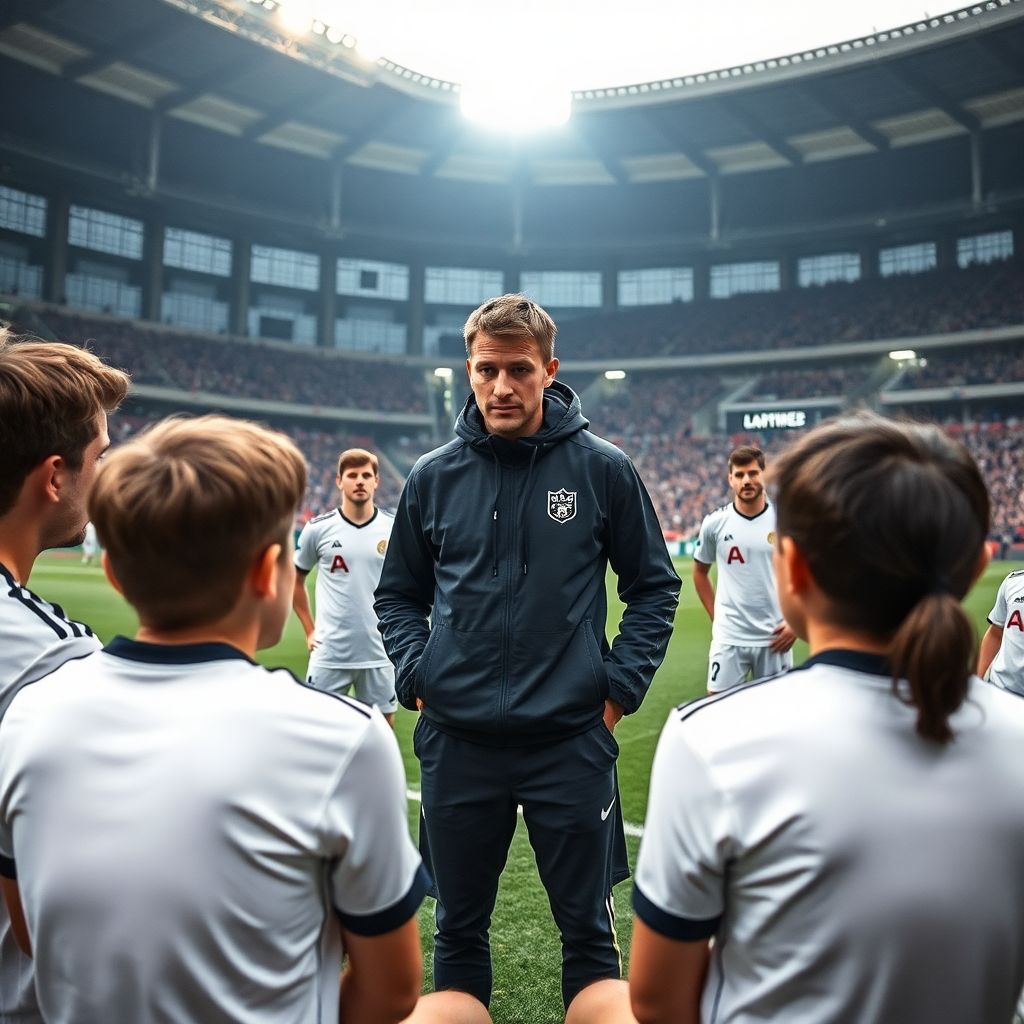
TFF 1. Lig is a safe, realistic launchpad for ambitious young coaches and players because it combines high-pressure competition with lower media heat and more tactical freedom. If you understand its structure, build the right support team, and target clubs strategically, you can turn the league into a deliberate development pathway.
Why TFF 1. Lig Matters for Emerging Talent
- Competitive but still accessible level, ideal for early senior minutes and first head-coach roles.
- Clubs rely heavily on the TFF 1. Lig young talents transfer market to stay sustainable and competitive.
- Tactical variety gives coaches space to experiment without immediate dismissal risk.
- Dense schedule accelerates learning, conditioning, and mental resilience.
- Active TFF 1. Lig scouting reports on young players attract Süper Lig and foreign clubs.
- Stable bridge for TFF 1. Lig player development and transfers, up and down the pyramid.
Structural Features That Encourage Youth Development
For players and coaches who are beyond pure academy level but not yet ready for top-five leagues or a big Süper Lig club, TFF 1. Lig is usually the optimal step. It suits:
- Players aged roughly late teens to mid-twenties needing consistent senior minutes.
- Assistant coaches ready for first head-coach job or larger tactical responsibility.
- Analysts and scouts wanting to specialise in TFF 1. Lig rising stars to watch.
Key structural advantages:
- Many clubs with limited budgets, forced to trust young players and coaches.
- Strong local rivalries that simulate big-game pressure without extreme media toxicity.
- Mix of experienced veterans and youngsters, ideal to learn game management.
When TFF 1. Lig is not the right move:
- If you already start regularly and perform well in Süper Lig; dropping too early can stall visibility.
- If you cannot handle travel, tight schedules, and physical games; adaptation risk is high.
- If your game style or personality requires a very controlled, possession-only environment.
Tactical Freedom and Experimentation for Coaches
To fully use the league as a tactical laboratory, coaches need specific tools and conditions.
- Data and video access
- A reliable video platform with full TFF 1. Lig archive and tagging.
- Basic event data (shots, passes, pressures) for trend analysis.
- Staff capable of fast adaptation
- At least one assistant focusing on opposition analysis and game plans.
- A fitness coach who understands the physical demands of 1. Lig tempo.
- Club alignment
- Board clarity that you will prioritise development of 2-3 young players every season.
- Agreement on realistic targets (e.g. mid-table plus one or two sales).
- Tactical experimentation framework
- Two or three base structures (e.g. 4-2-3-1 for control, 4-4-2 for transitions).
- Planned windows to test new ideas (home games vs similar-level teams, cup fixtures).
- Market awareness
- Continuous tracking of the best young coaches in TFF 1. Lig 2024 and beyond to benchmark yourself.
- Understanding how your playing style affects the TFF 1. Lig young talents transfer market around your club.
Pathways from 1. Lig to Süper Lig and Abroad

-
Define a realistic two-step career target
For players, the sequence is often 1. Lig → mid-table Süper Lig → foreign league. For coaches, it can be 1. Lig assistant → 1. Lig head coach → Süper Lig staff or head coach. Write down the next two moves you aim for, not just the next one.
-
Choose the right entry club profile
Target clubs whose incentives match development: mid-budget, strong fanbase, and history of selling players or promoting staff. Avoid clubs with constant coach changes or unclear ownership.
- Check average age of starting XI over the last season.
- Look at recent TFF 1. Lig player development and transfers from that club.
- Assess whether local media is extremely reactive or reasonably patient.
-
Build visibility through consistent strengths
Recruiters and sporting directors remember repeatable patterns, not isolated highlights. Define two or three clear strengths that show up every game and can be seen in TFF 1. Lig scouting reports on young players.
- Players: specific movement patterns, pressing intensity, set-piece threat, ball progression.
- Coaches: clear game model, in-game adjustments, consistent improvement in team metrics.
-
Align with agents and intermediaries who know the league
Work with representatives who regularly place talent in TFF 1. Lig and move them on to Süper Lig and European clubs. Demand a concrete 12-24 month plan, not just promises of interest.
- Ask for examples of previous 1. Lig to Süper Lig moves they handled.
- Clarify communication rules: monthly performance reviews, target club lists, and feedback loops.
-
Use data and video to tell your story
Create a compact portfolio showing your progression season by season.
- For players: clips sorted by skills (pressing, final third actions, 1v1 defending) plus basic metrics.
- For coaches: before/after team metrics, tactical clips, and development stories of key players.
- Update after each half-season and send to trusted scouts or staff.
-
Time your move to maximise role and minutes
The first step up is often the most fragile. Join a Süper Lig or foreign club where role, playing time, and tactical fit are clear, even if the badge is less glamorous.
- Prioritise teams whose style matches how you played or coached in TFF 1. Lig.
- Clarify in advance what success will look like after six and twelve months.
-
Maintain connection with the 1. Lig ecosystem
Even after promotion or transfer abroad, keep relationships in the league. This preserves a fallback option and a scouting network, and can support future signings or loans.
Fast-Track Mode: Short Pathway Checklist
- Set a two-step target (where you want to be in two moves, not just the next one).
- Pick a 1. Lig club that clearly plays and sells young talent instead of stockpiling veterans.
- Develop two or three instantly visible strengths every scout can recognise on video.
- Partner with an agent experienced in 1. Lig to Süper Lig moves, with a written plan.
- Update your video and data portfolio twice per season and actively share it.
Case Studies: Breakout Coaches and Players
Use this checklist to review whether your trajectory resembles typical 1. Lig breakout stories, both for staff and players.
- You (or your club) regularly appear in media pieces or internal lists about TFF 1. Lig rising stars to watch.
- There is a clear performance jump between your first and second 1. Lig season (minutes, goals, assists, xG, defensive actions, or team results).
- At least one top-three club in TFF 1. Lig has shown concrete interest (meetings, offers, or trial invitations).
- For coaches, your team overperforms its budget ranking, especially in home-game points and set pieces.
- For players, you have become a reference for a specific role (e.g. energetic box-to-box, press-resistant six, attacking full-back).
- Opponents visibly adjust their game plan to stop you or target your tactical ideas.
- Scouts from Süper Lig or abroad attend multiple matches specifically mentioning you or your players.
- Your training habits and professionalism are cited by staff as reasons for your progress.
- Across at least two windows, there have been realistic transfer or promotion talks, not just rumours.
Club Strategies: Balancing Results and Development
Common mistakes that slow or block TFF 1. Lig development projects:
- Short-term panic hiring – changing coaches at the first bad run, preventing any long-term youth integration.
- Unclear sporting model – mixing high pressing with deep block players, or constantly changing formations without a core identity.
- Overloading the squad with loans – too many temporary players, no continuity, and limited incentive to develop individuals.
- Ignoring physical and mental adaptation of young players – expecting teenagers to handle 1. Lig intensity without gradual build-up.
- Poor communication with agents and families – leading to unnecessary conflicts, pressure for rushed transfers, or demotivation.
- Underinvesting in analysis – no structured process for TFF 1. Lig scouting reports on young players, both inside and outside the club.
- Misaligned bonuses and contracts – rewarding short-term results only, not minutes for academy players or successful sales.
- Reactive transfer strategy – buying based on highlights or hype rather than a clear plan tied to the coach's game model.
Measuring Impact: Metrics and Scouting Signals
If a full TFF 1. Lig project is not possible, there are alternative paths and measurement strategies that can still move a career forward.
- Loan spells in lower but stable leagues
- Use a League 2 or regional top-division loan where you can play or coach every week.
- Focus on building the same clear strengths you would showcase in 1. Lig.
- Elite reserve or U21 competitions
- For technically strong but physically late-maturing players, top-level U21 leagues can provide a softer transition.
- Track metrics like duel win rate, progressive actions, and chance creation against peers.
- Specialist roles in first-team staff
- For coaches, starting as set-piece or opposition analyst in a Süper Lig club can be better than a chaotic head-coach role in 1. Lig.
- Measure impact by set-piece goals added, defensive solidity, and staff feedback.
- Targeted showcases and tournaments
- Short tournaments or friendly events can bridge the gap if you lack full-season footage.
- Agree in advance on the position, role, and minutes you need to display your profile.
Practical Questions About Using 1. Lig as a Launchpad
How many seasons should a young player ideally stay in TFF 1. Lig?
Usually you want at least one full season as a rotation player and one as a clear starter. Move when you show stable performance, not after a single hot run of games.
What age is too late to use 1. Lig as a springboard?
There is no fixed cutoff, but after your mid-twenties it becomes harder to sell as a "prospect". At that point, focus on being a reliable specialist rather than expecting big upward transfers.
How can a young coach stand out in TFF 1. Lig?
Choose a clear game model, improve at least one metric significantly (set pieces, defensive record, pressing), and communicate well with media and board. Consistent identity is more valuable than constant formation changes.
Is it better to be a starter in 1. Lig or a bench player in Süper Lig?
For most young players, regular 1. Lig minutes beat sitting on a Süper Lig bench. However, if a Süper Lig club offers a realistic rotation role and strong development culture, that can be worth it.
What should foreign scouts look at first in TFF 1. Lig?
Focus on repeatable actions that translate to stronger leagues: pressing intensity, decision-making under pressure, defensive duels, and off-ball movement. Contextualise stats with team style and role.
Can a goalkeeper use 1. Lig effectively as a development league?
Yes, because of the high shot volume and many set-piece situations. Track shot-stopping, box command, and build-up decisions, and ensure your clips show a variety of scenarios.
How do injuries affect the timing of a move from 1. Lig?
If you suffer a major injury, prioritise full return and a stable season back in 1. Lig before pushing for a transfer. Clubs prefer recent, clean data over old peak numbers.