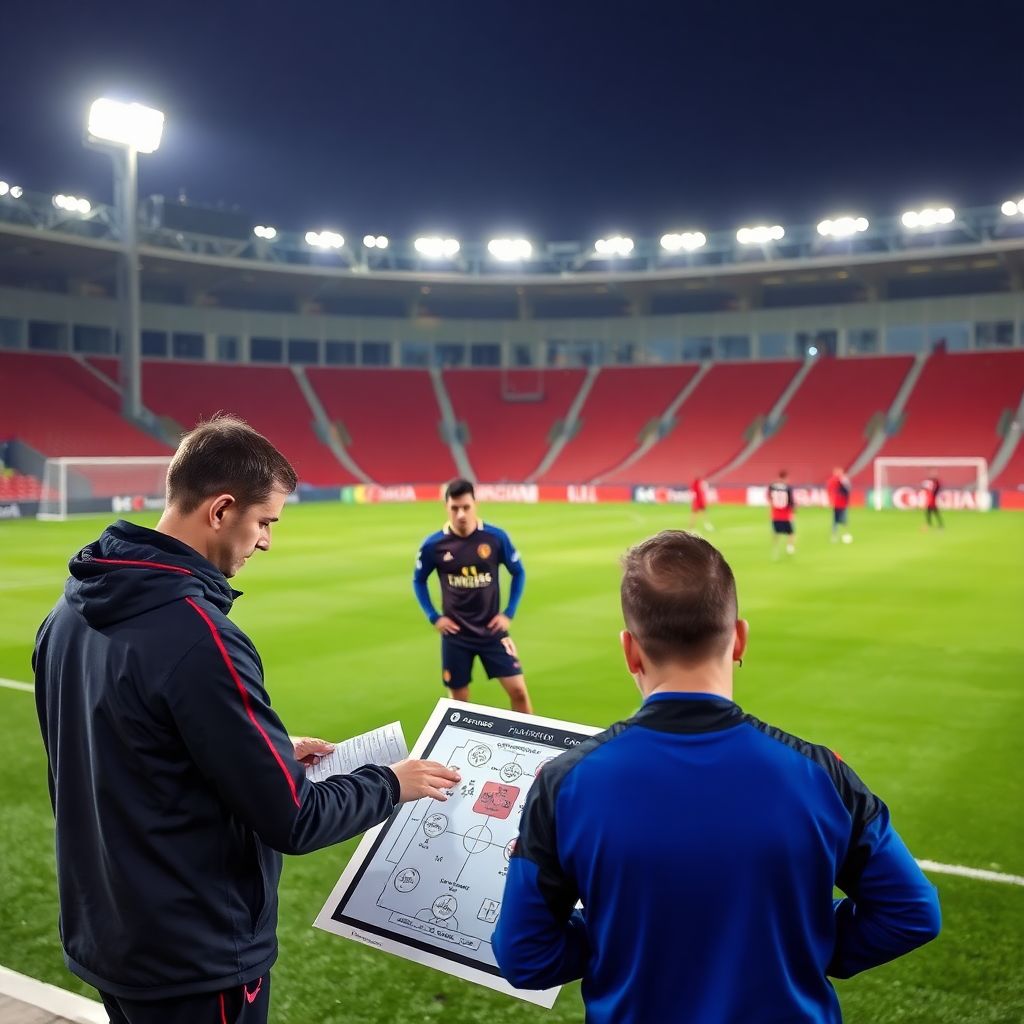
The tactical evolution of the Turkish national team over the last two decades is a gradual shift from reactive, emotion-driven play to more structured, data-informed football. This page gives a practical Turkey national football team tactics analysis: how defending, attacking, roles, and set-pieces actually changed, and what coaches and analysts in Turkey can copy in daily work.
Top Tactical Myths and Corrections
- Myth 1: Turkey has always played all-out attack. In reality, much of the period was based on mid-block defending and counter-attacks, with controlled possession appearing in specific cycles, not as a constant identity.
- Myth 2: Turkish defenders cannot build from the back. The tactical development of Turkey national football team structures shows that build-up improved when centre-backs received clear passing patterns and support angles, not simply with different players.
- Myth 3: Set-pieces were never a focus. Corners and free-kicks have been systematically used to compensate for physical disadvantages, especially through screens, decoy runs and second-ball organization.
- Myth 4: The team only reacts to opponents. In several cycles, Turkey set the tempo with planned pressing triggers and pre-defined counter-attacking routes, instead of waiting passively in a low block.
- Myth 5: There is no clear playing style. A consistent trend in Turkish national team football tactical evolution is the move from isolated talents to more repeatable patterns in wide overloads, underlaps and rotations between No.10 and forwards.
- Myth 6: Coaching ideas are disconnected from education. Modern Turkey football tactics coaching courses increasingly reflect national team concepts such as compact pressing distances, half-space occupation and smarter use of full-backs.
Two Decades in Overview: From 2006 to Present
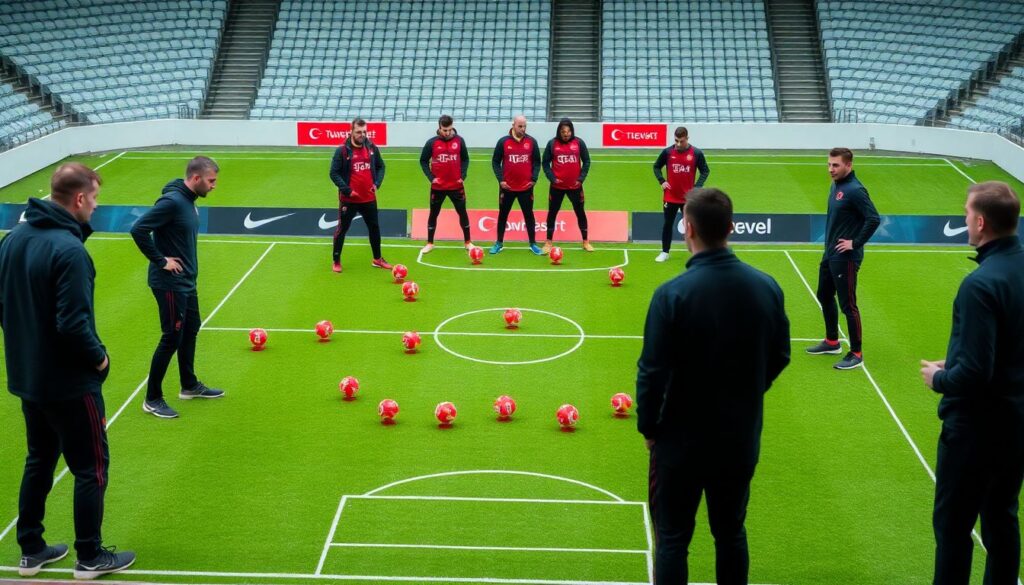
When we speak about the tactical development of Turkey national football team, we are describing how the side defended, attacked and used key roles from roughly the mid-2000s to today. The focus is not on single tournaments, but on the main patterns that repeat across different coaches.
The first phase leaned heavily on emotional momentum, late comebacks and direct play into powerful centre-forwards. Defending was often in a medium or low block, with aggressive pressing used in short bursts rather than as a full-game strategy. Attacking relied on individual creativity, especially from wide players and a classic No.10.
Later cycles shifted towards more ball circulation at the back, clearer pressing schemes and structured support around the ball. You can see this in any recent analysis of Turkey national team playing style: shorter distances between lines, more patient build-up and defined roles for full-backs, pivot midfielders and half-space attackers.
Today, the team’s tactical identity is a hybrid: flexible pressing heights, wide and central overloads, and more varied use of the striker role (fixed No.9, false 9, or rotating front three). For coaches and analysts in Turkey, the key is understanding these long-term patterns rather than copying a single match plan from a famous win.
Shift in Defensive Organization: Pressing, Block and Lines
- From emotional pressing to trigger-based pressing. Early on, pressure often started after losing the ball or conceding a foul, with players pressing on instinct. Over time, pressing became linked to clear cues: backward pass to a centre-back, poor first touch, or wide isolation. Coaches can train this by freezing play and asking, “What is our pressing cue here?”
- Mid-block as the default, not emergency. The team learned to hold a compact 4-4-2 or 4-1-4-1 mid-block, instead of dropping too deep. Lines stayed 10-15 meters apart, forcing opponents wide and guiding play into pre-decided pressing traps along the touchline.
- More control of the last line. Centre-backs stopped retreating too early and began defending higher, trusting the offside line and using the keeper as a sweeper. Full-backs were instructed to narrow earlier to protect the half-spaces, with wingers tracking back to cover the flanks.
- Clear roles for the holding midfielder. Instead of chasing the ball, the pivot now protects the space in front of the centre-backs and acts as the reference point for the block. In many games, this player directs teammates: stepping out to press or dropping to form a temporary back three.
- Pressing in waves rather than individually. The front line initiates, the midfield squeezes, and the back line steps up together. Coaches can rehearse this with simple constraints: no player can press alone beyond a certain line; they must wait for support to arrive.
- Game-plan-dependent heights. The team alternates between high press, mid-block and occasional low block based on opponent strength and match state. This is a core point in modern Turkey national football team tactics analysis: defensive strategy is now a planned choice, not just a reaction.
Attacking Patterns: Transitions, Width and Central Overloads
Attacking behaviour changed from “give the ball to the star and hope” towards clearer patterns that can be trained. Below are typical situations where these patterns appear and what they look like in simple coaching terms.
- Fast breaks after winning the ball in midfield. The first pass is often vertical into a dropping striker or No.10, who then plays wide into a winger running in behind. Support arrives from the ball-near full-back and a central midfielder attacking the box late. Coaches can set a rule: goal must come within six passes after a regain.
- Recycling possession against a set low block. When opponents defend deep, the back four and pivot circulate the ball patiently, forcing side-to-side movement. Full-backs step high, wingers sometimes move inside, creating triangles on the flank. The key is repeated patterns: pass-overlap, pass-underlap, or pass-inside to the No.10.
- Wide overloads into cut-backs. A consistent pattern in Turkish national team football tactical evolution is to overload one flank with full-back, winger and a central midfielder. The goal is to reach the byline and cut the ball back to the penalty spot, where a second wave of attackers arrives, instead of random high crosses.
- Central overloads with rotating No.10. The No.10 drops between the lines, a winger comes inside to form a temporary midfield three, and the striker pins the centre-backs. This creates a 3v2 advantage in the centre. With quick one-twos, the team can either break through the middle or release a full-back into space.
- Controlled re-starts from the goalkeeper. Build-up moved from long goal-kicks to shorter play into centre-backs or the pivot. The wide centre-back opens, full-back moves higher, and the near winger tucks inside. Analysts focusing on analysis of Turkey national team playing style often highlight this structure as a clear shift from earlier decades.
- Late surges from the second line. Midfielders time box entries for crosses and cut-backs instead of arriving too early. This gives more options on the edge of the area for shots, switches or through balls, and reduces the gap between midfield and defence in case of a turnover.
Role Redefinitions: Full-backs, No.10 and False 9
Several positions changed function as tactics modernised. Understanding the benefits and limits of these role shifts helps coaches decide what to copy and what to ignore in their own teams.
Advantages of the New Role Interpretations
- Full-backs as playmakers, not only runners. Modern full-backs join midfield, receiving inside to help progress the ball and allow wingers to stay high and wide. This gives more short passing options during build-up and helps control transitions when the ball is lost.
- No.10 as connector, not only creator. The No.10 drops deeper to help build attacks, combines with pivots, and supports pressing by closing opposition pivots. This makes the team less dependent on a single “fantasy” player and more stable between the lines.
- False 9 to drag defenders. A forward who drops from the front line can pull centre-backs out of position, creating space for wingers running inside. This is especially useful when facing rigid man-oriented defences, which Turkey often meets in qualifying matches.
- Interchangeable front three. Wingers and striker rotate positions, making it harder for defenders to pick up assignments. For youth coaches influenced by Turkey football tactics coaching courses, training such rotations helps develop more flexible attackers.
- Better pressing from the front. With a more active No.10 and versatile forwards, the first line of pressure now protects central areas and guides the ball wide, supporting the pressing structures described earlier.
Limitations and Risks of These Role Changes
- Space left behind attacking full-backs. When full-backs move too high without cover from the pivot or the nearest centre-back, counter-attacks into the channels become dangerous. Coaches must clearly define: who covers which space when full-backs advance.
- No.10 dropping too deep. If the playmaker receives the ball near the centre-backs, the team may lack a final-third presence. The solution is to fix minimum receiving zones: for example, the No.10 should not receive behind the pivot line during settled attacks.
- False 9 without wide runners. A false 9 is ineffective if wingers stay wide and do not attack the gaps created by the striker’s movement. Training should always pair the false 9 behaviour with timed diagonal runs from wide.
- Complex rotations confusing own players. If front-three movements are not rehearsed, players may occupy the same space, blocking passing lanes. Start with simple, rule-based rotations before copying more advanced patterns seen in the national team.
- Physical demands on creative players. Asking the No.10 to press intensely and drop into deeper build-up zones requires high fitness. Without proper conditioning, pressing intensity drops and the team becomes vulnerable between lines.
Set-piece Strategy and Exploiting Physical Profiles
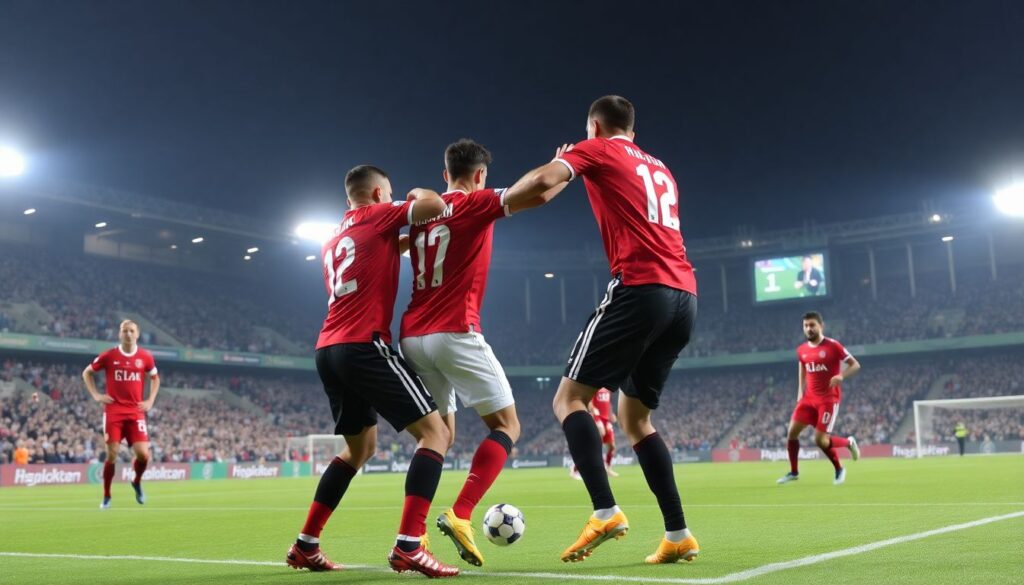
Set-pieces often expose myths about the Turkish team: either “no focus” or “only high crosses.” In reality, corners and free-kicks progressed from basic deliveries to smarter use of screens, blocks and second balls. Below are typical mistakes and misconceptions with practical corrections.
- Myth: Taller opponents mean automatic aerial defeat. Correction: Instead of direct duels, the team uses crowding of the goalkeeper, block runs to free the best header, and flat deliveries to attack the near-post zone. Coaches should plan specific roles for each player instead of hoping for a lucky jump.
- Error: Same corner routine every match. Opponents quickly learn and adapt. Modern practice rotates between in-swingers, out-swingers, short corners and edge-of-box shots. Even two or three well-drilled variations can change how rivals defend.
- Myth: Defensive corners need only tall players. Positioning and timing matter more. National team setups increasingly place quick players at the edge of the box to attack clearances, turning regains into fast counters instead of simply clearing and dropping back.
- Error: Ignoring throw-ins as tactical moments. Long throws and quick restarts near the box can create chaos. Turkey has used these to win second balls and force opponents to defend facing their own goal. Coaches should design basic throw-in patterns, not leave them to improvisation.
- Myth: Direct free-kicks are the only threat. Indirect routines, such as low passes to the side of the wall or chipped balls to the back post, have become more common. Training should dedicate time to these patterns, using the specific strengths of current players rather than historical habits.
Managerial Philosophies, Data Integration and Training Practices
Different coaches brought different ideas, but a clear long-term direction is visible: more structured defending, more repeatable attacking patterns, and growing use of video and data. For local coaches, the value lies in translating these ideas into simple, repeatable training actions.
Think of the current approach as a small “program” that runs every training week:
- Day 1 – Defensive structure focus. Short, high-intensity drills on block compactness and pressing triggers. Objective: fix distances between lines and communication of the pivot and centre-backs.
- Day 2 – Build-up and wide patterns. Exercises starting from the goalkeeper, rehearsing full-back and winger combinations, underlaps, and cut-backs. Analysts present short clips from Turkey national team football tactical evolution to show players concrete examples.
- Day 3 – Finishing and set-pieces. Repetition of main corner and free-kick routines, plus second-wave finishing from cut-backs. Clear roles: who blocks, who attacks near-post, who waits for rebounds.
- Day 4 – Game model integration. 11v11 or 10v10 with rules linking all elements: press on specific triggers, build through certain zones, try at least one planned set-piece routine. Staff use simple data (e.g., number of high regains, entries into half-spaces) to review progress.
By treating national team behaviour as a set of clear principles and repeatable patterns rather than mystical inspiration, coaches and analysts can turn theory into practice. A structured Turkey national football team tactics analysis is then not only a report but a direct guide for everyday training planning.
Practical Queries on Implementation and Analysis
How can a local coach copy national team pressing ideas with amateur players?
Simplify the rules: choose one pressing trigger, such as a backward pass to their centre-back, and train the whole front six to press together when it appears. Focus on distances and direction of pressure, not on complex schemes.
What is the easiest attacking pattern to train based on the national team?
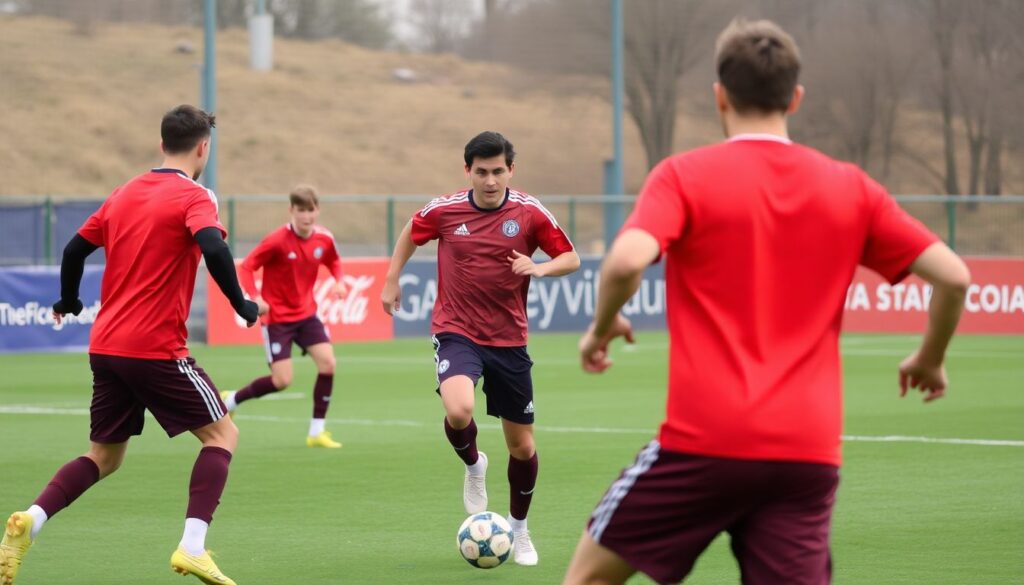
The wide overload into a cut-back is the most accessible. Work with full-back, winger and one midfielder combining on the flank to reach the byline, then cut back to a second wave. Repeat this on both sides until movements become automatic.
How should analysts in Turkey structure a basic match report on the national team?
Use three sections: how the team defended, how the team built attacks, and how the team used set-pieces. Under each, list 3-5 clear behaviours with video examples rather than long text descriptions.
Are false 9 movements realistic for youth and semi-pro teams?
Yes, if you connect them with clear wide runs. Start by instructing the striker to drop once every attack, and the near winger to attack the space behind. Avoid overloading young players with too many rotations at the beginning.
How much time should be given to set-pieces in a normal training week?
A short, focused block in two sessions per week is enough for most teams. The key is consistency: always rehearse the same 2-3 attacking and 2-3 defensive routines until they are automatic.
Where do Turkey football tactics coaching courses fit into this evolution?
Modern courses increasingly integrate national team case studies, using clips and data from recent matches. Coaches learn not only theory but also see how tactical concepts like compact pressing and half-space occupation look in real games.
How can data help with analysis of Turkey national team playing style?
Start simple: track how many times pressing triggers appear, where ball recoveries happen, and how many attacks go through preferred patterns. Use these numbers to confirm what you see on video and adjust training priorities.