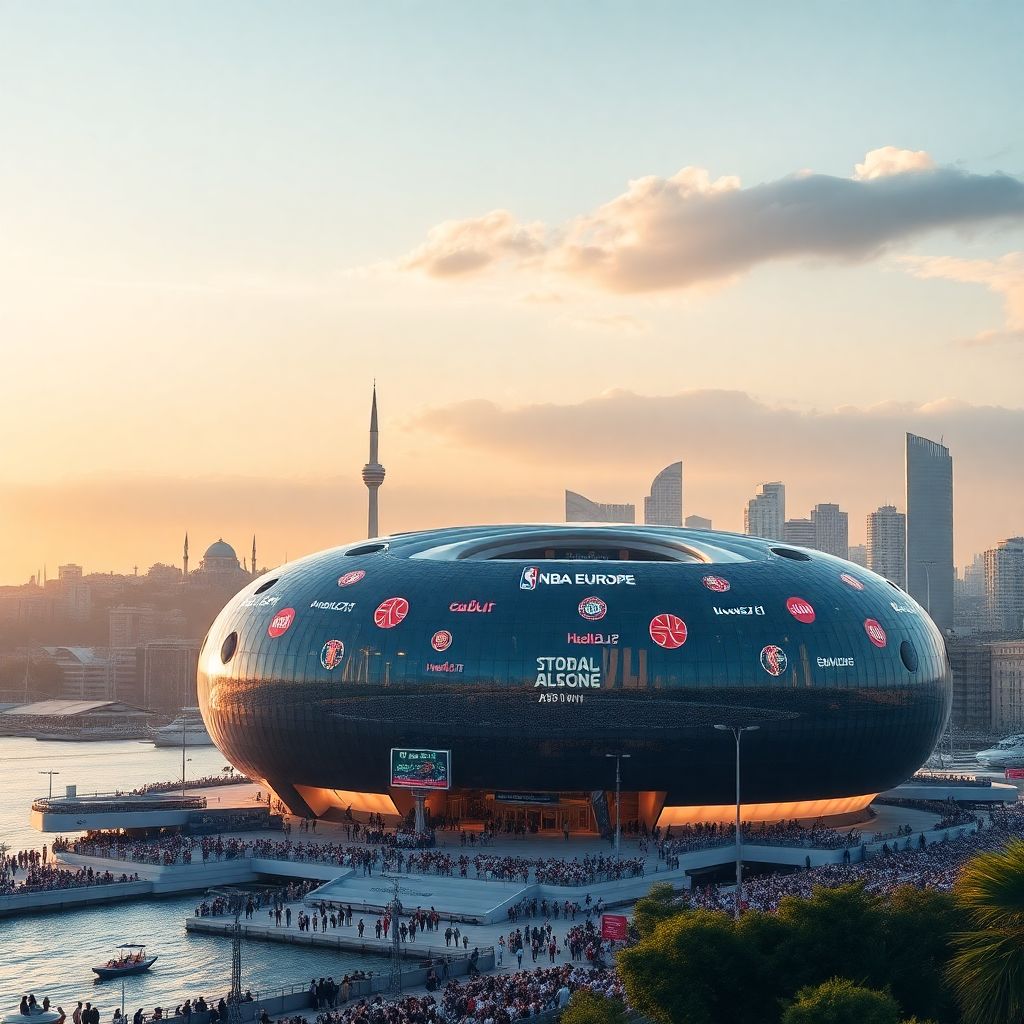
Multi‑billion‑dollar forecast for Istanbul from NBA Europe
The planned NBA Europe League, a joint project of the NBA and FIBA, is expected to create a powerful new economic ecosystem in Istanbul over the next decade. According to projections, the league’s activities in the city could generate around 2.2 billion dollars in total economic impact between 2027 and 2036.
The new competition, which is being designed as a long‑term, pan‑European basketball league, is not only a sporting project but also a major commercial venture. Cities hosting franchise teams are expected to benefit from a significant new stream of revenue linked to ticketing, merchandising, media rights, tourism and employment.
At the first stage of the project, 12 clubs are expected to receive permanent licenses in the league. Among the cities likely to be represented are Rome, Milan, London, Manchester, Paris, Lyon, Madrid, Barcelona, Berlin, Munich, Athens – and Istanbul. These cities are being targeted as strategic hubs capable of supporting year‑round elite basketball and building large, loyal fan bases.
Figures compiled from a report by The Sports Consultancy outline how the economic activity triggered by the Istanbul franchise could reach 2.2 billion dollars over a ten‑year period starting with the 2027-2036 cycle. This estimate includes both direct and indirect effects: revenues from matchday tickets, sales of official products and broadcasting rights, alongside spending by visiting fans, business tourism, full‑time jobs created around the league, and the knock‑on benefits across the supply chain.
The report also highlights the expected contribution of NBA Europe to Turkey’s gross domestic product. Through these revenue channels, the league’s operations in the country are projected to add approximately 819 million dollars to Turkey’s GDP over the same ten‑year stretch. This impact will be spread across sectors such as hospitality, transportation, entertainment, retail, event management and media production.
Over that decade, Istanbul is projected to host 213 separate NBA Europe events, ranging from regular‑season games to fan festivals, community programs and commercial activations. Cumulative attendance is forecast to reach around 3.6 million spectators. On an annual basis, the project is expected to support roughly 176 full‑time equivalent jobs in Turkey, not counting temporary and part‑time roles created on game days and during major events.
A continent increasingly shaped by European talent
The economic rationale behind NBA Europe is closely tied to the sport’s explosive growth on the continent. According to NBA analyses, basketball now attracts around 270 million fans across Europe, making it one of the region’s most followed sports and the fastest‑growing in terms of interest and participation.
In terms of popularity, basketball ranks second only to football among European spectators. Arenas in major cities routinely sell out for top‑level games, while grassroots participation is on the rise, particularly among younger demographics and in urban centers. This expanding fan base is a key factor in the NBA’s decision to invest more heavily in the European market.
The influence of European players in the NBA itself has also surged. At the start of the most recent season, NBA team rosters featured 71 players from Europe – the highest number in league history. European stars are no longer just role players; they are central figures around whom franchises are built.
This dominance is reflected in the race for the league’s top individual honors. Over the last eight seasons, European players have claimed the NBA’s Most Valuable Player award five times. That trend underscores both the depth of talent emerging from Europe and the appetite of European audiences to follow their heroes at the highest level.
Untapped commercial potential in European basketball
Despite this rising interest, basketball’s share of the European sports business landscape remains relatively modest. The combined value of the sports media and sponsorship market in Europe is estimated at around 45 billion dollars, yet basketball’s slice of that pie is calculated to be less than 1 percent.
This imbalance – huge audience numbers but comparatively low commercial returns – is precisely what the NBA and FIBA aim to address with NBA Europe. Leveraging the NBA’s 80‑year track record in league management, its global marketing reach to an estimated 2 billion fans, and its proven revenue‑sharing and governance models, the new league is expected to substantially boost basketball’s commercial performance on the continent.
For European clubs and investors, the project represents an opportunity to tap into sophisticated business practices: centralized media deals, consistent branding, fan engagement strategies, and data‑driven ticketing and merchandising operations. For host cities like Istanbul, it offers a platform to position themselves as regional sports capitals, attract foreign investment and promote long‑term tourism.
Why Istanbul is central to the project
NBA Europe and Middle East Managing Director George Aivazoglou underlined Istanbul’s strategic importance in his comments earlier this year. He described Istanbul as a truly global metropolis, with a deep passion for sports, a powerful cultural footprint and one of the largest and most engaged fan communities in Europe.
According to Aivazoglou, any meaningful transformation of European basketball must involve Turkey, and Istanbul in particular, as one of the leading forces shaping that future. The city’s geographical position between Europe and Asia, its large population, modern arenas and experience in hosting major tournaments all reinforce its role as a prime candidate for a permanent NBA Europe franchise.
For Istanbul, participation in NBA Europe is not just about hosting elite games. It is also a chance to further develop its sports infrastructure, improve transport and hospitality services around key venues, and enhance its global image as an inclusive, modern, event‑driven city. Over time, this can translate into higher tourist numbers, international conferences, business partnerships and a stronger cultural brand.
League format: semi‑open structure with performance paths
The NBA Europe project, planned for launch in October 2027, is being designed as a semi‑open league. This hybrid model combines the stability of long‑term franchise licenses with performance‑based access for additional clubs.
In its inaugural season, the league is projected to feature 16 teams. Twelve of these will hold permanent licenses, giving them guaranteed participation and allowing them to commit to multi‑year investments in arenas, marketing and youth development. The remaining four spots will be awarded based on sporting performance in FIBA‑run competitions and the Basketball Champions League.
This structure aims to strike a balance between commercial certainty and competitive dynamism. For Istanbul, it means that a local club will likely operate under a long‑term license, while other teams in the region can aspire to qualify through their results on the court. That could stimulate domestic rivalries, increase competition levels and raise standards across Turkish basketball.
How Istanbul’s local economy stands to benefit
The projected 2.2‑billion‑dollar impact on Istanbul will be distributed across multiple layers of the city’s economy. On match days, thousands of local and visiting fans will spend on accommodation, restaurants, transportation, shopping and entertainment. Major games can turn into mini‑festivals, bringing heightened activity to entire districts around arenas.
Suppliers ranging from catering companies and security firms to logistics providers and event technology specialists are likely to see rising demand. Media production houses, marketing agencies and content creators will also benefit from the need to produce and distribute game broadcasts, highlights, documentaries and digital content.
Another important area is urban regeneration. Experience from other major sports projects suggests that regular high‑profile events can accelerate infrastructure upgrades: improved public transport links to venues, better pedestrian access, enhanced safety measures and complementary developments such as retail zones or leisure spaces.
Job creation and skills development
While the forecast of 176 full‑time equivalent positions a year might seem modest in a city as large as Istanbul, the wider effect on the labor market is more extensive. Sports events rely heavily on flexible employment: part‑time staff, students and freelancers working in roles such as ushers, hospitality service, technical support, ticketing, security and fan engagement.
Beyond direct jobs, NBA Europe’s presence can stimulate skills development. Local professionals will gain experience in areas like sports management, data analytics for ticketing and fan behavior, digital content strategy, sponsorship activation and international event operations. Over time, this can help build a more mature sports industry ecosystem in Turkey and create exportable expertise.
Youth development is another key dimension. With an NBA‑branded competition and regular visits by global stars, basketball academies, schools and local clubs could see increased participation. Partnerships between the league, Turkish clubs and educational institutions could expand community programs, coaching clinics and scholarship initiatives.
Tourism and city branding
International sports leagues have become powerful tools for city branding, and NBA Europe is expected to play a similar role. Each televised game in Istanbul will double as a visual postcard, showcasing the city’s skyline, historical sites and modern lifestyle to millions of viewers across Europe and beyond.
This exposure can influence travel decisions among sports fans who might combine a game with a weekend city break. Over time, Istanbul can cultivate an identity not only as a historic and cultural center, but also as one of Europe’s key basketball destinations, similar to how certain cities are associated strongly with football or motorsport.
Business tourism may also increase. Companies often choose to host corporate events, client meetings or incentive trips around major sports events. An NBA Europe calendar anchored in Istanbul can provide a predictable schedule for such activities, generating additional revenue for hotels, conference centers and local service providers.
Opportunity and competition for existing European structures
The launch of NBA Europe will inevitably reshape the landscape of European club basketball. Existing competitions and traditional power structures may face pressure to adapt as the new league introduces different financial standards, marketing approaches and visibility levels.
For Turkish clubs and stakeholders, this presents both a challenge and an opportunity. Those that can align with the NBA Europe model, attract investment, modernize their operations and build strong brands will likely find themselves at the forefront of the new era. Others may need to rethink their strategies to remain competitive and financially sustainable.
Istanbul’s inclusion as a key market suggests that the city will be among the focal points of this transformation. Close coordination between clubs, local authorities, investors and the basketball federation will be crucial to maximize the benefits and minimize potential disruptions.
Long‑term outlook: beyond 2036
Although current projections focus on the 2027-2036 period, the impact of NBA Europe on Istanbul could extend well beyond that horizon. If the league succeeds in establishing a loyal regional fan base, sustainable revenue streams and high competitive standards, Istanbul’s franchise could become a permanent fixture in the city’s cultural calendar.
In the long term, the presence of an NBA‑backed club may inspire deeper integration between Turkish and European basketball pathways, encourage more Turkish players to compete at the highest level and strengthen Istanbul’s position in global sports diplomacy. The city would not only host games but also play an influential role in shaping how basketball evolves across the continent.
For now, the projections offer a clear message: if realized as planned, NBA Europe is set to bring both a new sporting spectacle and a multi‑billion‑dollar economic boost to Istanbul, positioning the city as one of the central pillars of a reimagined European basketball ecosystem.