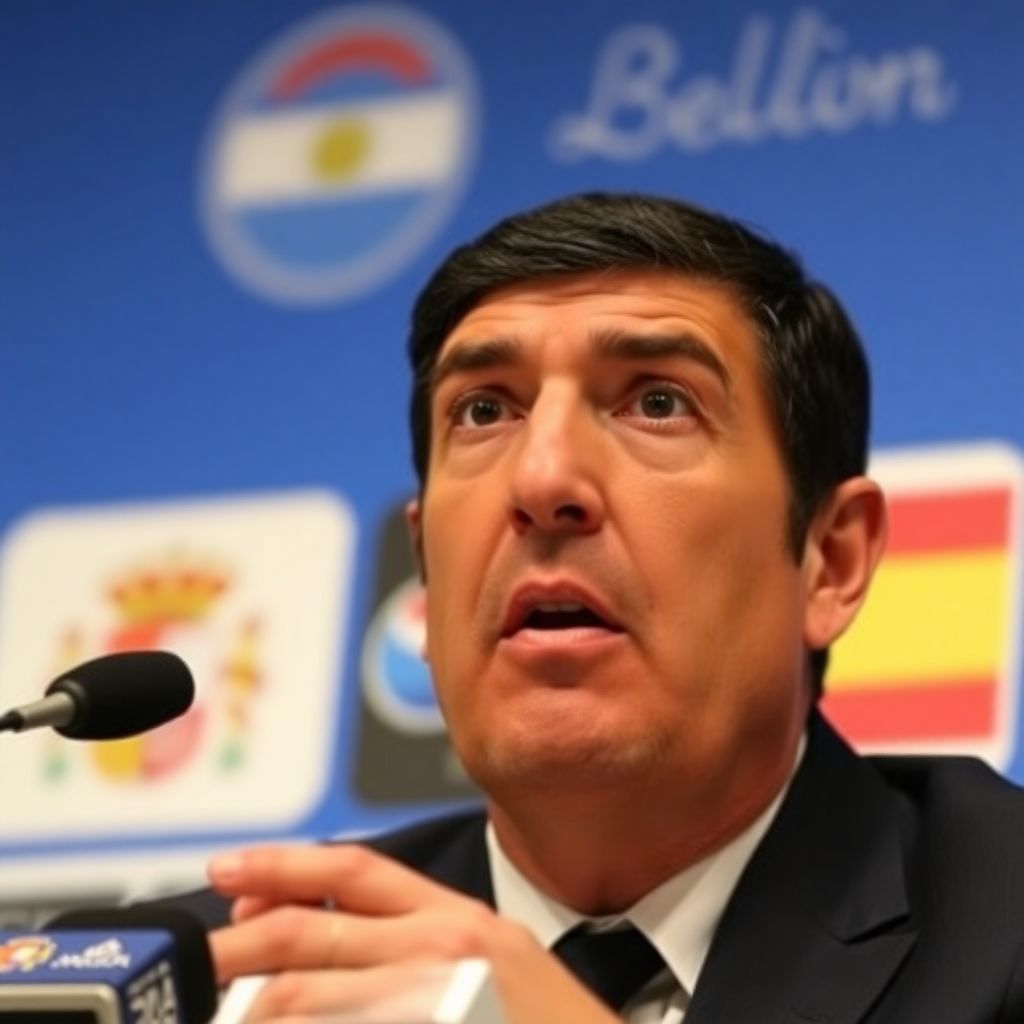
Lionel Scaloni: “Everyone Knows Their Strengths, We Must Show Our Best Version”
Argentina head coach Lionel Scaloni underlined that his team will need to reach their absolute peak if they are to defeat Spain in the 2026 World Cup final. Speaking to the press in New York on the eve of the decisive clash, Scaloni stressed that the key will be treating the game as a football match rather than being overwhelmed by the idea of a “World Cup final.”
Scaloni, 48, explained that preparation for Spain has followed the same thorough process as every other opponent, despite the magnitude of the stage:
“Even though it’s a final, in the end it is still a football match. To win, we need our best version. We try not to constantly repeat to ourselves that this is a World Cup final. If we let that thought dominate, we risk losing focus.”
According to the coach, Argentina’s staff has been studying potential rivals since December, including detailed analysis of Spain’s style and structure.
“We’ve been watching them for months. We know how they play; everyone is aware of their strongest qualities,” he said. “Our job is to prevent them from fully expressing those strengths on the pitch. At the same time, we’ll try to impose our own football and hurt them in the spaces where we believe we can do damage.”
Scaloni highlighted that the plan is not to neutralize Spain by abandoning Argentina’s identity, but to strike a balance between containment and attacking ambition: they will defend with intensity and discipline, yet still look for opportunities to exploit transitions and positional weaknesses.
—
Messi’s Future Still an Open Question
One of the most pressing questions surrounding Argentina is whether this final will be Lionel Messi’s last World Cup appearance. Scaloni, however, refused to speculate.
Asked if this could be Messi’s final World Cup, he replied:
“I don’t know, I have absolutely no idea. He keeps surprising us, so I really can’t say. That’s a question for him, not for me. We haven’t talked about it.”
By declining to define the match as a farewell, Scaloni indirectly protected both the player and the squad from additional emotional weight. Instead of turning the final into a tribute or a last dance narrative, the coach wants his players focused on performance, not on legacy storylines.
—
Deep Respect for Spain and Luis de la Fuente
When asked what worries him most about facing Spain, Scaloni did not single out one specific aspect; instead, he expressed admiration for the entire Spanish setup.
“They are a great team, a fantastic national side, and they are going through a very strong period under Luis de la Fuente,” Scaloni stated. “You already know how much I respect him. So, honestly, everything about Spain concerns me.”
This respect reflects not only Spain’s technical quality and tactical flexibility but also their consistency throughout the tournament. For Scaloni, the challenge lies in handling Spain’s possession-based approach, their pressing intensity and their ability to control tempo. He knows that any lapse in concentration can be punished at this level.
—
Emiliano Martínez: “Pressure Doesn’t Wear Me Down”
Team captain and goalkeeper Emiliano Martínez, who has become one of the emotional leaders of the squad, also met the media. He underlined that one of his primary responsibilities is to transmit confidence and calmness to his teammates.
“I feel really calm,” Martínez said. “When they look back and see that I’m composed, it allows them to focus only on attacking, on doing their job. My role is to help them and to be there in the moments when they need me the most.”
The 33-year-old pointed out that Argentina have been extremely productive going forward throughout this World Cup campaign.
“In this tournament we’re scoring three goals per game on average; our attack has been excellent. Compared to the last World Cup, we’ve conceded one goal fewer. That’s why I’m really looking forward to keeping another clean sheet. It would be the perfect way to finish the job.”
—
From Late Debut to Role Model
Martínez also reflected on his unusual journey. He made his debut for the Argentine national team at 28, an age when many players have already accumulated years of international experience.
Asked how he feels about being an idol for so many children today, he shared a revealing anecdote:
“The owner of a goalkeeping school told me that since the academy opened, they had never seen so many kids wanting to be goalkeepers. That’s something beautiful. Of course, I always tell families that they usually prefer their kids to be forwards, but I hope more and more will choose this position.”
He then emphasized how demanding the role of a goalkeeper is:
“Being a keeper has always been very tough. Nothing comes easy. You make one mistake and everyone sees it. You have to be mentally strong and accept that every game, every ball, is a test.”
—
“I’m Still the Same Kid from the Neighborhood”
Speaking about pressure and motivation, Martínez insisted that expectations do not crush him; instead, they energize him.
“Pressure doesn’t wear me down,” he explained. “I just focus on putting on my gloves, and when the ball comes, I tell myself: ‘I have the higher chance of making the save.’ I have that self-confidence in goal, whether it’s a friendly match or a World Cup final.”
He described his mindset as rooted in his upbringing:
“I still carry that neighborhood spirit inside me. No matter who is in front of me, I’m the same Martínez who played on those local pitches as a kid. That helps me stay grounded and fearless.”
—
Tactical Keys: How Argentina Might Approach Spain
Beyond the individual statements, Scaloni’s words offer clues about Argentina’s tactical approach. By insisting on “our best version” and “hurting them where we believe we can,” he hints at a flexible plan built on a few core ideas:
– Compact defensive block: Limiting space between the lines to prevent Spain from finding their attacking midfielders between the defense and midfield.
– Controlled pressing: Not pressing blindly, but choosing moments to step up collectively, especially when Spain build out from the back.
– Quick transitions: Using Messi, the wingers and overlapping full-backs to attack rapidly once possession is won, before Spain can reorganize.
– Set pieces as a weapon: With strong aerial presence and Martínez’s distribution, dead-ball situations could become a decisive factor.
Scaloni’s Argentina has already shown in previous tournaments that they can adapt: they can dominate possession when needed, or sit deeper and counter if the rival demands it. Facing Spain, the balance between these approaches will be crucial.
—
Psychological Management: Playing the Match, Not the Occasion
One consistent theme in Scaloni’s comments is the psychological management of his players. By repeating that “it’s just a football match,” he tries to remove the weight of history, expectations and comparisons with past generations.
The idea is simple: if the players step onto the pitch thinking only about “World Cup final,” they might play with tension, fear of mistakes or excessive caution. If they see it as a match where they must execute a plan, help their teammates and enjoy the game, they are more likely to play with clarity and freedom.
Messi’s uncertain future, the defense of Argentina’s status among the elite, and the pressure of a football-mad country all hover over the squad, but Scaloni wants those narratives kept outside the dressing room door.
—
Leadership Group: Messi, Martínez and the Spine of the Team
In addition to Messi and Martínez, Argentina rely heavily on a solid core of leaders across the pitch: experienced defenders, a hard-working midfield and forwards used to handling big nights. This leadership group plays a decisive role in translating Scaloni’s calm approach into the players’ daily routine.
Martínez’s statement about staying calm to allow others to “only look forward” is central. When those in charge of the spine of the team project serenity, younger or less experienced players feel safer to take risks, press aggressively and commit to duels without fear.
Inside the squad, this climate of trust and mutual backing is one of the reasons Argentina have evolved from a team dependent on Messi’s genius into a more complete collective, where every line contributes.
—
Legacy and Continuity Beyond the Final
While the immediate objective is winning the World Cup, Scaloni and his staff are also laying foundations for the future. The fact that they began analyzing potential opponents months in advance shows a long-term methodology rather than an improvised approach.
Whether Messi decides to continue or not, Argentina are building a model based on tactical flexibility, psychological strength and a clear identity. Young players entering the team are not only learning how to play, but how to handle finals, penalties, extra time and the pressure of a nation.
For Martínez, the growing number of children choosing to be goalkeepers is also a sign of continuity. It means new generations are not only dreaming of scoring goals but also of saving them, inspired by the current heroes.
—
A Final Defined by Details
As both Scaloni and Martínez suggest in different ways, this World Cup final against Spain is likely to be decided by fine margins: a single mistake, a moment of brilliance, a save from Martínez, a piece of magic from Messi or a successful tactical adjustment from the bench.
Argentina’s challenge is to arrive at that decisive moment as the best possible version of themselves: mentally calm, tactically prepared and emotionally balanced. Spain’s strengths are obvious and widely recognized; Argentina’s task is to prevent them from unfolding fully while making their own qualities shine.
For Scaloni and his players, everything now revolves around translating months of preparation and years of work into 90 minutes – or 120, if needed – where talent, discipline and character must come together one last time.