
Rising clubs in TFF 1. Lig are teams that combine stable leadership, smart recruitment and clear tactics to turn promotion dreams into repeatable processes. The biggest mistakes are short-term panic, random transfers and ignoring data. To prevent them quickly, clubs need lean governance, defined game models and disciplined financial planning.
Executive snapshot: tactics, transfers and finances
- Most sustainable promotion bids in TFF 1. Lig start from stability: clear board structure, trusted coach and consistent playing identity.
- Frequent errors include chasing “big name” signings, ignoring age profiles and over-reacting to short losing streaks.
- Data-informed tactics (xG, pressing metrics, set-piece analysis) are now decisive in tight promotion races.
- Balancing loans, experienced spine and academy graduates reduces wage risk and improves resale value.
- Infrastructure and ownership models explain why some rising clubs survive in Süper Lig while others yo-yo back immediately.
- For fans and analysts following TFF 1. Lig predictions and betting tips, understanding these structural factors is more important than last week’s scoreline.
Profiles of rising clubs: trajectories, leadership and identity
Inside TFF 1. Lig, “rising clubs” are not just the current league leaders. They are organisations that show upward trajectories across three axes: sporting results, financial health and institutional stability. A surprise contender can have a single good season; a real future Süper Lig powerhouse builds a repeatable model.
Leadership is usually the first differentiator. Successful boards set medium-term targets (two to three seasons), hire coaches whose playing style fits those targets and refuse to tear everything up after every bad month. Common mistakes are constant coach changes, owner interference in line-ups and impulsive reaction to short-term form that fans see on TFF 1. Lig live scores and streaming platforms.
Identity links leadership to the pitch. Strong projects define:
- a preferred game model (pressing vs deeper block, wing-focused vs central overloads);
- a recruitment filter (age, physical profile, technical strengths);
- a realistic financial ceiling (wage structure, incentives, release clauses).
Clubs that ignore these boundaries tend to overpay older players after one good season, misjudge TFF 1. Lig promotion odds to Super Lig and end up forced to sell key assets under pressure.
Tactical innovations shaping promotion bids
Tactical innovation in TFF 1. Lig is less about exotic systems and more about precise optimisation of common structures. Because resources are limited, smarter use of space, pressing triggers and set-plays often separates promotion contenders from mid-table teams. Frequent tactical errors are copy-paste systems that ignore squad strengths and lack of plan B.
- Flexible pressing schemes
Leading projects use hybrid pressing: high press in selected phases, mid-block rest phases and clear triggers on back passes or bad touches. Preventable mistake: pressing all game with an aging squad and running out of energy by March. - Asymmetric full-back use
One full-back tucks inside as an extra midfielder while the opposite side overlaps aggressively. This protects transitions without sacrificing width. Common error: pushing both full-backs high with slow centre-backs behind them. - Rotation in the half-spaces
Ten and winger switch zones to isolate defenders and open cut-back lanes. Many teams still play linear wing-cross football, becoming predictable and easy to defend. - Structured rest-defence
Promotion chasers now prepare “if we lose the ball here, who protects which zone?” in training. Weak teams attack with six or seven and leave huge channels behind without cover. - Set-piece specialisation
Dedicated routines for corners, long throws and free-kicks can add decisive goals in a league where margins are thin. Neglecting set-pieces is a simple yet frequent unforced error.
Squad construction: transfers, loans and youth integration
Squad building translates tactical ideas into human resources. In TFF 1. Lig, smart clubs use transfers and loans to plug specific gaps, then integrate academy graduates into low-risk roles. Reckless transfer windows, inspired by social-media hype or short-term TFF 1. Lig predictions and betting tips, usually end in wage inflation and dressing-room imbalance.
- Experience spine with dynamic legs
Teams build around a core of experienced goalkeeper, centre-back, six and striker, then surround them with younger, more energetic wide players and eights. Mistake to avoid: collecting veterans in every line and losing intensity. - Targeted loan strategy
Loans from Süper Lig clubs should cover positions where your academy is weak. Overreliance on loans creates yearly rebuilds and no continuity once loanees leave. - Clear pathway for academy talents
Youth players need defined minutes and roles, not random cameos. Best practices include structured rotation in cup games and late substitutions in controlled league states. - Profile-based foreign signings
Foreign players must fill clear tactical niches (e.g., pacey wide forward, aerially dominant centre-back). Copying “best TFF 1. Lig teams to bet on this season” and simply importing their nationalities is not a strategy. - Wage structure discipline
Top earners should logically be impact players; breaking this rule for hype signings quickly damages morale. Clubs must resist pressure agents create late in the window.
| Club archetype | Budget level | xG profile (attack / defence) | Average squad age | Stadium capacity |
|---|---|---|---|---|
| Stable promotion contender | Medium | Consistently positive on both sides | Balanced (mid-range) | Medium-to-large, often modernised |
| Surprise outsider | Low-to-medium | Strong defence, modest attack | Younger than league average | Small but intense atmosphere |
| Relegated Süper Lig club | High but shrinking | High attacking xG, unstable defence | Older core with a few youngsters | Large, sometimes under-used |
| Financially stressed team | Unclear or irregular | Volatile; big gaps between games | Random mix of very old and very young | Varies; maintenance often an issue |
Mini-scenarios: applying tactical and squad ideas in TFF 1. Lig
Scenario 1: A mid-table club with an aging defence keeps conceding late goals. Quick fix:
- drop the defensive line a few metres and adopt a mid-block;
- use a more conservative full-back on the weaker side;
- add a ball-winning six on loan for the rest of the season.
Scenario 2: A promotion candidate dominates TFF 1. Lig live scores and streaming highlights but struggles away from home. Quick preventive steps:
- prepare a lower-tempo away game plan with more set-piece emphasis;
- rotate one high-volume presser to keep overall intensity stable;
- trim the matchday squad of players who do not fit the compact game model.
Surprise contenders: mechanics behind unexpected runs
Surprise contenders usually appear when one or two factors click earlier than the market expects: a new coach’s system, a key striker’s form or a loan signing outperforming his reputation. Casual observers then overestimate TFF 1. Lig promotion odds to Super Lig for these teams, while underlying metrics sometimes warn about coming regression.
Strengths that fuel unexpected promotion fights
- Low external expectations reduce pressure and allow more tactical experimentation.
- Smaller squads often have stronger internal chemistry and clearer hierarchies.
- Coaches can specialise on one or two game models rather than constant tactical shifts.
- Fans create intense home atmospheres; TFF 1. Lig tickets for top promotion contenders can become local events, driving extra energy.
- Opponents underestimate them early in the season, gifting points before adjusting.
Limitations and hidden risks to watch
- Lack of depth: one or two injuries can collapse the structure.
- Overperformance in finishing or goalkeeping may hide fragile defensive systems.
- Financial strain when the board rewards early success with unsustainable bonuses or panic winter signings.
- Inexperience in end-of-season pressure games, especially in play-offs.
- Speculative hype around “best TFF 1. Lig teams to bet on this season” can lead to unrealistic internal expectations.
Infrastructure, ownership and investment comparisons
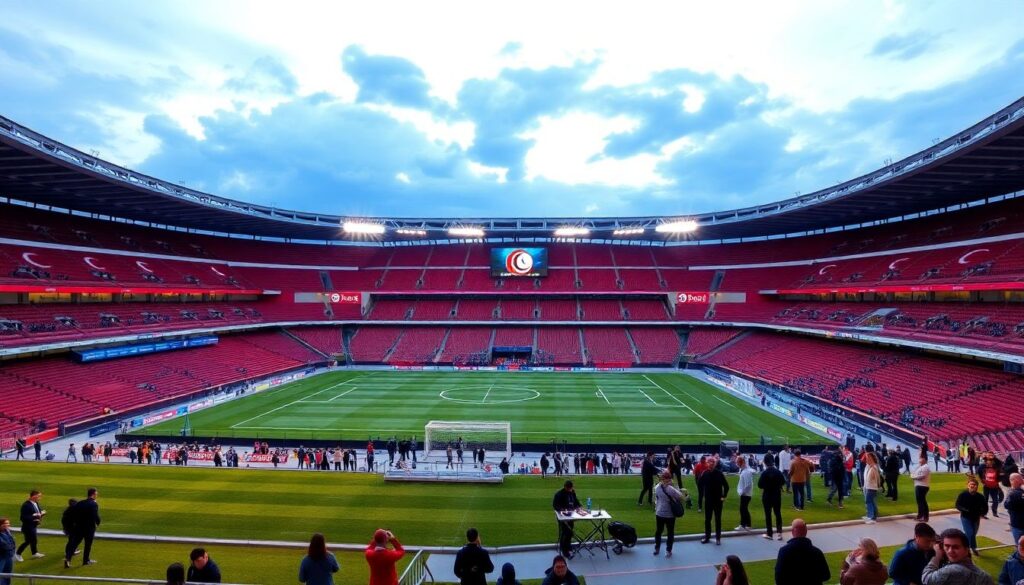
Beyond tactics and transfers, infrastructure and ownership models shape whether a rising TFF 1. Lig club can become a long-term Süper Lig presence. Stadium quality, training facilities, data departments and supporter relations all matter. Many preventable errors happen here, long before match-day line-ups are chosen.
- Confusing spending with investment
Buying aging stars is spending; improving training pitches and medical staff is investment. Clubs often do the opposite and wonder why injuries rise and performance drops. - Short-term owner projects
Owners promising instant promotion without clear governance structures usually burn cash and churn staff. A transparent roadmap is more valuable than loud declarations. - Ignoring matchday experience
Poor ticketing processes damage revenue and atmosphere. Modern contenders treat the journey to buying TFF 1. Lig tickets for top promotion contenders as part of the brand, not an afterthought. - No data or analytics culture
Some boards still dismiss xG and video analysis as “fashion”. The mistake is not only tactical; it prevents selling players at the right time based on performance trends. - Underestimating communication
Silence during crises invites rumours and destabilises coaches. Simple, regular communication from the club protects dressing-room focus and fan trust.
Forward-looking projections: which teams can survive in Süper Lig
Surviving in Süper Lig requires more than winning promotion. The transition demands squad upgrading, tactical adjustment and rebalanced finances. Clubs that treat the top division as just “TFF 1. Lig plus” usually return immediately; those that plan two windows ahead build foundations for mid-table stability.
Think of a basic survival “algorithm” for a newly promoted club:
- Retain the tactical core that earned promotion, especially defensive principles.
- Replace only the positions where Süper Lig pace and quality will expose clear weaknesses.
- Allocate additional budget first to athleticism and versatility, not just star names.
- Use data (xG trends, age curves) to decide whom to extend, sell or rotate.
- Set realistic targets: avoid Europe-chasing fantasies in year one; focus on safe mid-table.
For analysts and fans interested in TFF 1. Lig predictions and betting tips, the key is to track which rising clubs follow such structured processes. When evaluating TFF 1. Lig promotion odds to Super Lig and future survival chances, the underlying project quality matters far more than a single hot streak of results.
Practical queries on promotion mechanics, scouting and sustainability
How do I quickly recognise a sustainable rising club in TFF 1. Lig?
Look for coaching stability, consistent tactics, a balanced age profile and clear communication from the board. If the club avoids chaotic mid-season overhauls and still competes, the project is usually structurally sound.
Which metrics matter most beyond the league table?
Trend lines in chance creation and concession, not just single-game xG; minutes for younger players; and wage discipline. Clubs improving these areas over time are better long-term bets than those winning through streaky finishing.
How should clubs balance loans and permanent signings?
Loans should solve immediate, specific gaps, while permanent deals form the medium-term core. If most starters are loanees, continuity disappears and the club faces a near-total rebuild every summer.
What is the fastest way to reduce late-game collapses?
Short term: adjust line height, manage substitutions earlier and improve rest-defence shape. Parallel to that, invest in conditioning and recovery routines to keep intensity stable across the season.
How can smaller clubs prevent financial overreach during a surprise promotion push?
Freeze the wage structure, use bonuses instead of massive fixed salaries and avoid long contracts for players signed on peak hype. Written budget limits help boards resist emotional decisions.
Do flashy stadium projects always help promotion and survival?
Not necessarily. An over-ambitious stadium can drain resources from squad and staff. Incremental upgrades to pitch quality, training centre and medical facilities often produce better sporting returns.
How should fans read betting markets around TFF 1. Lig?
Treat odds and tips as information, not truth. Combine them with your own analysis of tactics, injuries and squad age. Never rely solely on “best TFF 1. Lig teams to bet on this season” lists without understanding the underlying projects.