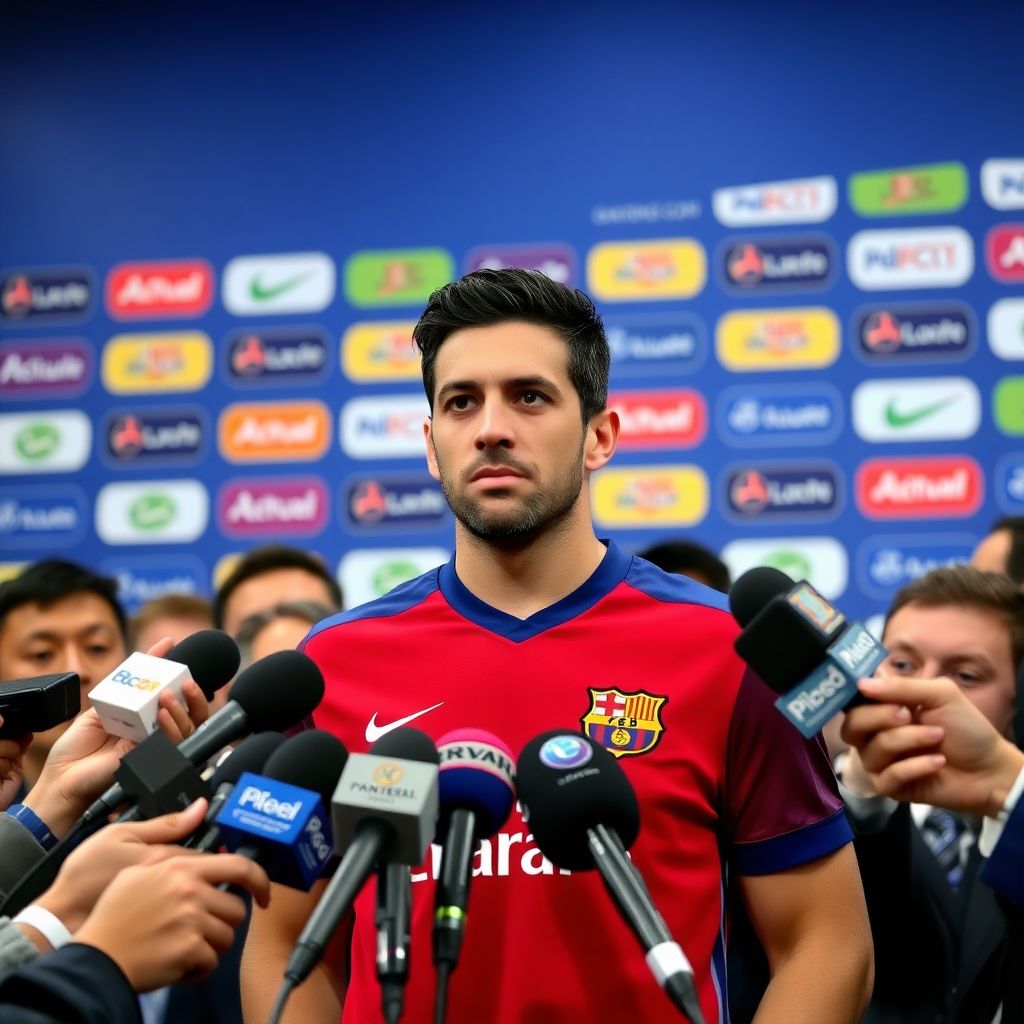
Ferran Torres breaks silence on PSG rumours and reflects on World Cup heroics
Barcelona forward Ferran Torres has addressed the growing speculation linking him with a move to Paris Saint-Germain, offering a cautious but intriguing response about his future. While not closing the door on a transfer, the Spanish international underlined that he remains under contract with Barcelona and is currently focused on his present club.
The 26-year-old attacker, whose name has been frequently mentioned in connection with PSG in recent weeks, spoke during a programme in the United States, where he was asked directly about the possibility of a switch to the French champions. His answer only fuelled further discussion about what might come next in his career.
Torres reminded everyone that he is still a Barcelona player, yet avoided making any definitive declaration that he will remain at the club long term. “I have a contract with Barcelona, but in football you never know what can happen,” he said. “I’m waiting to make the right decision. I still don’t know.” With these words, he left all options open, suggesting that the upcoming transfer windows could be decisive for his trajectory.
The forward’s comments reflect the reality of modern football, where long-term contracts rarely guarantee that a player will stay until the final day of the agreement. Clubs constantly review their squads, and players are equally aware of their market value and the need to find the best environment to develop and compete for trophies. Torres’ measured tone indicates he is unwilling to rush into any commitment about his future.
Beyond his club situation, Ferran also spoke about one of the most memorable moments of his career: his decisive goal in Spain’s World Cup final victory. The Barcelona player admitted that he has watched that strike repeatedly since the tournament. “I’ve seen the goal a thousand times,” he confessed. “During the match I wasn’t really aware of how I scored it. I just remember going crazy and sprinting off to celebrate. I can’t explain that feeling with words. You have to live through it to understand it.”
That goal turned him into a national hero and significantly raised his international profile. For many fans, it was the moment that confirmed his ability to decide matches at the highest level. For Torres himself, it seems to be both a source of pride and a reference point that pushes him to maintain that standard in every competition he plays.
The connection with PSG is not accidental. Torres previously worked under Luis Enrique in the Spanish national team, and the current PSG coach is known to be an admirer of the forward’s versatility and attitude. According to Spanish media reports, this shared history makes the idea of a move to Paris attractive for the player, as he would be reunited with a manager who understands his game and knows how to get the best out of him.
From a tactical standpoint, a potential transfer to PSG would be easy to imagine. Torres can operate across the frontline, on either wing or as a central forward, pressing aggressively and stretching defences with his movement. PSG, often in need of flexible attacking options who can adapt to different systems in domestic and European competition, could view him as an ideal piece to complement their existing stars and refresh their offensive line.
However, Barcelona’s perspective also matters. The Catalan club has invested in Torres and values his work rate, pressing and willingness to sacrifice for the team. At the same time, Barcelona’s financial situation over recent seasons has forced the club to carefully evaluate every significant offer that arrives for its players. If PSG were to formalise their interest with a substantial bid, it might become a serious talking point within the club’s boardroom.
For Torres, the decision would go beyond finances or prestige. At 26, he is approaching what many see as the prime years of a footballer’s career. Regular playing time, a clearly defined role and the possibility to compete for major trophies at both domestic and European level are likely to be essential factors. Whether he believes Barcelona or PSG can offer the best platform for that remains an open question, hinted at in his comment that he is “waiting to make the right decision”.
Psychologically, his words also suggest a player who has learned not to make promises he cannot guarantee. Having already experienced moves between major clubs and the intense scrutiny that accompanies them, Torres appears cautious, aware that any statement about staying or leaving can quickly be thrown back at him if circumstances change. His neutral tone allows him to keep every door ajar while he assesses how the next months unfold.
Another important element is his relationship with Luis Enrique. Under the coach’s guidance with the national team, Torres often played with freedom and confidence, trusted to take risks in the final third. Reuniting with a manager who already believes in him could be a strong pull, especially if he feels that he can reach a new level under a familiar tactical framework and man-management style.
On the other hand, remaining at Barcelona would give him continuity in a league he knows well, surrounded by teammates with whom he has built on-field chemistry. Competing in LaLiga and representing one of the most historically significant clubs in world football still carries enormous weight. For a Spanish player, succeeding at Barcelona can also have symbolic value, strengthening his status within the national team setup.
Torres’ reflections on his World Cup goal highlight another layer of his personality: he is both self-critical and emotionally connected to key moments in his career. Watching the goal “a thousand times” suggests a player who analyses his actions, perhaps looking for details in movement, positioning or decision-making, but also someone who allows himself to relive the emotions that define a sporting life. That blend of analysis and passion is often present in top-level athletes.
His remark that the feeling of scoring such a decisive goal “cannot be explained with words” underlines how deeply that experience has marked him. For many footballers, a World Cup final goal is a once-in-a-lifetime achievement, something that shapes their legacy regardless of what follows. For Torres, it seems to be both a cherished memory and a powerful source of motivation: a reminder of what he is capable of when everything aligns.
Looking ahead, his future will likely depend on several converging factors: Barcelona’s sporting project, PSG’s concrete level of interest, the plans of Luis Enrique, and Torres’ own assessment of where he can most effectively build on his status as a World Cup winner. Until an official decision is made, his careful phrases about waiting for “the right decision” will remain open to interpretation.
For now, what is clear is that Ferran Torres is not rushing anything. He acknowledges his current commitment to Barcelona, recognises the unpredictability of football, and carries with him the memory of one of the most important goals in Spain’s history. Whether that path ultimately leads him to stay in Catalonia or to embrace a new challenge in Paris, his words and his performances will continue to keep him at the centre of attention in the European football landscape.