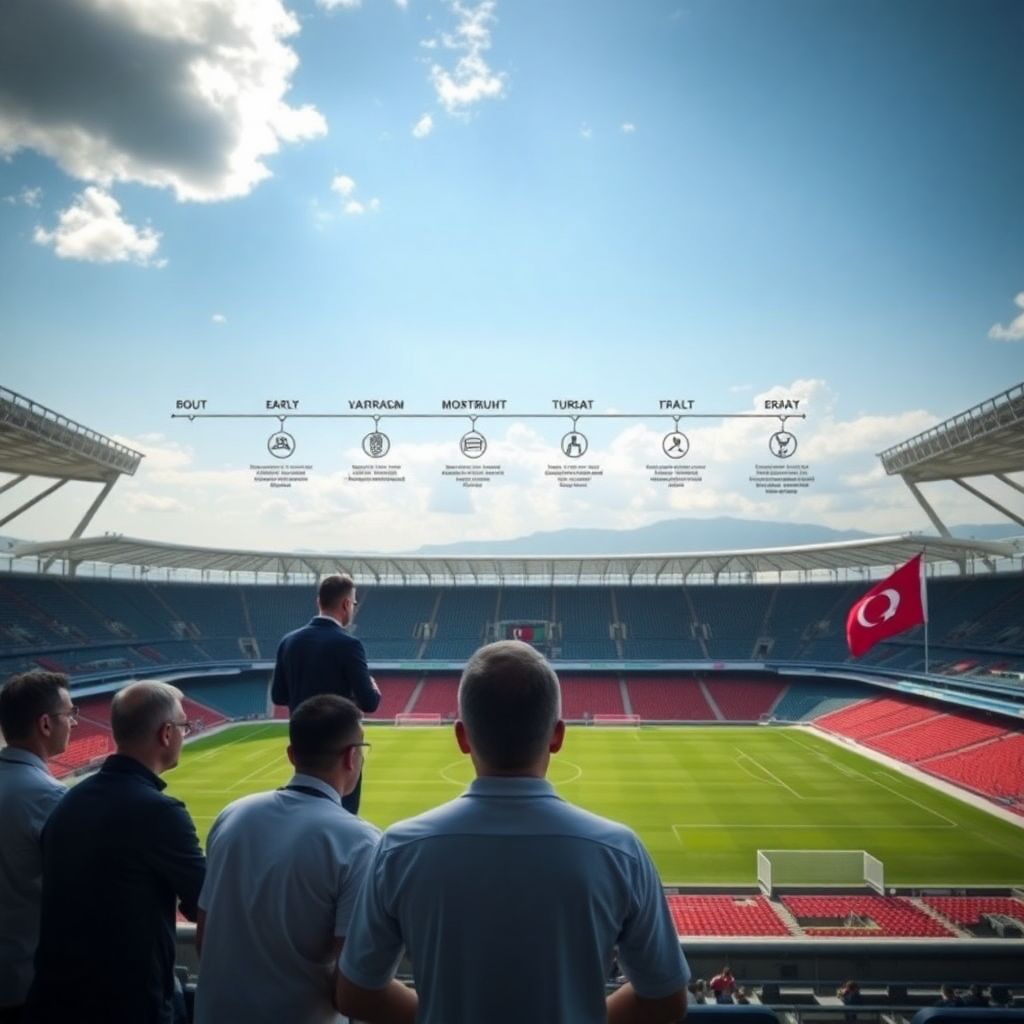
Turkey can become a regular World Cup contender if it treats the next 12 years as a structured project: stabilise coaching and playing identity, hard-wire youth development into clubs, reform Süper Lig incentives, and plan qualification campaigns scientifically. This roadmap gives concrete steps, timelines, and measurable targets tailored to Turkish football realities.
Core factors shaping Turkey’s World Cup prospects
- Building a stable tactical identity that bridges Turkey Euro 2024 and World Cup qualifications analysis rather than restarting every cycle.
- Creating a continuous talent pipeline, with clear tracking of the best Turkish football talents to watch from U15 to A team.
- Aligning club football incentives, foreign player rules, and minutes for domestic players with national team needs.
- Using data for fixture planning, rotation and realistic Turkey national football team future predictions instead of emotional decisions.
- Implementing transparent performance metrics that survive coach changes and political pressure.
- Educating fans, media and even those interested in betting tips Turkey national team major tournaments about long-term expectations.
- Integrating Turkey World Cup odds 2026 thinking into a 2030-2038 roadmap, not as a one-off bet but as a development checkpoint.
Current state: assessment of Turkey’s player pool and league dynamics
This roadmap is for federation planners, club leaders, academy directors and analysts who want a structured way to turn Turkey into a regular World Cup participant and knockout-stage threat.
It is not for anyone expecting overnight miracles, or who treats qualification as pure luck and short-term form. If you cannot commit to long-term processes, data tracking and uncomfortable reforms in the Süper Lig, these steps will only frustrate you.
Before applying the roadmap, make a simple diagnostic of the current ecosystem:
- Player pool depth by position – Map A team, U21, U19 options; identify chronic shortages (left-back, 6, 9, etc.).
- Minutes for Turkish players – Track average league minutes per age group (U21, 22-25, 26-29, 30+).
- League intensity and style – Assess whether Süper Lig tempo, pressing and tactical complexity prepare players for World Cup level.
- Exported players – Count players starting in top-5 leagues and European competitions and their roles (leaders vs rotation).
- Coaching continuity – Review the last 10-15 years of coaching changes and tactical resets in the national team.
If the outcome shows thin depth in key positions, low minutes for young Turkish players and chaotic coaching changes, treat that as your baseline: the roadmap below is built precisely for such a starting point.
Coaching, tactics and the national identity on the pitch
To turn Turkey into a consistent World Cup contender, the federation and clubs need shared tools and standards, not only inspirational speeches. The following resources and structures are required.
-
Central tactical framework
- One primary game model (e.g., proactive 4-3-3/4-2-3-1, pressing-oriented) plus one alternative structure for game management.
- Written principles for pressing, build-up, transitions and set pieces, accessible to national youth coaches and club academies.
-
Coach education and certification
- Mandatory national modules linking federation tactical identity with UEFA coaching licences.
- Annual workshops with club head coaches and academy directors to keep everyone aligned.
-
Data and video infrastructure
- Access to event and tracking data for Süper Lig, 1. Lig and European matches of Turkish players.
- Shared video platform with tagged clips by principle (pressing triggers, third-man runs, etc.).
-
Clear role profiles by position
- For each position, define 3-5 key behaviours and performance indicators.
- Share role profiles with clubs so they understand what the national team will select for.
-
Psychological and cultural standards
- Guidelines on resilience, dealing with pressure and away atmospheres; integrated into youth camps.
- Common language about effort, discipline and creativity to form a recognisable Turkish identity on the pitch.
Youth development overhaul: academies, scouting and talent retention

This section gives a step-by-step plan for building a sustainable talent pipeline that can feed multiple World Cup cycles safely and predictably.
-
Map and segment the national talent base
Create a unified database of players from U13 to U23, across professional clubs, amateur clubs and diaspora communities.
- Tag each player by position, physical profile, technical strengths, and psychological indicators.
- Include both domestic leagues and Turks abroad, especially in Germany, the Netherlands and other key countries.
-
Standardise academy benchmarks
Define minimum training, facility and staffing standards for academies that want federation certification.
- Weekly training volume per age, coach-to-player ratios, sports science and medical support.
- Technical benchmarks (weak-foot use, scanning behaviour, decision-making under pressure).
-
Introduce evidence-based scouting
Move from intuition-only scouting to structured observation and data-informed decisions.
- Use standardised scouting forms focused on repeatable actions (pressing intensity, off-ball movement, ball control in tight spaces).
- Combine live scouting with video review; cross-check reports from at least two scouts before making big decisions.
-
Create a clear pathway from academy to first team
Ensure every club has a documented route for U17-U19 players into senior football.
- Set target minutes for U21 players per season at club level, with internal rewards for clubs that exceed them.
- Use strategic loans to 1. Lig or partner clubs with guaranteed minutes and position-specific development plans.
-
Protect and retain elite prospects
For the best Turkish football talents to watch, implement individual development plans and retention strategies.
- Assign mentor coaches at both club and federation level; schedule regular check-ins.
- Offer education, language support and life-skills training to prevent off-field issues derailing careers.
-
Synchronise youth national teams with the senior model
Make sure U15-U21 teams play similar structures and principles as the senior national team.
- Share the same terminology for tactical concepts and set-piece routines.
- Rotate players between age groups based on readiness, not strictly age, to accelerate top prospects.
-
Monitor outcomes with simple, safe metrics
Avoid overcomplicated systems; track only indicators that coaches can influence.
- Number of U21 players with 1,000+ senior minutes per season.
- Share of national-team minutes played by academy-trained players from Turkish clubs.
- Retention of dual-nationality talents choosing Turkey over other countries.
Fast-track mode: condensed youth pipeline checklist
If full implementation is overwhelming, start with this safe, simplified sequence:
- Build a basic U13-U23 player database covering top clubs and key diaspora areas.
- Agree one game model and terminology for all youth national teams.
- Enforce minimum U21 minutes in Süper Lig and 1. Lig through incentives.
- Create individual plans for the top 20-30 prospects per age group and review them twice per year.
- Track only three indicators at first: U21 minutes, players in top-5 leagues, and dual nationals choosing Turkey.
Domestic league reforms and club-to-national team alignment
Use the following checklist to verify whether domestic structures truly support the national-team roadmap.
- Foreign player regulations are stable for several seasons and reward clubs that develop and field Turkish players instead of random short-term imports.
- Financial rules encourage sustainable squads with resale value, not last-minute expensive veterans.
- Clubs that qualify for Europe have calendar and support that allow them to compete without exhausting key Turkish internationals.
- There is a working group between federation and Süper Lig/1. Lig to synchronise schedules, national-team camps and recovery windows.
- Data on physical loads and injuries is shared between clubs and federation for all national-team players.
- At least a portion of league broadcasting and prize money is tied to development metrics (U21 minutes, academy graduates in squads).
- Refereeing standards and VAR usage are consistent enough that players are not shocked by World Cup-level officiating.
- Club tactical trends (pressing, build-up) roughly match what Turkey uses at international level, so players do not adapt from zero every camp.
- There is a clear pathway for domestic coaches into national youth and assistant roles, creating a deeper bench of tactically aligned managers.
Qualification strategy: fixtures, seeding and resource allocation
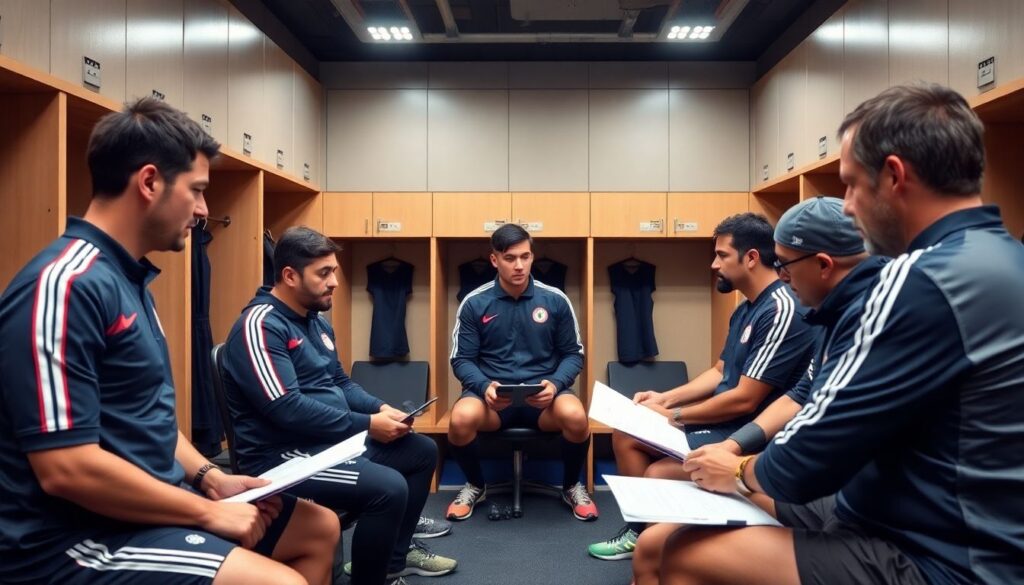
The path to becoming a regular World Cup contender runs through smarter qualification planning. Avoid these common errors:
- Overreacting to short-term Turkey World Cup odds 2026 scenarios and abandoning long-term plans after one bad window.
- Scheduling glamorous friendlies that please fans but do not prepare the team for specific qualification opponents.
- Ignoring seeding mathematics and letting ranking points leak away through poorly chosen fixtures.
- Rotating squads randomly instead of following a clear plan for integrating younger players in low-risk matches.
- Underinvesting in opponent analysis, relying on reputation instead of up-to-date tactical scouting.
- Failing to coordinate travel, recovery and club negotiation, leading to burnout of key players before decisive games.
- Letting media and fan pressure dictate line-ups and systems, especially after tournaments like Euro 2024, rather than sticking to analysis-based Turkey Euro 2024 and World Cup qualifications analysis.
- Spending more resources on symbolic gestures (camps in exotic locations, promotional tours) than on analysts, fitness staff and technology.
- Not simulating different qualification scenarios and bench-testing depth for injuries and suspensions.
Performance metrics and phased objectives for the next 12 years
Different federations have different budgets and political constraints. If a full long-term project is not realistic, consider these alternative approaches, each with its own conditions.
-
Data-light, culture-heavy model
Focus on coaching education, shared identity and discipline without heavy analytics. Suitable for lower budgets or when data expertise is scarce, as long as leadership is stable and visionary.
-
Club-driven excellence model
Let a small group of leading Turkish clubs drive standards in youth development, tactics and sports science, with the federation mainly coordinating. Works when those clubs are already dominant and committed to exporting talent.
-
Generation-based targeting model
Instead of aiming for every tournament, concentrate resources around one or two strong age cohorts, building towards specific World Cups. Useful when demographics show an extraordinary generation in U15-U19 categories.
-
Diaspora-focused talent model
Prioritise identification and integration of diaspora players in top European academies and leagues. This suits scenarios where domestic league reform is slow, but there is strong Turkish presence abroad.
To compare approaches and plan investments and KPIs over time, use a simple planning matrix like the one below.
| Phase / Timeline | Main Investment Focus | Primary KPIs |
|---|---|---|
| Short term (0-4 years) | Coach education, tactical identity, basic data and scouting structure | Stable head coach tenure, clear game model, increased U21 minutes, improved FIFA ranking for qualification seeding |
| Medium term (4-8 years) | Academy standards, club alignment, sports science and injury prevention | More Turkish starters in top European leagues, consistent qualification for major tournaments, deeper squads by position |
| Long term (8-12 years) | Infrastructure upgrades, nationwide talent reach, advanced analytics | Regular World Cup qualification, knockout-stage appearances, sustained top-tier ranking and predictable Turkey national football team future predictions |
Practical answers to common tactical and structural doubts
How long would it realistically take for Turkey to become a regular World Cup contender?
With coherent planning and stable leadership, the realistic horizon is at least one full generation cycle, roughly 8-12 years. Anything faster would require an exceptional golden generation plus luck in draws and injuries.
Should Turkey prioritise tactics or talent development first?
They must run in parallel, but in practice you start by defining a simple tactical identity, then shape youth development around it. Without a clear game model, academies and clubs will pull in different directions.
How important are Turks playing in top European leagues?
They are critical for raising the ceiling of the national team. However, exported players must come from a strong domestic development structure; otherwise, you rely on rare individual cases instead of a sustainable flow.
Can constant coaching changes ever be part of a successful strategy?

Frequent changes almost always delay progress, because players repeatedly relearn systems. If a coach fits the long-term identity and meets most performance metrics, continuity is far more valuable than short-term emotional reactions.
Is a defensive, counter-attacking style a safer route for Turkey?
Ultra-defensive approaches can work in isolated games but rarely produce sustained qualification success. A balanced model with clear pressing and transition structures is safer over multiple campaigns and opponent types.
How should Turkey balance developing strikers versus creative midfielders?
Both are vital, but modern football often builds chance creation through midfield and wide players. A practical approach is to overproduce adaptable attackers while investing specifically in finishing and movement coaching for potential number nines.
Do betting markets tell us anything useful about Turkey's progress?
Odds should never drive decisions, but long-term movements in Turkey World Cup odds 2026 and beyond can reflect external confidence in structural improvements. Treat them as a noisy external indicator, not as a planning tool.