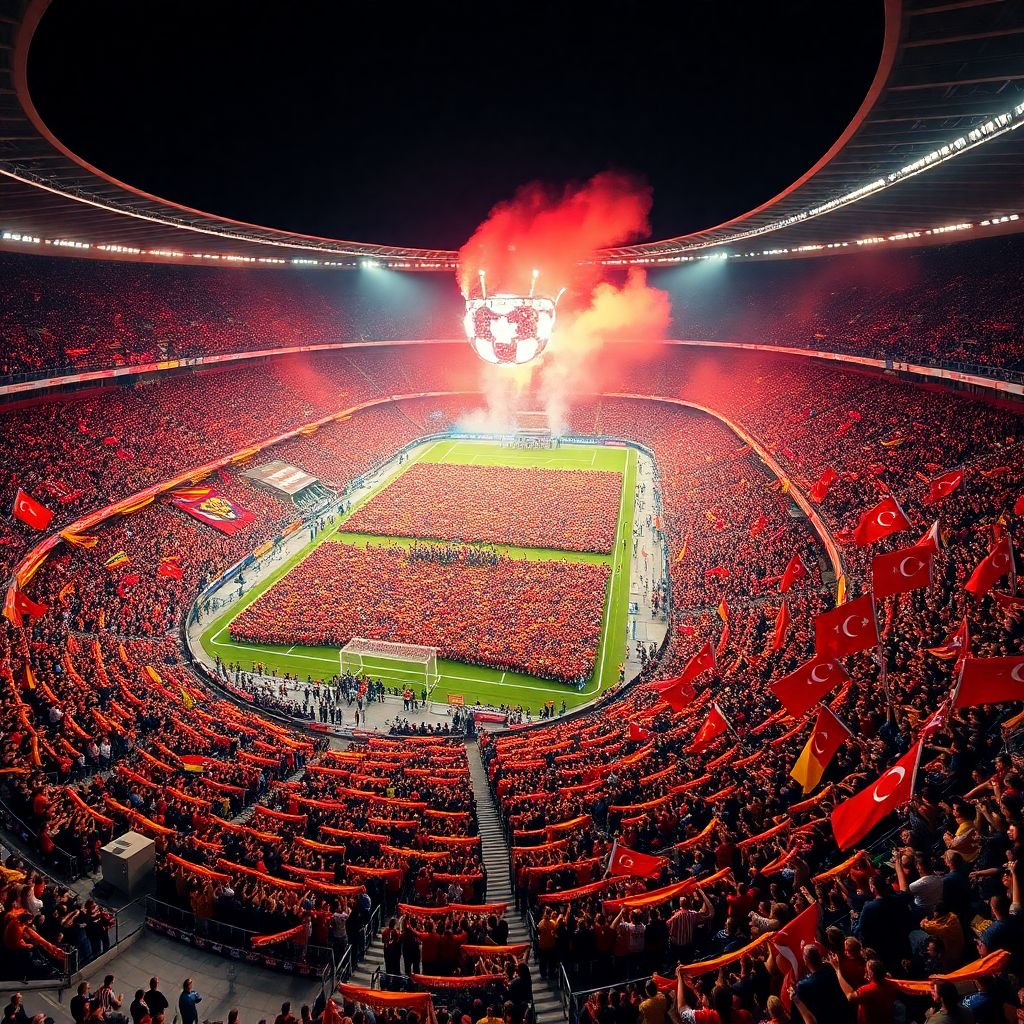
Ultra Culture and the Super Lig Matchday Experience
Ultra culture in the Turkish Super Lig is not just a noisy backdrop; it’s a semi-organised social system that engineers sound, colour and emotion inside the stadium. When you walk into a derby in Istanbul in 2026, you’re stepping into a carefully orchestrated environment where capos, drumlines and visual choreographers coordinate to turn ninety minutes of football into a continuous performance. This isn’t random passion: it’s a mix of choreography, crowd psychology and local subcultural codes that determine how songs start, how pressure on referees is applied, and how players are either protected or punished. Even commercial layers — from ticketing strategies to football ultras merchandise Super Lig fans design and sell — are now shaped by the logic of the curva, not just by club management or sponsors.
In other words, ultras don’t just “support”; they architect the entire sensory field of matchday.
Historical Background: From Spontaneous Noise to Structured Curva
If you rewind to the late 1980s and early 1990s, Turkish crowds were already loud, but far less structured. The decisive shift began as European ultra practices filtered into Istanbul and other big cities, merging with existing local fan associations. By the mid‑2000s, key Super Lig groups had adopted a clear vertical hierarchy: capos on platforms, dedicated drum units, and recognised “creative cells” responsible for lyrics and banners. This period also saw the first large‑scale tifos covering entire stands, particularly in derbies, which radically changed TV aesthetics and global perception of the league. From there, rivalry between groups escalated into a creative arms race: larger banners, more complex pyrotechnic scripts, and highly synchronised chanting blocks lasting 10–15 minutes without interruption, setting a benchmark for regional fan culture.
Today’s atmosphere is a product of that escalation, not a spontaneous accident.
Basic Principles of Ultra Influence on Atmosphere
At the core of ultra culture stand a few operational principles: control of rhythm, visual domination and narrative framing. Rhythm control means managing tempo — when the stadium hums at low intensity and when it explodes — through pre‑agreed song sequences, hand signals and drum patterns. Visual domination is achieved via flags, scarves, coordinated colours and tifos that occupy the camera frame, turning the group into a visible actor in every broadcast. Narrative framing is more subtle: song lyrics and banners construct stories about “we” and “they”, about perceived injustice, loyalty or betrayal, and these narratives feed into how neutral spectators interpret a match. Combined, these principles mean that the ultras effectively program the emotional timeline of a fixture, guiding thousands of non‑ultra fans who still follow their cues for when to whistle, when to applaud and when to exert psychological pressure on opponents.
Most casual fans participate in this script without ever meeting the organisers.
Economic Layer: Tickets, Packages and Commercial Interfaces
Even the seemingly dry question of pricing has been touched by ultra logic. Clubs have discovered that high‑intensity home support sells globally, so marketing teams now align campaigns with ultra aesthetics. International fans searching for Super Lig tickets best prices are no longer only comparing seat locations; many specifically look for sectors adjacent to the active stands to feel that acoustic shockwave. Travel agencies selling cheap Super Lig matchday packages increasingly bundle not just accommodation and transport, but explanations of chant culture and basic “etiquette” in the curva. At the premium end, Super Lig hospitality VIP tickets are now advertised with a dual pitch: comfort and proximity to an atmosphere that TV viewers recognise as uniquely Turkish. Thus, while ultras often criticise commercialisation, their cultural output has quietly become a core asset in the league’s international monetisation strategy.
So the business side and the subculture are now tightly, if uneasily, interlinked.
Examples of Implementation on Matchday
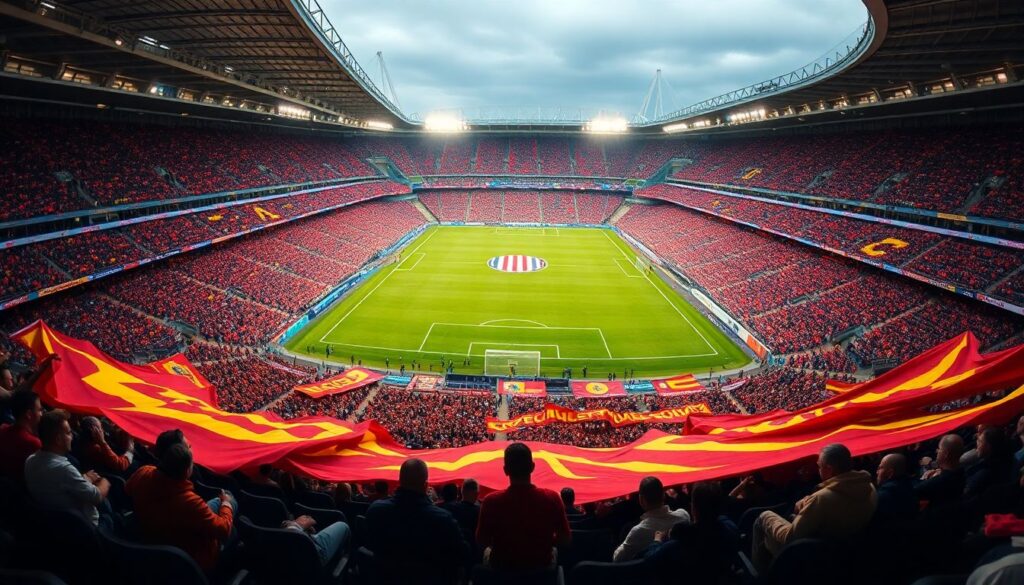
On a practical level, the matchday workflow looks almost like a project plan. Days or weeks before a high‑profile fixture, design teams finalise tifo concepts using digital mock‑ups that account for camera angles and roof structures, almost like informal acoustic and visual engineers. Fabric is cut, painted and numbered so volunteers can deploy it within minutes. Capos rehearse new songs with smaller groups at training grounds or local bars, test call‑and‑response patterns and adjust lyrics to recent events — a refereeing scandal, a transfer saga, a political reference. On the day, access points are controlled to ensure core members cluster in acoustically optimal zones, often under low roofs to amplify sound pressure. When the referee blows for kick‑off, what looks like chaos is actually a scripted performance with contingency plans if the team concedes early or needs a sudden injection of noise.
Every chant and banner has a defined tactical purpose within that script.
Tourism and Experiential Products
By 2026, atmosphere itself has become a tourist product. Operators offering a guided Super Lig stadium tour Istanbul don’t limit themselves to museum rooms and trophy displays; they now highlight ultra sectors, explain flag storage systems and show where capos stand. Some tours even schedule around lower‑risk fixtures so visitors can witness choreography preparation without crowding risks. At the same time, pop‑up stalls and online platforms selling football ultras merchandise Super Lig fans design — scarves with chant lyrics, replica tifo art, themed streetwear — extend the curva beyond the ninety minutes. These objects act as portable fragments of the matchday atmosphere, letting foreign visitors export a piece of the subculture home. Importantly, a portion of these revenues often flows back into funding materials for future choreographies, closing a feedback loop between tourism, commerce and ultra creativity.
Atmosphere has effectively become both spectacle and commodity.
Common Misconceptions About Super Lig Ultras
From the outside, ultra culture is often collapsed into one‑dimensional clichés: “hooligans”, “political radicals” or “paid agitators”. While there have been violent incidents and clear political alignments, this reduction misses the internal diversity and the technical sophistication of how matchday is produced. Many core members are highly organised volunteers with skills in design, logistics and even rudimentary crowd acoustics, using concepts like sound reflection and tempo modulation without formal training. Another frequent misunderstanding is that clubs directly control ultras; in reality, the relationship is more transactional and sometimes openly conflictual, with groups negotiating ticket allocations, sanctions and visual freedoms. Finally, equating noise with danger ignores the way strong internal norms and informal policing can actually lower random aggression by channelling energy into collective singing and visual performance instead of unstructured confrontation.
Put simply, the loudest stands are not automatically the least safe.
Technology, Social Media and Data in 2026
In 2026, digital tools have subtly recalibrated how all of this works. Encrypted messaging groups coordinate last‑minute choreography changes if weather, police orders or TV schedules shift. Social media analytics show which songs, gestures or pyrotechnic moments generate the most engagement, and some groups now iterate their “setlists” based on these informal metrics, almost like bands tracking crowd reactions. Clubs, noticing the impact on global reach, share camera feeds and timing information so large tifos align perfectly with broadcasting breaks, maximising highlight‑reel potential. At the high end of the market, premium experiences — from curated fan journeys to Super Lig hospitality VIP tickets with behind‑the‑scenes access to curva prep (where clubs and ultras find compromises) — blend data‑driven marketing with subcultural authenticity. The net effect is a more self‑aware, semi‑professionalised atmosphere industry orbiting around the match itself.
The stands have become both stage and studio, constantly tuned by feedback loops.
Future Outlook: Where Ultra Culture Is Heading
Looking ahead from 2026, several trajectories seem plausible. Regulatory pressure on pyrotechnics and crowd control will likely continue, pushing groups toward even more sophisticated visual and acoustic alternatives: LED‑based tifos, coordinated phone‑light scripts, and chant patterns optimised for broadcast microphones rather than raw decibel levels alone. At the same time, as international demand grows, we can expect more structured products: curated sections for foreign visitors who want immersion without full commitment, bundled in cheap Super Lig matchday packages that include basic chant sheets and context about local rivalries. The tension between commercialisation and authenticity will sharpen; some groups may formalise as cultural associations to protect autonomy and negotiate revenue channels, while others retreat into more closed, purist circles. What seems stable is the core fact that the emotional architecture of Super Lig games will remain ultra‑centred.
Whatever tactical or technological changes arrive, the matchday atmosphere will still be written from the curva upward.