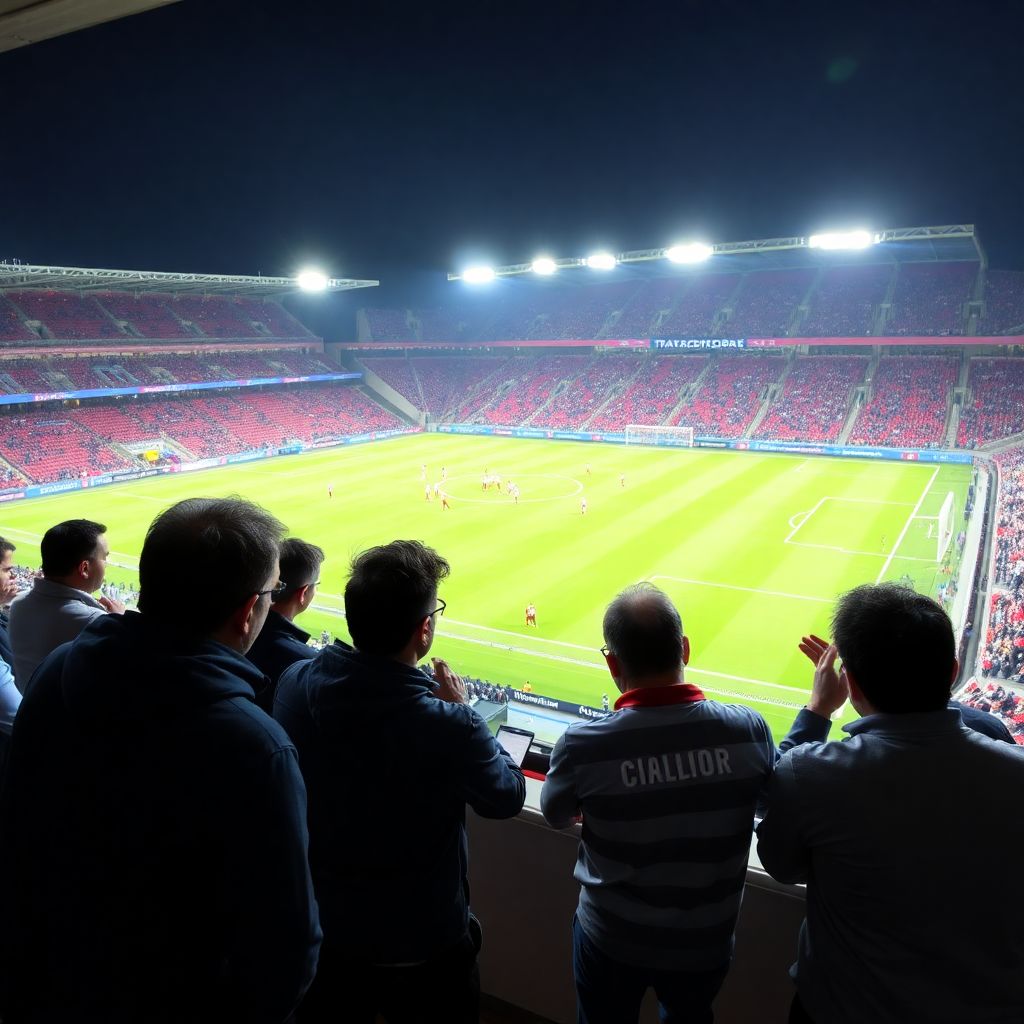
Columnists dissect Trabzonspor’s draw against Kasımpaşa: what the 1-1 really showed
——————————————————————————-
Trabzonspor opened the new Süper Lig season in Istanbul with a reinforced squad and high expectations, yet left the pitch with only a single point after a 1-1 draw against Kasımpaşa. The scoreboard suggests a balanced match, but football writers agree: this was a game that revealed as many questions as it did positives about Fatih Tekke’s team.
A stronger squad, same recognizable identity
According to many observers, the most striking aspect of Trabzonspor under Fatih Tekke is not who plays, but how the team plays. Despite several additions and changes in personnel, the side that took the field in Istanbul looked very similar in terms of game identity.
Tekke’s influence is evident: since his first day in charge, he has imposed a clear, stable game model. Regardless of which eleven players start, the claret-blue side tries to stick to the same principles – patient build-up, disciplined positioning, and an insistence on structured attacking moves rather than chaos or pure individual talent.
Against Kasımpaşa, Trabzonspor once again refused to panic. They tried to progress up the pitch through organized set patterns, circulating the ball with patience instead of rushing decisions. Even when the tempo dropped, they largely maintained their tactical shape, which is a sign of a team that has internalized its coach’s ideas.
Good start, but early promise fades
The opening 20 minutes painted a very encouraging picture. Trabzonspor stepped onto the pitch with authority, controlling the rhythm, winning second balls and pushing Kasımpaşa back. In that spell, the visitors gave a clear impression that they were the side more likely to take all three points.
However, after this initial dominance, the game began to tilt. Kasımpaşa gradually found their balance, started to resist Trabzonspor’s press, and began creating danger of their own. The match stopped being one-way traffic and turned into a more open contest, with both teams having spells of control and moments of vulnerability.
This shift highlighted an early-season issue: Trabzonspor’s inability to maintain the same intensity over 90 minutes. The physical and mental sharpness needed to keep pressing, to move as a unit, and to reproduce the same quality attacks was missing for stretches of the game.
First match, first lessons
Many columnists underlined a key point: it is the first match of the season. That matters. A team can look very different in October compared to August. For Trabzonspor, this draw should be read more as a notebook full of observations than as a final verdict.
Several writers argued that if Trabzonspor had been able to play a few more high-tempo, competitive-friendly games – matches with the intensity of European qualifiers – the side might have arrived at this fixture better prepared. The problems that surfaced in Istanbul could have been confronted and corrected before the league even kicked off.
This is why the 1-1 is seen less as a disappointment and more as a testing ground. It exposed early mistakes, highlighted promising patterns, and raised tactical questions that Tekke and his staff must now answer.
A good first half, a costly drop after the break
Trabzonspor went into the interval with the advantage after scoring a well-worked goal that capped a solid first-half performance. The lead was deserved, reflecting their control for significant stretches of the opening 45 minutes.
But the second half told a different story, especially between the 45th and 60th minutes. That period turned into a warning sign. The team’s tempo dipped noticeably; they lost the compactness and energy that had been so visible earlier. Kasımpaşa grew bolder, pushed numbers forward, and finally forced the mistake that resulted in a penalty.
The penalty itself may be labeled as “avoidable” or “unnecessary,” but it did not appear out of nowhere. It was the logical outcome of a phase in which Trabzonspor seemed slower in their reactions and less precise in their defensive decisions. In modern football, such lapses are usually punished, and Kasımpaşa did exactly that.
Fatih Tekke’s in-game response: the Salah move
Conceding the equalizer prompted a swift reaction from Fatih Tekke. He played what many describe as his “Salah card”, turning to his experienced star to shift the balance of the game.
Salah’s introduction was not just about fresh legs. His presence brought composure, intelligence in movement, and an immediate threat near the opposition box. Yet the decision also reopened an ongoing debate among analysts: is right wing really the best place for a player with his qualities?
Several columnists insist that in the weeks ahead, Salah should be used not as a classic winger chained to the touchline, but rather in a more central, second-striker role behind Onuachu. With his footballing IQ, timing of runs, and finishing, limiting him to crossing duties on the flank is seen as a waste of his full potential.
Salah’s ideal role and the Onuachu partnership
The argument in favor of deploying Salah closer to Onuachu is straightforward. Onuachu is a towering focal point who thrives on crosses and aerial duels, fixing defenders in the box. Salah, on the other hand, is a technically refined player who reads space well and can exploit the chaos created by a traditional target man.
Placed just behind or around Onuachu, Salah could:
– Attack second balls and knockdowns,
– Combine in tight spaces at the edge of the box,
– Arrive from the second line with late runs,
– Use his experience to pick final passes rather than just deliver crosses from wide.
Such a partnership could give Trabzonspor a much richer attacking palette, moving them away from predictable wing play and into more varied, unpredictable combinations in the central areas of the final third.
Both teams could have won it
After the equalizer and Tekke’s tactical adjustments, the game opened up again. Clear chances appeared at both ends of the pitch, turning the final phase into a contest that could have swung either way.
Kasımpaşa had moments where they looked capable of completing the comeback, especially when Trabzonspor’s defensive line hesitated. At the same time, the visitors created their own late opportunities, threatening to snatch victory in the dying seconds.
This exchange of big chances underlined a key takeaway: the match did not have a single dominant team from start to finish. Instead, it was divided into segments, each side taking turns to control the proceedings. From that perspective, the 1-1 scoreline reflects the overall balance of the contest.
What the 1-1 draw really means for Trabzonspor
From a purely mathematical standpoint, an away draw to start the season is far from catastrophic. But the significance of the result lies more in the performance trends than in the single point obtained.
Positives:
– The team has a clear identity and game plan under Tekke.
– The first 20 minutes and stretches of the first half showed high-quality football.
– New and old players alike seem to understand their roles in the basic structure.
Concerns:
– The inability to maintain tempo and focus for the full 90 minutes.
– Individual errors under pressure, such as the penalty decision.
– Unresolved questions about the best roles for key attackers like Salah.
For a side that aims to compete at the top of the Süper Lig, these issues must be addressed early on, before they turn into patterns that cost more points.
Physical and mental readiness: the hidden foundation
Beyond tactics and formations, the match highlighted the importance of conditioning and psychological sharpness. Trabzonspor’s drop in intensity after the break suggested a team still short of optimal match fitness.
In addition, the concentration lapses that led to defensive mistakes indicate that the mental aspect is just as crucial. Title-chasing teams usually show the ability to suffer without conceding, to absorb pressure, and to avoid panic even when momentum swings against them. Trabzonspor showed this only in flashes, not consistently across the full match.
As the weeks go by and the workload increases, these factors should naturally improve, provided training is tailored not only to tactics but also to physical and mental resilience.
How this fits into Trabzonspor’s broader project
Under Fatih Tekke, Trabzonspor appear to be building a long-term project rather than chasing only short-term results. The insistence on a recognizable style, regardless of who is on the pitch, is a sign that the coaching staff is aiming for continuity.
For such a project, early-season games like this one serve as live laboratories. The coaching staff gathers data: which partnerships work, which players adapt fastest, which tactical variations influence the game positively or negatively. The 1-1 draw in Istanbul, then, becomes a crucial chapter in understanding where the project currently stands.
If the team can transform the lessons from this match into concrete improvements – better game management, more efficient use of star players, stronger second-half performances – this single point may later be seen as the start of a stable and coherent campaign.
What must change before the next fixtures
Looking ahead, several adjustments could help Trabzonspor convert similar performances into victories:
1. Sustained intensity
Training plans may need to focus on keeping the team’s tempo high beyond the first half-hour, reducing the dramatic drop-offs seen after the break.
2. Clearer attacking roles
Deciding where Salah and other creative players are most dangerous – especially in relation to Onuachu – will be key to unlocking stubborn defenses.
3. Minimizing cheap penalties and errors
Greater discipline inside the box and better communication in the back line are mandatory to avoid gifting opponents opportunities.
4. More competitive preparation
Scheduling tougher pre-season or early-season tests, where possible, could sharpen the team before critical league clashes.
Final overview
Trabzonspor’s 1-1 draw with Kasımpaşa was not a disaster, nor was it a triumph. It was a mirror, showing both the strengths and the fragilities of Tekke’s side at this early stage of the season.
The team looks structurally sound and better equipped than in previous campaigns, yet still far from its maximum potential. The game in Istanbul confirmed that when Trabzonspor manage to maintain their discipline and tempo, they can impose themselves on difficult away grounds. But it also reminded everyone that lapses in focus and energy are ruthlessly punished in the Süper Lig.
How quickly Fatih Tekke and his players can correct these weaknesses, while enhancing what they already do well, will determine whether this opening draw becomes a small footnote in a successful season or a sign of recurring problems to come.