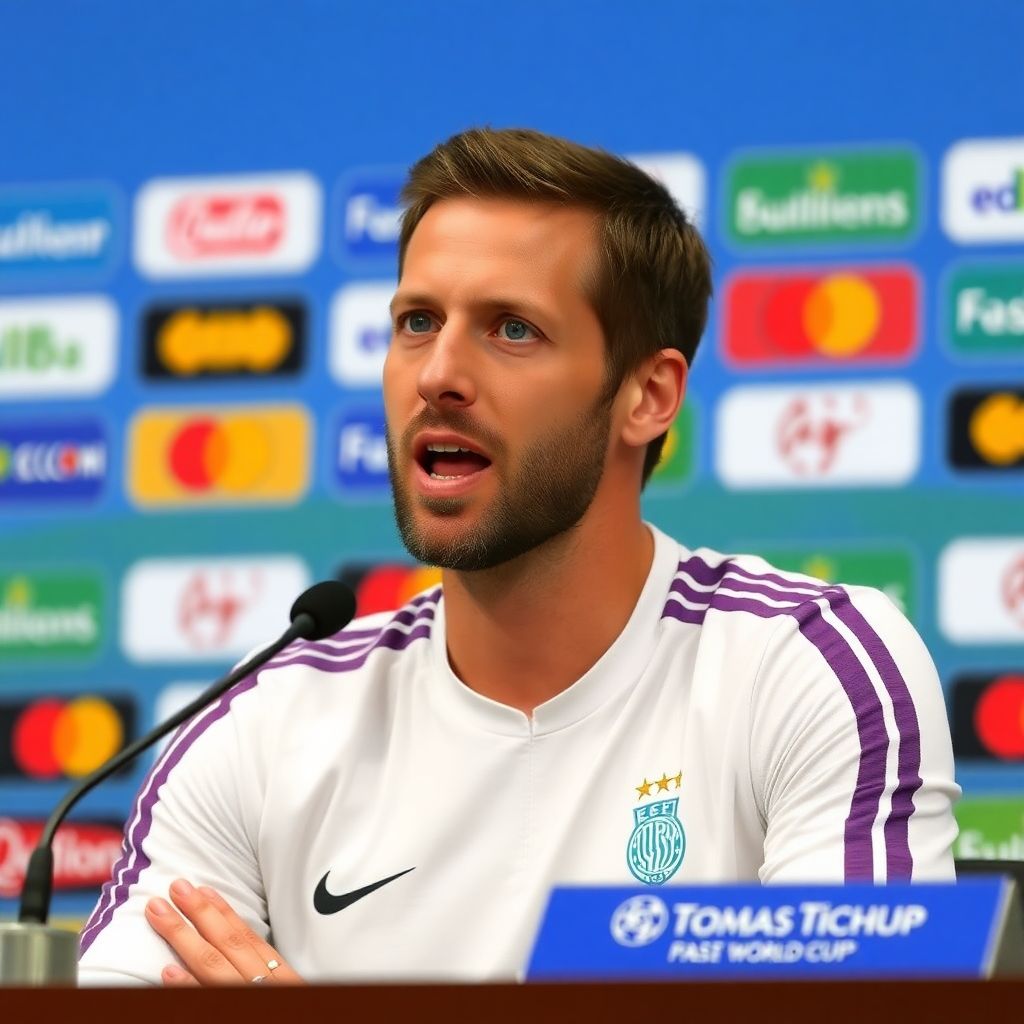
Thomas Tuchel: Messi is a leader and the heartbeat of every team he plays for
On the eve of the 2026 FIFA World Cup semi-final between England and Argentina, England head coach Thomas Tuchel underlined both his team’s hunger to reach the final and his immense respect for Lionel Messi’s enduring influence on the game. Speaking at a press conference held at Atlanta Stadium, the German coach predicted a fiercely contested and highly emotional match between two giants of world football.
Tuchel opened by stressing the magnitude of the occasion, but also the need to keep it in perspective within the England camp. According to the 52-year-old, the World Cup is delivering exactly what football lovers around the globe expect: epic clashes between traditional powers, high drama, and constantly shifting momentum.
“Everyone who loves football and follows the World Cup understands what this game represents and everything that comes with it,” Tuchel said. “Two great football nations are facing each other. We expect an intense match, an emotional one, with many swings in momentum. Anything else would surprise me. We know why we are here, we know what we want. We never hesitated to say it or to dream about it. We are in the semi-finals and we arrived here hungry.”
He was keen to underline that while England hold deep respect for Argentina, they refuse to be overwhelmed by their opponent’s history or mystique. “We respect our rivals, but we don’t get carried away by their historic moments or turn the situation into something bigger than it is. It’s a massive football match, nothing less, nothing more. We’re very excited and ready to play.”
England’s squad situation and fitness update
Tuchel confirmed that England go into the semi-final largely at full strength. The only definite absentees are suspended defender Jarell Quansah and Jordan Henderson, who suffered a broken arm after falling from an advertising board during the post-match celebrations against Mexico.
Apart from those two, the squad is complete. Tuchel highlighted that midfielder Declan Rice is fit enough to feature, easing fears over a possible absence in the heart of England’s midfield. Rice’s presence is seen as vital, given Argentina’s preference for central combinations and short passing in tight spaces.
Lessons from the quarter-final against Norway
Reflecting on the quarter-final win over Norway, Tuchel admitted his side produced a flawed performance, particularly in possession. He was openly critical of England’s attacking rhythm and decision-making during that match, even though they still managed to progress.
“We made too many mistakes as a team,” he said. “We never really found our rhythm in attack. Our decision-making was rushed, we lacked patience and at times discipline. That disrupted our attacking flow and prevented us from controlling the game the way we wanted.”
At the same time, Tuchel pointed to a significant improvement in England’s defensive structure over the course of the tournament. Team defending, he argued, has become one of the side’s greatest strengths and will have to reach an even higher level against Argentina.
“Throughout the tournament we have improved a lot in our defensive organisation,” he continued. “That has to be at its absolute peak tomorrow. In attack we need to accelerate, to play at a higher tempo. We haven’t yet reached the attacking momentum we are capable of. I’m convinced my players will show their best in the semi-final. We are excited about that opportunity.”
“I like the shift in energy in our camp”
Tuchel also spoke about the broader mood within the England squad, referencing a noticeable change in energy as the team moved deeper into the tournament. He sees a group that is ambitious, restless and fully aware that their journey is not yet complete.
He revealed that he managed to watch the first half of the other semi-final between France and Spain, and was particularly impressed by Spain’s performance under pressure. “Spain looked very impressive,” Tuchel said. “The bigger the stage became, the calmer they played. They showed huge confidence. They deserve congratulations for what they are doing.”
England, Tuchel reminded, have been consistently present in the latter stages of major tournaments in recent years. “We have now reached quarter-finals and semi-finals in consecutive tournaments. At the European Championship we reached the final. Now we want to take the last bite, to make that final step,” he explained. “I love the change of energy in our camp. I feel the players are very excited, very ambitious. No one is satisfied just by being in the semi-final, and that’s exactly the mentality we need.”
Messi: more than just a star – a true leader
When the conversation turned to Lionel Messi, Tuchel’s tone mixed admiration with tactical awareness. He described the Argentine captain as a footballer whose influence is almost impossible to put into words.
“Messi carrying his team again at this tournament is absolutely incredible,” Tuchel said. “Words are not enough to describe this level of quality, this kind of success and the responsibility he takes on his shoulders. There is nothing left to add to what he has already shown across his career. And yet here he is again, doing it at another World Cup.”
For Tuchel, Messi is not only a creative genius, but also the emotional and tactical leader of every side he represents. “He is a leader and the key player of every team he plays for,” the England coach stated. “You can see how Argentina are built around him, but also how well they function as a collective.”
Argentina’s cohesion and tactical identity
Tuchel praised Argentina’s continuity and experience, pointing out that they have largely kept the same core group of players from previous tournaments. That stability, he believes, is one of their greatest advantages.
“We know how cohesive Argentina are,” he said. “You can see their experience at this level. They have maintained almost the same group of players. They are very experienced and they have an excellent coach. They love to play through the centre of the pitch, they enjoy short passing combinations and are constantly searching for pockets of space.”
The presence of Messi, according to Tuchel, defines Argentina’s attacking triggers. “When Messi has the ball, everything starts moving,” he noted. “Players come alive around him, runs are made, spaces are created. Even when they fall behind in matches, they don’t panic. They stay calm, trust their structure and their quality.”
Tuchel described Argentina as an extremely competitive squad, loaded with talent in every department. “They are a very combative group and possess high-quality players in every position,” he said. “They can defend aggressively, they are comfortable suffering without the ball, and they know how to manage difficult phases of a game.”
Preparing for the best version of Argentina
Despite the challenge, Tuchel insisted that England’s focus is not on fear, but on preparation and belief. He repeated that his staff are preparing for the strongest possible version of Argentina, aware that small details could decide the match.
“We are preparing for the best version of Argentina,” he said. “You have to work, you have to be ready to overcome difficulties. That’s the only way. I believe every team in the world is beatable. That includes Argentina, and it includes us. Both teams will try to expose the other’s weaknesses, and the margins will be very fine.”
Tuchel highlighted the importance of emotional control in such a high-stakes encounter. Both sides are used to dramatic World Cup nights, and staying clear-headed might be as important as any tactical plan. “There will be intense phases, there will be pressure, maybe even chaos at times,” he predicted. “The team that keeps its structure and emotional balance has a big advantage.”
How England might try to limit Messi’s influence
Without revealing specific tactical secrets, Tuchel hinted at the key principles England will rely on to contain Messi and disturb Argentina’s fluency. The plan, as he implied, goes far beyond simply marking one man.
“Stopping Messi is not about one player,” he noted. “If you follow only him, you open up spaces for others. It’s about collective movement, distances between our lines, how we press the ball before it arrives at his feet, and how quickly we close the passing options around him.”
Tuchel suggested that England’s improvements in team defending will be put to their most demanding test yet. The balance between pressing aggressively and avoiding being played through by Argentina’s short passing combinations will be crucial. “We need compactness without timidity,” he said. “Courage without recklessness. That’s the art against a team like this.”
He also alluded to the importance of transitional moments. Argentina, especially with Messi, are lethal when spaces appear between the lines. England will have to decide when to attack in numbers and when to maintain a more secure structure behind the ball.
England’s attacking challenge: finding rhythm and courage
On the other side of the ball, Tuchel knows England must show a more fluid and decisive face than they did against Norway. He identified tempo, clarity in the final third, and patience in build-up as the core elements that still need refinement.
“To beat a team like Argentina, it’s not enough just to defend well,” he pointed out. “We need to be brave with the ball, to create pressure on them, to keep them busy in their own half. Our attacking rhythm has to be better, our movements more coordinated, our decision-making calmer.”
He emphasised that quick switches of play, intelligent positioning between the lines and well-timed runs in behind could unsettle Argentina’s defence. At the same time, England must avoid losing the ball in dangerous zones where Messi and his teammates can launch deadly counters.
“Sometimes the best way to defend is to attack with control,” Tuchel said. “We want to show our identity, not just react to theirs.”
Mentality, experience and the weight of history
The semi-final between England and Argentina inevitably evokes memories of famous past encounters, from controversial goals to dramatic knockout battles. Tuchel acknowledged that the history between the nations adds spice, but he insisted that his players must not become trapped by the past.
“History belongs to the fans, to the media, to the stories that make this sport beautiful,” he explained. “For us, as a group, this is a new game, with new players, new circumstances. We respect the past, but we don’t play it. We play the present.”
He underlined that England’s own recent experiences in major tournaments – navigating extra times, penalty shoot-outs and high-pressure environments – now form part of their identity. “We have learned how to cope with big nights,” he said. “We have suffered, we have grown. That experience is valuable, but it only matters if we use it tomorrow.”
Tuchel returned to the theme of hunger, stating that no one in the squad is satisfied with simply reaching another semi-final. “We are proud, of course, but satisfaction is dangerous at this stage,” he warned. “We want more. The players feel it, and I feel it. That’s the energy driving us.”
A semi-final defined by leaders
In the end, Tuchel framed the semi-final as a battle not only of tactics and talent, but of leadership on and off the pitch. Messi, in his view, embodies Argentina’s belief and creativity, while England will look to their own leaders to guide them through decisive moments.
“Messi is a leader in a very unique way,” Tuchel concluded. “He leads with his feet, with his decisions, with the calm he brings to his teammates. Every team he plays for revolves around him. Our challenge is to face that kind of leader with our own strength, our own identity, and our own leaders across the pitch.”
As the world awaits another chapter in the World Cup’s rich history, Tuchel’s message is clear: Argentina, with Messi at the centre, are formidable – but not untouchable. England, driven by hunger, organisation and growing belief, arrive in Atlanta ready to test that theory on the biggest stage.