
TFF 1. Lig as a Talent Factory in 2026: Why Scouts Can’t Ignore It Anymore

If you’re still treating TFF 1. Lig as “just a second division”, you’re already behind. Over the last few seasons this league has quietly turned into one of Europe’s most productive talent incubators, feeding both the Süper Lig and mid‑tier European clubs with ready‑made starters. The result: more eyes in the stands, sharper data tools, and a transfer market where a good season in TFF 1. Lig can change a player’s life overnight.
The modern trend is simple: clubs no longer see promotion as the *only* KPI. Developing and selling is now baked into sporting strategy. That shift is exactly why TFF 1. Lig young talents 2024 and beyond are being tracked as closely as some top‑flight prospects.
—
Data-Driven Talent: What the Numbers Say
The league has changed style‑wise. A decade ago you’d see slower, more physical games; now pressing intensity and transition speed are much closer to Süper Lig standards. That’s crucial for projection: it reduces the gap young players face when moving up.
From the most recent publicly available seasons (up to 2024–25), several statistical trends stand out:
– Younger squads: The average age of starting XIs has been edging down, with several clubs consistently fielding line‑ups around 24–25 years old.
– Minutes for U23s: In some promotion‑chasing teams, U23 players are logging 25–35% of total league minutes—elite for a second tier.
– Chance creation: Key passes and expected goals (xG) from wide zones and half‑spaces are up, reflecting more structured attacking patterns rather than pure crossing football.
In practice, this means that when you compile a TFF 1. Lig wonderkids scouting report today, you’re not just looking at “raw athletes”. You’re increasingly dealing with players who already operate in systems with clear pressing triggers, compact mid‑blocks, and rehearsed build‑up patterns—elements that translate much better to European football.
—
Key Statistical Profiles to Track
If you’re watching TFF 1. Lig with an eye on hidden gems, don’t just chase goals and assists. Focus on repeatable, “portable” skills:
– For attackers
– Non‑penalty xG and xG per shot (shot quality over volume)
– Progressive carries and successful 1v1 dribbles
– Pressures in the final third—many top clubs now filter forwards by this
– For midfielders
– Progressive passes and passes into the final third
– Defensive duels won and interceptions per 90
– Receiving between the lines (number of passes received under pressure)
– For defenders
– High line defending: recovery runs, defensive actions in the opposition half
– Aerial duel win rate in both boxes
– Ball progression via passes or carries, not just clearances
These metrics are exactly what turn “good locally” into “top TFF 1. Lig prospects for big European clubs.”
—
Modern Trends: How Playing Styles Shape Future Stars
By 2026, the dominant tactical trend in TFF 1. Lig is clear: high‑energy, structured chaos. Teams want to press, they want to counter, and they’re willing to suffer without the ball if it means quick transitions. That’s gold for development.
Short paragraph time: this is no longer a league where a slow veteran can cruise through games just with experience.
You now see:
– Back‑fours morphing into back‑threes in build‑up
– Inverted full‑backs stepping into midfield
– Wingers acting almost like second strikers in the box
For young players, this environment forces adaptability. A full‑back must be able to both lock down wide areas *and* invert into midfield. A number eight must understand timing of third‑man runs and counter‑pressing cues. This is exactly why the best TFF 1. Lig players to watch this season often look tactically “older” than their age suggests.
—
Where the Hidden Gems Usually Play
If you’re trying to spot undervalued talent early, certain profiles tend to be mispriced in this league:
– Ball‑playing centre‑backs in defensively average teams: their passing doesn’t always show in raw team results, so they fly under the radar.
– Box‑to‑box midfielders in mid‑table sides: they rack up defensive actions and progressive carries without glamorous numbers.
– Inside forwards who create more than they finish: playmakers masquerading as wingers are often undervalued compared to pure scorers.
Short version: follow the roles that demand decision‑making and versatility, not just highlight‑reel actions.
—
Economic Aspects: TFF 1. Lig as a Transfer Market Strategy
Let’s talk money. Turkish football has had to adjust to financial pressure: currency fluctuations, debt‑laden big clubs, and UEFA financial regulations. The response has been rational—turn TFF 1. Lig into a profit center.
Instead of overpaying for aging foreigners, more Süper Lig and even some European clubs are doing the following:
1. Buying promising TFF 1. Lig players in the €500k–€2m range
2. Giving them 1–2 seasons of gradual integration
3. Selling them on for 3–5x the fee if they hit
Each successful case—whether a winger stepping up from a relegation‑threatened side or a young keeper promoted to a European‑qualifying club—strengthens the belief that this model is sustainable.
For TFF 1. Lig clubs themselves, the internal logic has changed:
– Budgeting: Some teams now plan their seasons counting on at least one significant outbound transfer to balance the books.
– Recruitment: Scouting departments are targeting 18–22‑year‑olds from domestic academies and undervalued foreign markets, fully aware that resale is part of the equation.
– Contracts: Longer deals with built‑in sell‑on clauses are becoming standard for key young players.
This is why we increasingly talk about future Turkish football stars from TFF 1. Lig not as exceptions, but as a pipeline.
—
How Clubs Turn Prospects into Assets
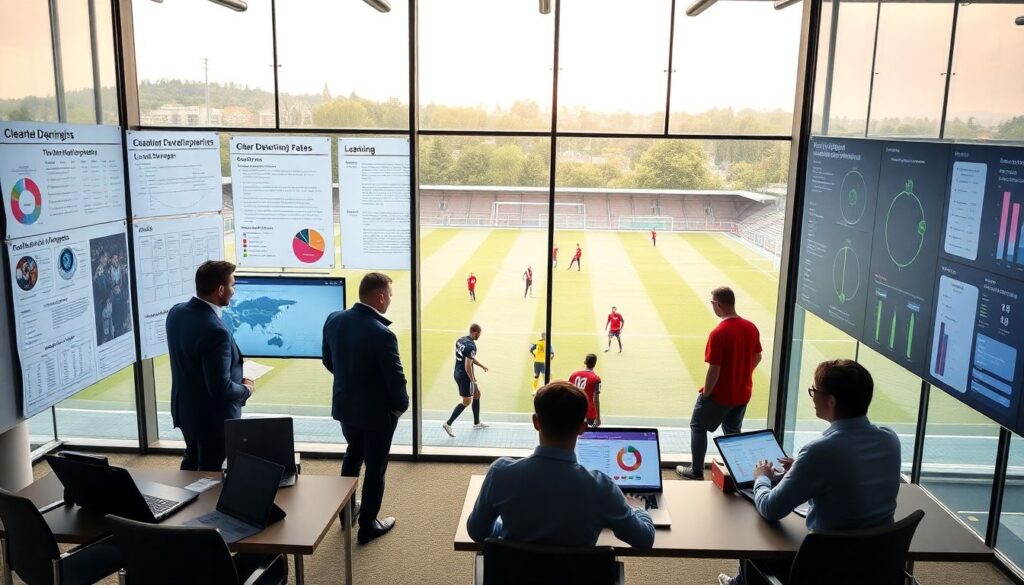
To leverage the league as a talent incubator, clubs are systematizing their approach. If you’re in a front‑office or academy role, these are the levers that matter:
– Clear development paths
– Written plans for each high‑potential player (loan, minutes targets, positional training)
– Use of data and video to provide individual feedback every month
– Smart loan usage
– Larger clubs sending academy products to TFF 1. Lig for first‑team experience
– Smaller clubs negotiating early‑buy clauses or loan fees to capture value
– Exit‑ready profiles
– Training players in at least two positions to widen the market
– Focusing on skills that sell internationally: pace, pressing, ball‑carrying, set‑piece delivery
Short reminder: every training session is now partly about player development, partly about asset appreciation.
—
Impact on the Wider Football Industry
All of this doesn’t happen in a vacuum. The rise of TFF 1. Lig as a development league affects the broader football ecosystem in several ways.
First, scouting networks are reorganising. European clubs that used to fly in only for Süper Lig derbies are now allocating dedicated time and staff to second‑tier games, both live and via video. The league is moving from “backup market” to “primary search area” for certain profiles, especially dynamic midfielders and aggressive full‑backs.
Second, agent strategies are shifting. Representatives of young players increasingly view a step into TFF 1. Lig as a *strategic bridge*, not a setback. A season of 2,000–2,500 minutes at this level can be worth more than sitting on a bench in a top division elsewhere.
Third, media coverage and analytics startups are filling the gap. More detailed public data, fan‑made compilations, and English‑language content on TFF 1. Lig mean that narratives are built faster—and hype cycles, for better or worse, start earlier.
This layered ecosystem is exactly what sustains demand for comprehensive TFF 1. Lig wonderkids scouting report content across clubs, agencies, and data providers.
—
Short-Term vs Long-Term Projections
Looking ahead from 2026, several projections are reasonable based on trends up to mid‑decade:
– Short term (1–3 years)
– Continued increase in U23 minutes as financial pressures persist.
– More transfers from TFF 1. Lig directly to mid‑tier European leagues, not only via Süper Lig.
– Higher competition among domestic clubs for the same pool of young players, driving prices up.
– Medium term (3–5 years)
– One or two TFF 1. Lig clubs positioning themselves *explicitly* as “development hubs”, marketing this to players and agents.
– Deeper integration of sports science and performance tracking even at lower‑budget teams.
– Growing share of broadcasting narratives focused on rising stars rather than only promotion battles.
Short version: expect the talent pipeline to become more structured, more visible, and more expensive.
—
How to Watch TFF 1. Lig in 2026 If You Care About Talent
If your goal is to actually find the best TFF 1. Lig players to watch this season, you need a method. Randomly tuning in on weekends won’t cut it anymore; too many eyes are already doing that.
Here’s a practical, modern approach:
– Start with role‑based filters
Decide what you’re looking for—ball‑playing CB, pressing forward, box‑to‑box eight—then use data (where available) to shortlist players who fit those profiles statistically.
– Watch in “phases” rather than full matches only
Instead of passively watching 90 minutes, focus some sessions on:
– Build‑up phases: how does the player behave when the team has controlled possession?
– Transitions: what’s their first reaction on turnovers?
– Set pieces: do they add hidden value?
– Compare across contexts
See how prospects perform:
– Home vs away
– Against top‑half vs bottom‑half opponents
– Under different game states (leading, drawing, chasing)
That’s how you separate streaky players from those with consistent, transferable impact.
—
Checklist for Evaluating a “Future Star”
When you think you’ve found a gem, run through a simple checklist:
– Do their underlying numbers (xG, progressive actions, defensive duels) back up the eye test?
– Can you clearly articulate their elite skill (pace, intelligence, carrying, creativity)?
– Are they adaptable to at least one higher tactical level (faster tempo, stricter pressing)?
– Is their personality and resilience visible in body language—how do they react to mistakes?
If you can answer “yes” to most of these, you may be looking at one of the future Turkish football stars from TFF 1. Lig.
—
Conclusion: From “Second Tier” to Strategic Goldmine
TFF 1. Lig in 2026 is no longer just a battleground for promotion and survival; it’s a structured, data‑monitored, financially significant talent market. Clubs embrace youth not only out of necessity but as part of a defined model. Scouts treat the league as a main hunting ground, not an afterthought. Agents use it as a launchpad.
For anyone involved in modern football—analysts, coaches, directors, or even serious fans—the message is straightforward: ignore this league, and you’ll miss an entire generation of players. The next wave of top TFF 1. Lig prospects for big European clubs is already on the pitch; the only question is whether you’re watching closely enough.