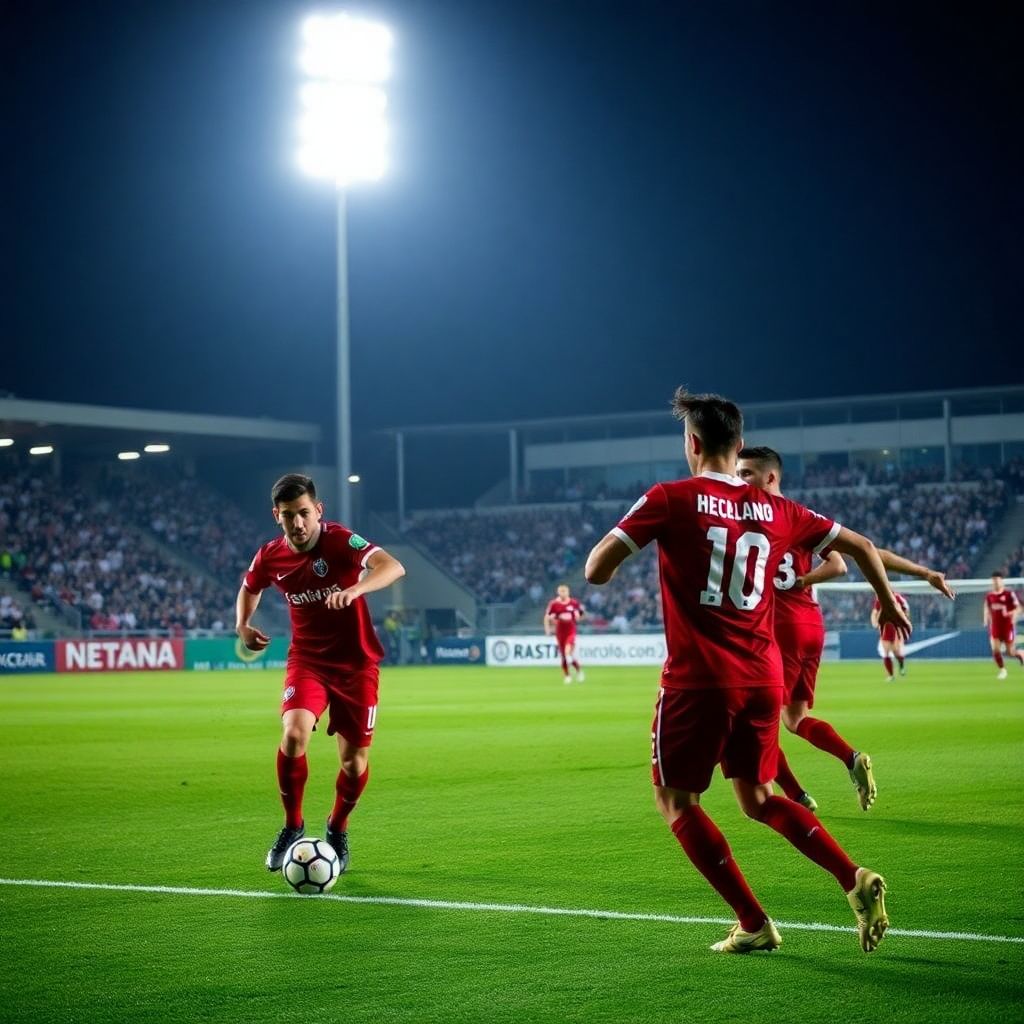
TFF 1. Lig is effectively Turkey’s main talent factory: a competitive, high-intensity league where young players learn to handle pressure, physical duels and tactical discipline before jumping to Süper Lig or abroad. For scouts and clubs, it offers cheaper, earlier access to future football stars in TFF 1. Lig.
Fast Facts: 1. Lig as a Talent Pipeline
- TFF 1. Lig is the second tier, but the primary proving ground for TFF 1. Lig young talents aiming at Süper Lig and Europe.
- Games mix experienced seniors and Turkish second division rising stars, creating a demanding environment for development.
- Clubs rely heavily on academy graduates, loans from Süper Lig and affordable foreign prospects.
- Scouting opportunities in TFF 1. Lig are attractive because players are less expensive and contractual situations are often simpler.
- Best young players in Turkish 1st League stand out through consistency against physically strong, tactically disciplined opposition.
- Data and video tools now complement traditional live reports, making it easier to track future football stars in TFF 1. Lig.
Dispelling Myths: 1. Lig Is Not Just a Second-Tier Backwater
TFF 1. Lig is the second level of Turkish professional football, but its function is more than just promotion and relegation. Practically, it works as a transition zone between youth football and elite competition, where players learn to handle full stadiums, tough away trips and weekly tactical adjustments.
For many clubs, 1. Lig is where they polish and sell talent. Salaries and transfer fees are lower than in the Süper Lig, so teams are forced to develop and trade players smartly instead of simply buying finished stars. This economic reality is exactly what turns the league into a talent factory.
The main misunderstanding is that a “second division” automatically means low tactical level. In reality, many coaches use complex defensive structures, high pressing and compact blocks. Young players must understand pressing triggers, defensive transitions and positional play at a much higher pace than in U19 level.
Another myth is that only older players go to 1. Lig to finish their careers. While such veterans exist, they often act as on-pitch mentors for Turkish second division rising stars, transmitting know-how about game management, tempo control and professionalism that academies alone cannot teach.
Talent Identification: How Clubs Spot High-Potential Players
Clubs and scouts in 1. Lig use a blend of live observation, video, data and references to identify best young players in Turkish 1st League. In practice, the process follows a clear sequence:
- Wide screening and shortlisting – Analysts and scouts track every club’s minutes for U23 players, monitoring positions of interest and flagging players with regular starts or impactful substitute appearances.
- Video-based pre-scouting – For each shortlisted player, staff review full matches and clips: decision making under pressure, body orientation, first touch, defensive reactions, and contributions without the ball.
- Live scouting in varied contexts – Scouts watch players in different game states: home vs. away, leading vs. chasing, playing with 10 men, against promotion contenders, and in bad weather or poor pitches.
- Background checks and personality assessment – Coaches, former teammates and academy staff are asked about work rate, discipline, resilience after mistakes and openness to coaching.
- Physical projection and injury profile – Staff evaluate whether the player’s athletic qualities (speed, endurance, strength, agility) can scale to Süper Lig or top-five European leagues without recurring injuries.
- Tactical flexibility – Players who can handle multiple roles or systems (e.g., full-back and wing-back, 6 and 8) are prioritised, as they are easier to integrate into evolving team structures.
- Contract and market context – Age, contract length, release clauses and agents’ reputations are analysed to judge how realistic and affordable a move would be.
Development Pathways: Academies, Loans and Coaching in 1. Lig
Once a player is identified, clubs need structured pathways to convert raw potential into reliable performance. In TFF 1. Lig, several typical development routes are used.
- Direct promotion from club academy to first team
Club-owned academies promote standouts to train regularly with the senior squad. These players may initially appear in cup games or late substitutions, then gradually earn starts as they adapt to the league’s pace and physicality. - Loans from Süper Lig clubs
Big clubs send prospects on season-long loans to get consistent minutes. 1. Lig coaches gain quality players without high transfer fees, while parent clubs test whether the loanees can handle adult competition, travel fatigue and tactical responsibility. - Signings from regional and lower divisions
Some of the most interesting TFF 1. Lig young talents come from regional leagues or the 2. Lig. They are offered medium-term contracts and deliberate, step-by-step integration plans instead of immediate pressure to perform every week. - Position changes guided by coaching staff
Coaches may convert fast wingers into offensive full-backs or attacking midfielders into No. 8s, where their skills better fit the team’s structure. TFF 1. Lig’s slightly lower media pressure gives space to experiment with these role changes. - Individual development programmes
Clubs build tailored plans that combine gym work, nutrition, video feedback and extra technical sessions. For instance, a young centre-back may have targeted training on defending crosses, set-piece timing and long diagonal passing. - Mental and lifestyle support
Sports psychologists and experienced captains help youngsters manage expectations, social media attention and family pressures, increasing the chances that talent converts into a stable professional career.
Market Dynamics: Transfers, Scouting Networks and Agent Roles
The market around TFF 1. Lig is shaped by budget limits and strong competition from abroad. Understanding its advantages and constraints is essential for anyone exploring scouting opportunities in TFF 1. Lig.
Advantages of Using 1. Lig as a Talent Source
- Lower entry cost – Transfer fees, wages and signing-on bonuses are generally lower than in Süper Lig or Western European markets, making the league attractive for value-focused recruitment.
- Early access to future stars – Clubs that monitor the league closely can secure future football stars in TFF 1. Lig before they become too expensive or sign long contracts with bigger teams.
- Rich diversity of playing profiles – The league includes technical playmakers, physically dominant defenders, direct wingers and modern full-backs, giving scouts multiple stylistic options.
- Open scouting culture – Many clubs welcome dialogue with foreign scouts and sports directors, sharing basic data and footage to facilitate negotiations.
- Clear visibility through promotion races – Promotion playoffs put young players under TV cameras and higher pressure, offering extra information on how they perform in crucial matches.
Limits and Challenges in the 1. Lig Talent Market
- Short-term survival mentality – Some clubs fighting relegation overuse experienced players and delay giving minutes to youngsters, slowing their development and limiting sample size for scouts.
- Inconsistent infrastructure – Training pitches, gym facilities and support staff vary widely between clubs, so a player’s current performance may not fully reflect his potential in a better environment.
- Complex third-party interests – Certain players are influenced by multiple intermediaries, making deals slower and less predictable, especially for foreign buyers unfamiliar with local practices.
- Incomplete data coverage – While top teams are well tracked, data for smaller clubs or specific events (e.g., youth minutes, friendly matches) might be limited, requiring more live scouting.
- Adaptation risk – Not every standout in TFF 1. Lig can translate their performance to top divisions; some rely heavily on league-specific styles (e.g., long-ball dominance or deep blocks).
Success Stories: Graduates Who Reached Top European Leagues
Well-known graduates from 1. Lig have reached Süper Lig, major European competitions and national teams. However, observers often misinterpret what these stories mean for scouting and development strategy.
- Myth: Only technical wingers and No. 10s progress
Reality: Full-backs, centre-backs and deep midfielders frequently move up. The key is adaptability and game intelligence, not only dribbling or flair. - Myth: A single standout season guarantees a big move
Clubs increasingly demand at least two consistent seasons of impact. One “hot” year without underlying stability in physical and tactical metrics is usually not enough. - Myth: Older players cannot become exports
While younger ages hold premium value, some players leave in their mid-twenties once they align physical peak, tactical maturity and strong league reputation. - Myth: Data alone can find all hidden gems
Numbers help filter options but do not fully capture mentality, role discipline or context. Mixed methods (data + live scouting + background checks) remain the most reliable approach. - Myth: Once a player leaves 1. Lig, he does not return
Players sometimes come back on loan or permanently to restart their careers with more minutes, using familiar environments to regain confidence and market value. - Myth: Only domestic clubs benefit from 1. Lig
Foreign clubs that systematically track the league can sign undervalued players before bigger European rivals even notice them.
Measuring Potential: Metrics and Indicators Scouts Use in 1. Lig
Evaluating potential in TFF 1. Lig requires going beyond goals and assists, especially when comparing players from different clubs and roles. Scouts combine qualitative impressions with quantitative indicators to differentiate long-term prospects from short-term performers.
- Contextual performance stats
- Offensive metrics such as chance creation, progressive passes and successful dribbles in tight areas are judged relative to team strength and tactics.
- Defensive metrics like interceptions, duels won and pressing actions are analysed considering whether the team plays high, mid or low block.
- Physical repeatability and intensity
- High-intensity sprints, distance covered and recovery runs across full matches show if a player can sustain his style against stronger opposition.
- Scouts watch how performance changes between the first and last 15 minutes as a proxy for fitness and concentration.
- Decision making under pressure
- Frequency of smart, simple decisions when pressed: safe passes, clearances, carries into space rather than risky dribbles in own third.
- Error profile: whether mistakes are technical (bad touch) or cognitive (late reaction, poor scanning), and how quickly the player recovers.
- Tactical discipline and game understanding
- Positional play: maintaining structure in defensive transitions, not chasing the ball and leaving gaps behind.
- Role clarity: following the coach’s plan even when the team is behind, instead of improvising selfishly.
- Mentality and learning curve
- Response to setbacks such as conceding a goal, being substituted early or losing a starting spot.
- Visible improvements over a run of 10-15 games (e.g., fewer card-related fouls, smarter pressing angles).
Imagine a 20-year-old attacking full-back in TFF 1. Lig: scouts log his 1v1 success rate, crossing accuracy, progressive runs, defensive duels and recovery sprints over several matches. They then overlay video notes about positioning and mentality, comparing him with other Turkish second division rising stars to judge if he can jump to a higher league within two seasons.
Reader Questions on Scouting, Moves and Career Trajectories
How should a foreign club start exploring scouting opportunities in TFF 1. Lig?
Begin with video platforms and public data to map clubs and identify TFF 1. Lig young talents with consistent minutes. Then schedule targeted live scouting trips around promotion and relegation battles, when pressure is highest and player behaviours are most revealing.
What makes future football stars in TFF 1. Lig stand out from regular players?
They combine above-average physical capacity, strong decision making at high speed and tactical discipline across different game plans. Over time they show steady improvement, impacting matches consistently rather than relying on occasional highlights.
Are best young players in Turkish 1st League usually ready for top-five European leagues immediately?
Only a few are ready to step directly into top-five leagues. Most need an intermediate step, such as Süper Lig or another mid-level European competition, to adjust to higher tempo, tactical complexity and off-field demands.
How important are agents in moves from 1. Lig to bigger leagues?
Agents coordinate negotiations, manage expectations and shape career paths, but they cannot replace performance. Clubs increasingly verify every claim with data, video and independent references before making significant investments.
Can a player who fails in Süper Lig revive his career back in 1. Lig?
Yes. Many players return to 1. Lig to regain match rhythm and confidence with more playing time. Strong performances there can create a second chance either back in Süper Lig or abroad.
What should young players prioritise if they aim to become Turkish second division rising stars?

They should focus on physical robustness, understanding multiple positions in their role group and maintaining professional habits off the pitch. Reliable behaviour and steady learning often matter more than early highlight reels.
How can smaller European clubs take advantage of this league’s talent factory role?
By building long-term relationships with selected 1. Lig clubs, sharing scouting reports and arranging friendly matches or loan deals. This creates early access to undervalued talents before their prices increase.