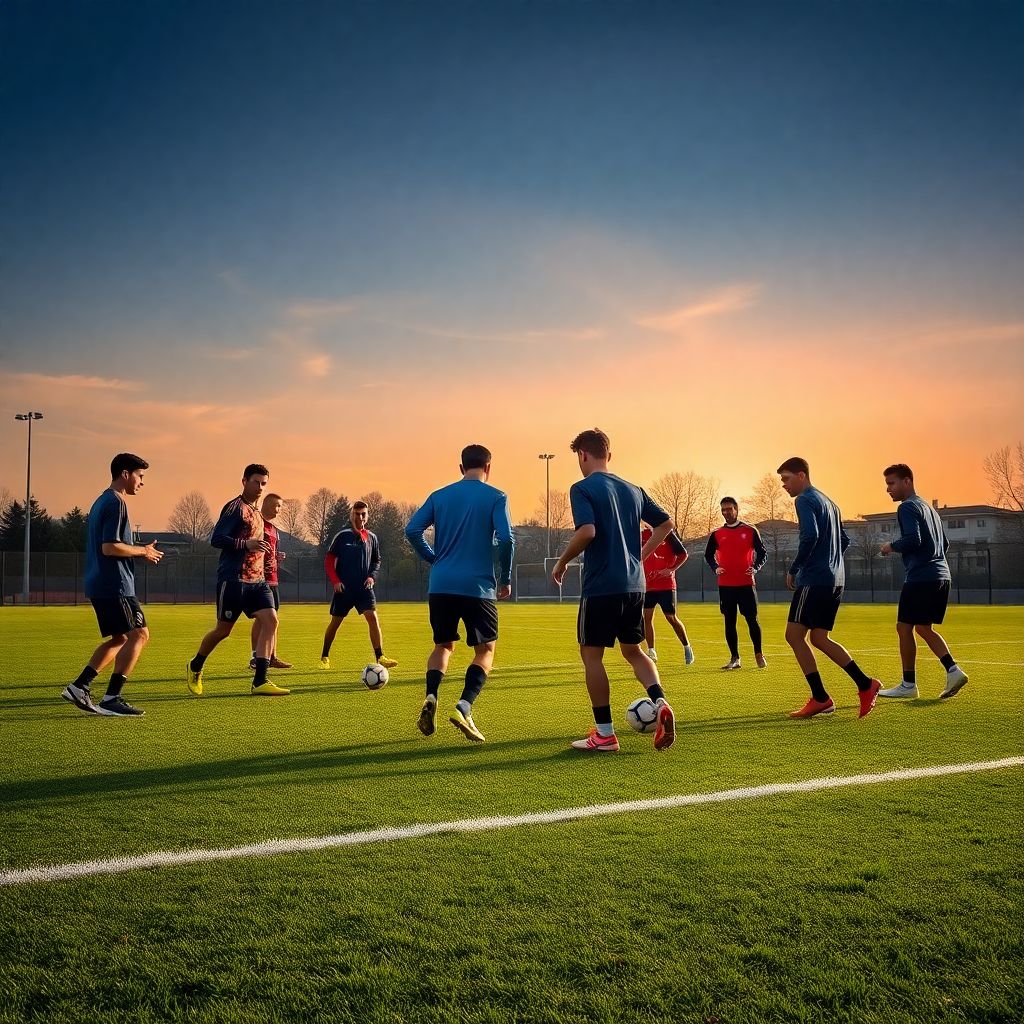
Sports psychology shapes how Turkish footballers handle pressure, confidence, focus and teamwork from grassroots to Super Lig. It complements tactical and physical training by building mental skills: pre‑match routines, resilience, emotional control and communication. Used well, it helps Turkey’s next football stars turn talent into consistent performance in club and national team environments.
Core psychological pillars shaping Turkey’s future football talents
- Mental toughness built on controllable habits, not on “being tough by nature”.
- Game-focused confidence based on preparation, not external praise.
- Emotional regulation under crowd, family and media pressure.
- Clear role understanding and communication inside Turkish team cultures.
- Growth mindset in the face of selection, injuries and transfers.
- Healthy identity balance between “footballer” and private life.
Quick practical mindset tips for Turkish coaches and players
- Before every session, set one clear mental goal (for example: “scan before receiving” or “communicate early”).
- Use a simple breathing routine (4 seconds in, 4 hold, 6 out) before pressure drills or penalties.
- After matches, review three controllable positives and one concrete improvement, avoiding arguments about referees.
- For youth, link every correction with one short praise to keep motivation stable.
- Schedule one weekly 15‑minute meeting focused only on mental topics, not tactics.
Debunking common myths about sports psychology in Turkish football
In Turkey, many still think sports psychology is only for “problem” players or for those who are mentally weak. In reality, a sports psychologist for footballers in Turkey works like a position-specific coach for the mind: supporting high performers and developing key mental skills long before crises appear.
Another myth is that mental training is soft, theoretical talk with no effect on the scoreboard. Practical football mental coaching services Turkey use video, training tasks and match routines, so players can see direct links between their thinking, emotions, body language and key actions such as first touch, pressing triggers or penalty kicks.
Some coaches fear that psychologists will interfere with authority or change the club culture. Evidence-based practice in sports psychology training programs for youth football Turkey actually aligns with the club’s playing model and values. The psychologist supports coaches, not replaces them, by giving them better tools to communicate and motivate.
Finally, parents may see online sports psychology courses for football players as a luxury. Yet mental skills are often the differentiator between two equally talented 17-year-olds competing for a contract. Defining sports psychology as structured mental skill coaching, not therapy, helps Turkish academies integrate it early and systematically.
Mental skills that predict elite performance: assessment and prioritization
Sports psychology focuses on specific, trainable skills. For Turkey’s next football stars, these are the priority areas and how to assess them in practice.
- Attentional control and scanning – Measured by how consistently a player scans before receiving, maintains focus after mistakes and follows tactical instructions under fatigue.
- Pressure management – Observed in penalties, last‑minute situations, derbies and high-stakes youth tournaments; rated by decision quality, body language and communication under stress.
- Resilience and response to setbacks – Evaluated via reactions to being benched, injuries, selection cuts or criticism; resilient players bounce back with concrete action plans.
- Intrinsic motivation and professionalism – Visible in training intensity, extra work habits, sleep and nutrition discipline; coaches can use simple rating scales after sessions.
- Team orientation and leadership – Assessed through communication style, support for teammates, acceptance of roles and influence in the dressing room, not only by wearing the armband.
- Game intelligence under mental load – Judged by decisions when tired or after mistakes, connecting video analysis with on‑pitch choices in chaotic phases of the game.
Designing psychology-infused training programs for academies and clubs
To move from theory to practice, academies and clubs in Turkey need clear structures where mental training is embedded inside football work, not added as a separate lesson once a year.
- Warm-up mental routines – Introduce short breathing, visualization or cue-word routines in pre‑training and pre‑match warm‑ups, led by coaches trained through sports psychology training programs for youth football Turkey.
- Pressure drills with mental targets – Combine small-sided games and finishing drills with clear psychological aims: coping with noise, quick emotional reset after conceding, or communication under time pressure.
- Video sessions including mental clips – Alongside tactical clips, show examples of body language, reactions to referees and communication. Ask players to analyse what is mentally strong or weak, then set improvement goals.
- Individual development plans – Each player has 2-3 mental objectives (for example: “stay composed after turnovers”). These are reviewed monthly by coach and, where possible, a club psychologist.
- Parent and coach education blocks – Short workshops on praise, feedback, and dealing with selection help align the environment around the player, especially at U11-U15 levels.
- Professional team integration – When you hire performance psychologist for professional football team Turkey, integrate them into staff meetings so that mental objectives are aligned with physical and tactical loads.
Navigating cultural, regional and socioeconomic influences on player mindset
Player mentality in Turkey is shaped not only by individual traits, but also by family expectations, regional football cultures and socioeconomic realities. Understanding these factors helps design realistic, respectful interventions.
Strengths and opportunities in the Turkish context
- Strong emotional connection to football and club identity, which can fuel high motivation and willingness to sacrifice.
- Family involvement that, when guided, can provide powerful support systems for youth players.
- Competitive street and neighborhood football traditions that build creativity, courage and informal leadership.
- Passionate stadium atmospheres that, if prepared for, can accelerate development of pressure management skills.
- Growing access to online sports psychology courses for football players, allowing education beyond big-city clubs.
Constraints and typical mental challenges across regions
- Overinvolved or result-focused parents increasing anxiety and fear of mistakes in young players.
- Economic pressure on families, pushing players to rush transfers or play through injury out of financial necessity.
- Regional stereotypes inside squads, sometimes affecting confidence and role acceptance of players from smaller cities.
- Authority-heavy coaching styles that may silence player communication and problem-solving on the pitch.
- Limited access to qualified sports psychologist for footballers in Turkey outside major urban centers, leading to inconsistent support.
Evidence-based interventions: short programs and long-term development cases
When introducing mental training, clubs often repeat the same mistakes, which reduce impact and create scepticism about sports psychology.
- One-off motivational talks – Inviting a speaker for a single session, then expecting long-term change. Mental skills need repetition and integration into training plans.
- Focusing only on problems – Calling the psychologist only when results are bad, instead of building strengths and preventive habits when the team is doing well.
- Ignoring coach behaviour – Trying to “fix” players without adjusting coach feedback style, body language or communication during games.
- Mixing therapy and coaching – Expecting sports psychology to solve every personal issue. Clear boundaries and referral routes to clinical professionals must be defined.
- Lack of measurement – Running workshops without any before/after tracking of confidence, focus or behaviour leads to the impression that psychology is not “real” or practical.
- No connection to tactical model – Teaching generic mental tips that ignore how the team actually plays (for example, high press vs low block) weakens buy‑in and relevance.
Tracking impact: metrics, monitoring tools and performance-linked KPIs
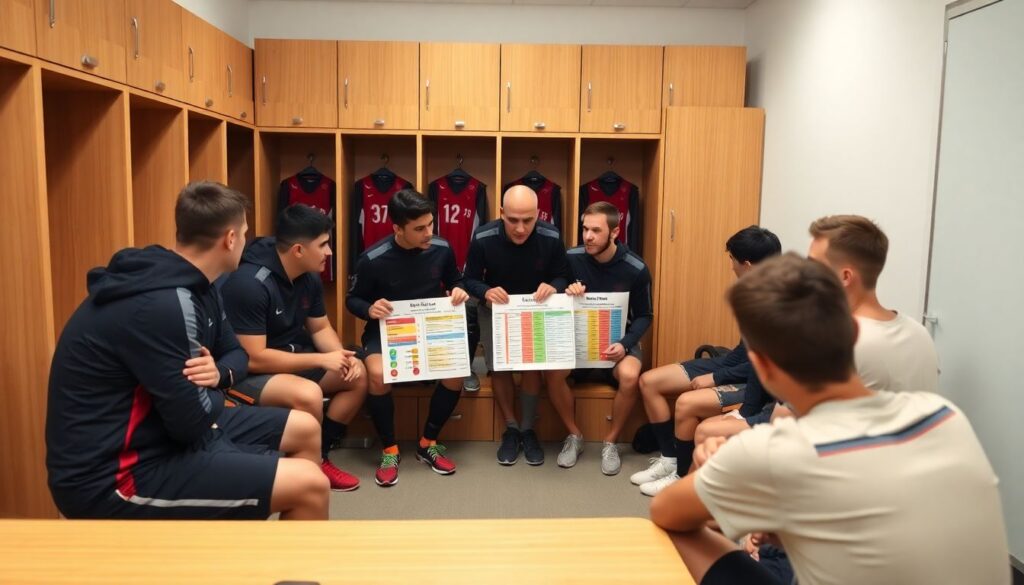
To prove value and continuously improve, mental training must be linked to clear, observable indicators. These should be simple enough for Turkish coaches to use weekly without extra staff.
A basic monitoring approach for a youth academy might look like this:
- Choose 3-4 mental KPIs per age group (for example: “response after mistake”, “communication in defensive phase”, “training intensity”) with clear behavioural definitions.
- After each match, coaches quickly rate each player on a 1-5 scale for those KPIs, alongside technical/tactical ratings.
- Every month, review patterns: who is improving, who is inconsistent, and whether specific mental sessions changed any ratings.
- Integrate simple player self-ratings to compare coach and player perceptions, guiding 1‑to‑1 conversations.
Mini-case: a U17 team in Turkey integrated a 6‑week mental focus block into training (breathing routines, cue words, and post-error reset). They tracked “response after mistake” and “communication” ratings. Over six league matches, average ratings improved, and the number of goals conceded immediately after losing the ball dropped noticeably.
Practical clarifications for coaches, parents and academy directors
Is sports psychology only needed for players with mental problems or crises?
No. The main role is to develop mental skills in all players, just like physical conditioning. Early integration helps prevent many crises and supports already successful players to reach higher levels.
How often should a team work on mental skills during a season?
Short, regular work is more effective than rare long sessions. Even 10-15 minutes of targeted mental training embedded into normal football practice each week can create visible change over a season.
Do we need a full-time psychologist, or can coaches handle mental training alone?
Coaches can apply many basic tools after short education or collaboration with experts. A dedicated specialist, even part‑time or online, helps with deeper work, complex cases and staff alignment.
Can mental training help a technically limited player become elite?

Mental skills cannot replace technical or physical deficits, but they can maximise a player’s potential, improve learning speed and increase consistency. For equally talented players, mindset often decides who progresses.
How can parents support their child’s football mindset at home?
Focus feedback on effort, learning and behaviour, not only on goals or selection. Avoid tactical lectures after matches; ask open questions and let the child speak first about what they learned.
Are online sports psychology options useful for smaller clubs in Turkey?
Yes, online sports psychology courses for football players and remote consultations can give structured support where local experts are unavailable. The key is to choose practical, football-specific content and involve coaches in follow‑up.
What should we check before we hire a performance psychologist for our team?
Look for football-specific experience, clear methods, and readiness to work with staff, not only players. Ask how they plan to measure impact and integrate sessions into your existing training structure.